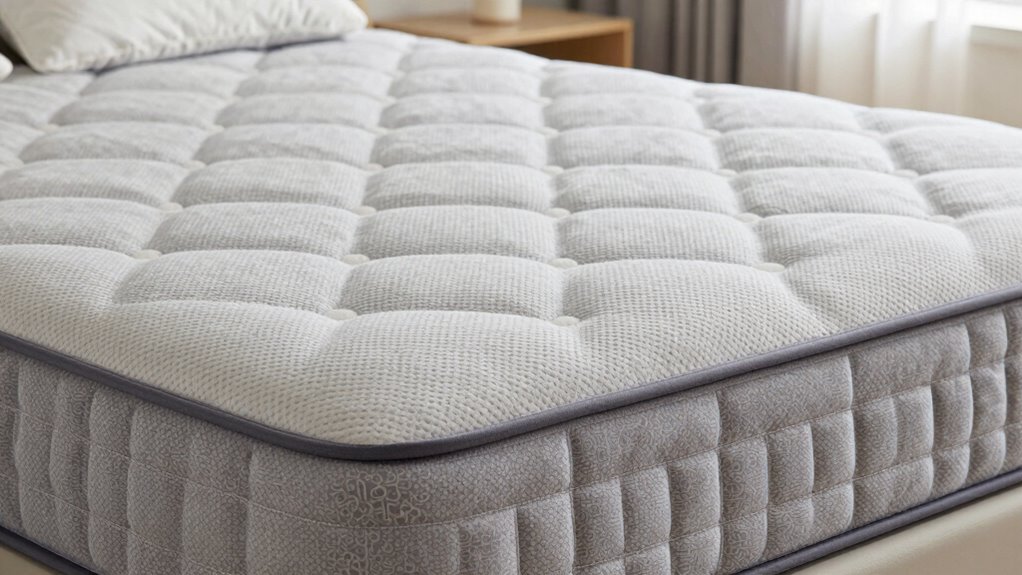

Pressure relief mattresses are designed to prevent skin breakdown by evenly distributing your body weight and reducing pressure points. They come in various types, like foam or alternating air, each suited for different needs. Features like pressure mapping tech and customizing support help keep your skin healthy and comfortable. To make the best choice and care for your mattress, it’s important to understand the options and technology available—more details can help you choose wisely.
Key Takeaways
- Pressure relief mattresses distribute body weight evenly to prevent skin breakdown and pressure sores, using foam, gel overlays, or air systems.
- They are ideal for bedridden patients, elderly individuals, and post-surgery recovery to improve comfort and skin health.
- Features like pressure mapping, adjustable support, and innovative materials enhance effectiveness and personalized care.
- Regular maintenance, including cleaning and repositioning, is essential to ensure mattress longevity and hygiene.
- Cost varies from basic foam models to advanced air or gel mattresses, depending on support level and technology.
What Are Pressure Relief Mattresses and How Do They Promote Comfort?
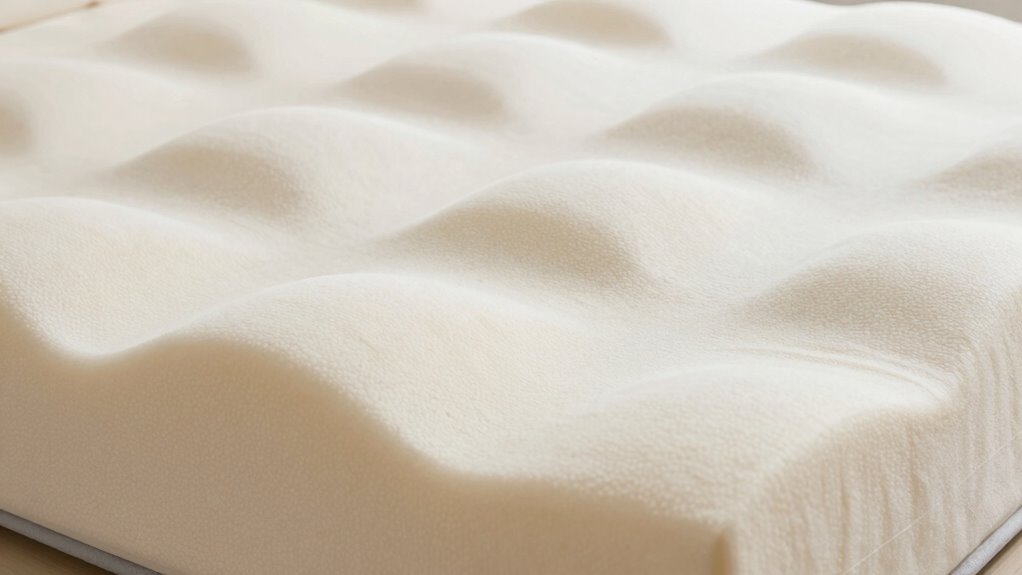
Have you ever wondered how pressure relief mattresses help prevent skin breakdown and improve comfort? These specialized mattresses work by distributing your body weight evenly, reducing pressure points. For example, gel overlays are often added to enhance cushioning and provide additional pressure redistribution. Pressure mapping technology plays a key role in designing these mattresses, showing where pressure is highest and allowing for targeted adjustments. This technology enables manufacturers to develop customized support systems that better meet individual needs. This ensures that areas prone to skin breakdown, like heels and sacrum, receive extra support. By customizing support, pressure relief mattresses minimize discomfort and promote better circulation. Additionally, innovative materials are crucial in enhancing the effectiveness of these mattresses. Recent advancements in pressure distribution techniques allow for even more precise and adaptive support, further improving patient outcomes. Incorporating ergonomic design principles helps optimize pressure relief and comfort across diverse patient populations. Understanding the role of pressure redistribution is essential for selecting the most effective mattress solutions. This combination of innovative materials and advanced techniques helps maintain skin integrity and keeps you comfortable, whether you’re bedridden or recovering from an injury.
Who Should Use a Pressure Relief Mattress?
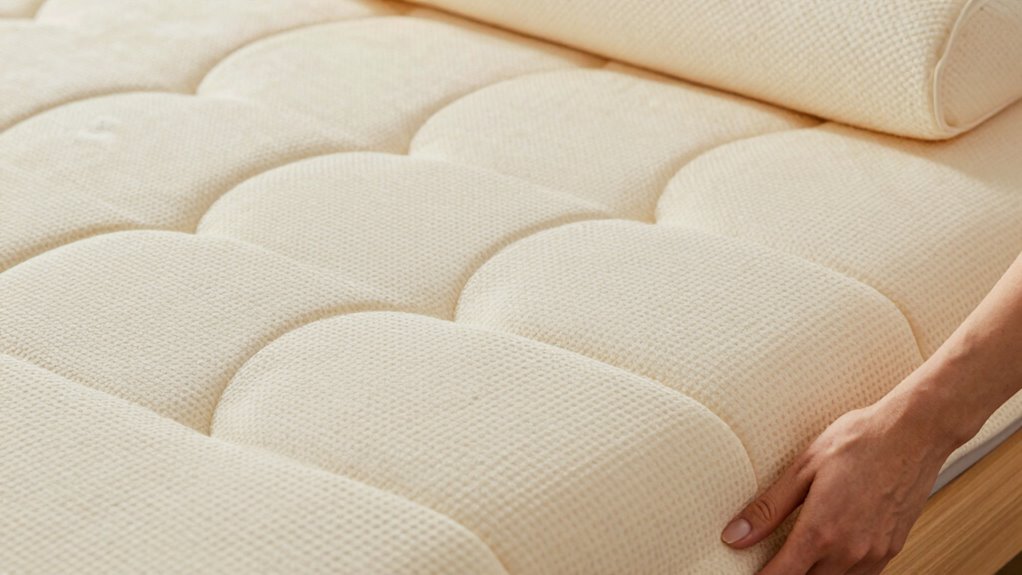
If you’re caring for someone who spends a lot of time in bed, a pressure relief mattress can be essential. It benefits elderly individuals, post-surgery patients, or anyone at risk of pressure sores. Understanding your specific needs helps determine if this specialized mattress is right for you. Additionally, Free Floating technology can improve comfort and reduce pressure points by allowing the mattress surface to adapt to the user’s body shape. Recognizing the importance of safe wiring and other personal factors may also influence the choice of specialized bedding solutions for individual needs. Proper mattress maintenance ensures the longevity and effectiveness of pressure relief systems, contributing to better health outcomes. Incorporating essential oils known for their soothing and healing properties may also promote relaxation and recovery for those using pressure relief mattresses.
Bedridden Patients’ Needs
Bedridden patients are at a higher risk of developing pressure ulcers due to prolonged immobility, making pressure relief mattresses essential for their care. If you’re caring for someone who cannot move independently, a pressure relief mattress can profoundly reduce skin breakdown. These mattresses often use memory foam to distribute pressure evenly and minimize shear forces. Additionally, choosing the right mattress covers helps prevent moisture buildup and infections. Consider these factors:
- Immobility Level: Patients with limited movement benefit most from adjustable pressure settings.
- Skin Condition: Those with fragile or compromised skin need enhanced pressure redistribution.
- Comfort & Hygiene: Select mattresses with washable covers and breathable materials to ensure comfort and cleanliness.
Using the right mattress tailored to these needs helps promote healing and prevents complications.
Elderly Care Requirements
Elderly individuals who experience limited mobility or are at risk of skin breakdown should consider using a pressure relief mattress. These mattresses help improve sleep quality by reducing pressure points that can cause discomfort and skin damage. If you notice skin redness, soreness, or frequent repositioning difficulty, a pressure relief mattress can provide essential support. Maintaining mattress hygiene is also vital, as it minimizes bacteria build-up and infection risk, supporting overall health. Proper cleaning routines and mattress hygiene are crucial for preventing health complications. Additionally, choosing the right pressure redistribution technology can optimize comfort and skin protection for seniors with fragile skin or chronic conditions. These mattresses promote better rest and prevent pressure ulcers. Using a pressure relief mattress can make a significant difference in daily comfort and long-term skin integrity, ensuring that your loved ones receive the proper care they deserve. Furthermore, understanding air quality and ensuring a clean sleeping environment can further enhance overall well-being and recovery. Proper ventilation and air purification can help maintain a healthier sleeping space, reducing the risk of respiratory issues. Regularly inspecting and maintaining support surfaces can also extend the lifespan of the mattress and ensure consistent pressure relief.
Post-Surgery Recovery
After surgery, your body is often vulnerable to pressure sores and skin irritation, especially when mobility is limited. Using a pressure relief mattress promotes proper mattress hygiene, reducing bacteria buildup and infection risk. It also enhances patient comfort, helping you rest more comfortably during recovery. A pressure relief mattress is especially beneficial if you’re immobilized or have limited movement. Proper pressure distribution is essential in preventing skin breakdown and ensuring a safer recovery process.
Consider these essential points:
- It redistributes pressure evenly, preventing skin breakdown.
- It minimizes the need for frequent repositioning, easing discomfort.
- It supports faster healing by reducing skin irritation and pressure sores.
Choosing the right mattress ensures maximum hygiene and comfort, vital for a smooth recovery process.
Types of Pressure Relief Mattresses: Which One Is Right for You?
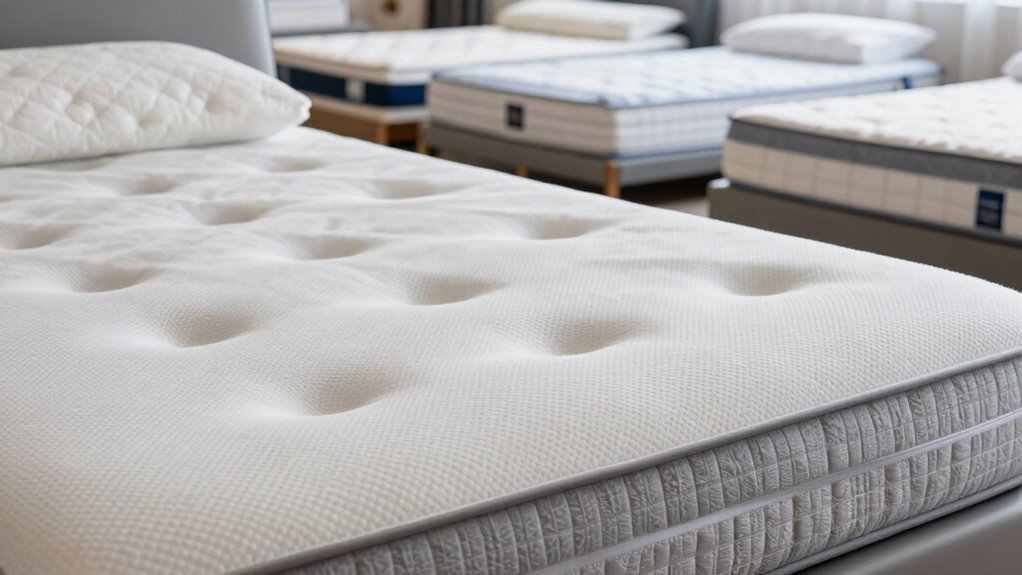
Choosing the right pressure relief mattress depends on your specific needs and comfort preferences. Foam mattresses offer consistent support, while alternating pressure models provide dynamic relief through movement. You’ll also want to take into account custom fit options to ensure the mattress works perfectly for your body. Understanding kitchen tools and their proper use can be a helpful analogy for selecting the right mattress, as both require knowledge of features and correct application to ensure safety and comfort. Additionally, considering reliability and safety features can help you choose a mattress that performs well over time and provides peace of mind. Incorporating user experience principles into your decision can help optimize your comfort and overall satisfaction. Being aware of home safety modifications can further support your decision by ensuring your sleeping environment promotes safety and independence. For example, choosing a mattress with built-in safety alarms or sensors can enhance your overall safety during sleep.
Foam vs. Alternating Pressure
When it comes to pressure relief mattresses, understanding the differences between foam and alternating pressure options can help you make the right choice. Foam mattresses often feature memory foam or gel infused layers, providing consistent support and reducing pressure points. They mold to your body, offering comfort and stability. Alternating pressure mattresses, on the other hand, use air cells that periodically inflate and deflate, shifting pressure away from vulnerable areas.
Consider these factors:
- Foam mattresses provide a quiet, maintenance-free solution with consistent support.
- Alternating pressure systems actively relieve pressure by redistributing weight regularly.
- Your choice depends on mobility, skin condition, and personal preference for support versus dynamic pressure relief.
Custom Fit Options
Selecting the right pressure relief mattress often depends on your specific needs and preferences, as there are various custom fit options available. These options guarantee you get personalized support that addresses your unique pressure points and comfort levels. Custom fit mattresses can be tailored based on firmness, material, and adjustable features. Consider whether you need a softer surface or firmer support, and if you prefer foam, air, or hybrid designs. Understanding pressure distribution is key to making an informed choice that best suits your individual requirements.
| Feature | Benefit |
|---|---|
| Adjustable firmness | Personalized support for comfort |
| Custom contouring | Reduces pressure points effectively |
| Material choice | Matches your comfort preferences |
| Hybrid options | Combines benefits of multiple types |
This tailored approach helps optimize pressure relief and ensures you get the best fit for your needs.
Essential Features to Consider When Choosing a Pressure Relief Mattress
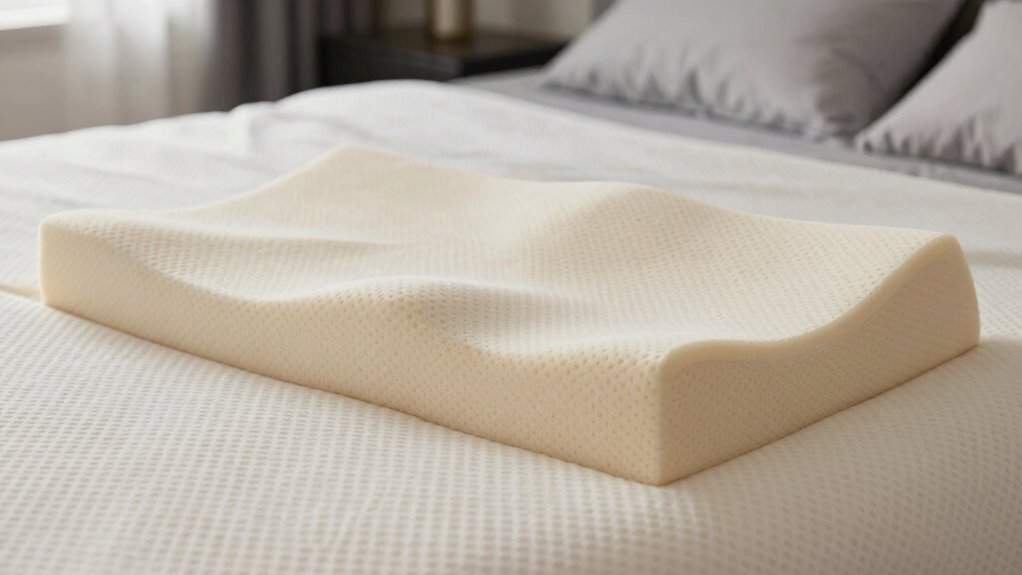
To guarantee you get the best pressure relief mattress for your needs, it’s important to take into account several essential features. First, consider sleep comfort, which depends on how well the mattress supports your body and reduces pressure points. Second, look at mattress materials, as high-quality foam or specialized fabrics can enhance durability and comfort. Third, assess the mattress’s breathability to prevent heat buildup during sleep. These features ensure the mattress provides consistent pressure redistribution, improving skin protection and overall rest. Prioritize materials that promote proper airflow and comfort, and choose a design that aligns with your sleep position. Additionally, consulting with simple safety tips professionals can help you identify solutions tailored to your specific needs. Focusing on these critical factors helps you select a pressure relief mattress that maximizes comfort and skin integrity. Incorporating airflow design and breathable fabrics can further enhance sleep quality by reducing heat retention.
How Do Pressure Redistribution Technologies Enhance Skin Protection?
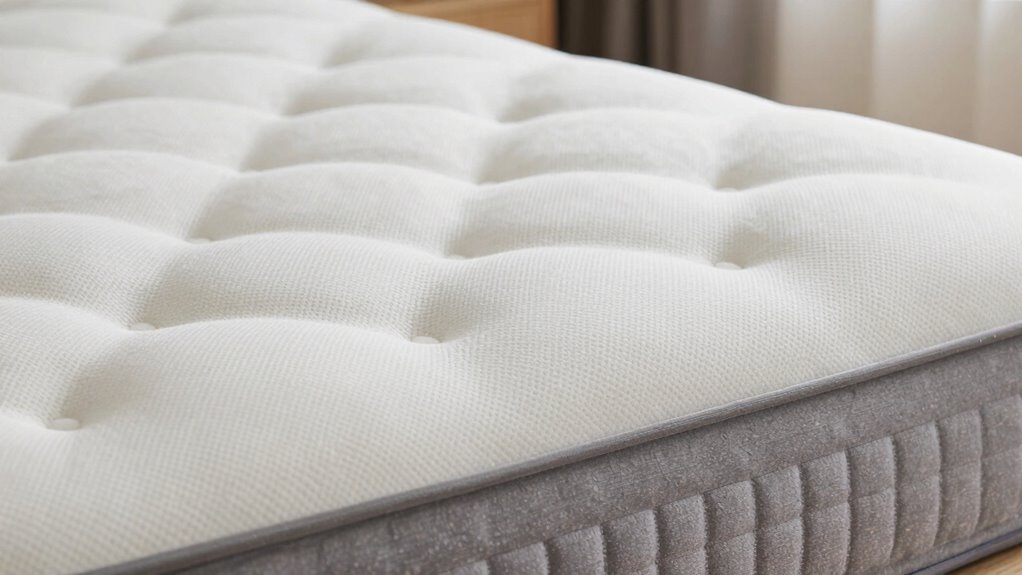
Pressure redistribution technologies play a key role in safeguarding your skin by evenly dispersing pressure across the mattress surface. This even distribution reduces the risk of pressure points that can cause skin breakdown and ulcers. By minimizing localized pressure, these technologies help maintain proper blood flow, which is essential for skin health and healing. Advanced pressure redistribution systems adjust dynamically to your body’s shape and movements, ensuring continuous skin protection. This targeted support prevents prolonged pressure in vulnerable areas, decreasing the likelihood of skin damage. Ultimately, pressure redistribution enhances skin protection by creating a stable, uniform surface that reduces stress on your skin and underlying tissues, promoting overall comfort and preventing pressure-related injuries.
Comparing Different Pressure Relief Mattress Options: Pros and Cons
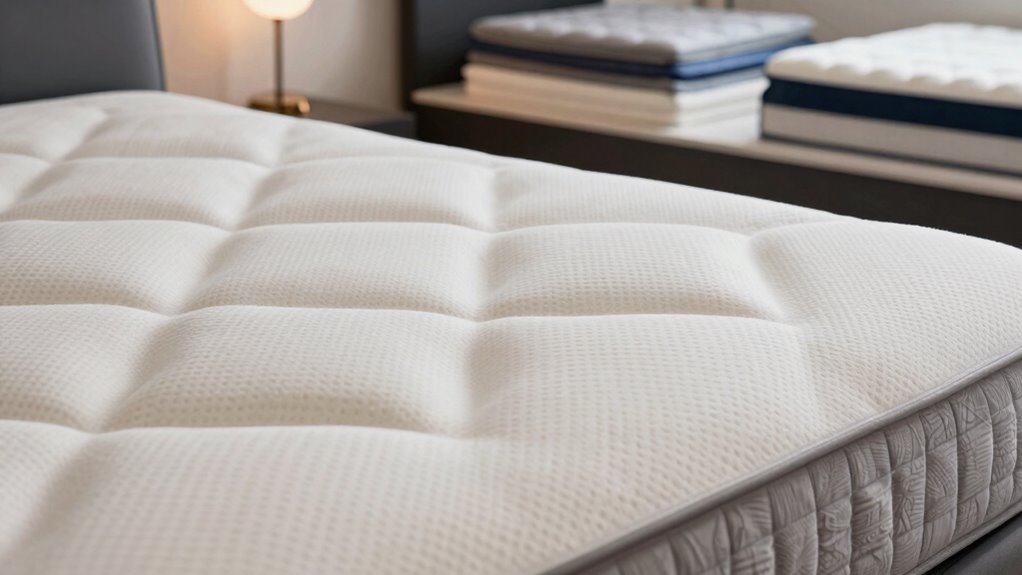
When choosing a pressure relief mattress, you should consider options like foam versus air support, each with its own advantages and drawbacks. Cost and maintenance can vary markedly, impacting your long-term investment, while portability and flexibility influence ease of use in different settings. Understanding these points helps you select the best mattress for your specific needs.
Foam vs. Air Support
Choosing between foam and air support mattresses depends on your specific needs and preferences, as each offers distinct advantages and drawbacks. Memory foam mattresses conform closely to your body, providing excellent pressure relief and reducing pressure points. They tend to be quiet and maintenance-free but can retain heat. Air support mattresses, on the other hand, allow you to adjust firmness levels easily, making them ideal for personalized comfort and pressure redistribution. They’re lightweight and easy to reposition, but may require regular maintenance to prevent leaks and ensure proper support.
- Memory foam offers consistent pressure relief but may trap heat.
- Air support provides adjustable firmness but needs ongoing maintenance.
- Both options can improve comfort, but your choice depends on mobility, heat sensitivity, and customization needs.
Cost and Maintenance
Cost and maintenance vary markedly between foam and air support mattresses, influencing your long-term investment. A thorough cost analysis shows foam mattresses usually have a lower initial price but may require replacement sooner due to wear. Air support mattresses tend to be more expensive upfront but can last longer with proper upkeep. Maintenance tips for foam include regular cleaning and avoiding excessive moisture to preserve firmness. For air support, ensure the bladders are properly inflated and check for leaks regularly. Both types benefit from routine inspections and keeping the surface clean to extend lifespan. While foam mattresses demand less ongoing care, air support options require more attentive maintenance to prevent malfunctions. Consider your budget and ability to perform upkeep when choosing the best pressure relief mattress for your needs.
Portability and Flexibility
Are you looking for a pressure relief mattress that’s easy to move and adaptable to different settings? If so, consider options with a portable design and adjustable features. These mattresses provide flexibility for various environments, whether at home or in a care facility.
- Lightweight construction allows you to transport the mattress effortlessly.
- Removable components make cleaning and maintenance simpler.
- Adjustable firmness levels cater to different user needs and preferences.
Choosing a mattress with a portable design means you can easily shift it between rooms or locations without hassle. Adjustable features ensure the mattress adapts to evolving comfort and support requirements, making it a versatile solution for long-term use.
How Much Do Pressure Relief Mattresses Cost? Factors to Know
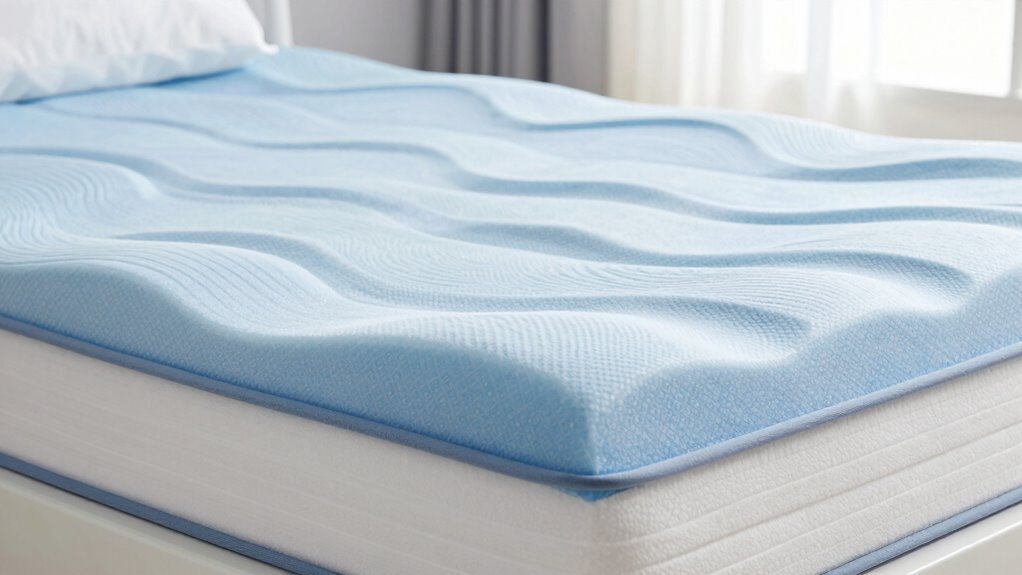
Pressure relief mattresses come in a wide range of prices, influenced by various factors that can affect their overall cost. Your budget, mattress features, and material durability play key roles in determining what you’ll pay. Higher-end models often use advanced foam or specialized materials, increasing durability and longevity. A good cost comparison helps you find options that balance affordability with quality. Keep in mind, more durable materials tend to be pricier but save you money long-term by lasting longer. For quick reference:
| Feature | Cost Range |
|---|---|
| Basic foam mattresses | $200 – $500 |
| Advanced memory foam | $500 – $1,200 |
| Premium gel-infused | $1,200 and up |
Knowing these factors helps you make an informed choice suited to your needs and budget.
Caring for and Maintaining Your Pressure Relief Mattress
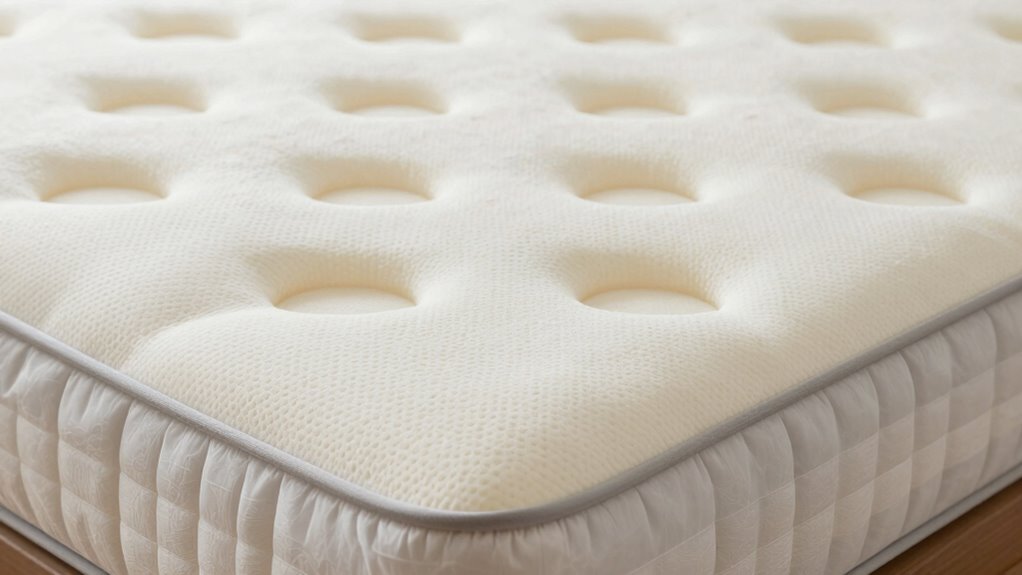
To guarantee your pressure relief mattress remains effective and lasts as long as possible, proper care and maintenance are essential. Start by regularly washing your bed linen and mattress covers to prevent dirt and bacteria buildup. Use gentle detergents to avoid damaging the material. Second, rotate or flip your mattress every few months to promote even wear and prevent sagging. This helps maintain pressure redistribution properties. Finally, keep the mattress clean by vacuuming its surface and avoiding spills. Protect it with a waterproof mattress cover to guard against moisture and stains. Avoid placing heavy objects on the mattress, which can deform its support layers. Consistent maintenance ensures your pressure relief mattress stays comfortable and functional for years to come.
Troubleshooting Common Issues With Pressure Relief Mattresses
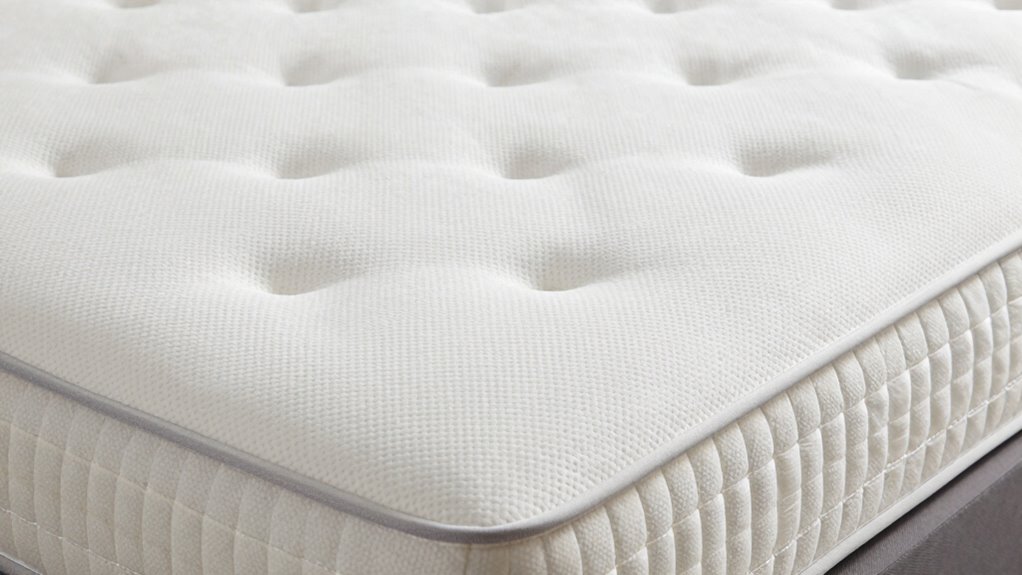
Many common issues with pressure relief mattresses can be quickly identified and resolved with proper troubleshooting. If you notice discomfort or uneven pressure distribution, check your bed positioning to ensure the mattress is correctly aligned and supported. Poor bed positioning can cause pressure points and reduce the mattress’s effectiveness. Additionally, mattress hygiene plays a vital role; regular cleaning and inspection prevent dirt, sweat, and oils from accumulating, which can compromise the mattress’s materials and function. If the mattress feels less supportive, verify that it’s properly inflated or adjusted according to manufacturer instructions. Addressing these basic issues often resolves problems and improves comfort. Routine bed positioning checks and maintaining good mattress hygiene are simple yet essential steps to keep your pressure relief mattress functioning at its best.
Tips for Effective Pressure Ulcer Prevention and Mattress Selection
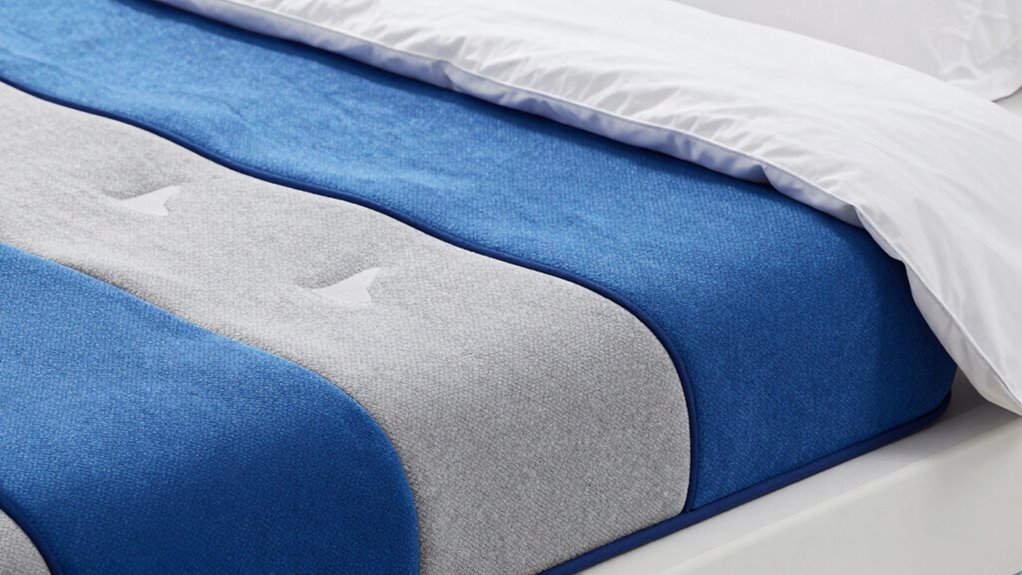
Preventing pressure ulcers effectively starts with selecting the right mattress and implementing proper positioning techniques. Focus on choosing a mattress with suitable bedding materials and supportive mattress covers that reduce friction and shear. To maximize prevention, consider these tips:
Selecting the right mattress and proper positioning are key to preventing pressure ulcers effectively.
- Assess individual needs and select a pressure relief mattress that offers appropriate support and comfort.
- Use high-quality mattress covers that promote airflow and minimize moisture buildup, reducing skin breakdown.
- Regularly reposition the patient and adjust the mattress settings to maintain ideal pressure distribution.
Frequently Asked Questions
How Long Do Pressure Relief Mattresses Typically Last?
A pressure relief mattress typically lasts between 5 to 10 years, depending on its mattress lifespan and durability factors. You should regularly inspect the mattress for signs of wear, such as sagging or reduced support. Proper maintenance, like rotating the mattress and keeping it clean, can extend its lifespan. Keep in mind that higher-quality materials generally offer greater durability, ensuring your pressure relief mattress provides effective support for years to come.
Can Pressure Relief Mattresses Be Used on Regular Beds?
Using pressure relief mattresses on regular beds isn’t just possible—it’s like giving your bed a superhero upgrade. You can absolutely use them, but you’ll want to check bed compatibility and consider mattress customization options. Some pressure relief mattresses are designed specifically for certain bed frames, so verify your bed can support their unique features. With a little research, you’ll transform your sleeping space into a haven of comfort and support.
Are There Any Health Risks Associated With Pressure Relief Mattresses?
Pressure relief mattresses are generally safe, but you should watch out for potential health risks like skin irritation or allergy concerns. If you have sensitive skin or allergies, the materials used might cause discomfort or reactions. Always check the mattress’s fabric and foam components, and consult your healthcare provider if you notice any irritation or allergic responses. Proper hygiene and maintenance can also help minimize these risks.
What Is the Average Weight Capacity of These Mattresses?
The average weight capacity of pressure relief mattresses typically ranges from 250 to 600 pounds, depending on the model and materials used. You should look for durable construction and sturdy support systems to guarantee safety and longevity. Higher weight capacities often mean increased durability, so consider your specific needs. Always check the manufacturer’s specifications to confirm the mattress can support your weight comfortably and reliably.
Do Pressure Relief Mattresses Require Special Bedding or Accessories?
Pressure relief mattresses generally don’t require special bedding or accessories, but you should check bedding compatibility to guarantee a proper fit. Some mattresses might benefit from specific accessories like waterproof covers or specialized toppers for added comfort or protection. Always follow the manufacturer’s recommendations to maximize the mattress’s lifespan and effectiveness. In most cases, standard sheets and bedding work fine, but verifying accessory requirements can help you get the best results.
Conclusion
Choosing the right pressure relief mattress is like planting a sturdy shield around your skin’s delicate landscape. With the right features and proper care, you’ll create a fortress that wards off pressure sores and nurtures comfort. Think of it as tending a garden—consistent attention guarantees your skin stays healthy and resilient. Invest in your peace of mind today, and let your mattress be the gentle guardian that keeps you safe, comfortable, and worry-free.