
If you notice your loved one struggling with mobility—like frequent falls, difficulty transferring, or instability—they may need a hospital bed at home. Watch for skin issues such as sores, persistent skin breakdown, or wounds that won’t heal, as these indicate pressure-related concerns. Signs of nutritional decline, dehydration, or incontinence-related skin irritation also point to the need for specialized support. If these warning signs sound familiar, there’s more information to help you make the best choice.
Key Takeaways
- Your loved one struggles with repositioning, increasing pressure sore risk or discomfort despite standard support.
- Frequent falls, instability, or difficulty maintaining balance indicate the need for specialized support surfaces.
- Persistent skin sores, pressure ulcers, or skin breakdown require pressure redistribution mattresses and customized support.
- Signs of weight loss, weakness, or dehydration suggest they need enhanced nutritional and hydration support at home.
- Incontinence-related skin irritation or infections point to the necessity of medical-grade support and repositioning solutions.
How to Tell if Your Loved One Needs a Hospital Bed
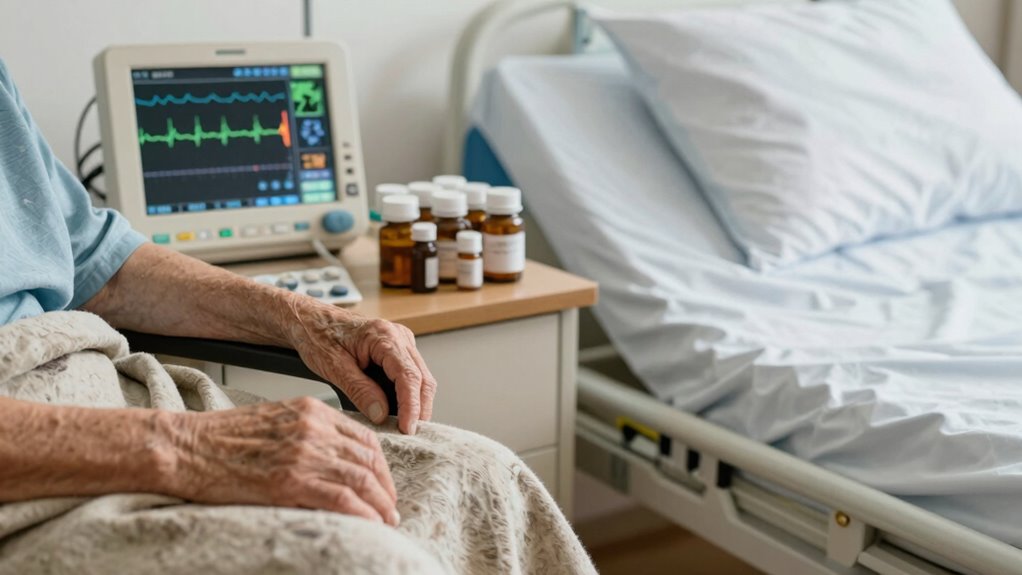
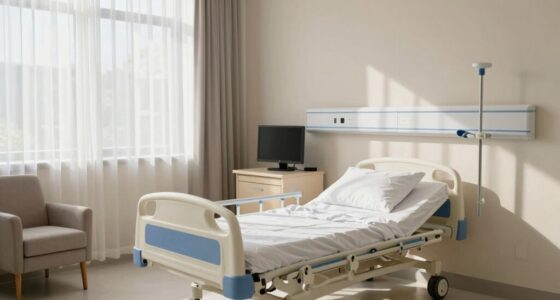
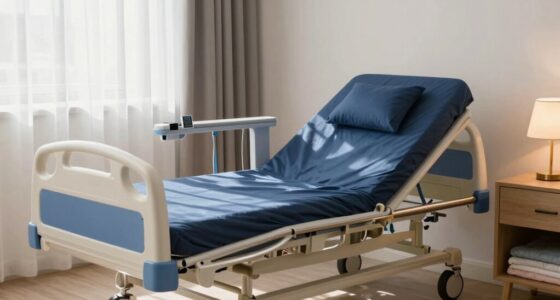
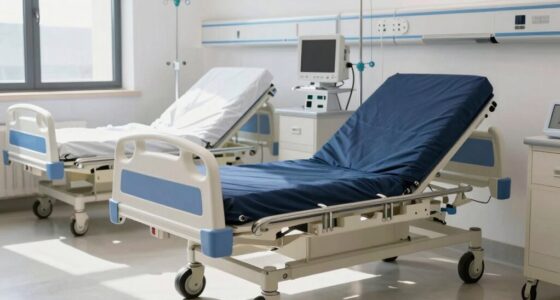
Recognizing when your loved one needs a hospital bed is essential for their comfort and safety. One clear sign is if they require frequent repositioning to prevent bedsores or discomfort, which can be made easier with specialized medical equipment like adjustable beds. If you notice they struggle to get in and out of a regular bed safely, it’s time to contemplate a hospital bed. Proper caregiver training is crucial, so you know how to operate the bed’s features correctly, ensuring safety and comfort. Additionally, if your loved one has limited mobility or persistent pain, a hospital bed can provide the support needed for easier movement and better rest. Being attentive to these signs helps you make informed decisions for their well-being. Innovative European cloud servers can offer reliable remote monitoring solutions to assist in caregiving, especially when combined with advanced healthcare technology. Properly selected beds can also help prevent pressure ulcers, ensuring your loved one’s skin remains healthy. Understanding clinical features and other technical specifications of hospital beds can also improve comfort and safety.
Noticing Mobility Challenges and Weakness
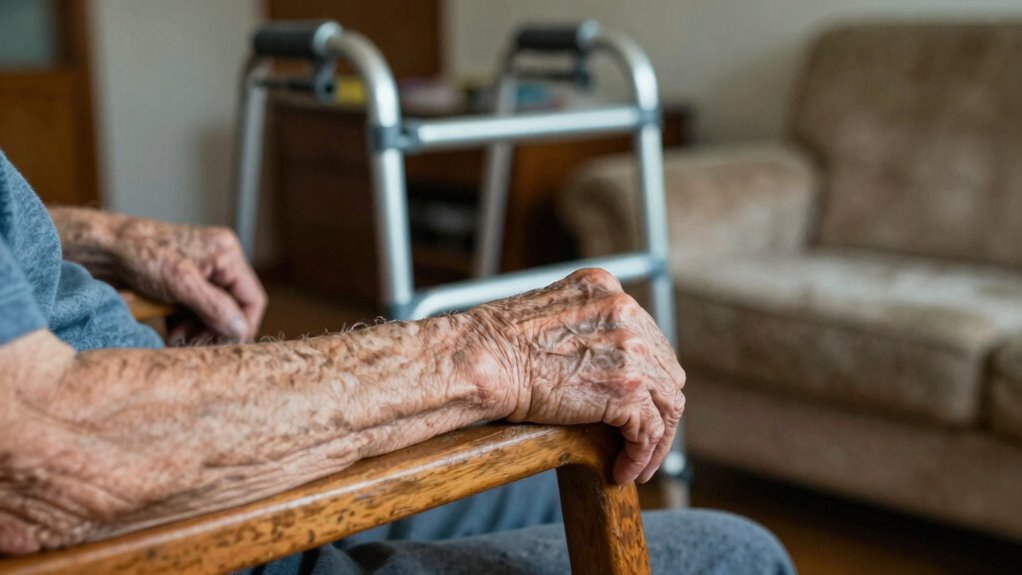
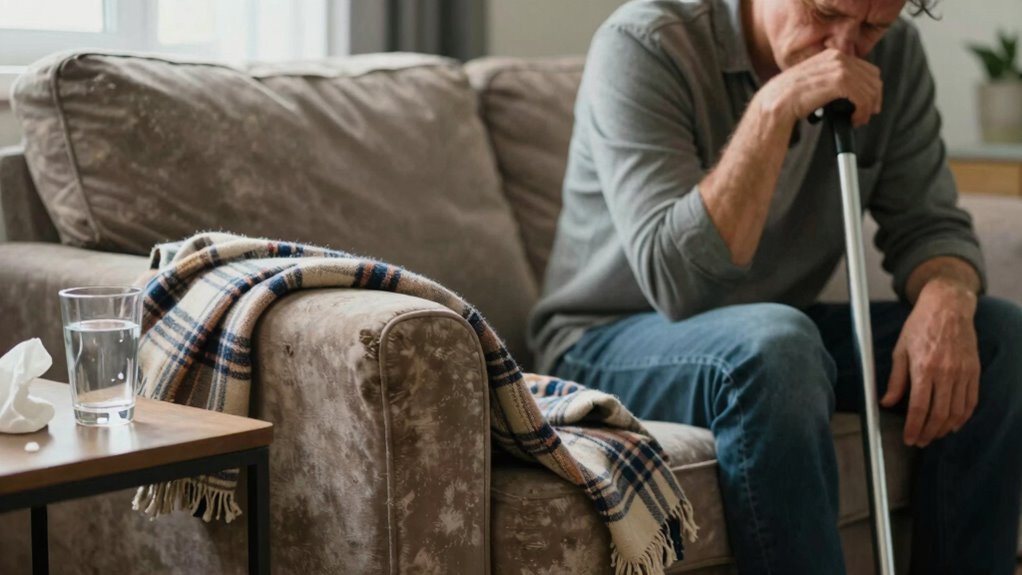
When your loved one starts to exhibit difficulties moving or shows signs of weakness, it’s a clear indication that their mobility may be compromised. You might notice them struggling to stand, walk, or maintain balance. They could rely more on assistive devices like canes, walkers, or wheelchairs, or seem hesitant to move without support. These challenges often lead to increased fatigue or the need for assistance with daily activities. If mobility becomes limited or unsafe, it’s a sign that a hospital bed at home might be necessary to prevent falls, improve comfort, and assure proper support. Recognizing these signs early helps you act promptly, prioritizing their safety and well-being. Additionally, understanding seasonal maintenance can help ensure their environment remains safe and comfortable year-round. Regular mobility assessments can help detect changes early and facilitate timely interventions. Being aware of physical limitations can also help you modify their living space to reduce hazards and support independence. Staying informed about aging-related health issues can help anticipate additional needs and plan appropriate care measures.
Skin Sores or Skin Problems That Won’t Heal
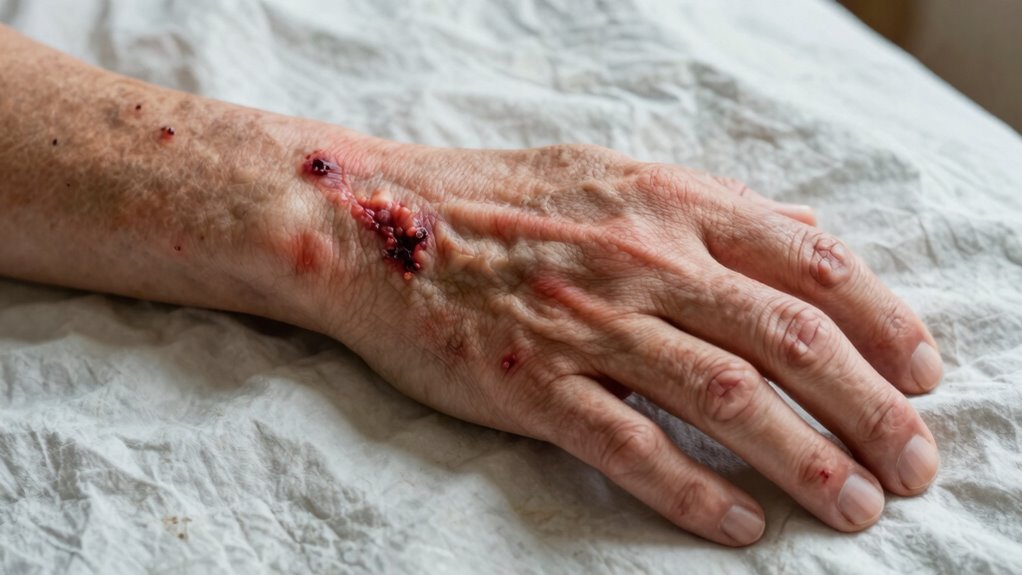
Persistent skin sores or skin problems that won’t heal are clear signs your loved one might need a hospital bed. These issues can indicate poor bedside safety and inadequate medication management, which can worsen skin conditions. If sores persist despite basic care, it may be time to reassess their environment and treatment plan. Proper water chemistry and pressure management are essential for wound healing and preventing further skin damage. Consider these factors: 1. The sores are enlarging or showing signs of infection, requiring specialized wound care. 2. Your loved one struggles with repositioning, increasing pressure on affected areas. 3. Medication schedules are difficult to follow, risking improper wound healing. 4. A pressure redistribution surface like a hospital bed can help alleviate pressure points and promote healing. Additionally, ensuring consistent pressure relief is crucial to prevent the development of new sores. Regular repositioning and pressure management techniques are vital components of effective skin care. A hospital bed can help improve bedside safety by allowing easier repositioning and better pressure relief, promoting healing and preventing further skin damage.
Falls or Unsteadiness That Raise Concerns
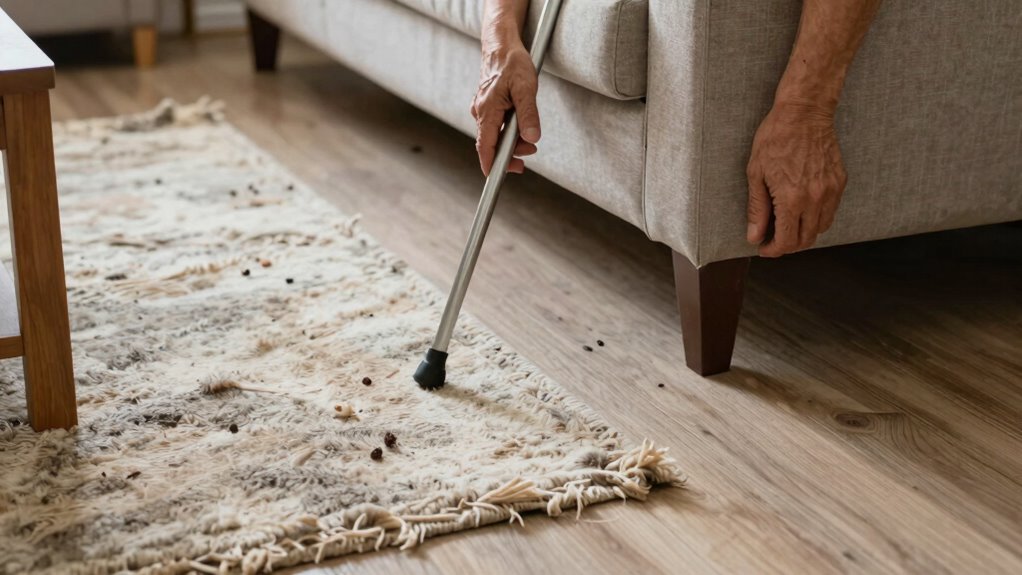
If your loved one is experiencing frequent falls or seems unsteady when moving, it’s a clear sign that their safety at home may be compromised. They might be relying heavily on assistive devices like walkers or canes, but these may no longer provide enough stability. Cognitive decline can also make it harder for them to judge distances or respond quickly, increasing fall risk. If unsteadiness persists despite help, it’s time to evaluate their environment and consider a hospital bed that offers better support and safety features. Falling not only risks injury but can also lead to fear and decreased mobility. Recognizing fall risk factors early can help prevent serious injuries and ensure appropriate safety measures are in place. Using modern farmhouse decor elements to create a calming, accessible space can support their comfort and safety. Addressing these warning signs promptly can help prevent further accidents and improve your loved one’s overall safety and well-being. Additionally, understanding personality traits can help caregivers better tailor their support and environment to meet their loved one’s specific needs. Regular assessments of their mobility and environment can also identify hazards that might contribute to falls and make necessary adjustments.
Signs of Nutritional Decline and Dehydration
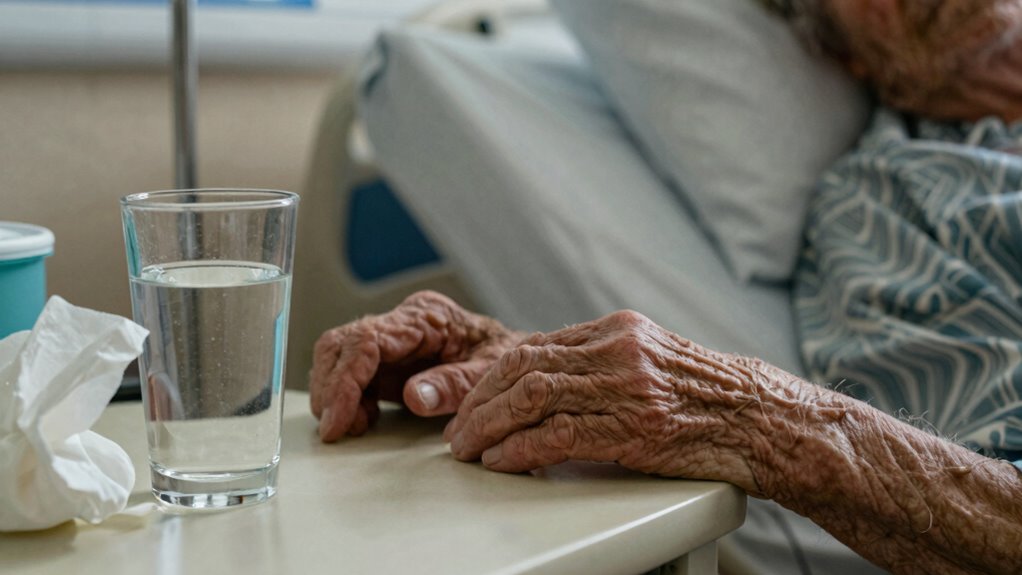
Frequent falls and unsteadiness can often be linked to underlying health issues, including nutritional decline and dehydration. When your loved one isn’t meeting their nutritional needs, they may show signs like weight loss, weakness, or fatigue. Dehydration can cause dry mouth, dizziness, or confusion, further increasing fall risk. Recognizing these signs early is vital for prompt intervention. Monitoring hydration status and ensuring proper nutrition help stabilize these symptoms. Additionally, nutritional deficiencies can exacerbate health problems, making it even more important to address these concerns promptly. If you notice these signs, it may be time to consider a hospital bed at home, providing better support for their nutritional and hydration needs.
Incontinence and Skin Irritation to Watch For
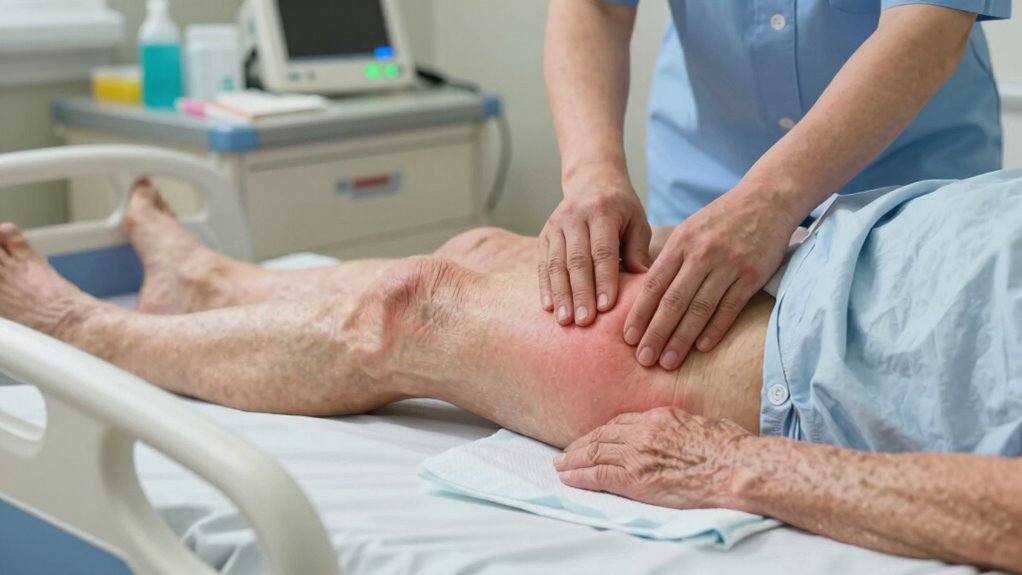
Incontinence can lead to skin irritation and other complications if not managed properly. Urinary incontinence increases the risk of skin issues, especially if moisture isn’t cleaned promptly. Watch for redness, soreness, or breaks in the skin, which signal irritation. These signs can worsen quickly and lead to infections or pressure sores. To help you recognize these warning signs, here’s a quick guide:
| Symptom | Cause | Action |
|---|---|---|
| Redness or soreness | Prolonged moisture contact | Change bedding and clean skin promptly |
| Skin breakdown | Friction or prolonged exposure | Use barrier creams or protectants |
| Discoloration or sores | Skin irritation worsening | Seek medical advice immediately |
Monitoring these signs ensures your loved one stays comfortable and healthy at home. Regularly assessing auditory processing can also help identify additional challenges that may impact overall well-being. Additionally, understanding skin health is essential for preventing further issues related to incontinence. For example, using appropriate skincare products can significantly reduce the risk of irritation and breakdown. Being aware of early warning signs helps in taking timely action to prevent serious complications, which is especially important for maintaining overall patient safety and comfort.
When to Consider Specialized Support and Comfort Options
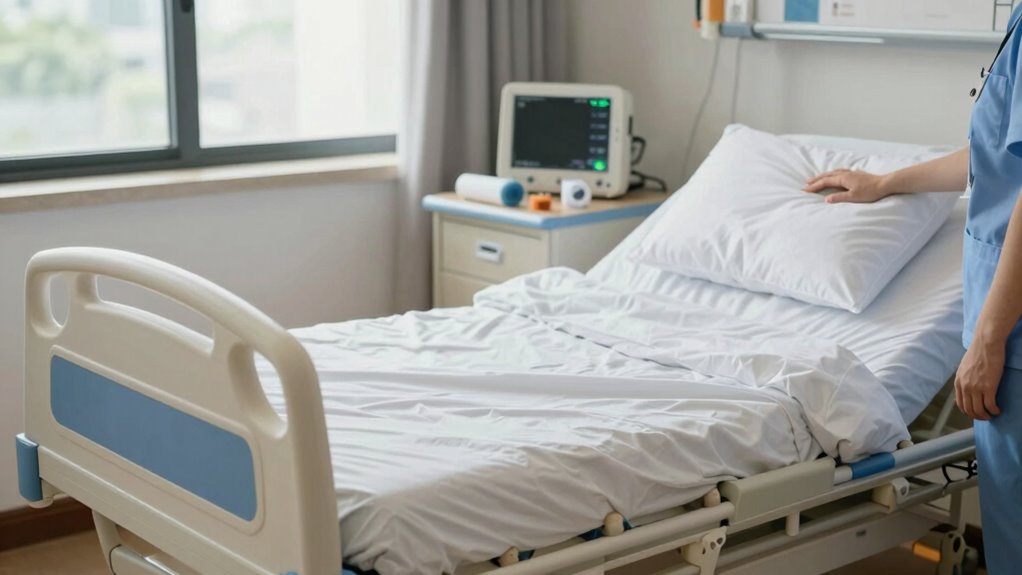
If your loved one shows signs of mobility challenges or difficulty repositioning, it’s time to contemplate specialized support options. Managing pressure sores and ensuring proper support can prevent further health issues and improve comfort. Recognizing these needs early helps you choose the right solutions to keep them safe and comfortable. Additionally, understanding the different types of pinball machines available can help you make informed decisions about the best equipment to support their needs.
Recognizing Mobility Challenges
Mobility challenges can profoundly impact your loved one’s safety and comfort, signaling it may be time to think about specialized support and seating options. If they struggle with moving around, you might notice difficulty transferring from bed to chair or frequent falls. These signs suggest they could benefit from assistive devices like grab bars or walkers, and home modifications such as ramps or widened doorways. Consider the following:
- Difficulty repositioning or changing positions independently
- Increased risk of falls or injuries during movement
- Persistent discomfort or pain when sitting or lying down
Recognizing these signs early helps you decide when to introduce supportive solutions that enhance safety and comfort, ensuring your loved one maintains independence and dignity at home.
Managing Pressure Sores
Pressure sores, also known as bedsores, can develop quickly if your loved one spends long periods in one position without proper support. To manage pressure sores effectively, focus on pressure ulcer prevention by regularly repositioning them and using appropriate mobility aids. When sores become persistent or worsen, consider specialized support and comfort options like pressure-relieving cushions or mattresses. These tools help distribute weight evenly, reducing pressure on vulnerable areas. Recognizing early signs allows you to act promptly and seek professional care. Here’s a quick reference:
| Prevention Strategies | Support Options |
|---|---|
| Regular repositioning | Pressure-relieving mattresses |
| Use mobility aids | Cushions and gel pads |
| Skin inspections | Adjustable beds |
| Maintain hygiene and hydration | Specialized support surfaces |
Ensuring Proper Support
When your loved one shows signs that regular support isn’t enough, it’s time to contemplate specialized comfort options. Guaranteeing proper support enhances home safety and reduces caregiver strain. Consider these indicators:
- Persistent discomfort or pain despite standard adjustments—indicating the need for specialized cushions or mattresses.
- Frequent repositioning attempts that don’t alleviate pressure or improve comfort, highlighting the need for advanced support surfaces.
- Signs of skin breakdown or pressure sores developing, signaling that more tailored support is necessary to prevent further injury.
Addressing these issues helps maintain home safety, provides better comfort, and supports caregiver efforts. When standard solutions fall short, investing in specialized support ensures your loved one’s needs are fully met, promoting health and well-being at home.
Frequently Asked Questions
How Does a Hospital Bed Improve Patient Safety at Home?
A hospital bed improves patient safety at home by enhancing patient mobility and reducing fall risks. Its adjustable features allow you to position your loved one comfortably and securely, making it easier for them to get in and out of bed. This promotes independence while preventing falls, especially for those with limited strength or balance. With a hospital bed, you create a safer environment that supports their health and well-being.
Can a Hospital Bed Help Prevent Bedsores?
Yes, a hospital bed can help prevent bedsores by providing pressure relief and skin protection. The adjustable features let you change your loved one’s position frequently, reducing prolonged pressure on vulnerable areas. With a hospital bed, you can easily reposition them, promote better circulation, and minimize the risk of skin breakdown. This tailored support is essential for maintaining skin health and ensuring comfort at home.
What Features Should I Look for in a Hospital Bed?
Did you know that adjustable hospital beds can improve comfort and reduce complications? When choosing a bed, look for features like mattress compatibility to guarantee comfort and support. An adjustable headrest is essential for sitting up easily, promoting better breathing and digestion. Also, check for sturdy construction, easy controls, and side rails for safety. These features help your loved one stay comfortable and secure at home.
How Often Should a Hospital Bed Be Cleaned and Maintained?
You should clean and maintain the hospital bed regularly, ideally following a weekly maintenance schedule. Perform bed cleaning daily with disinfectant wipes to reduce germs, focusing on high-touch areas like side rails and controls. Check for loose parts, wear, or damage during each cleaning session. Proper maintenance guarantees safety, comfort, and longevity of the bed, so sticking to a routine helps prevent issues and keeps your loved one comfortable and secure.
Are There Financial Assistance Options for Purchasing a Hospital Bed?
Did you know nearly 60% of medical equipment costs aren’t fully covered by insurance? You might find financial assistance through financing programs or insurance coverage, which can help offset the expense of a hospital bed. Check with your insurance provider for coverage details, and explore specialized financing options that make purchasing easier. Don’t hesitate to ask local healthcare providers about assistance programs—they often have resources to help you afford essential equipment.
Conclusion
If you notice these warning signs, don’t ignore them—think of them as your loved one’s call for help. A hospital bed isn’t just a piece of furniture; it’s a lifeline. By acting swiftly, you can turn challenges into moments of comfort and care. Remember, ignoring the signs is like silencing a whisper for help—listen closely, and take action before small issues become big emergencies. Your love and vigilance can make all the difference.