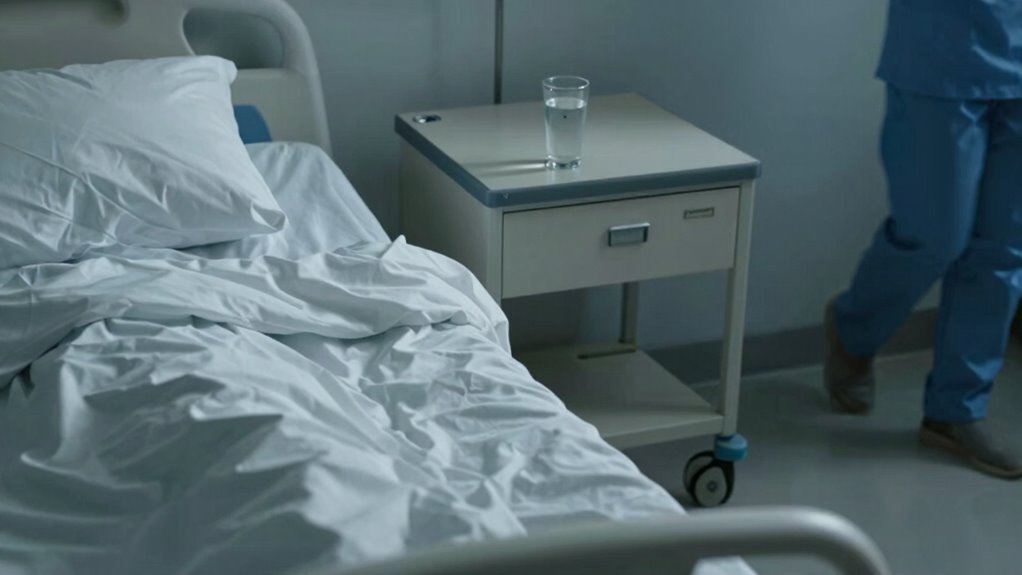
Ignoring key hospital bed features like adjustable height, safety rails, and built-in controls can cause serious safety risks and strain for caregivers. Without these, you’ll struggle more during transfers, repositioning, and emergency adjustments. Overlooking safety features increases the likelihood of falls and injuries for patients and caregivers alike. By paying attention to these details, you’ll avoid unnecessary effort and hazards. To discover how these overlooked features can improve safety and ease your caregiving tasks, keep exploring.
Key Takeaways
- Ignoring adjustable height features increases caregiver effort and risk of injury during patient repositioning.
- Neglecting built-in controls delays emergency adjustments, compromising patient safety.
- Overlooking safety features like side rails elevates fall risk for patients.
- Failing to consider ergonomic design makes transfers and routine tasks more difficult and hazardous.
- Disregarding safety mechanisms can lead to increased caregiver strain and patient discomfort.
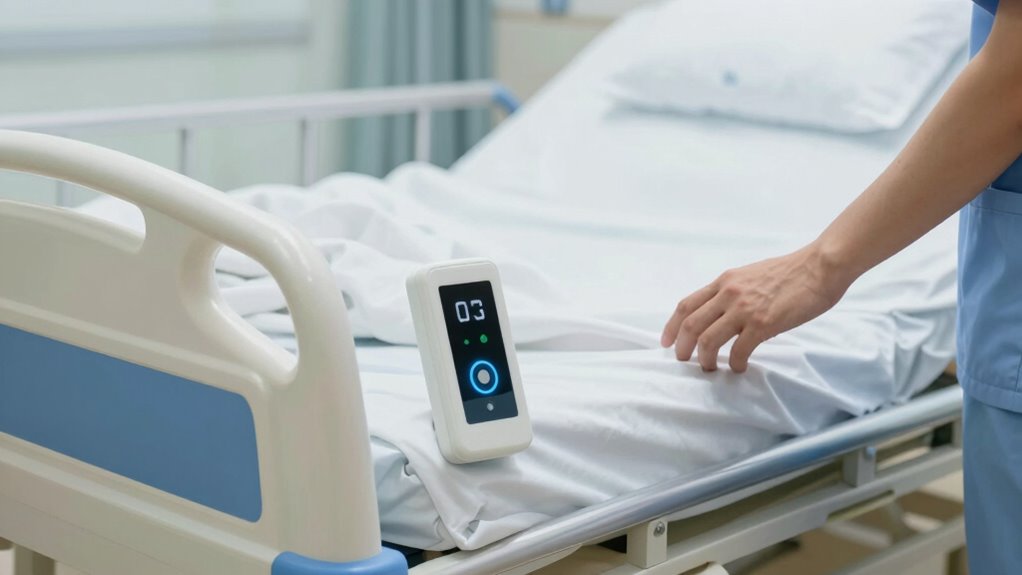
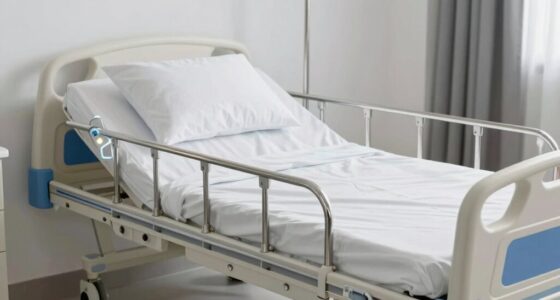
Many caregivers overlook essential hospital bed features that can considerably improve patient comfort and safety, only to regret their choices later. One of the most critical features often ignored is adjustable height. When a bed can be raised or lowered, it makes caregiving tasks much easier and safer for you. Instead of straining your back or risking injury, you can adjust the bed to a height that allows you to perform tasks like repositioning or assisting with transfers comfortably. This flexibility not only minimizes physical strain but also enhances patient safety by allowing for easier access when adjusting bedding or attending to their needs. Ignoring this feature means you might be stuck with a fixed-height bed that complicates daily routines, increasing the risk of accidents or caregiver fatigue. Additionally, hospital bed safety features, such as secure side rails, are crucial to prevent falls and injuries. Equally important are built-in controls, which many caregivers overlook in favor of external or manual adjustments. Built-in controls on the side rails or headboards give you quick, intuitive access to essential bed functions like adjusting the head or foot elevation, locking wheels, or changing bed height. When these controls are conveniently located and user-friendly, you can make adjustments swiftly without unnecessary interruptions. This can be especially vital during emergencies or when attending to a patient’s sudden needs. Failing to prioritize built-in controls can lead to reliance on remote devices or external mechanisms, which may be less reliable or harder to access in critical moments. Having these controls at your fingertips ensures you’re always in command of the bed’s settings, offering both safety and convenience. Moreover, neglecting these features can impact the overall comfort and well-being of your patient. For instance, if the bed isn’t height-adjustable, transferring a patient from a wheelchair or helping them stand becomes more challenging and potentially hazardous. Likewise, lacking accessible controls can cause delays in repositioning a patient to prevent bedsores or discomfort. These small oversights might seem insignificant initially but can lead to increased caregiver effort, patient discomfort, or even injuries over time. When selecting a hospital bed, considering the ergonomic design can make a significant difference in ease of use and safety. Additionally, choosing a bed with adjustable features that suit your specific caregiving environment can greatly enhance efficiency. Incorporating innovative safety mechanisms can further improve the overall safety profile of the bed, especially in high-risk situations. An understanding of caffeine science and ergonomic principles can also inform choices that improve both caregiver comfort and patient outcomes. Ultimately, you want a hospital bed that adapts to both your and your patient’s needs. Features like adjustable height and built-in controls aren’t just luxuries—they’re necessities that foster safer, more efficient caregiving. When you choose a bed that incorporates these features, you’re investing in a safer environment and making your daily routines smoother. Overlooking them might save a little upfront, but it can cost you much more in safety, effort, and patient comfort down the road.
hospital bed with adjustable height
As an affiliate, we earn on qualifying purchases.
As an affiliate, we earn on qualifying purchases.
Frequently Asked Questions
How Do I Choose the Safest Hospital Bed for My Loved One?
To choose the safest hospital bed for your loved one, prioritize features that support patient mobility, like adjustable height and easy-to-operate controls. Make certain the bed has reliable bedside technology, such as call buttons and monitoring systems, for quick assistance. Check for sturdy side rails and secure locking mechanisms to prevent falls. By focusing on these aspects, you provide a safer environment that promotes independence while minimizing risks.
Are There Budget-Friendly Hospital Beds With Essential Safety Features?
Yes, there are affordable options that include safety essentials. Look for hospital beds with essential features like side rails, lockable wheels, and adjustable heights, which often come at a lower cost. Prioritize models that balance affordability with safety, and compare different brands and reviews. You can find budget-friendly beds that provide peace of mind without sacrificing the safety features your loved one needs for comfort and security.
What Maintenance Is Required for Hospital Beds Over Time?
You need to perform routine inspections on hospital beds regularly to guarantee all parts, like the frame and wheels, function properly. Check for loose bolts, wear, or damage, and replace any defective components promptly. Additionally, verify mattress compatibility to prevent discomfort or safety issues. Keeping the bed clean and lubricating moving parts prolongs its lifespan, ensuring safety and comfort for the patient while reducing repair costs over time.
Can Hospital Beds Be Customized for Specific Medical Needs?
Yes, hospital beds can be customized for your specific medical needs. You can make personalized adjustments like adjusting height, tilt, or positioning to guarantee comfort and safety. Additionally, specialized accessories such as side rails, mattress overlays, or IV poles enhance functionality and support. This customization helps you provide tailored care, improves patient comfort, and promotes better recovery. Don’t overlook these options—they’re essential for maximum care and well-being.
How Do Hospital Bed Features Impact Patient Comfort and Recovery?
You’ll notice that features like adjustable mattresses and bed positioning directly enhance patient comfort and recovery. By customizing the bed’s height and angle, you promote better circulation, reduce pressure points, and help patients breathe easier. These adjustments also make it easier for caregivers to assist with daily activities, preventing strain and injury. Ignoring these features can lead to discomfort and slower healing, so prioritizing them improves overall patient outcomes.
hospital bed safety rails with built-in controls
As an affiliate, we earn on qualifying purchases.
As an affiliate, we earn on qualifying purchases.
Conclusion
So, next time you overlook those small hospital bed features, remember—you might just be ignoring the very details that could save you time, effort, or even your loved one’s comfort. Ironically, what seems minor now could become a major regret later. Instead of rushing past those overlooked features, take a moment to appreciate their true value. After all, paying attention to the little things might be what keeps everything running smoothly—and your peace of mind intact.
electric hospital bed with ergonomic design
As an affiliate, we earn on qualifying purchases.
As an affiliate, we earn on qualifying purchases.
medical bed with remote control
As an affiliate, we earn on qualifying purchases.
As an affiliate, we earn on qualifying purchases.