
If your bed no longer offers enough space for movement or feels too soft or firm, it’s a sign to contemplate a replacement. Struggling to get in or out safely and experiencing discomfort or soreness suggests the need for better support and safety features like adjustable heights or side rails. Worn-out mattresses, sagging frames, or difficulty handling mobility tasks also indicate it’s time for an upgrade. Keep these signs in mind to improve comfort, safety, and long-term care—there’s more to learn ahead.
Key Takeaways
- Your mattress no longer provides adequate support or comfort, causing persistent discomfort or soreness.
- The bed shows signs of wear, sagging, or frame instability that compromise safety.
- You experience difficulty safely getting in or out of bed, indicating the need for adjustable features.
- Standard beds lack necessary adjustments for medical needs like elevation or pressure redistribution.
- Routine maintenance and safety concerns reveal the bed is aging, worn, or no longer safe for use.
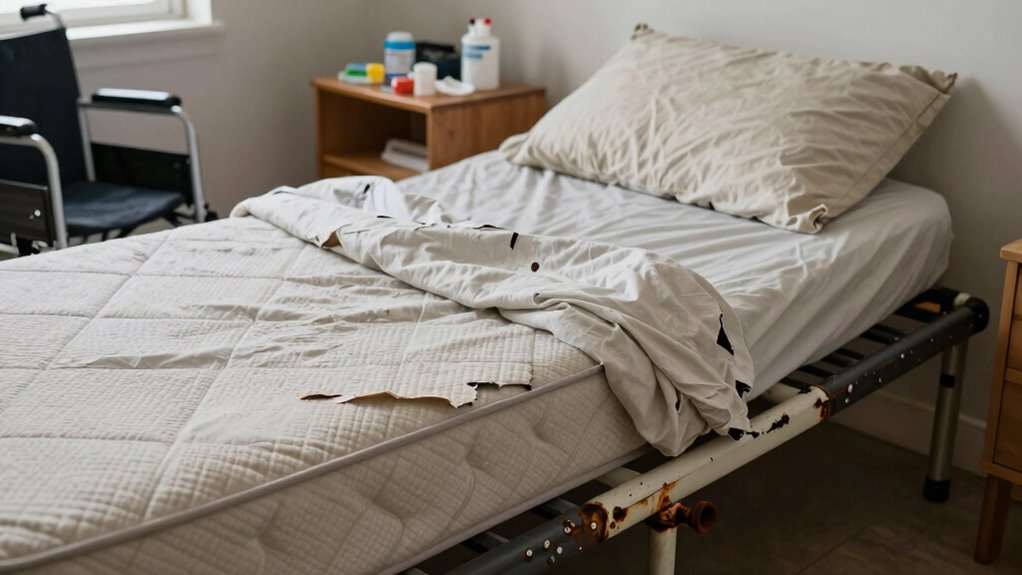
A standard bed might serve you well in many situations, but there comes a point when it no longer meets your needs or those of a loved one requiring extra care. One of the first signs is a change in bed size and mattress comfort. If your current bed no longer provides enough space for comfortable movement or if it feels too soft or too firm, it’s time to reconsider. A home care bed offers adjustable features like height and positioning, which can improve comfort and safety. If you constantly wake up feeling stiff or sore, your mattress might not be supporting your body properly anymore. Standard mattresses tend to wear out over time, losing their supportive qualities. A home care bed usually comes with specialized mattresses designed for pressure redistribution and enhanced comfort, helping to prevent bedsores and reduce discomfort. Regular inspection and cleaning of the bed and its components are also essential to maintain safety and hygiene.
Another clear indicator is difficulty getting in or out of your bed safely. If you find yourself needing to climb or struggle to sit up, or if your loved one has mobility challenges, a standard bed might no longer be suitable. Home care beds are designed with safety in mind, featuring adjustable heights and side rails that help prevent falls. They also make caregiving tasks easier, allowing caregivers to position the bed at a height that reduces strain on their back and makes transfers safer. Ensuring proper jewelry sterilization and safety precautions in bedding and accessories can also help prevent infections or injuries related to compromised sanitation. Additionally, the durability of the bed becomes increasingly important as wear and tear can lead to safety hazards over time. Recognizing signs of material fatigue or frame instability can help prevent accidents before they happen. Incorporating regular maintenance routines can extend the lifespan of the bed and ensure ongoing safety. Furthermore, understanding the long-term safety features offered by different beds can help you make a more informed decision about when to upgrade.
You may also notice that your current bed doesn’t accommodate specific medical or mobility needs. For example, if you or a loved one require frequent repositioning, or if there’s a need for elevated head or foot sections, a standard bed falls short. Home care beds are highly adjustable, giving you the flexibility to raise or lower different sections to improve breathing, reduce swelling, or ease digestion. This level of customization isn’t possible with standard beds, making home care beds a practical upgrade for ongoing health needs. Additionally, considering future health concerns and how your bed supports long-term comfort can ensure you make a well-informed choice.
Finally, if your current bed is aging, sagging, or showing signs of wear, it’s time to replace it—especially if it no longer provides adequate support or safety. Worn-out beds can compromise your sleep quality and overall health, leading to discomfort and increased risk of injury. A home care bed offers a more durable, adaptable solution designed to meet long-term needs, providing better support, enhanced safety features, and improved comfort for both you and your loved ones. When these signs appear, investing in a home care bed can greatly enhance safety, comfort, and quality of life.
electric home care bed with adjustable height
As an affiliate, we earn on qualifying purchases.
As an affiliate, we earn on qualifying purchases.
Frequently Asked Questions
Can a Home Care Bed Be Used for Overnight Guest Stays?
Yes, you can use a home care bed for overnight guests, and they often find it comfortable. Studies show that adjustable beds enhance guest comfort by allowing personalized positioning. These beds improve bed mobility, making it easier for guests to get in and out. Just make sure the bed’s settings are user-friendly, and add cozy bedding to make your guest feel at home.
Are Home Care Beds Suitable for Children or Teenagers?
Home care beds can be suitable for children or teenagers if safety features are prioritized. Child safety is essential, so look for beds with secure side rails and adjustable height. For teens seeking independence, these beds offer customizable positioning options. However, verify the bed size fits growing children comfortably, and always supervise their use to prevent accidents. Properly chosen, a home care bed can support both safety and independence effectively.
How Much Does a Typical Home Care Bed Cost?
A penny saved is a penny earned, so knowing the cost of a home care bed helps with budget planning. Typically, these beds range from $800 to $3,000, depending on features like adjustable height, side rails, and specialty mattresses. Cost considerations should include delivery and installation fees. By researching options and setting a clear budget, you guarantee you choose a bed that fits your needs without overspending.
Do Home Care Beds Require Special Bedding or Linens?
Home care beds often require special bedding or linens designed for their features. Bedding compatibility is key, as you’ll need linens that fit the adjustable frame and any additional safety rails. Linen requirements typically include easy-to-clean, durable fabrics that can withstand frequent washing. Using the correct bedding guarantees comfort, safety, and proper function of the bed’s adjustable parts, making daily care easier for both you and your loved one.
Is Professional Installation Necessary for a Home Care Bed?
Did you know improper setup can increase injury risk by 25%? You should opt for professional installation of a home care bed to guarantee safety precautions are met. Professional installers are trained to assemble and position the bed correctly, reducing accidents and ensuring stability. This expert setup guarantees your comfort and safety, giving you peace of mind that your home care bed is functioning efficiently and securely.
pressure redistribution medical mattress
As an affiliate, we earn on qualifying purchases.
As an affiliate, we earn on qualifying purchases.
Conclusion
If you notice these signs, it’s time to contemplate a home care bed. Did you know that over 1.5 million people in the U.S. rely on specialized beds for better comfort and safety? Upgrading can improve your quality of life and prevent injuries. Don’t wait until it’s too late—invest in a home care bed now to guarantee comfort, safety, and peace of mind for you or your loved one.
bed rails for safety and mobility
As an affiliate, we earn on qualifying purchases.
As an affiliate, we earn on qualifying purchases.
hospital style adjustable bed
As an affiliate, we earn on qualifying purchases.
As an affiliate, we earn on qualifying purchases.