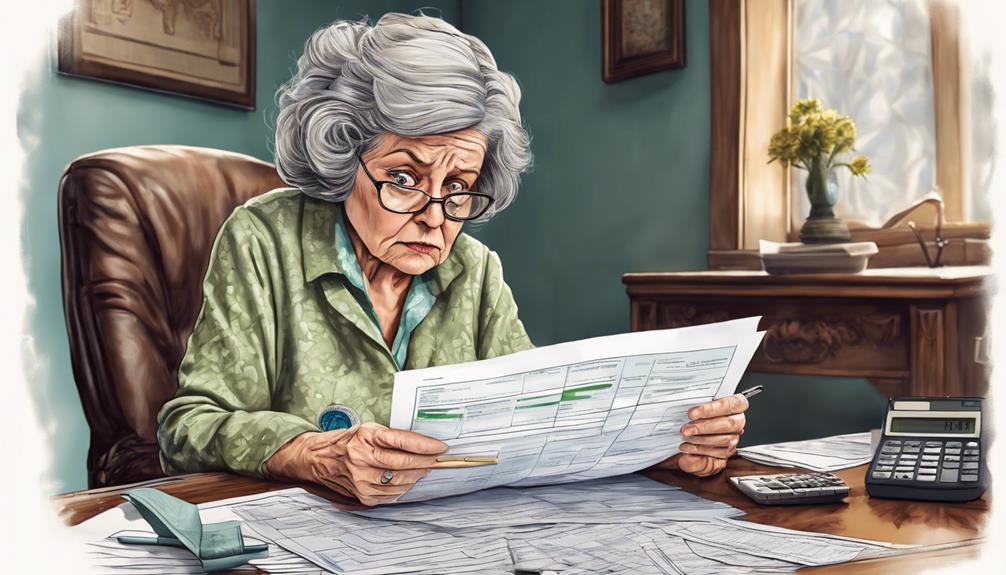

A reverse mortgage can help fund elder care by converting home equity into cash without monthly payments. It offers benefits like providing extra income and reducing financial stress, but it also carries risks like rising interest costs and reducing inheritance. Your eligibility depends on age, home condition, and financial stability. While it can be a useful tool, it’s important to understand both sides. If you’d like to explore more about how to make it work for you, keep going.
Key Takeaways
- Reverse mortgages convert home equity into cash, helping fund elder care without selling the home.
- They have no monthly payments but increase debt due to compound interest, potentially reducing home equity.
- Fixed rates offer predictability, while variable rates may start lower but fluctuate with market conditions.
- Eligibility depends on age, home condition, and financial stability, with some home and health restrictions.
- Careful planning and professional advice are essential to understand costs, interest impacts, and long-term effects on inheritance.
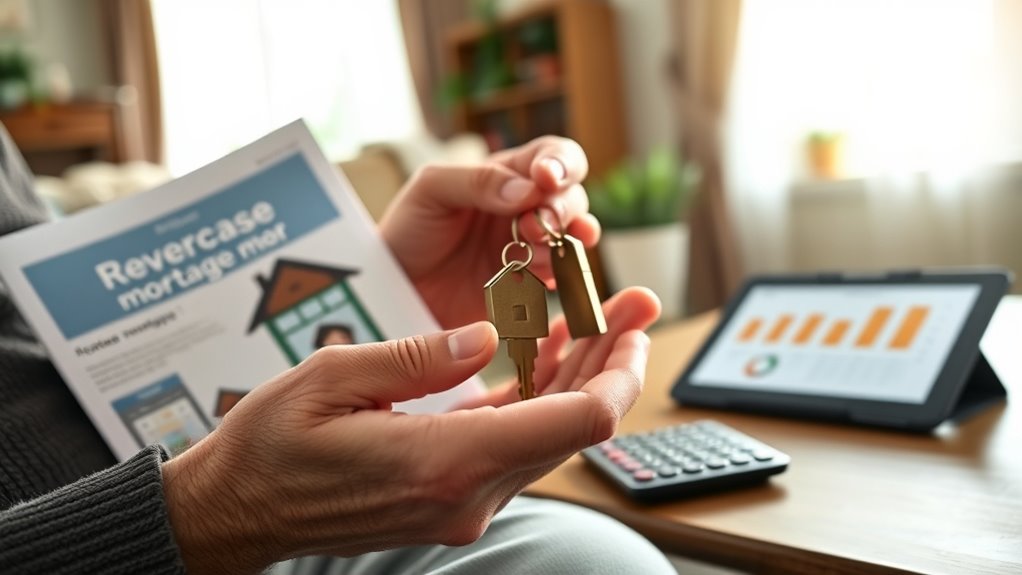
Are you considering ways to tap into your home’s equity without selling? If so, a reverse mortgage might be an option worth exploring. This financial tool allows you to convert part of your home’s value into cash, which can help cover elder care expenses or other costs. Before jumping in, it’s important to understand how loan eligibility and interest rates play a role in the process. Loan eligibility for a reverse mortgage typically depends on your age, the value of your home, and your ability to pay property taxes and homeowners insurance. Generally, the older you are, the more equity you can access, as reverse mortgages are designed to serve seniors. Your home must also meet certain standards, and lenders will verify your financial stability to ensure you can maintain ongoing expenses. Interest rates are another critical factor. They influence how much you’ll owe over time, as reverse mortgages accrue interest on the borrowed amount. These rates can be fixed or variable, with variable rates often starting lower but fluctuating based on market conditions. Fixed rates offer predictability but may limit the amount you can borrow initially. When considering a reverse mortgage, it’s essential to compare current interest rates across lenders to find the best deal. Keep in mind that interest compounds over the life of the loan, which means your debt can grow quickly if you’re not careful. This can reduce the amount of equity left in your home for heirs or future needs. While reverse mortgages can provide a valuable source of funds without monthly payments, they do come with risks. Your loan eligibility might be limited if your home doesn’t meet the criteria or if you have significant debts or financial issues. Additionally, rising interest rates can increase the cost of borrowing, making it more expensive over time. It’s wise to consult with a financial advisor or housing counselor to understand whether you qualify and how interest rates could impact your long-term financial health. Reverse mortgages can be a helpful tool for funding elder care, but they aren’t suitable for everyone. Carefully assess your home’s value, your age, and your future financial plans. By understanding loan eligibility requirements and keeping an eye on interest rate trends, you can make a more informed decision about whether a reverse mortgage aligns with your needs and goals. Additionally, understanding how interest rates fluctuate can help you anticipate future costs and plan accordingly.
Frequently Asked Questions
Can I Lose Ownership of My Home With a Reverse Mortgage?
You won’t lose ownership of your home with a reverse mortgage as long as you meet the loan restrictions and keep up with property taxes, homeowners insurance, and maintenance. Ownership risks are minimal if you adhere to these requirements. However, if you fail to comply, the lender could require repayment, potentially leading to foreclosure. Stay informed and manage your responsibilities to maintain ownership and enjoy the benefits of your reverse mortgage.
Are Reverse Mortgages Available for Condos or Mobile Homes?
Think of reverse mortgages like a key that grants access to options; they can indeed open doors for condos and mobile homes. Condominium eligibility varies, often requiring approval from the association, while mobile home options depend on state laws and whether the home qualifies as real estate. You might find that some mobile homes and condos are eligible, but it’s crucial to verify specific lender requirements and local regulations first.
How Does a Reverse Mortgage Affect My Heirs’ Inheritance?
A reverse mortgage can impact your heirs’ inheritance because it reduces your estate’s value, potentially leaving less for them. When you pass away, the loan must be repaid, usually by selling the home. This affects your estate planning since you need to take into account how the inheritance impact aligns with your goals. It’s wise to discuss options with a financial advisor to ensure your heirs’ inheritance is protected.
Can I Use a Reverse Mortgage to Pay off Existing Debts?
Yes, you can use a reverse mortgage to pay off existing debts by tapping into your home equity. It acts as a form of debt consolidation, allowing you to convert your home’s value into funds. This can help reduce high-interest debts and improve your financial stability. Just remember, using a reverse mortgage for debt payoff means you’ll owe more on your home, so weigh the long-term implications carefully.
What Are the Tax Implications of Receiving Funds From a Reverse Mortgage?
When you receive funds from a reverse mortgage, the tax implications are minimal because the money isn’t considered taxable income. However, the interest you pay on the reverse mortgage may be deductible if you itemize your deductions, especially if the loan proceeds go toward home improvements or mortgage interest. Keep in mind, consult a tax professional to guarantee you understand how interest deductions and other factors impact your specific situation.
Conclusion
A reverse mortgage is like a double-edged sword—you get access to your home’s equity, but it can cut into your future inheritance. Weigh the pros and cons carefully, considering your long-term needs and financial security. Think of it as steering a river; steer wisely to avoid hidden rocks. Ultimately, make a choice that keeps your journey smooth and steady, ensuring your peace of mind as you fund your elder care.