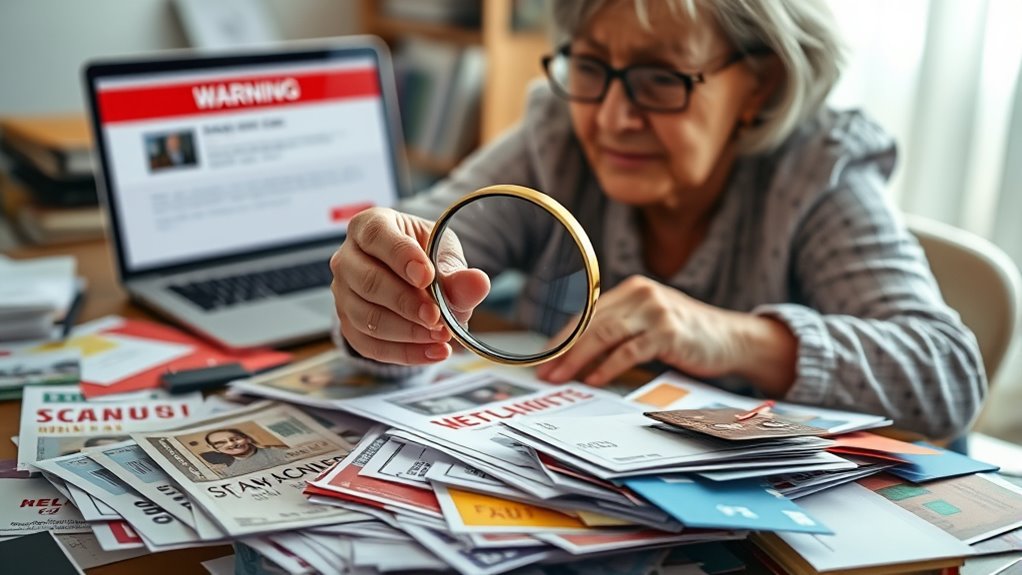

Common scams targeting seniors include fake investment schemes, identity theft, fake charity calls, lottery and prize scams, and phishing emails. To protect yourself, verify all offers and credentials before acting, never share personal info unexpectedly, and stay cautious of urgent requests. Set up alerts on your accounts and review statements regularly. Knowing these tactics can help you avoid becoming a target—stay tuned for more tips to keep your finances safe.
Key Takeaways
- Be cautious of promising high returns or guaranteed investments; verify credentials with trusted advisors before investing.
- Never share personal or financial information over phone or email without confirming the source’s legitimacy.
- Watch out for scammers posing as banks, government agencies, or financial advisors to steal sensitive data.
- Regularly monitor bank and credit statements for suspicious activity and report any unauthorized transactions immediately.
- Educate yourself about common scams, use strong memory aids, and stay vigilant to recognize and prevent fraudulent schemes.

Have you ever wondered how scammers target seniors with financial schemes? It’s a heartbreaking reality that many older adults fall prey to various forms of fraud, often because scammers know they can exploit vulnerabilities. One common tactic is investment fraud, where scammers lure seniors with promises of high returns or “guaranteed” investments that turn out to be scams. They might pose as financial advisors or representatives from fake companies, convincing you to hand over your savings without revealing the true risks. These schemes can be sophisticated, using false documents or fake websites to appear legitimate. Because seniors often have accumulated savings over a lifetime, scammers see them as prime targets for these manipulative setups.
Scammers target seniors with fraudulent investments, exploiting their savings and trust through false promises and fake documents.
Another important threat is identity theft, which can devastate your financial security. Scammers might pretend to be legitimate institutions, such as banks or government agencies, to trick you into revealing personal information like social security numbers, bank account details, or passwords. Once they have this information, they can drain your bank accounts, open new credit cards in your name, or even take out loans—leaving you with financial loss and a lengthy, stressful recovery process. Older adults may be more vulnerable because they sometimes trust authority figures more easily or may not be as familiar with the latest scams and tactics used online or over the phone.
To protect yourself, it’s essential to remain cautious when approached with investment opportunities that sound too good to be true. Always verify the credentials of anyone offering financial advice or investment products. Don’t hesitate to consult with a trusted financial advisor or family member before making significant financial decisions. Be skeptical of unsolicited calls or emails, especially if they pressure you to act quickly or threaten dire consequences if you don’t respond immediately. When it comes to identity theft, never share personal or financial information over the phone or email unless you are certain of the recipient’s legitimacy. Remember, legitimate organizations will never ask for sensitive information unexpectedly or pressure you to act instantly. Dog names can sometimes be a playful way to remember important concepts or personal details, but always prioritize your security.
Additionally, consider setting up alerts on your bank and credit accounts to monitor any suspicious activity. Regularly review your statements and report any unauthorized transactions immediately. Educate yourself about common scams targeting seniors, so you can recognize the warning signs early. Staying informed and cautious is your best defense against falling victim to these malicious schemes. Protecting your money and personal information is vital, and taking proactive steps can substantially reduce your risk of becoming another victim of investment fraud or identity theft.
identity theft protection for seniors
As an affiliate, we earn on qualifying purchases.
As an affiliate, we earn on qualifying purchases.
Frequently Asked Questions
How Can Seniors Verify the Legitimacy of Investment Opportunities?
You can verify the legitimacy of investment opportunities by researching the firm and individual involved, checking for proper licensing and registration through regulatory agencies, and consulting trusted financial advisors. Be cautious of fraudulent schemes that promise quick, high returns with little risk. Always perform thorough investment verification by asking for written documentation and verifying credentials to protect yourself from scams targeting seniors. If something feels off, trust your instincts and seek professional advice.
What Signs Indicate a Senior Is Being Targeted for a Scam?
Imagine a lighthouse flickering unexpectedly, signaling danger. That’s how warning signs and scam indicators show you someone’s trying to target you. You might notice urgent pressure to act, promises of easy money, or unfamiliar callers asking for personal info. Stay alert for these signs, and don’t ignore suspicious behavior. Recognizing these scam indicators keeps you safe, helping you avoid falling into a trap set by scammers.
Are There Legal Resources Available for Victims of Financial Scams?
Yes, there are legal resources available for victims of financial scams. You can seek legal assistance from attorneys specializing in elder law or consumer protection. Victim advocacy groups also offer support, guidance, and resources to help you through the process. These organizations can help you understand your rights, report scams, and pursue justice, ensuring you get the support you need to recover and protect yourself from future scams.
How Often Should Seniors Review Their Financial Accounts for Suspicious Activity?
Like a vigilant hawk, you should review your financial accounts at least once a month, especially if you’re more vulnerable to scams. Regular account monitoring helps detect fraud early, preventing significant losses. Set up alerts for unusual transactions and check bank statements carefully. Staying proactive in fraud detection keeps your money safe, and the sooner you spot suspicious activity, the easier it is to address and resolve any issues.
What Community Programs Are Effective in Educating Seniors About Scams?
You can participate in community outreach programs and educational workshops designed to educate seniors about scams. These initiatives often offer practical advice, teaching you how to recognize and avoid common fraud tactics. Attending local seminars or joining senior centers that host scam awareness sessions can substantially boost your knowledge. By engaging actively in these programs, you stay informed, alert, and better equipped to protect yourself from financial scams targeting seniors.
fraud prevention scam alert system
As an affiliate, we earn on qualifying purchases.
As an affiliate, we earn on qualifying purchases.
Conclusion
Staying vigilant and educated is your best defense against financial scams. While it might seem unlikely you’ll fall victim, scammers are constantly evolving their tactics. By staying informed and trusting your instincts, you can protect your hard-earned savings. Remember, taking a few extra moments to verify a suspicious request can save you from significant loss. Your financial security depends on your awareness—don’t let scammers outsmart you; stay proactive and confident.
secure bank account monitoring device
As an affiliate, we earn on qualifying purchases.
As an affiliate, we earn on qualifying purchases.
fake investment scam protection tools
As an affiliate, we earn on qualifying purchases.
As an affiliate, we earn on qualifying purchases.