

If you’re a caregiver, understanding Social Security survivor benefits helps you make certain your family’s financial stability after a loved one’s death. You may be eligible if you were married for at least nine months or are caring for a child under 16. Benefits are based on the deceased’s earnings, and claiming early can reduce your payments. To maximize support and meet your needs, it’s important to know how eligibility and benefit amounts work—more details can guide you forward.
Key Takeaways
- Caregivers may qualify as survivors if they are dependent children or disabled adults caring for the deceased’s child.
- Survivor benefits are based on the deceased’s earnings record and can provide ongoing income for eligible caregivers.
- Benefits can start as early as age 50 if the caregiver is disabled or caring for a child under 16.
- Proper documentation of relationship and dependency is essential to establish eligibility for survivor benefits.
- Waiting until full retirement age maximizes survivor benefits, but early claiming can reduce monthly payments.
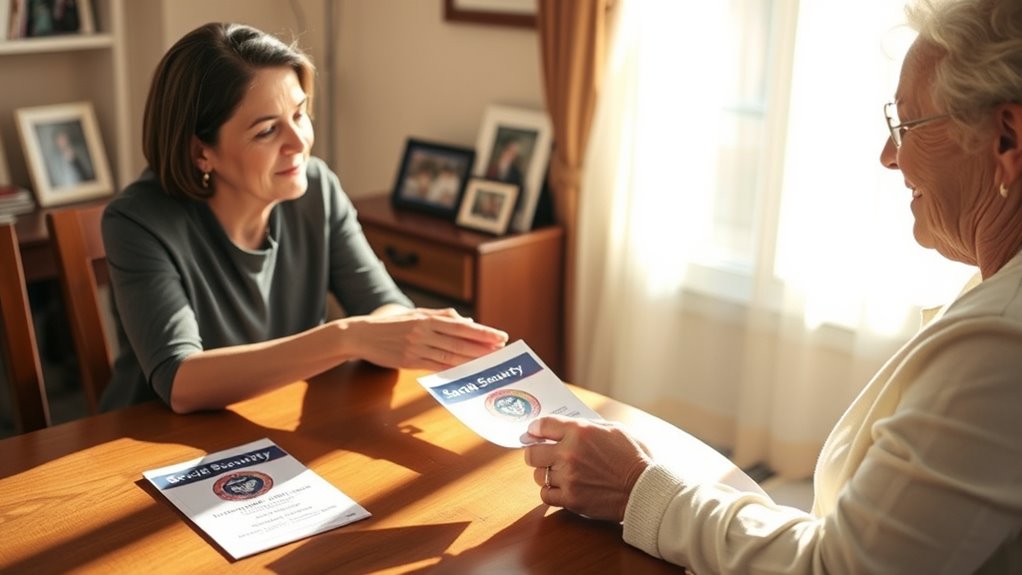
Have you ever wondered how surviving family members can stay financially protected after a loved one’s death? When someone passes away, the financial stability of their family can be at risk, but Social Security survivor benefits are designed to help fill that gap. If you’re caring for a loved one or are a surviving spouse, understanding how these benefits work is essential to ensuring your financial security. One of the key aspects to consider is spousal benefits, which can provide a crucial safety net for surviving spouses. These benefits can be claimed as early as age 60, or age 50 if you’re disabled, offering ongoing income that can help cover everyday expenses. In some cases, the surviving spouse may be eligible for full survivor benefits, which are based on the deceased spouse’s earnings record.
Survivor eligibility depends on several factors, including your relationship to the deceased and your age. Generally, to qualify as a survivor, you must have been married to the deceased for at least nine months before their death, though there are exceptions, such as in cases of accidental death or if you’re caring for a child under 16. If you’re a widow or widower, you don’t need to have been married at the time of your loved one’s passing, but you do need to meet certain age and dependency criteria to claim survivor benefits. If you’re a divorced spouse, eligibility can be more complex; you might still qualify if your marriage lasted at least 10 years, and you remain unmarried, among other conditions. Additionally, understanding the earnings record of the deceased can help determine the amount of survivor benefits you are entitled to receive.
The amount you receive as a survivor depends on your relationship and the deceased’s earnings history, but it’s generally designed to provide a similar level of income that the deceased was earning. You can choose to start receiving survivor benefits as early as age 60 (or age 50 if disabled), though claiming early may reduce your monthly benefit amount permanently. On the other hand, waiting until full retirement age can maximize your benefits. For surviving spouses of certain age and health conditions, these benefits can be essential in maintaining financial stability during a challenging time.
Social Security survivor benefits guide
As an affiliate, we earn on qualifying purchases.
As an affiliate, we earn on qualifying purchases.
Frequently Asked Questions
Can Survivor Benefits Be Transferred to a Non-Spouse Caregiver?
Survivor benefits generally can’t be transferred to a non-spouse caregiver, as benefits are typically paid directly to eligible beneficiaries like spouses or children. However, if you’re a caregiver, you might qualify for benefits if you’re legally responsible for the survivor’s financial support or if you’re acting as a representative payee. Your eligibility for beneficiary transfer depends on your relationship and legal responsibilities, so check with Social Security for specific cases.
How Do Survivor Benefits Affect Eligibility for Other Assistance Programs?
You might worry survivor benefits could limit your eligibility for other assistance programs. In reality, these benefits are usually not counted as income for programs like Medicaid or Supplemental Security Income, but they can impact your overall financial planning and estate considerations. It is vital to understand how survivor benefits interact with your total income to guarantee you qualify for the support you need, now and in the future.
Are There Age Limits for Children to Receive Survivor Benefits?
You should know that there are age restrictions for children to receive survivor benefits. Typically, benefits are available until age 18, or up to 19 if still in high school. If a child has a disability that began before age 22, they can receive benefits for as long as the disability lasts. The benefit duration depends on these age restrictions and whether the child continues to meet the criteria.
What Documentation Is Required to Apply for Survivor Benefits?
Losing a loved one is heartbreaking, but applying for survivor benefits offers some comfort. To start the application process, you’ll need documentation like the deceased’s death certificate, proof of your relationship, and the child’s birth certificate if applicable. Gather these documents beforehand to streamline the process. Submitting complete documentation guarantees a smoother application, helping you secure the benefits your loved one left behind and easing your burden during this tough time.
Can Survivor Benefits Be Retroactively Claimed?
Yes, you can file for survivor benefits retroactively within a certain period, usually up to six months from your application date. Keep in mind, this involves retroactive claims, which can impact benefit timing. To guarantee you don’t miss out, submit your claim promptly and provide all required documentation. Acting quickly maximizes your chances of receiving benefits for past months, so don’t delay if you think you’re eligible.
disability claim forms for Social Security
As an affiliate, we earn on qualifying purchases.
As an affiliate, we earn on qualifying purchases.
Conclusion
Think of Social Security survivor benefits like a safety net catching you when you fall. As a caregiver, understanding these benefits helps you protect your loved ones during tough times. Knowing how to access survivor benefits guarantees you’re prepared for life’s unexpected turns. Stay informed, ask questions, and don’t hesitate to seek help. With the right knowledge, you can navigate this complex system confidently—just like a steady hand guiding someone through a storm.
benefits claim documentation folder
As an affiliate, we earn on qualifying purchases.
As an affiliate, we earn on qualifying purchases.
survivor benefits calculator
As an affiliate, we earn on qualifying purchases.
As an affiliate, we earn on qualifying purchases.