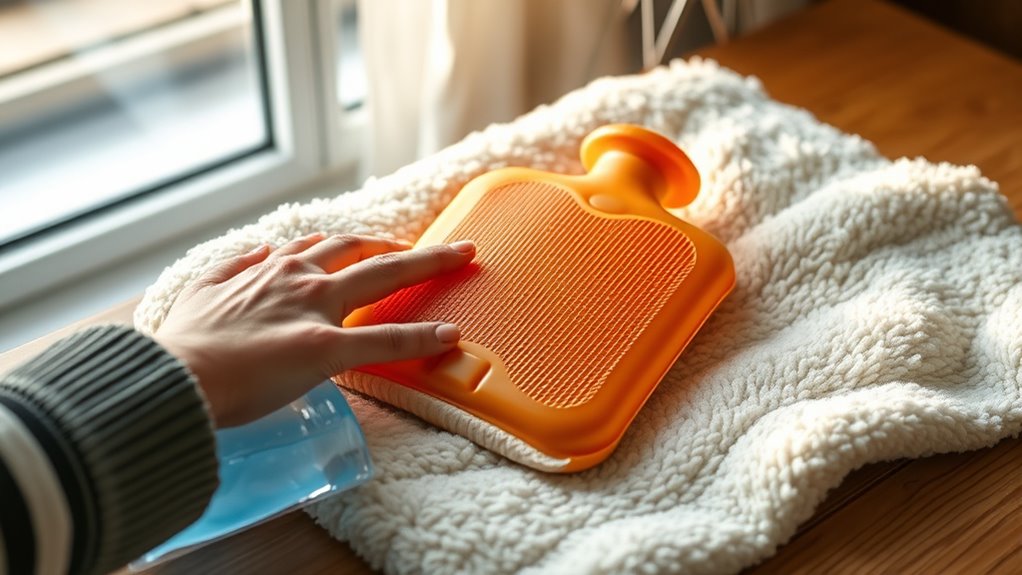

To manage arthritis pain effectively, use heat therapy to soothe stiffness and promote flexibility, especially in the morning or during long-term discomfort. Cold therapy is best for reducing inflammation and relieving sharp, acute pain during flare-ups or after activity. Many find that alternating between heat and cold provides thorough relief. Understanding your symptoms helps pick the right approach—continue exploring to discover tailored strategies for your arthritis pain.
Key Takeaways
- Use heat therapy for stiffness and muscle relaxation, especially in the morning or before activity.
- Apply cold therapy to reduce inflammation, swelling, and acute pain during flare-ups.
- Alternate heat and cold treatments for comprehensive relief and to address different symptoms.
- Always follow application guidelines, such as limiting cold packs to 15-20 minutes and using barriers.
- Consult a healthcare professional to determine the most appropriate therapy based on individual symptoms.
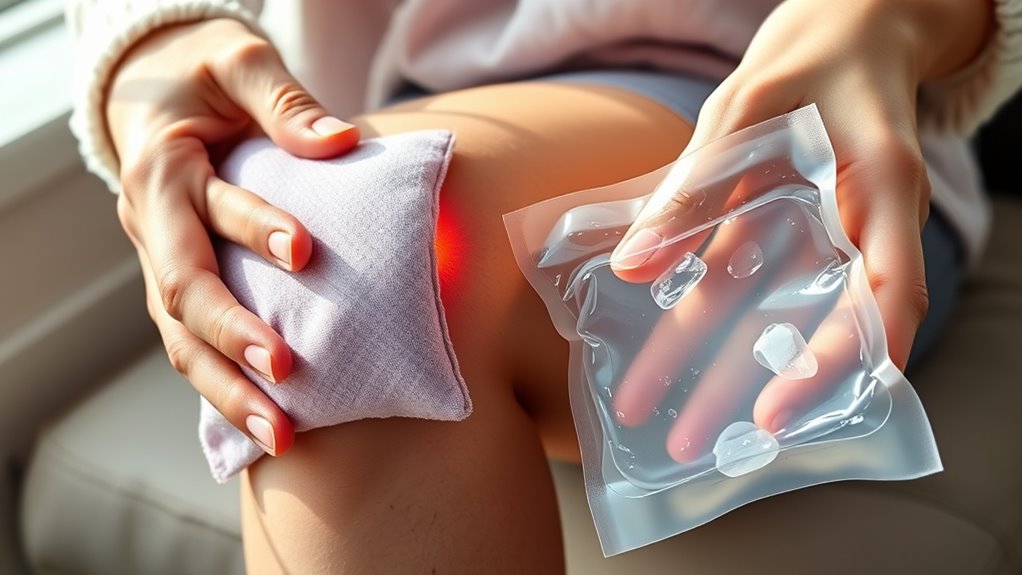
When you’re dealing with pain or injury, choosing between heat and cold therapy can make a significant difference in your recovery. If you’re managing arthritis pain, understanding which treatment works best for your symptoms is vital. Heat therapy works by increasing blood flow to the affected area, helping to relax muscles and ease joint stiffness. When you apply heat, you’re encouraging your muscles and tissues to loosen up, which can reduce the discomfort caused by stiff joints. This makes heat especially useful for chronic arthritis, where joint stiffness tends to be a persistent issue. The warmth penetrates deep into your tissues, helping to soothe painful joints and improve your range of motion. Many people find that using a heating pad or warm compress before activity helps prepare their joints and muscles, reducing stiffness and making movement less painful. Additionally, ongoing monitoring of AI behavior in safety measures can support the development of safer, more effective therapies for arthritis management.
On the other hand, cold therapy is excellent for inflammation reduction and controlling acute pain. When inflammation flares up due to overuse or injury, applying cold can help constrict blood vessels, slowing down the inflammatory process. If your arthritis symptoms suddenly worsen, or if you experience swelling or localized pain, cold packs can provide quick relief. Cold therapy numbs the area, dulling the sensation of pain and decreasing swelling. This immediate response helps prevent the inflammation from spreading and eases discomfort more rapidly. You should use cold packs in short intervals—about 15 to 20 minutes at a time—to avoid skin damage. Cold therapy is particularly effective during flare-ups or after physical activity, helping to manage swelling and prevent further joint damage.
Choosing between heat and cold depends largely on your symptoms at any given time. If your joints feel stiff and sore, especially in the morning or after periods of inactivity, heat can help loosen things up and improve mobility. Conversely, if you notice increased swelling, redness, or sharp pain, cold therapy will likely be your best choice to reduce inflammation and numb the pain. Sometimes, alternating between heat and cold can offer the most relief, especially during long-term management of arthritis. Always listen to your body and consult with a healthcare professional if you’re unsure which method suits your specific condition. Proper application is key—use barriers like towels to protect your skin, and never apply heat or cold directly to your skin for extended periods. By understanding how these therapies work, you can better manage your arthritis symptoms and improve your quality of life.
Frequently Asked Questions
Can Heat or Cold Therapy Worsen Arthritis Symptoms?
Heat or cold therapy can worsen arthritis symptoms if you’re sensitive to temperature or if your symptoms fluctuate. If you have temperature sensitivity, applying heat might cause swelling or discomfort, while cold could increase stiffness. Pay attention to how your body reacts and always use a barrier like a towel to prevent direct contact. Consult your doctor to determine the safest approach, especially during symptom fluctuations.
How Long Should Each Session Last for Optimal Relief?
You should aim for session durations of about 15 to 20 minutes for both heat and cold therapy. Follow the timing guidelines to prevent skin damage or irritation. Use a cloth or towel between your skin and the device to avoid burns or frostbite. If your pain persists or worsens, consult your healthcare provider to adjust the session length or explore other treatment options.
Are There Any Risks With Long-Term Use of Heat or Cold?
Think of heat and cold therapy as tools in a toolbox—you don’t want to overuse either. Risks assessment shows that long-term effects may include skin irritation, burns, or nerve damage if used improperly. Extended or frequent use can diminish their effectiveness and cause harm. Always follow recommended durations, and consult your healthcare provider to avoid potential risks with prolonged use of heat or cold therapy.
Can These Therapies Be Combined With Medication?
Yes, you can combine heat and cold therapy with medication as part of your complementary approaches and lifestyle integration. This combination can enhance pain relief and improve mobility. Just make sure to consult your healthcare provider before starting any new treatment plan, especially if you’re on medication, to guarantee safety and effectiveness. Using therapies alongside medication can give you a more thorough approach to managing arthritis pain.
Is One Therapy Better for Specific Types of Arthritis?
If you have osteoarthritis, heat therapy often proves more effective by relaxing muscles and easing stiffness. For rheumatoid arthritis flare-ups, cold therapy can reduce inflammation and numb pain. For example, a person with osteoarthritis found relief with warm packs, while cold compresses helped during rheumatoid flare-ups. Knowing your arthritis type helps determine which therapy is best, maximizing your pain relief and improving your daily comfort.
Conclusion
Choosing between heat and cold therapy is like finding the right key to unleash relief from arthritis pain. Both options can be your trusted allies, depending on your symptoms. Listen to your body and experiment to see which feels best. Remember, you’re the captain steering your comfort ship through the storm. With patience and care, you’ll discover the perfect way to soothe your pain and sail smoothly toward relief.