
To ease arthritis challenges at home, focus on simple modifications like installing lever-style door handles, which require less grip strength. Make adjustments that minimize joint stress during daily tasks, such as using ergonomic tools and making easy-to-reach storage areas. These changes can boost comfort, safety, and independence. Small improvements can have a big impact on your daily living—keep going to discover more effective ways to create a supportive home environment.
Key Takeaways
- Install lever-style door handles to reduce grip effort and ease opening tasks.
- Use ergonomic tools and accessories to minimize joint strain during daily activities.
- Make simple home adjustments, like lowering shelves or adding grab bars, to improve accessibility.
- Prioritize modifications that require minimal physical effort and are cost-effective.
- Regularly assess and update home modifications to maintain comfort and safety.
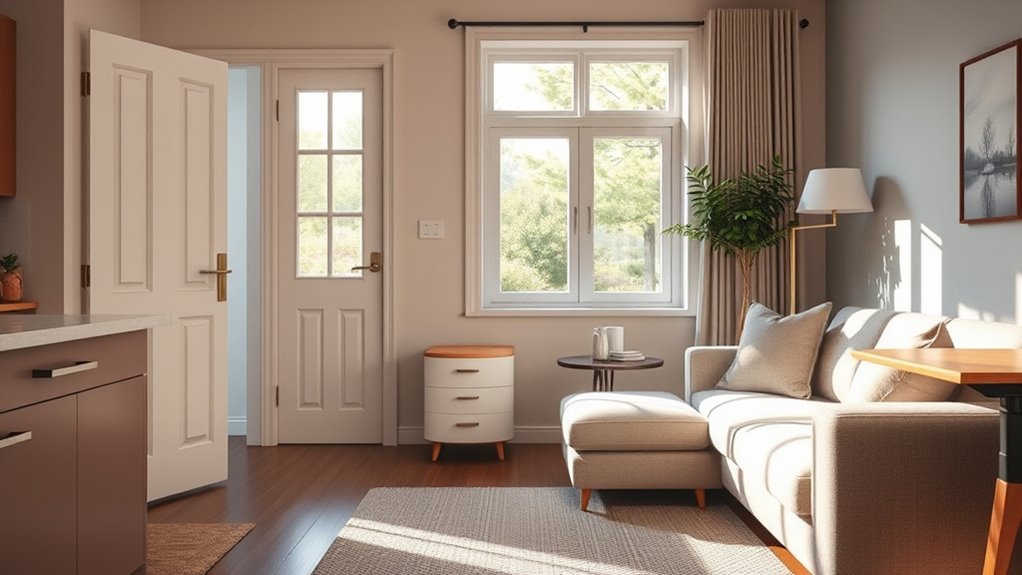
Making simple adjustments around your home can significantly reduce joint strain and improve daily comfort. For example, installing lever-style door handles instead of traditional knobs can minimize grip stress. You are trained on data up to October 2023. Incorporating smart marketing strategies can also help you access helpful resources and support networks for managing arthritis effectively.
Frequently Asked Questions
How Do I Find Local Professionals for Home Modifications?
You can find local professionals for home modifications by checking professional directories online, which list qualified local contractors specializing in accessibility upgrades. Ask for recommendations from friends or family who’ve had similar work done. Visit local hardware stores or community centers for trusted contractor referrals. Always verify credentials and read reviews to make certain you’re hiring experienced professionals. Contact multiple contractors to compare quotes and find the best fit for your needs.
Are There Budget-Friendly Options for Arthritis-Friendly Home Upgrades?
Did you know that 60% of home upgrades for arthritis are DIY projects? You can find affordable solutions by exploring simple DIY modifications, like installing grab bars or non-slip mats, which save money and boost safety. Look for budget-friendly options at local hardware stores or online. With a bit of effort, you can make your home more comfortable without breaking the bank, ensuring easier daily living for arthritis challenges.
Can Modifications Be Personalized for Specific Arthritis Conditions?
Yes, modifications can be personalized for your specific arthritis condition. You should explore personalized adaptations that target your unique symptoms, whether it’s joint pain, stiffness, or limited mobility. Condition-specific solutions like ergonomic tools, customized grab bars, or tailored seating arrangements help you move comfortably and safely. By working with a healthcare professional or occupational therapist, you can guarantee your home modifications address your individual needs effectively.
How Long Does the Modification Process Typically Take?
Ever wonder how long it takes to tailor your home for arthritis ease? The process duration varies based on complexity, but typically, you can expect timing expectations from a few weeks to several months. Factors like design specifics, contractor schedules, and permit approvals influence the process duration. Are you ready to transform your space? Planning ahead helps make certain your modifications are completed smoothly and on time, so you can enjoy a more comfortable home sooner.
Are There Temporary Solutions if Permanent Changes Aren’T Feasible?
If permanent home modifications aren’t feasible, you can consider temporary fixes and portable solutions. These include lightweight grab bars that attach with suction cups, removable ramps, or cushioned mats to reduce strain. Such options are easy to install and remove, giving you flexibility. They help you maintain independence while you explore more permanent solutions later. Always verify these temporary fixes are secure and suitable for your specific needs.
Conclusion
Just like a well-tuned orchestra creates harmony, your home should adapt to support your arthritis journey. By making these simple modifications, you’re not only easing pain but also empowering yourself to live fully. Remember, as the wise say, “A stitch in time saves nine,” so don’t wait to create a comfortable, accessible space. Your home can be your sanctuary—where every detail plays a part in your well-being.