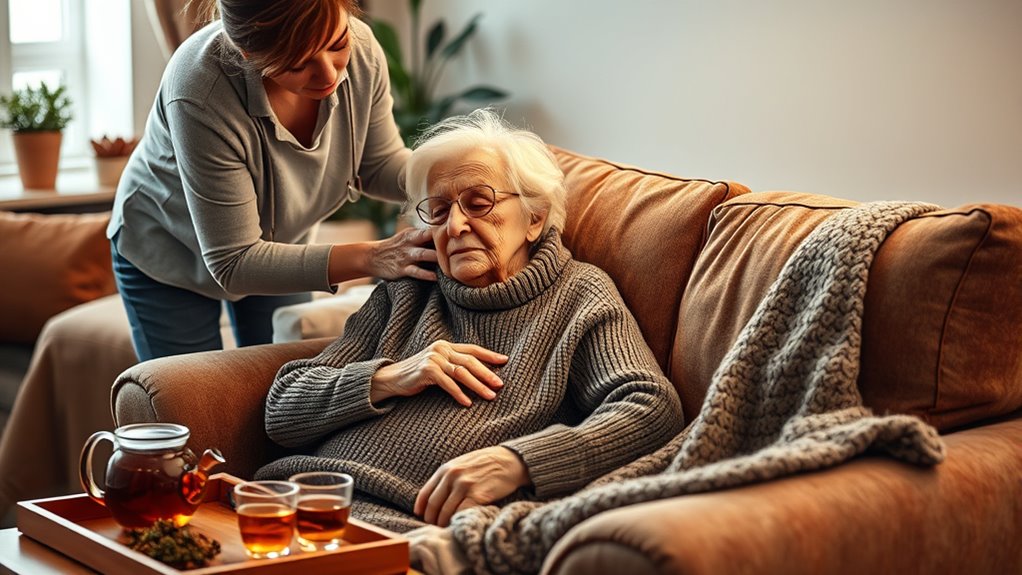

To care for a senior with chronic pain like back issues or neuropathy, focus on combining physical and emotional support. Work with healthcare providers to create personalized pain management plans, including gentle exercises and alternative treatments. Offer emotional reassurance through attentive listening, and encourage activities that bring joy and routine. Your ongoing compassion and tailored strategies can markedly improve their comfort and outlook—continuing this guide will help you learn even more effective ways to support them.
Key Takeaways
- Collaborate with healthcare providers to develop personalized pain management plans, including medication, physical therapy, or alternative treatments.
- Incorporate gentle exercises and stretches to improve mobility and reduce stiffness safely.
- Offer emotional support through active listening, validation, and reassurance to address feelings of frustration or helplessness.
- Encourage enjoyable activities and maintain routines to promote emotional well-being and a sense of normalcy.
- Foster open communication about pain levels and side effects to adjust care strategies effectively.

Caring for a senior with chronic pain can be challenging, but understanding their needs is essential for improving their quality of life. When it comes to managing conditions like back pain or neuropathy, your approach should focus on both pain management and emotional support. Chronic pain doesn’t just affect the body; it also impacts your loved one’s mood, motivation, and overall outlook. Recognizing this interconnectedness helps you provide more compassionate, effective care.
To effectively manage their pain, work closely with healthcare professionals to develop a tailored pain management plan. This may include medication, physical therapy, or alternative treatments such as acupuncture or massage. Encourage your loved one to communicate openly about their pain levels and any side effects they experience. This feedback allows adjustments to be made, ensuring they receive relief without unnecessary discomfort. Besides medical strategies, incorporate gentle exercises or stretches that can alleviate stiffness and improve mobility, always respecting their limits. Small, consistent movements can make a significant difference in reducing pain intensity over time.
While focusing on physical pain, don’t forget the importance of emotional support. Chronic pain often leads to feelings of frustration, helplessness, or depression. Your presence and understanding can make a profound difference. Listen actively when they share their feelings, validate their experiences, and avoid dismissing their pain as merely “in their head.” Reassure them that you’re there to support them through the ups and downs. Sometimes, simply being present is enough to lift their spirits. Encourage activities that bring joy or relaxation, whether it’s listening to music, reading, or gentle social interactions. Maintaining a routine can provide a sense of normalcy and purpose, which are indispensable for emotional well-being.
Frequently Asked Questions
How Can I Tell if My Senior’s Pain Is Worsening Suddenly?
If you notice sudden changes in your senior’s behavior, increased discomfort, or new symptoms, it could be a sign of pain escalation. Watch for warning signs like increased crying, withdrawal, difficulty moving, or changes in sleep patterns. If these appear, don’t hesitate to contact their healthcare provider promptly. Early intervention can help prevent complications and make certain your senior receives the appropriate care they need.
What Are Safe Alternative Therapies for Managing Chronic Pain?
You can try safe alternative therapies like mind-body techniques, such as meditation or deep breathing exercises, to help manage pain. Herbal remedies like turmeric or ginger may also ease discomfort, but always consult a healthcare provider first. These options can complement your senior’s treatment plan, reduce reliance on medication, and promote relaxation. Remember to verify any herbal remedies are safe and appropriate for their specific health conditions.
How Do I Handle Mood Changes Caused by Chronic Pain?
Think of mood swings as storm clouds on a cloudy day—you can’t control the weather, but you can prepare. Offer emotional support and gentle communication strategies, like listening without judgment and validating feelings. Encourage your loved one to share their emotions, helping them feel understood. By staying patient and compassionate, you help clear the skies, fostering a safe space where they can weather their pain and emotional storms.
What Privacy Considerations Exist When Caring for a Senior With Pain?
You need to prioritize patient privacy by keeping all health information confidential and only sharing details with authorized individuals. Guarantee conversations about your senior’s pain are private, and avoid discussing their condition in public. Use secure methods for storing medical records and obtain proper consent before sharing any information. Respecting confidentiality builds trust and complies with legal standards, helping your loved one feel safe and respected in their care.
How Can I Coordinate Care With Multiple Healthcare Providers?
You can coordinate care by scheduling regular interdisciplinary meetings with all healthcare providers involved. This helps guarantee everyone’s on the same page regarding medication management and treatment plans. Keep detailed records of appointments, medications, and recommendations. Communicate openly with each provider, sharing updates about your senior’s condition. Using a shared care plan or digital tools can streamline communication and improve overall management, reducing risks and enhancing comfort.
Conclusion
Remember, caring for your senior with chronic pain is a noble quest, much like tending to a noble steed. Be patient, listen closely, and adapt as needed. Small acts of compassion and understanding can make a world of difference. Though it may seem like a challenge from a bygone era, your dedication can bring comfort and relief. Stay steadfast—your love and care are the true remedies in this ongoing journey.