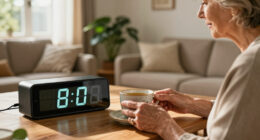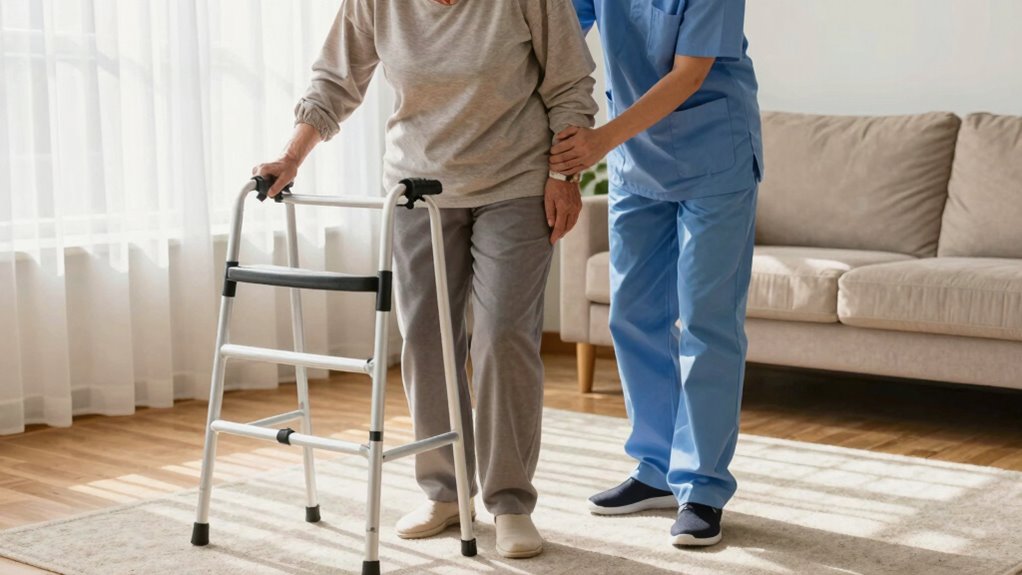
To support a senior with chronic dizziness and fear of falling, guarantee they have properly fitted assistive devices like walkers, canes, or grab bars for stability. Make safety modifications at home, such as adding grab bars, non-slip mats, and improving lighting. Encourage balance and strength exercises, and consult healthcare professionals regularly for tailored management plans. Creating a safe environment and fostering confidence are key—if you want to know more, there’s helpful advice you can explore.

Turn quiet afternoons into listening time
- Thousands of audiobooks, podcasts and originals
- Listen on your phone, tablet or Echo — also offline
- Cancel anytime
Key Takeaways
- Provide assistive devices and ensure proper fitting to promote safe, confident movement.
- Make home modifications like grab bars, non-slip mats, and improved lighting to reduce fall risks.
- Encourage regular balance and strength exercises tailored to the senior’s needs.
- Schedule ongoing healthcare consultations to address dizziness causes and update safety strategies.
- Offer emotional support and reassurance to help reduce fear and build confidence in mobility.

Living with persistent dizziness can be frightening for seniors, especially when it leads to a fear of falling. This fear often causes them to withdraw from daily activities, further impacting their independence and quality of life. As someone supporting a senior in this situation, your goal is to create a safe environment that minimizes risks and boosts their confidence. One effective way to do this is by introducing assistive devices. Walkers, canes, and grab bars can provide essential stability, making movement safer and more secure. When choosing these devices, verify they’re properly fitted and easy for your loved one to use. Proper training on how to use them can make a significant difference—sometimes, just knowing they have reliable support helps reduce their anxiety about falling.
Alongside assistive devices, home modifications are vital. Small changes can dramatically improve safety and comfort. Installing grab bars in the bathroom near the toilet and shower provides extra support during those vulnerable moments. Non-slip mats and rugs help prevent slips and falls on slick surfaces. Improving lighting throughout the house makes it easier for your loved one to see potential hazards, especially during nighttime trips to the bathroom. Removing clutter from walkways ensures clear, unobstructed paths, reducing trip hazards. Consider adding handrails along hallways or staircases, especially if your loved one has difficulty maintaining balance. These modifications aren’t just about preventing falls—they also empower your loved one to move around with more confidence. Additionally, it’s important to understand that home safety measures** can significantly reduce the risk of falls and help seniors feel more secure in their environment. Incorporating balance and strength exercises can further enhance stability and reduce dizziness episodes, providing additional peace of mind. Engaging in personalized fall prevention strategies tailored to your loved one’s specific needs can make safety plans more effective and reassuring. Regular consultation with healthcare professionals about dizziness management** can also help address underlying causes and improve overall stability.
As an affiliate, we earn on qualifying purchases.
Frequently Asked Questions
Can Medication Help Reduce Chronic Dizziness in Seniors?
Yes, medication options can help reduce chronic dizziness in seniors, but it’s crucial to consult a healthcare professional first. They can prescribe appropriate medications and help manage side effects effectively. You should monitor your loved one’s response closely, adjusting dosages if needed, and report any adverse effects. Remember, medication is often part of an all-encompassing plan that includes physical therapy and lifestyle changes to improve balance and reduce dizziness.
How Can I Improve My Loved One’s Home Safety?
Think of your loved one’s home as a ship steering through stormy seas; you want to guarantee it’s steady and secure. You can improve home safety through fall prevention by making essential home modifications: remove tripping hazards, install grab bars, and improve lighting. These steps create a safer environment, helping your loved one feel more confident and secure, reducing the risk of falls while they continue their journey with dignity.
Are There Specific Exercises to Improve Balance?
You can help your loved one by encouraging balance exercises like heel-to-toe walking, single-leg stands, and seated leg lifts, which are excellent for fall prevention. Make certain they perform these exercises safely, perhaps with a sturdy chair or wall nearby for support. Regular practice helps improve stability, confidence, and reduces dizziness, making falls less likely. Always consult a healthcare professional before starting new exercises to ensure they’re appropriate.
When Should I Seek Professional Medical Advice?
If your senior experiences sudden dizziness or falls frequently, you should seek medical advice promptly. For example, imagine your loved one suddenly feels faint while standing; this indicates a need for professional evaluation. You can help by suggesting lifestyle adjustments and exploring community resources like physical therapy. Early intervention guarantees safety, reduces fear, and improves balance, so don’t hesitate to consult healthcare providers when symptoms worsen or persist.
How Do I Address Emotional Impacts of Fear of Falling?
You should provide emotional reassurance to help your senior manage their fear of falling. Offer a calm, supportive presence, and listen to their concerns without judgment. Encourage anxiety management techniques like deep breathing or mindfulness exercises. Remind them of their strengths and safety measures in place. Your consistent reassurance can ease their emotional distress and help them feel more secure, fostering confidence as they navigate daily activities.
Conclusion
So, while you might think the best way to support a senior with dizziness is to keep them close and cautious, sometimes the biggest help is just letting them stand tall—literally and figuratively. Ironically, in trying to prevent falls, you might make them more fearful. Remember, a little confidence and independence can be the most stabilizing things of all. After all, sometimes the best way to support someone is simply to cheer them on from a safe distance.
Fall Picks
fall essentials
As an affiliate, we earn on qualifying purchases.