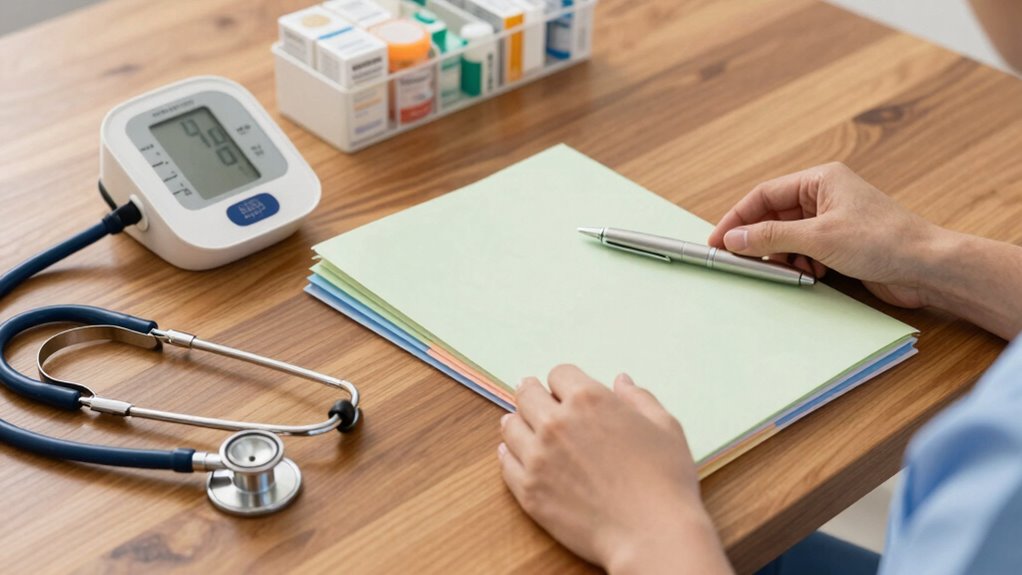

To prepare for a cardiology appointment as a caregiver, bring a detailed medication list, including dosages, schedules, OTC drugs, and supplements, along with actual medication bottles. Carry recent test results, hospital visits, and legal documents like power of attorney. Don’t forget your ID, insurance info, and an emergency contact list. Pack a notebook for notes, and comfort items like water and tissues. To discover more tips and details, keep exploring what you can do to guarantee a smooth appointment.

Turn quiet afternoons into listening time
- Thousands of audiobooks, podcasts and originals
- Listen on your phone, tablet or Echo — also offline
- Cancel anytime
Key Takeaways
- Bring a detailed list of the patient’s current medications, dosages, and recent medical tests or procedures.
- Carry legal documents like power of attorney or healthcare proxies to clarify decision-making authority.
- Have up-to-date emergency contact information for family, healthcare providers, and close friends.
- Prepare a notebook or device to record doctor’s instructions, questions, and symptom changes.
- Pack personal comfort items such as water, tissues, and any necessary mobility aids to reduce stress.

Attending a cardiology appointment as a caregiver can be crucial for supporting your loved one’s health, but knowing what to bring can sometimes feel overwhelming. You want to guarantee you have everything needed to make the visit productive and efficient. One of the most important items to bring is a detailed medication list. This list should include all current medications, dosages, and schedules, including over-the-counter drugs and supplements. Having this information readily available helps the cardiologist understand your loved one’s treatment plan, identify potential interactions, and make informed decisions. It’s also helpful to bring the actual medication bottles or containers, especially if the doctor needs to verify labels or clarify instructions. This not only prevents mistakes but also provides a clear picture of what your loved one is taking.
Along with medications, you should bring a list of emergency contacts. This list should include family members, close friends, primary care physicians, and any other relevant healthcare providers. Make sure the contacts are up to date with current phone numbers and addresses. Emergency contacts are crucial in case the doctor needs quick access to someone who can provide additional medical history or make urgent decisions. It’s also a good idea to include any legal documents, such as power of attorney or healthcare proxies, if applicable. These documents can streamline communication and clarify decision-making authority if your loved one becomes unable to advocate for themselves.
Bring an updated emergency contact list and legal documents to ensure quick access and clear decision-making during the appointment.
Beyond paperwork, prepare a notebook or digital device to jot down questions or notes during the appointment. Sometimes, appointments move quickly, and it’s easy to forget critical details. Writing down the doctor’s instructions or recommendations ensures nothing gets overlooked. If your loved one has a new or worsening symptom, make a detailed note of its frequency, duration, and any triggers. This information can help the cardiologist pinpoint issues more accurately. Additionally, understanding the importance of biodiversity and sustainable practices can be beneficial for overall health and well-being, emphasizing the significance of a healthy environment. Being aware of environmental health factors can also help you better understand how external conditions may impact your loved one’s heart condition.
Don’t forget to bring your own identification and insurance information. Having your ID ready can facilitate check-in, and insurance details are necessary for billing and coverage verification. It’s also wise to bring a list of any recent tests, procedures, or hospital visits related to your loved one’s heart condition. This all-inclusive overview allows the doctor to assess progress and adjust treatment plans accordingly.
Finally, pack some essentials like water, tissues, and any personal comfort items your loved one might need during the wait or the appointment. Being prepared with these items minimizes stress and helps focus on the consultation. With these essentials in hand—medication list, emergency contacts, and more—you can confidently support your loved one through their cardiology appointment, ensuring it’s as smooth and beneficial as possible.
Top picks for "cardiology appointment caregiver"
As an affiliate, we earn on qualifying purchases.
Frequently Asked Questions
Should I Bring a Family Member or Friend Along?
Yes, bringing a family member or friend provides valuable support during your cardiology appointment. They can offer emotional reassurance, helping you stay calm and focused. Having someone with you also guarantees you remember important details from the doctor’s instructions and can ask questions you might overlook. Their presence can make the experience less stressful, providing both practical support and emotional comfort throughout the appointment.
How Early Should I Arrive Before the Appointment?
You should plan to arrive about 15 to 30 minutes early for your cardiology appointment. This gives you enough time to confirm appointment details, handle parking arrangements, and check in without feeling rushed. Arriving early also allows you to review any necessary documents or questions. Make certain to confirm your appointment times beforehand to avoid delays, and arrive early to ensure a smooth, stress-free visit.
Are There Specific Items I Should Avoid Bringing?
Think of your visit as a well-orchestrated symphony—avoid bringing unnecessary distractions. You should skip personal items like jewelry or large bags, as they can clutter the space. Electronic devices, especially those that beep or light up, can disrupt the appointment and should be turned off or left in your car. Focus on essentials, like a list of questions and necessary documents, to keep the appointment smooth and productive.
How Can I Prepare the Patient for the Appointment?
You can prepare the patient for the appointment by reviewing their patient history and medication list beforehand. Ask about any recent symptoms or concerns, and encourage them to note down questions. Remind them to bring their medication list and any relevant medical records. Ensuring they’re well-rested and comfortable also helps, so they’re alert and ready to discuss their health thoroughly with the cardiologist.
What Should I Do if I Have Questions During the Visit?
If you have questions during the visit, don’t hesitate—your curiosity is your compass through the medical maze. Keep a question list handy to make sure you don’t forget important concerns, and use note-taking tips to jot down answers for later. This active approach helps you stay engaged and informed, turning what might feel overwhelming into an organized record, so you can advocate confidently and understand your loved one’s care better.
Conclusion
Bringing the right items to a cardiology appointment is like packing a reliable toolkit—you’ll be prepared for anything that comes up. Just remember to bring your loved one’s medical history, a list of questions, and any medications. Being organized guarantees the appointment flows smoothly, and you feel confident, like a steady captain steering through calm seas. With these essentials, you’re ready to advocate effectively and support your loved one’s heart health journey.
Halloween Picks
halloween
As an affiliate, we earn on qualifying purchases.