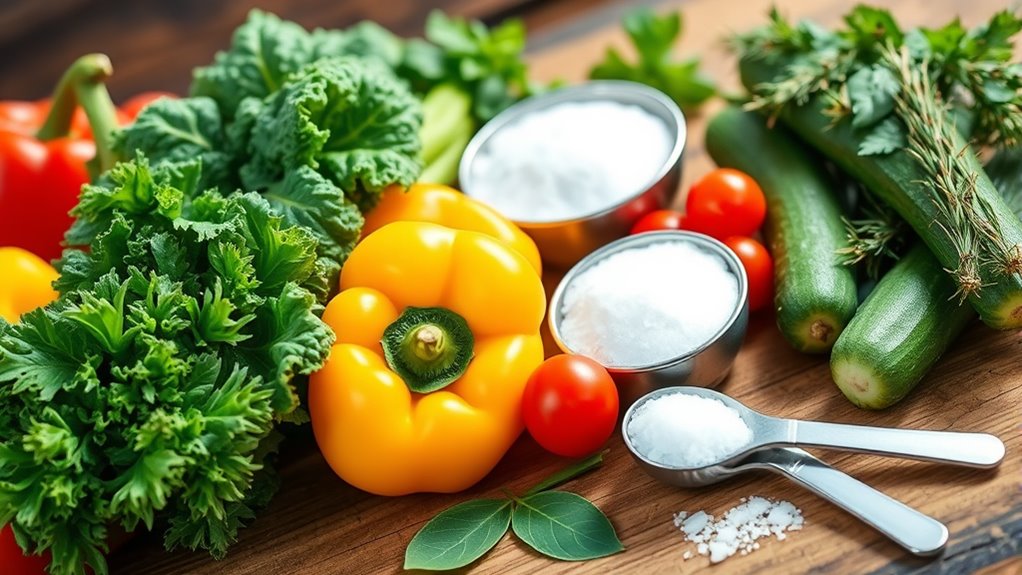

To cook low-sodium meals for heart failure, boost flavor with fresh herbs, spices, lemon juice, or vinegar instead of salt. Plan your meals ahead and choose whole, fresh ingredients to avoid processed foods high in salt. Always check labels for low-sodium options and rinse canned vegetables thoroughly. Making your own sauces and dressings helps control salt intake. Keep learning simple strategies like this to support your heart health and enjoy flavorful, low-sodium meals.
Key Takeaways
- Use fresh herbs, spices, lemon juice, and vinegar to flavor foods without adding salt.
- Plan meals ahead, focusing on whole, unprocessed ingredients to control sodium intake.
- Read labels carefully and choose low-sodium or no-salt-added products during shopping.
- Rinse canned vegetables and prepare homemade sauces to reduce hidden sodium.
- Incorporate variety with vegetables, lean proteins, and grains to support heart health and flavor.

Reducing sodium in your cooking can considerably improve your health without sacrificing flavor. As someone managing heart failure, lowering your salt intake is essential, but that doesn’t mean you have to give up tasty meals. Instead, focus on seasoning alternatives that add flavor without the sodium. Fresh herbs like basil, cilantro, and parsley can brighten your dishes without any added salt. Spices such as cumin, paprika, garlic powder, and black pepper bring depth and complexity to your meals. Lemon juice and vinegar are excellent options to enhance flavor and provide a tangy kick, making your dishes more satisfying without salt. By exploring these seasoning alternatives, you can enjoy flavorful food while staying within your sodium limits.
Meal planning strategies also play a key role in maintaining a low-sodium diet. When you plan your meals ahead of time, you’re less likely to rely on processed or prepackaged foods that are often high in sodium. Take time to prepare a weekly menu, focusing on whole, fresh ingredients. This way, you control what goes into each meal, making it easier to avoid hidden salt. Additionally, batch cooking and portioning your meals can help you stick to your dietary goals, preventing impulsive choices that might lead to excessive salt intake. Incorporate a variety of vegetables, lean proteins, and whole grains to keep your diet balanced and flavorful.
Another effective meal planning strategy is to read labels carefully. Processed foods, canned goods, and condiments are notorious for their high sodium content. Opt for low-sodium or no-salt-added versions whenever possible. When shopping, choose fresh or frozen produce over canned options, or rinse canned vegetables thoroughly to remove excess salt. Preparing your own sauces, dressings, and marinades also allows you to control the salt level, giving you more confidence in what you’re eating. Incorporating affordable low-sodium options into your shopping routine can help you maintain your diet without overspending. Over time, these habits become second nature, making it easier to maintain your low-sodium lifestyle.
Incorporating these strategies and seasoning alternatives into your daily routine can make a significant difference. It’s about creating flavorful meals that don’t rely on salt, which benefits your heart health and overall well-being. Remember, small changes in your meal planning and seasoning choices add up. With practice, you’ll find that you can enjoy delicious, satisfying food while managing your sodium intake effectively. Your commitment to these low-sodium cooking tips is an essential step toward better heart health and a more vibrant, energetic life.
Frequently Asked Questions
Can I Use Natural Herbs Instead of Salt for Flavor?
Yes, you can definitely use natural herbs instead of salt for flavor. Herb blending techniques allow you to create flavorful combinations that enhance your dishes without added sodium. Try fresh herbs like basil, thyme, or rosemary, and mix them for a unique taste. These herbs serve as excellent flavor enhancer options, giving your meals depth and aroma without compromising your health goals. Experiment and find your perfect herbal blend!
Are There Specific Cooking Methods to Reduce Sodium?
You can reduce sodium by choosing cooking methods like steaming, grilling, or baking, instead of frying or sautéing with salt. These techniques help retain flavor without added salt. When meal prepping, focus on using fresh herbs and spices for seasoning, and select cooking utensils that minimize sticking to reduce the need for salt-based flavor enhancers. This approach keeps your meals tasty and heart-healthy, supporting your dietary goals effectively.
How Can I Read Labels to Find Low-Sodium Products?
To find low-sodium products, you should read nutrition labels carefully. Look for the “Sodium” section and compare the sodium content listed per serving; aim for products with less than 140 mg per serving. Check ingredient lists for added salt or sodium-rich additives. By actively reading nutrition labels and identifying sodium content, you can make smarter choices and reduce your overall sodium intake effectively.
What Are Alternative Seasonings for Salt in Recipes?
You can replace salt with flavor enhancing spices like pepper, garlic powder, onion powder, paprika, and herbs such as basil or oregano. These add depth to your dishes without extra sodium. For low sodium snack ideas, try seasoned popcorn, roasted chickpeas, or veggie sticks with hummus. Experimenting with these spices keeps your meals tasty and satisfying while helping you stick to your low-sodium goals.
Is It Safe to Use Salt Substitutes Regularly?
Did you know nearly 60% of adults use salt substitutes regularly? Salt replacement safety varies; some contain potassium, which can be risky if you have kidney issues or heart problems. Always check with your doctor before using them daily. Instead, try natural seasoning alternatives like herbs, spices, and citrus to add flavor without risking your health. These options are safer and can make your meals exciting and heart-friendly.
Conclusion
By embracing these low-sodium cooking tips, you gently steer your meals toward a more balanced path, allowing your heart to find harmony. With every mindful choice, you’re nurturing a quiet strength within, creating space for wellness to flourish. Remember, small shifts can lead to significant serenity over time. Trust in your ability to craft nourishing dishes that honor your journey—each mindful bite is a subtle act of care that speaks volumes.