
After a heart attack, follow your doctor’s advice on medication, eat a balanced diet, and gradually increase physical activity within safe limits. Prioritize rest, monitor symptoms, and keep track of emotional well-being to support your recovery. Stay connected with healthcare providers and attend follow-up visits. Managing stress and making lifestyle changes are vital for healing. Keep exploring tips to help guarantee a safe and steady return to health.
Key Takeaways
- Adhere strictly to prescribed medications and keep a medication list for easy reference.
- Engage in gentle, doctor-approved physical activity and monitor symptoms regularly.
- Seek emotional support from loved ones or professionals to manage stress and emotional health.
- Maintain a balanced diet, avoid smoking and limit alcohol to support heart recovery.
- Keep a symptom and medication journal to track progress and discuss concerns during follow-up visits.
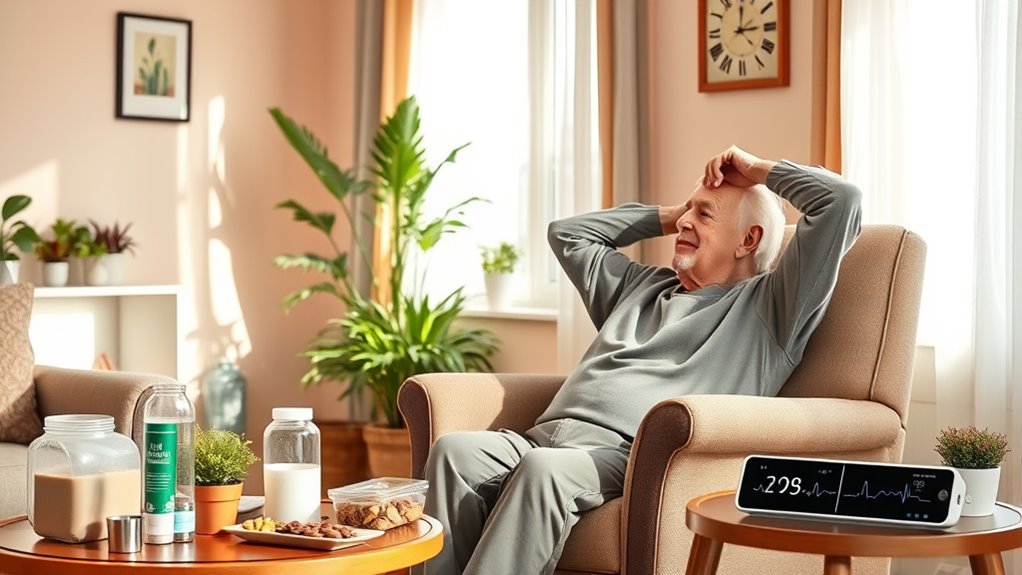
Recovering at home after a heart attack requires careful attention and ongoing care. One of the most important steps you can take is ensuring medication adherence. Your doctor likely prescribed medications to help stabilize your heart and prevent future issues. Taking these medications exactly as prescribed is essential. Missing doses or stopping medication early can increase your risk of complications. To stay on track, set reminders or use a pill organizer, and keep a list of medications handy. If you experience side effects or have concerns about your medications, don’t hesitate to contact your healthcare provider. Staying consistent with your medication regimen is a critical part of your recovery and long-term heart health.
Alongside medication adherence, emotional support plays a significant role in your recovery process. A heart attack can be a traumatic event, leaving you feeling anxious, depressed, or overwhelmed. It’s normal to experience these emotions, but they shouldn’t be ignored. Reach out to loved ones—family, friends, or support groups—who can listen and offer encouragement. Talking openly about your feelings can reduce stress and help you cope better. If feelings of anxiety or depression persist, consider seeking help from a mental health professional. Managing your emotional health is just as important as physical recovery because stress and negative emotions can impact your heart health. Additionally, engaging in appropriate exercise can boost your mood and improve your cardiovascular health.
In addition to medication adherence and emotional support, you should follow your doctor’s recommendations for physical activity and lifestyle changes. Start with gentle activities like walking, but always check with your healthcare team before increasing intensity. Proper nutrition also supports healing, so aim for a balanced diet rich in fruits, vegetables, lean proteins, and whole grains. Avoid smoking, limit alcohol, and control blood pressure and cholesterol levels through lifestyle adjustments and medication. Regular follow-up appointments are essential to monitor your progress and catch any potential issues early.
Remember to listen to your body. Rest when needed, but also stay active within your limits. Keep a journal to track your symptoms, medication schedule, and emotional well-being. This can help you identify patterns or concerns to discuss with your doctor. Recovery from a heart attack is a gradual process, requiring discipline, patience, and support. By sticking to your medication plan, seeking emotional support, and making healthy lifestyle choices, you increase your chances of a stronger, more resilient recovery. Stay proactive, and don’t hesitate to reach out for help when needed—your health depends on it.
Frequently Asked Questions
How Can I Tell if My Symptoms Worsen at Home?
You can tell if your symptoms worsen by closely monitoring your warning signs and keeping detailed symptom tracking. If you notice increased chest pain, shortness of breath, dizziness, or swelling, these may indicate a problem. Seek medical help immediately if symptoms escalate or don’t improve. Trust your instincts and don’t hesitate to contact your healthcare provider if you’re unsure—prompt action can prevent serious complications.
Are There Specific Foods to Avoid During Recovery?
Think of your diet restrictions as a tightrope walk—you need balance to stay safe. During recovery, avoid foods high in saturated fats, trans fats, and sodium, like fried foods, processed snacks, and salty cured meats. Instead, focus on heart-healthy food choices such as fruits, vegetables, lean proteins, and whole grains. Cutting back on these risky foods helps prevent complications and keeps your heart strong, guiding you toward a smoother recovery.
When Should I Resume Daily Activities Post-Heart Attack?
You should gradually resume daily activities once your doctor gives the green light, typically after your follow-up appointment. Start with light tasks and slowly increase activity levels, respecting any activity restrictions your healthcare provider recommends. Listen to your body; if you experience pain, fatigue, or discomfort, scale back and rest. Prioritize a steady, gentle pace to support your recovery and prevent setbacks during this essential phase.
How Can I Manage Emotional Health After a Heart Attack?
You can manage your emotional health by building emotional resilience and practicing stress management techniques. Focus on staying connected with loved ones, sharing your feelings, and seeking support if needed. Incorporate relaxation methods like deep breathing, meditation, or gentle exercise to reduce stress. Remember, it’s normal to feel a range of emotions after a heart attack, so give yourself time and patience as you work toward emotional recovery.
What Emergency Signs Require Immediate Medical Attention?
Did you know that timely emergency response can save lives in over 90% of heart attack cases? If you experience chest pain, shortness of breath, sudden weakness, or pain radiating to your jaw or arm, seek emergency care immediately. Recognizing heart attack symptoms early is vital. Call emergency services right away and stay calm while waiting for help. Quick action can make all the difference for your recovery and survival.
Conclusion
Remember, your recovery journey is like tending a delicate garden—you must nurture it daily with care, patience, and attention. By following these at-home tips, you’re not just healing; you’re rebuilding strength and hope. Don’t underestimate the power of small steps—they add up to a healthier, happier you. So, stay committed, stay vigilant, and let each moment be a tribute to your resilience. After all, your recovery is the masterpiece you’re creating—one careful brushstroke at a time.