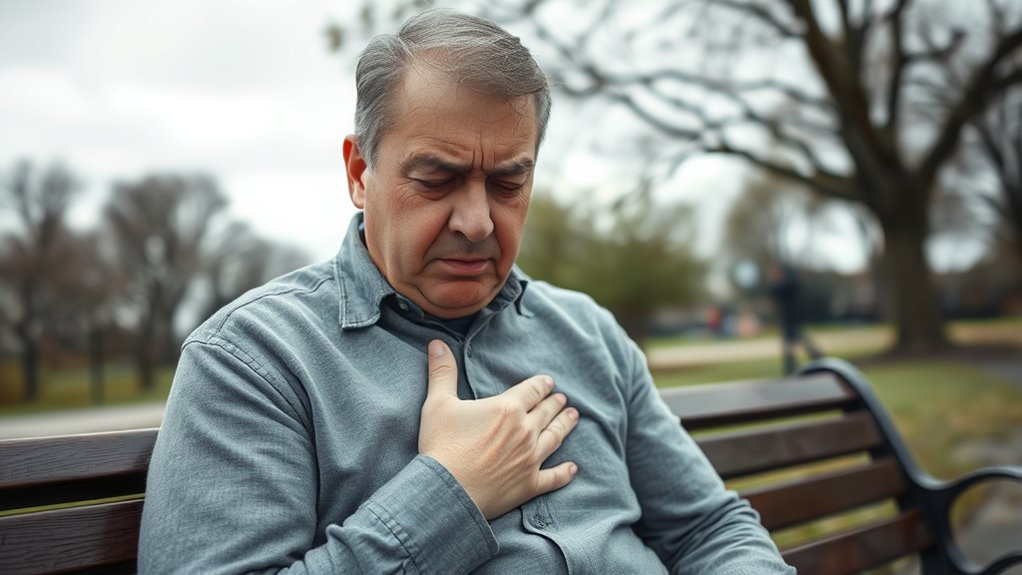

If you notice sudden, severe chest pain, shortness of breath at rest, or chest pain radiating to your arm or jaw, call 911 immediately. Watch for signs of heart failure like rapid or irregular heartbeat, swelling, persistent coughing, or dizziness. Also, seek urgent help if you experience symptoms of stroke, allergies, or severe bleeding. Knowing these warning signs can help you act fast—keep going to discover more important details.
Key Takeaways
- Call 911 immediately if experiencing sudden severe chest pain radiating to arm, neck, or jaw.
- Seek emergency help for sudden shortness of breath at rest or with minimal exertion.
- Contact emergency services if you notice signs of a stroke, such as weakness, facial drooping, or confusion.
- Dial 911 for sudden or severe symptoms like fainting, severe allergic reactions, or uncontrolled bleeding.
- Call 911 when symptoms worsen rapidly or do not improve despite initial care.

Knowing when to call 911 can be life-saving. Recognizing the symptoms that indicate a medical emergency is essential, especially when it comes to heart failure or other serious health issues. Your ability to quickly identify warning signs and act swiftly can make all the difference in outcomes. Being prepared with emergency contacts and knowing what symptoms demand immediate attention can help you respond confidently when someone’s health is at risk. This is why symptom recognition is a critical part of your emergency preparedness. If you notice sudden or severe symptoms, don’t hesitate—calling 911 immediately can save a life.
When it comes to heart failure, specific signs signal that immediate medical help is needed. These include sudden shortness of breath, especially if it occurs at rest or with minimal exertion. You might also see swelling in the legs, ankles, or abdomen, which indicates fluid buildup. Persistent coughing or wheezing, especially with pink, frothy sputum, is another warning sign. If you or someone else experiences a rapid or irregular heartbeat, chest pain, or feelings of dizziness or fainting, these are critical symptoms that require urgent attention. Recognizing these signs quickly and understanding their severity forms an essential part of your emergency preparedness. The sooner you call 911, the better the chances of receiving life-saving treatment in time.
In addition to heart failure symptoms, other emergencies require immediate action. Severe chest pain, especially if it radiates to the arm, neck, or jaw, should never be ignored. Sudden weakness or numbness on one side of the body, difficulty speaking, or confusion are signs of a stroke. Severe bleeding, difficulty breathing, or signs of an allergic reaction like swelling of the face or throat also demand prompt emergency response. Your ability to identify these symptoms accurately helps you make split-second decisions that could save lives. Always remember that when in doubt, it’s better to err on the side of caution and call 911. Emergency preparedness involves not only knowing the symptoms but also keeping emergency numbers accessible and ensuring others around you know how to act in a crisis. Additionally, understanding the importance of Volkswagen Tuning knowledge can help you stay alert to vehicle safety issues that might require emergency assistance.
Frequently Asked Questions
Can Heart Failure Symptoms Improve Without Emergency Intervention?
Heart failure symptoms can sometimes improve with early symptom recognition and lifestyle modifications, but it’s not guaranteed. If you notice signs like shortness of breath, fatigue, or swelling, you should seek medical advice promptly. While lifestyle changes like diet, exercise, and medication can help manage symptoms, worsening signs require urgent care. Always consult your healthcare provider to determine the best course of action and avoid dangerous complications.
Should I Call 911 for Mild Chest Discomfort?
If you experience mild chest discomfort warning signs, it’s best to call 911 if it lasts more than a few minutes, worsens, or is accompanied by other symptoms like shortness of breath, sweating, or pain radiating to your arm or jaw. Don’t ignore even mild discomfort; it could signal a serious problem. Prompt emergency help guarantees you get the care needed to prevent potential heart issues from worsening.
How Quickly Do Symptoms Escalate in Heart Failure Emergencies?
Symptoms in a heart failure emergency can escalate quickly, often within minutes to hours. You might notice worsening shortness of breath, severe fatigue, or swelling that suddenly intensifies. It’s essential to monitor for rapid symptom progression, as this indicates emergency escalation. If you experience any sudden or severe changes, don’t hesitate—call 911 immediately to get prompt medical help before the situation worsens.
Are There Age-Specific Signs Indicating Emergency Need?
You should watch for age-specific symptoms, especially in the elderly, who are at higher risk for heart failure emergencies. For seniors, an elderly warning might include sudden confusion, severe weakness, or rapid breathing. Statistics show that over 70% of heart failure-related deaths occur in people over 65. If you notice these signs, it’s vital to call 911 immediately to guarantee prompt medical help.
What Home Remedies Can Temporarily Ease Heart Failure Symptoms?
You can’t cure heart failure with home remedies, but you can try natural diuretics like reducing salt intake and staying hydrated to ease symptoms temporarily. Focus on a heart-healthy diet rich in fruits, vegetables, and whole grains to support heart function. Rest, avoid strenuous activity, and stay calm to prevent worsening symptoms. Remember, these are only temporary measures—seek medical advice promptly and call 911 if symptoms worsen.
Conclusion
Remember, your body is like a lighthouse guiding you through stormy seas. If heart failure signs or other warning signals flicker like a distant lighthouse beam—difficult breathing, chest pain, or sudden weakness—don’t hesitate to call 911. Trust that quick action can be the anchor that keeps you safe amidst turbulent times. Listen to your body’s call for help; it’s your beacon steering you toward brighter, healthier shores.