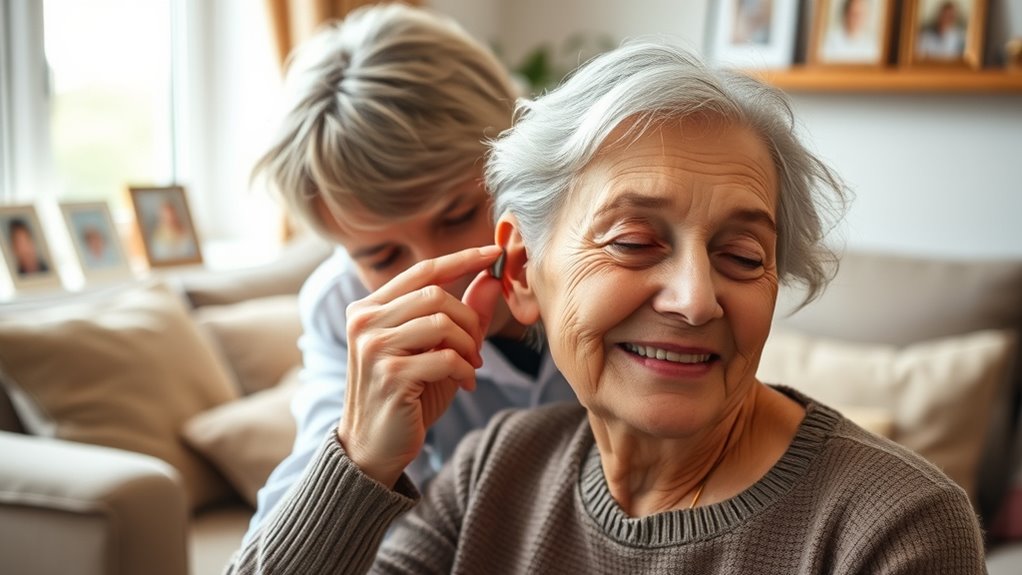

To help an elderly loved one with hearing loss, learn about assistive devices like hearing aids and amplified phones, ensuring they’re comfortable and well-maintained. Use effective communication strategies, such as speaking clearly, facing them, and reducing background noise. Create a supportive environment with good lighting and patience, encouraging their independence. Supporting them emotionally and adapting to their needs can boost confidence and connection. Stay with us to discover more ways to improve their daily life.
Key Takeaways
- Assist with selecting, maintaining, and properly using hearing aids and other amplification devices.
- Use clear speech, face the person, and minimize background noise during conversations.
- Create a well-lit, comfortable environment and sit close enough for effective communication.
- Encourage the use of visual cues, written notes, or text messages to aid understanding.
- Offer patience, emotional support, and consistent encouragement to boost confidence and independence.

Hearing loss can be challenging for elderly loved ones, but your support makes a meaningful difference. When helping them navigate their hearing challenges, one of the most effective ways is by introducing assistive devices. These devices, like hearing aids, amplified telephones, or personal amplifiers, can dramatically improve their ability to hear and understand conversations. Make sure to assist them in choosing the right device suited to their specific needs and comfort. Once they start using these tools, encourage regular maintenance and checkups to keep everything functioning properly. Familiarize yourself with how these devices work so you can assist them in adjusting settings or troubleshooting minor issues. Your involvement can boost their confidence in using these aids consistently, which is essential for maximizing their benefits.
Alongside assistive devices, employing effective communication strategies is essential. Speak clearly and at a moderate pace, ensuring you face them directly so they can read your lips and see your facial expressions. Reduce background noise whenever possible, especially during important conversations, to help them focus on what you’re saying. If they miss a part of your conversation, don’t repeat yourself loudly—try rephrasing or rephrasing your sentence instead. Encourage them to ask for clarification, and be patient if they need you to repeat or slow down. Using visual cues, like pointing or gesturing, can also aid understanding. Sometimes, written notes or text messages can serve as helpful supplements, especially in noisy environments or during complex discussions. Additionally, creating a comfortable and supportive environment can make a significant difference in their communication experience.
It’s important to create an environment that supports their hearing needs. Make sure their living space is well-lit, so they can see your face clearly. Sit close enough to them during conversations, but avoid invading their personal space. Be mindful of their comfort level with assistive devices; some may need time to adapt, so patience is key. Remember, emotional support is just as essential, so listen patiently and be understanding if they feel frustrated or self-conscious about their hearing loss. Your consistent encouragement and proactive approach not only help them adapt but also foster a sense of independence and confidence. By combining assistive devices with thoughtful communication strategies, you make their daily interactions more manageable and enjoyable. Your ongoing support can greatly enhance their quality of life, helping them feel heard, valued, and connected despite their hearing challenges.
Frequently Asked Questions
How Can I Encourage My Loved One to Seek Hearing Help?
You can motivate your loved one to seek hearing help by gently addressing their denial and emphasizing how improving their hearing can boost independence. Share stories of others who benefited from hearing aids, and listen patiently to their concerns. Offer to accompany them to appointments, showing your support. Reminding them that seeking help is a positive step towards staying connected and independent encourages them to take action confidently.
What Are the Costs Associated With Hearing Aids and Treatments?
Hearing aids can cost between $1,000 and $4,000 per device, but insurance coverage varies. Some plans may partially cover the cost, and financial assistance programs are available to help. You should check with your loved one’s insurance provider and explore local or online assistance options. Keep in mind that investing in proper hearing treatment can markedly improve their quality of life and communication.
How Do I Handle My Loved One’s Frustration Over Hearing Difficulties?
You should offer emotional support by showing patience and understanding when your loved one gets frustrated over hearing difficulties. Listen calmly, avoid correcting or rushing them, and acknowledge their feelings. Encourage open communication and reassure them you’re there to help. Your calm and empathetic approach helps reduce their frustration, making them feel supported and understood as they navigate their hearing challenges.
Are There Specific Communication Strategies for Different Types of Hearing Loss?
You might think one size fits all, but different types of hearing loss demand different approaches. For sensorineural loss, face your loved one and speak clearly, encouraging lip reading. If it’s conductive loss, minimize background noise and consider sign language or visual cues. Ironically, adapting your communication is key; what works for one type may not for another. Use sign language or lip reading to bridge the gap effectively.
How Often Should Hearing Aids Be Checked or Replaced?
You should have hearing aids checked at least once a year for proper hearing aid maintenance. Regular check-ups ensure they function well and fit comfortably. If your loved one’s hearing aids are outdated or no longer meet their needs, consider hearing aid upgrades. Replacing or upgrading helps maximize hearing clarity and comfort. Staying proactive with maintenance and upgrades keeps the devices effective, supporting your loved one’s communication and quality of life.
Conclusion
By opening your ears and heart, you become the lighthouse guiding your loved one through the fog of silence. Your patience and understanding are the steady beams, shining hope and clarity into their world. Remember, even in the quietest moments, your support is the anchor that keeps them grounded. Together, you can navigate the waves of hearing loss, restoring the melody of connection and trust that once filled their days with vibrant sound.