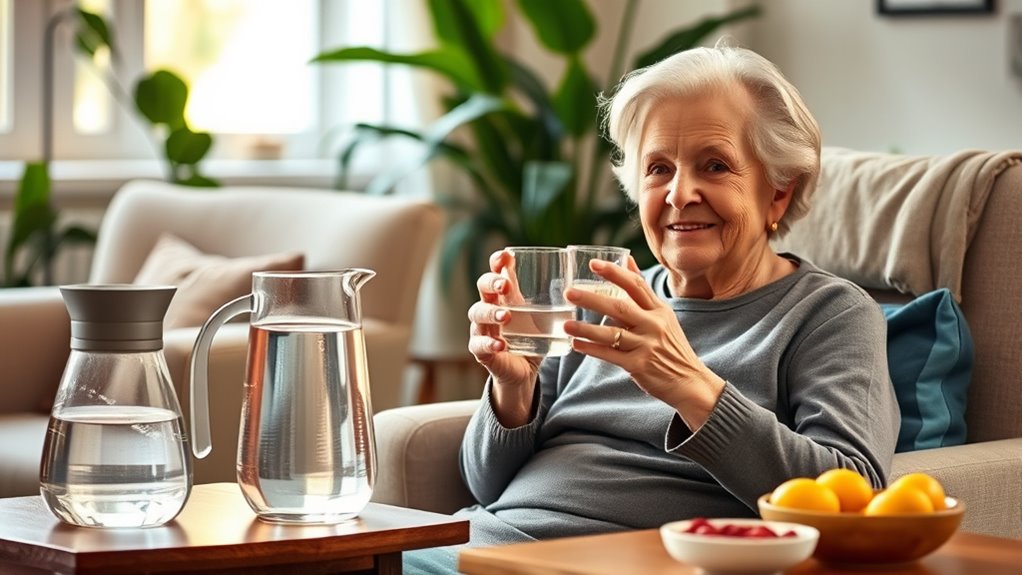

To prevent dehydration in the elderly, make hydration a priority daily. Encourage them to sip fluids regularly and keep water nearby, including drinks like herbal teas or broths. Include water-rich foods such as fruits and vegetables in their diet, and develop simple routines for drinking. Watch for signs like dry mouth or dark urine, and act quickly if symptoms appear. Continuing will uncover more effective strategies to keep them properly hydrated and healthy.
Key Takeaways
- Encourage regular fluid intake using reminders, water bottles, and a variety of beverages to promote consistent hydration.
- Incorporate water-rich foods like fruits and vegetables into daily meals to boost hydration naturally.
- Recognize symptoms of dehydration early, such as dry mouth and dark urine, and increase fluid consumption promptly.
- Replenish electrolytes during hot weather or after physical activity with moderate electrolyte solutions or broths.
- Address diminished thirst sensation in the elderly by establishing routine hydration habits and monitoring hydration status regularly.
Staying properly hydrated is essential for maintaining your overall health and preventing dehydration, especially during hot weather or vigorous activity. When you focus on your fluid intake, you’re ensuring your body has enough water to support vital functions like circulation, temperature regulation, and waste elimination. But hydration isn’t just about drinking water; it’s also about maintaining electrolyte balance, which plays a crucial role in keeping your cells functioning properly. Electrolytes such as sodium, potassium, and chloride work together to transmit nerve signals, regulate muscle contractions, and maintain the body’s pH level. If your fluid intake isn’t enough or if your electrolytes become imbalanced, you risk dehydration, which can lead to dizziness, confusion, muscle weakness, and even more serious health issues.
As you age, your thirst sensation diminishes, making it easier to overlook the need for fluids. This means you might not feel thirsty even when your body needs hydration. To prevent this, it’s important to develop a routine that encourages regular fluid consumption throughout the day. Keep a water bottle nearby, set reminders to sip fluids at regular intervals, and include a variety of beverages like herbal teas or broths to diversify your intake. While water should be your primary source, you can also incorporate foods with high water content, such as fruits and vegetables, to support your hydration efforts.
Pay attention to how your body signals dehydration. Common signs include dry mouth, dark-colored urine, fatigue, and lightheadedness. If you notice any of these symptoms, increase your fluid intake promptly. In hot weather or during physical activity, you lose more fluids through sweat, so it’s especially important to replenish both water and electrolytes. Sports drinks or electrolyte solutions can help restore the electrolyte balance, but avoid excessive consumption of sugary beverages, which can do more harm than good. Recognizing dehydration symptoms early can help prevent more serious complications and ensure prompt rehydration.
Monitoring your fluid intake is a simple yet effective way to prevent dehydration. Aim for consistent consumption throughout the day rather than drinking large amounts all at once. Keep track of how much you drink to ensure you’re meeting your needs. Remember, your hydration needs may vary based on your activity level, health conditions, and the climate you live in. By prioritizing adequate fluid intake and maintaining electrolyte balance, you support your body’s ability to function optimally and reduce the risk of dehydration-related complications. Staying proactive in managing your hydration helps preserve your independence, energy, and overall well-being.
Frequently Asked Questions
How Can Caregivers Encourage Elderly Individuals to Drink More Fluids?
You can encourage elderly individuals to drink more fluids by offering flavored beverages like infused water or herbal teas to make hydration more appealing. Use social encouragement by drinking fluids together or creating fun routines around hydration times. Remind them gently of the benefits, and keep beverages easily accessible. Your support and positivity can make a big difference in helping them stay properly hydrated each day.
Are Certain Beverages Better Than Water for Hydration in the Elderly?
Ever wondered if flavored beverages or electrolyte drinks are better than water for hydration? While water is best, some elderly individuals find flavored drinks more appealing, encouraging them to drink more. Electrolyte drinks can replenish essential minerals lost through dehydration. Just remember, choose options low in sugar and artificial additives. So, offering a variety of beverages can help maintain proper hydration and keep your loved ones healthy and comfortable.
How Does Medication Affect Hydration Needs in Seniors?
You should know that medication side effects can increase your hydration needs, as some drugs cause dry mouth, increased urination, or sweating. Polypharmacy challenges, meaning taking multiple medications, can complicate hydration because interactions may affect fluid balance. It is crucial to monitor your fluid intake carefully, especially if your medications list includes diuretics or antihistamines, and consult your healthcare provider regularly to prevent dehydration risks.
What Are Signs of Mild Dehydration in Elderly Residents?
You might notice early symptoms of mild dehydration in elderly residents, such as dry mouth, thirst, and darker urine. Subtle cues include fatigue, dizziness, or a slight confusion. Keep an eye out for these signs, as they often appear before more severe symptoms develop. Addressing these early cues promptly helps prevent dehydration from worsening, ensuring your residents stay healthy and comfortable.
Can Dehydration Lead to Long-Term Health Complications?
Dehydration can indeed lead to long-term health complications, including chronic kidney issues and cognitive decline. When you don’t keep your loved ones properly hydrated, their kidneys struggle to filter waste, potentially causing lasting damage. Additionally, dehydration affects brain function, leading to memory problems and confusion over time. Ensuring adequate fluid intake helps prevent these serious health risks, supporting overall well-being and longevity for elderly residents.
Conclusion
Staying hydrated is essential for your health as you age. Did you know that nearly 20% of hospitalizations for older adults are related to dehydration? By drinking enough fluids daily, recognizing early signs, and seeking help when needed, you can prevent serious complications. Don’t wait until you’re thirsty—make hydration a priority. Small daily efforts can greatly improve your well-being and keep you active and healthy for years to come.