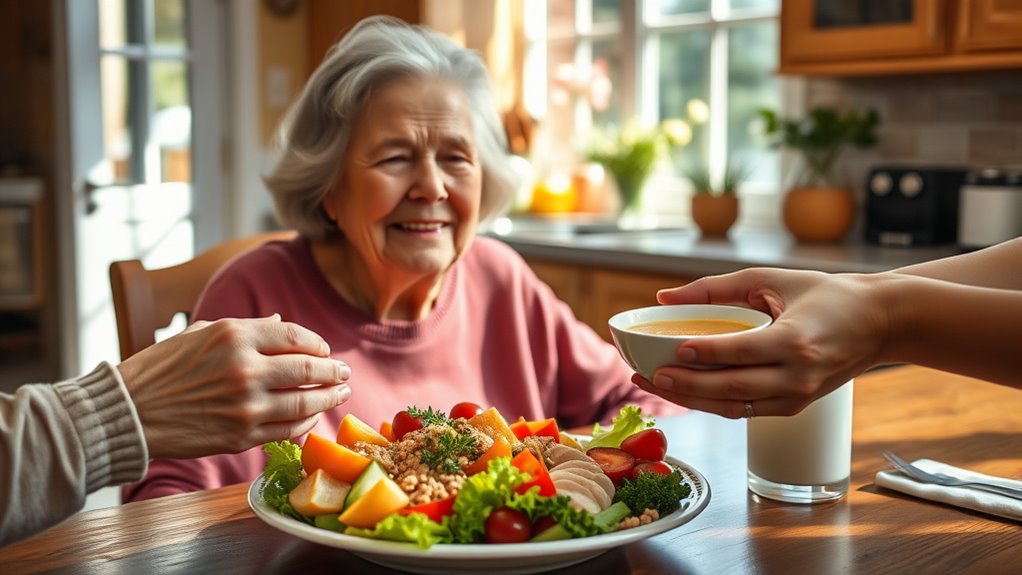

To prevent malnutrition in frail seniors, focus on providing nutrient-dense foods that are appealing and easy to eat, like colorful fruits, vegetables, lean proteins, and whole grains. Offer small, frequent meals and encourage regular hydration with flavorful beverages and hydrating foods. Adjust meals to individual preferences and dietary needs, emphasizing presentation and variety to stimulate appetite. Maintaining a consistent routine and active hydration can markedly boost their health—continue exploring more effective strategies to support their well-being.
Key Takeaways
- Prioritize nutrient-dense foods like fruits, vegetables, lean proteins, and whole grains to maximize essential nutrient intake.
- Serve small, frequent meals with appealing flavors and colorful presentation to stimulate appetite.
- Encourage regular, small sips of fluids throughout the day using flavorful options to prevent dehydration.
- Incorporate hydrating foods such as soups, melons, and oranges to boost hydration alongside fluid intake.
- Tailor meal plans to individual preferences and health needs, preparing meals ahead to ensure consistent, enjoyable nutrition.

Frail seniors often face unique nutritional challenges that can impact their overall health and well-being. As you look after a loved one or navigate your own health, understanding how to prevent malnutrition is essential. One of the key areas to focus on is meal planning. When planning meals, you want to prioritize nutrient-dense foods that provide essential vitamins and minerals without overwhelming the digestive system. Incorporate a variety of fruits, vegetables, lean proteins, whole grains, and healthy fats to guarantee balanced nutrition. Small, frequent meals can help maintain energy levels and stimulate appetite, especially if your loved one struggles with feeling hungry or has difficulty swallowing. You should also consider their preferences and any dietary restrictions to make sure meals are both appealing and suitable for their health needs. Additionally, preparing meals ahead of time can help reduce stress and guarantee consistent nutrition intake, especially during days when energy levels are low. Paying attention to nutrient density in foods ensures your loved one gets the most benefit from each meal without increasing portion sizes.
Hydration strategies are equally important because seniors often become dehydrated without realizing it. Dehydration can lead to confusion, fatigue, and other health complications, so it’s essential to promote adequate fluid intake. Encourage drinking small amounts of fluids throughout the day rather than large quantities at once, which can be overwhelming or cause discomfort. Incorporate a variety of beverages like water, herbal teas, and broths, and consider adding flavor with slices of lemon, cucumber, or berries to make drinks more appealing. If your loved one has trouble swallowing or dislikes plain water, try offering hydrating foods such as melons, oranges, or soups. Keep hydration options easily accessible, placing water bottles or glasses within reach in frequently visited areas. Regularly remind or encourage them to sip fluids, especially if they tend to forget or are less inclined to drink on their own.
Combining effective meal planning with solid hydration strategies can make a significant difference in preventing malnutrition among frail seniors. Pay attention to their individual needs and preferences, and adjust accordingly. Making meals colorful, flavorful, and easy to eat can boost their appetite, while a consistent hydration routine helps maintain essential bodily functions. Remember, small changes can lead to big improvements in their overall health, energy, and quality of life. By actively managing both nutrition and hydration, you support their strength and resilience, helping them stay healthier and more comfortable each day.
Frequently Asked Questions
How Can I Encourage Frail Seniors to Eat More Consistently?
You can encourage frail seniors to eat more consistently by creating simple meal plans that include their favorite foods, making mealtimes enjoyable. Enhance taste by adding herbs, spices, or condiments to boost flavor without extra salt. Serve smaller, frequent meals instead of large ones, and involve them in meal planning to give a sense of control. These strategies make eating more appealing and help guarantee they get proper nutrition regularly.
Are Supplements Necessary for All Frail Seniors?
Supplements aren’t necessary for all frail seniors, but they can help if you face dietary restrictions or struggle to get enough nutrients from food alone. Always prioritize supplement safety by consulting healthcare providers before starting any new regimen. Keep in mind that individual needs vary, so personalized advice ensures you’re choosing the right options without risking interactions or excess intake. Supplements should complement, not replace, a balanced diet.
What Are Quick and Easy Nutritious Snack Options?
Imagine Sarah, a senior who struggles to eat large meals. She opts for healthy snacks like Greek yogurt with honey and nuts, which are quick and easy recipes. You can try trail mix, cheese with whole-grain crackers, or fruit smoothies. These healthy snacks boost energy and nutrients without fuss. Keep snacks simple, nutritious, and portable, making it easier for you or your loved ones to maintain good nutrition effortlessly.
How Does Hydration Impact Senior Nutrition?
Hydration importance is essential because it helps maintain fluid balance, which is critical for your overall health. When you’re well-hydrated, your body can absorb nutrients more effectively, support digestion, and prevent issues like dizziness or confusion. Dehydration can lead to serious health problems, especially in seniors. Drinking enough water and fluids daily keeps your body functioning properly and guarantees you get the most out of your nutrition.
When Should I Seek Professional Help for Malnutrition Concerns?
You should seek professional help when you notice early signs of malnutrition, such as unexplained weight loss, fatigue, or decreased appetite. If you’re concerned about your or a loved one’s risk assessment, don’t wait—consult a healthcare provider promptly. They can evaluate nutritional status, identify underlying issues, and recommend tailored interventions to prevent further health decline and guarantee proper nutrition. Early intervention can make a significant difference.
Conclusion
By following these nutrition tips, you can help prevent malnutrition and support your overall health. Imagine Sarah, a frail senior who started incorporating nutrient-dense snacks and small, frequent meals into her day. Within weeks, she felt more energetic and regained some of her lost weight. Remember, small changes make a big difference. Stay consistent, listen to your body, and don’t hesitate to seek guidance from a healthcare professional to keep your nutrition on track.