
Gentle exercises are essential for stroke survivors to safely regain mobility and strength. Focus on low-impact movements like wrist circles, ankle rotations, and gentle stretches, which improve circulation and prevent stiffness. Customized exercises, guided by healthcare professionals, guarantee safety and effectiveness as you progress. Your caregiver can support you by helping with proper form and motivation. Keep up with these gentle routines, and you’ll discover more ways to enhance your recovery journey.
Key Takeaways
- Incorporate low-impact movements like wrist circles, ankle rotations, and shoulder shrugs to enhance circulation and joint flexibility.
- Develop personalized, gradual exercise plans with healthcare professionals to ensure safety and effective mobility improvement.
- Engage caregivers to assist with proper exercise techniques, motivation, and creating a supportive recovery environment.
- Use seated leg lifts and resistance band exercises to target specific muscles and promote gradual strength rebuilding.
- Include breathing exercises and mindfulness to reduce stress, boost motivation, and support overall mobility and mental well-being.

Recovering from a stroke can be challenging, but gentle exercises can play a essential role in regaining strength and mobility. When you start your rehabilitation journey, it’s important to follow effective rehabilitation strategies tailored to your needs. These strategies often include a combination of low-impact movements, stretching, and balance exercises designed to gradually rebuild your physical capabilities. Working closely with healthcare professionals can help you develop a personalized plan that promotes safe and steady progress. Remember, consistency is key; even small daily efforts can lead to meaningful improvements over time.
Gentle, personalized exercises are vital for stroke recovery and regaining mobility over time.
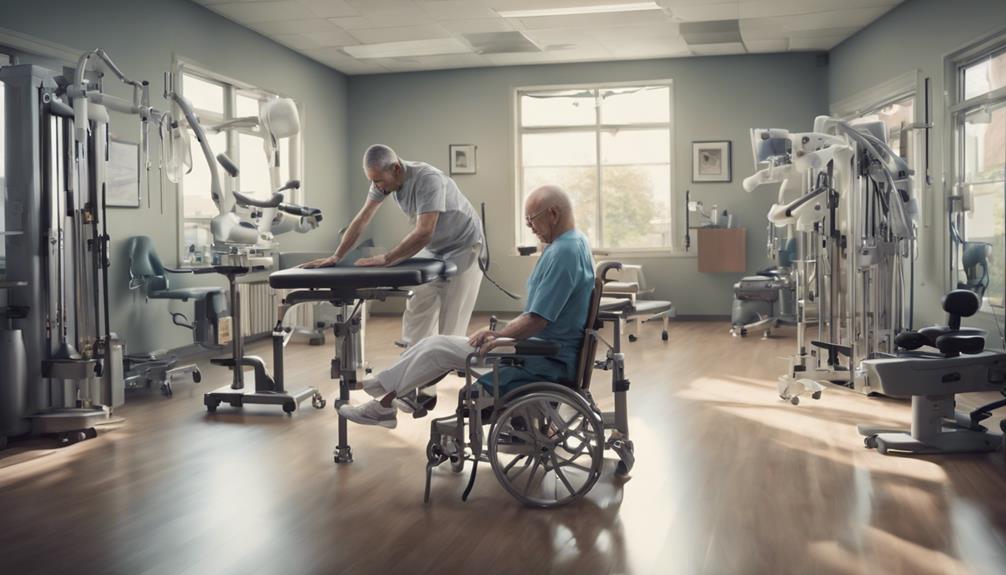
Support from your caregiver markedly influences your recovery. Caregivers can assist with exercises, ensuring you perform movements correctly and safely. They can also motivate you when motivation wanes and help create a supportive environment that reduces frustration and anxiety. Their encouragement and presence can make a big difference in your confidence and adherence to your rehabilitation routine. Caregiver support also extends to helping you manage daily activities and making adjustments in your surroundings to facilitate easier movement. This assistance not only boosts your physical recovery but also provides emotional reassurance, which is essential during challenging times.
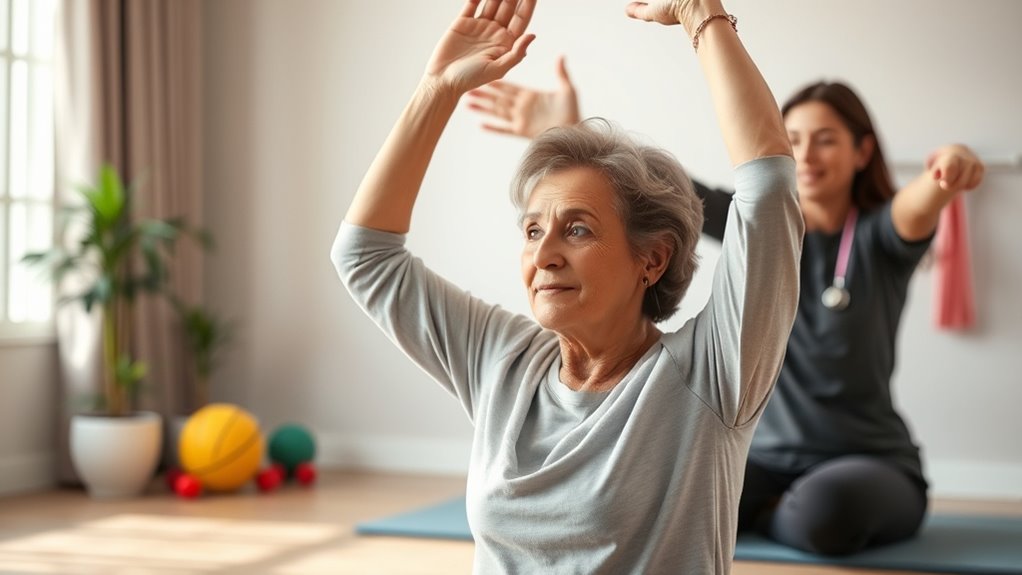
When incorporating gentle exercises into your routine, start with simple movements like wrist circles, ankle rotations, and shoulder shrugs. These activities improve circulation, increase joint flexibility, and prevent stiffness. As your strength improves, you can gradually introduce more targeted exercises, such as seated leg lifts or gentle resistance band work, always paying attention to your comfort level. It’s important to listen to your body and avoid pushing yourself too hard too quickly. Rest periods between exercises are just as important as the exercises themselves, giving your muscles time to recover and reducing the risk of injury.
In addition to physical benefits, gentle exercises can help reduce stress and improve mental well-being. The sense of accomplishment you feel after each session can boost your motivation and outlook. Incorporating breathing exercises and mindfulness techniques can further enhance your recovery, helping you stay focused and calm. Remember, progress might be slow at first, but with patience and consistent effort, your mobility can improve markedly. Your caregiver can help monitor your progress and adjust your exercises as needed, ensuring your recovery remains safe and effective. Overall, combining thoughtful rehabilitation strategies with caregiver support creates a strong foundation for regaining independence and enhancing your quality of life after a stroke.
Frequently Asked Questions
How Soon After a Stroke Can I Start Exercising?
You can start exercising soon after a stroke, but timing considerations are vital. Usually, your doctor will advise when it’s safe to begin gentle activities, often within days or weeks. Always follow safety precautions, like starting slowly and monitoring how you feel. Your healthcare team will guide you through suitable exercises, ensuring you don’t push too hard too soon. Prioritizing safety helps prevent setbacks and promotes gradual recovery.
Are There Exercises Suitable for Severe Mobility Impairments?
Are you wondering if there are exercises for severe mobility impairments? Absolutely. Adaptive stretching and seated yoga are excellent options, tailored to your needs. These gentle activities help improve flexibility, reduce stiffness, and promote circulation without putting stress on your body. You can do them safely while seated or lying down, making them accessible regardless of your mobility level. Have patience—you’ll notice progress over time with consistent practice.
How Can I Prevent Exercise-Related Injuries During Recovery?
To prevent exercise-related injuries during recovery, you should always do a proper warm-up before starting. This prepares your muscles and reduces strain. Maintain correct posture throughout your exercises to avoid unnecessary stress on your joints and muscles. Listen to your body; if you experience pain or discomfort, stop immediately. Consult with your healthcare provider or therapist regularly to guarantee your exercises are safe and appropriate for your current mobility level.
Should I Consult a Doctor Before Beginning Gentle Exercises?
Yes, you should consult a doctor before starting gentle exercises. A medical consultation provides a personalized assessment of your condition, ensuring the exercises are safe and appropriate for your recovery stage. Your healthcare provider can identify any contraindications and recommend modifications, helping you avoid injury and maximize benefits. Always follow their guidance to support your mobility improvement safely and effectively.
Can These Exercises Help With Cognitive Recovery Too?
Like planting seeds in a garden, gentle exercises can nurture your cognitive benefits and boost mental stimulation. These activities increase blood flow to the brain, helping improve focus, memory, and overall mental clarity. While mainly aimed at physical recovery, consistent gentle exercises support neural pathways, aiding cognitive recovery. So, yes, engaging in these exercises not only enhances mobility but also promotes mental health, making your recovery journey more all-encompassing.
Conclusion
Just like a gentle stream gradually shapes the landscape, these exercises can steadily improve your mobility. Remember, progress might be slow, but consistency is key. By incorporating these gentle movements into your daily routine, you’ll build strength and confidence step by step. Stay patient and positive—each small effort adds up to a big difference. Keep moving forward, and you’ll find yourself regaining independence, one gentle step at a time.