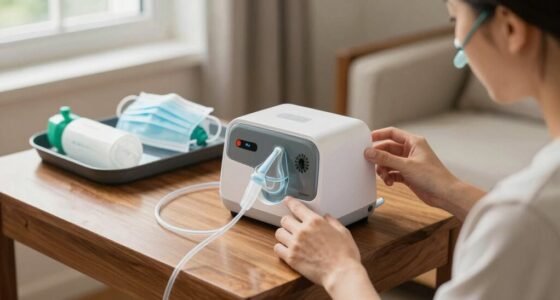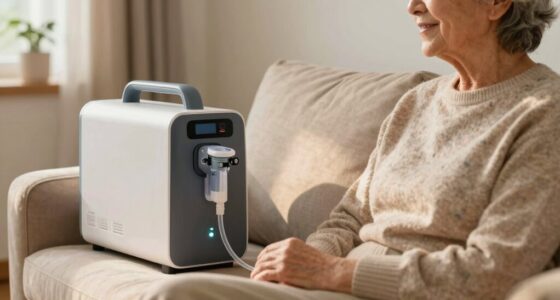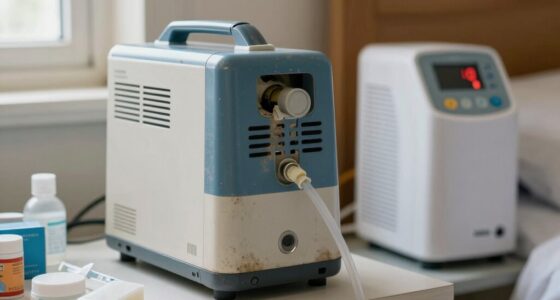
Using oxygen therapy at home increases fire risks because oxygen supports combustion, especially if exposed to open flames, heat, or sparks. To stay safe, keep tanks away from heat sources, ensure proper storage and ventilation, and use safety devices like smoke alarms and fire extinguishers. Regularly check equipment for leaks and maintain safety protocols. Continue exploring ways to keep your home secure and prevent potential fire hazards.
Key Takeaways
- Oxygen supports combustion, increasing fire risk; proper storage, handling, and safety labels are essential.
- Keep oxygen equipment away from open flames, heat sources, and smoking to prevent fires.
- Install and regularly test smoke detectors and fire extinguishers near oxygen use areas.
- Conduct regular inspections for leaks, damages, and ensure proper ventilation to reduce oxygen buildup.
- Educate family members about fire safety protocols and myths related to oxygen use to prevent accidents.
What Are the Fire Risks of Using Oxygen at Home?
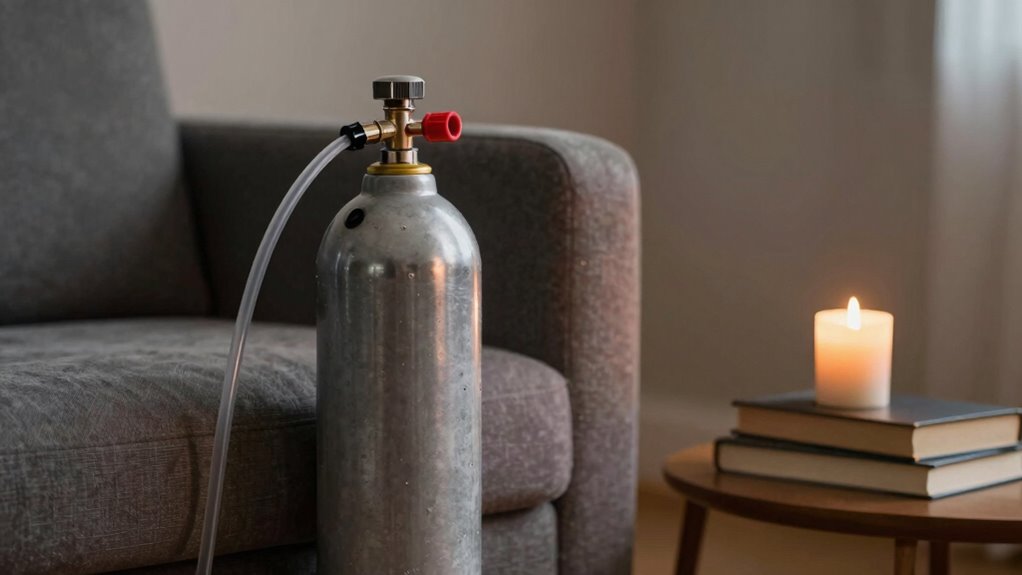
Using oxygen at home increases the risk of fire because oxygen supports combustion and can make fires burn more rapidly and intensely. If you don’t pay attention to proper fire extinguisher placement, you might struggle to respond quickly during an emergency. Keep fire extinguishers accessible and near potential hazards, such as oxygen tanks or concentrators. Additionally, always heed oxygen safety labels; these labels highlight specific dangers and safety precautions. Misplacing a fire extinguisher or ignoring safety labels can lead to delayed responses or accidents during a fire. Remember, oxygen enriches the air, so even small sparks can ignite fires more aggressively. Proper storage, clear labeling, and strategic extinguisher placement are essential to minimize fire risks in your home. Incorporating fire-resistant materials into your home’s interior can also help reduce fire spread in case of an incident. Understanding fire safety protocols and ensuring your home complies with safety standards further enhances your safety during emergencies. Regularly reviewing fire prevention measures related to oxygen use can significantly improve overall safety. Being aware of fire hazard identification helps in proactively reducing risks associated with oxygen therapy.
How Can You Recognize Fire Hazards When Using Oxygen?
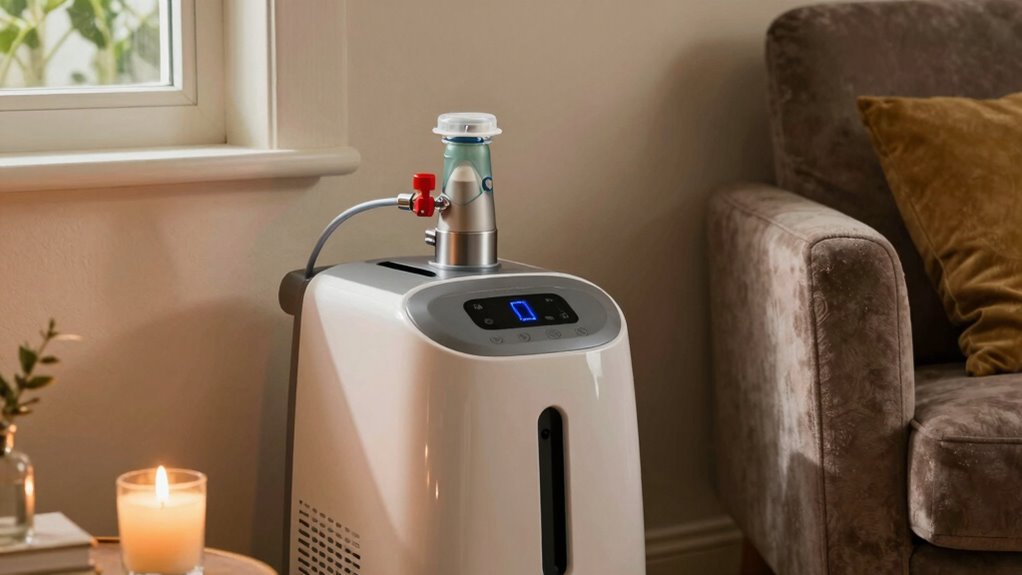
You need to stay alert for open flames or sparks nearby when using oxygen, as they can quickly cause fires. Keep a safe distance from heat sources and open flames to prevent accidents. Also, make certain proper ventilation to reduce oxygen buildup and lower fire risks in your home. Ensuring your ventilation system is properly maintained can significantly decrease the risk of dangerous oxygen accumulation. Regularly inspecting and maintaining oxygen regulators and tubing can also help prevent leaks that increase fire hazards. Additionally, understanding the fire safety protocols specific to oxygen use can further enhance your home’s safety. Being aware of textile line fire-resistant materials and safety guidelines can provide an extra layer of protection in case of emergencies. Maintaining proper fire extinguishers and training household members on their use is also crucial for quick response in case of accidental fires.
Check for Open Flames
Since open flames can ignite quickly in the presence of oxygen, it’s crucial to check your environment for potential fire hazards. Look out for:
- Candle hazards – make sure candles are extinguished when not in use and kept away from curtains or bedding.
- Smoking dangers – never smoke near oxygen equipment, and keep lighters or matches out of reach.
- Open flames – avoid using stoves or fireplaces nearby, and always turn off any open flames when not actively monitoring them.
Maintain Safe Distances
Maintaining safe distances when using oxygen is essential to prevent fires caused by nearby heat sources or flames. Keep oxygen tanks at least 5 feet away from open flames, heaters, or anything that generates heat. Never smoke or use lighters near oxygen equipment, as sparks can ignite a fire instantly. Always verify that smoke detectors are installed and functioning properly in your home; they provide early warnings if a fire starts. When using oxygen, stay alert for signs of heat or smoke nearby. If you notice anything suspicious, turn off the oxygen supply and evacuate your home immediately. Creating a clear fire escape route and practicing evacuation plans strengthens your safety, helping you react quickly in emergencies. Staying vigilant about safe distances greatly reduces fire risks. Understanding electrical safety and proper fire prevention measures can further protect your home and loved ones. Regularly inspecting and maintaining fire safety equipment ensures that your home remains a secure environment in case of emergencies. Additionally, being aware of potential fire hazards in your environment can help you take proactive steps to minimize risks. Recognizing fire safety protocols and knowing how to respond effectively can make a crucial difference during a fire incident. Remember, the proper use and storage of oxygen supplies are key components of fire prevention.
Ensure Proper Ventilation
How can you recognize fire hazards when using oxygen? Poor indoor air quality and inadequate ventilation systems can increase risks. To guarantee proper ventilation, check these key factors:
- Make sure your room has good airflow; avoid blocking vents or exhaust fans that help circulate air.
- Use exhaust fans or open windows regularly to remove stale, oxygen-rich air that could fuel a fire.
- Keep the area free of clutter and flammable materials, which can accumulate and ignite if oxygen levels rise.
- Regularly inspect ventilation systems to ensure they are functioning properly, especially in rooms where oxygen is used or stored. Additionally, be aware of fire safety tips and ensure fire extinguishers are accessible and in good working order. Proper ventilation reduces dangerous oxygen buildup and improves indoor air quality, lowering fire hazards. Regularly assess your home’s airflow management to ensure it functions correctly, especially in rooms where oxygen is used or stored. Maintaining appropriate oxygen levels is crucial for safety, particularly in enclosed spaces where combustion risks are heightened. This simple step can make a significant difference in fire safety, especially considering the horsepower of electric bikes that can produce quick acceleration, which could be hazardous in poorly ventilated spaces.
Top Safety Tips for Using Oxygen Tanks and Therapy Devices Safely

Using oxygen tanks and therapy devices safely is crucial to prevent accidents and guarantee effective treatment. First, understand that fire safety myths can lead to dangerous habits. Always keep oxygen tanks away from open flames, smoking areas, and heat sources. Verify your devices are maintained, and check for leaks regularly. Oxygen therapy benefits include improved breathing and quality of life, but misuse increases fire risk. Use the correct equipment and follow manufacturer instructions. Store tanks upright in well-ventilated areas and secure them properly. Avoid using oils, greases, or petroleum-based products near your oxygen. Remember, safety depends on awareness and vigilance. Additionally, understanding fire safety myths can help prevent risky behaviors that compromise your safety. Being informed about oxygen safety guidelines can further reduce the chance of accidents and ensure proper handling of therapy devices. Regular training and proper handling techniques are also essential for maintaining a safe environment. Recognizing hazardous behaviors related to oxygen use can further enhance safety precautions.
How to Install Safety Devices to Prevent Oxygen-Related Fires
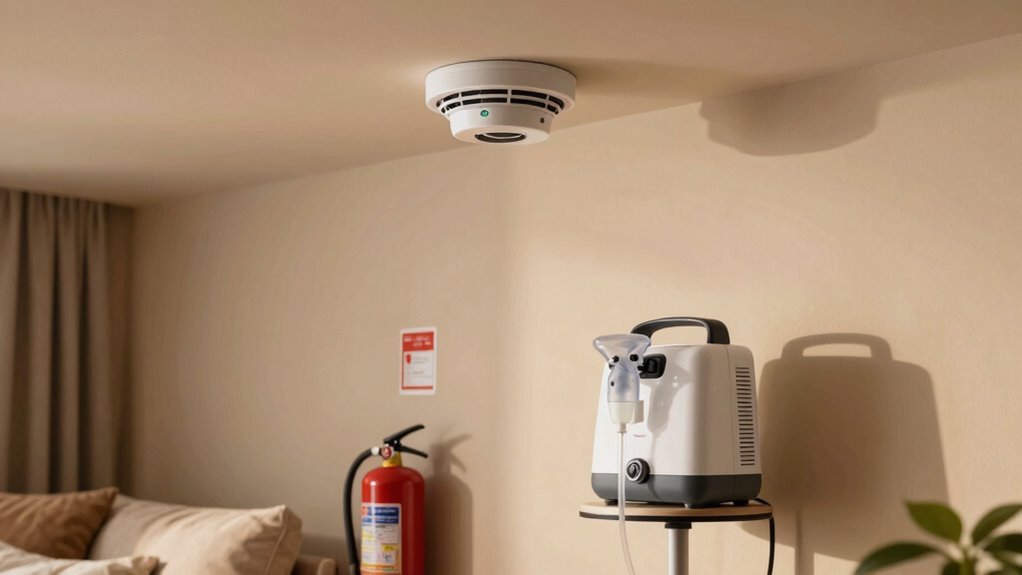
Installing safety devices is a vital step in reducing the risk of oxygen-related fires at home. Start by ensuring your fire alarm is properly installed and functioning. Place smoke detectors near bedrooms, kitchens, and oxygen therapy areas to catch fires early. Here are three steps to follow:
- Fire alarm installation: Use interconnected alarms so when one sounds, all go off, alerting everyone.
- Smoke detector placement: Position detectors on the ceiling or high on the wall, at least 10 feet from cooking appliances.
- Regular testing: Test alarms monthly and replace batteries annually to keep them reliable. Proper fire safety measures can significantly reduce fire risks associated with oxygen use. Additionally, understanding fire prevention technology can help in choosing the most effective safety equipment. Staying informed about smoke detector standards ensures your safety devices meet current safety regulations.
What Are the Emergency Steps if a Fire Breaks Out With Oxygen?

What should you do immediately if a fire breaks out when oxygen is in use? First, stay calm and act quickly. Alert everyone nearby and activate your fire escape plan—leave the house immediately, avoiding elevators. If you can, turn off the oxygen supply to reduce the fire’s intensity, but only if it’s safe to do so. Call your emergency contact or emergency services as soon as you’re at a safe distance. Do not attempt to fight the fire yourself, especially if oxygen is involved, as it can intensify flames. Focus on evacuating everyone safely and ensuring they’re out of harm’s way. Once outside, wait for emergency responders to handle the situation. Remember, quick action can save lives.
How to Conduct Regular Safety Checks for Oxygen Equipment

You need to regularly inspect your oxygen equipment to keep it safe. Check for leaks and damage, and make sure everything is working properly. Proper storage also helps prevent accidents, so review your setup often.
Inspect Equipment Regularly
Regularly inspecting your oxygen equipment is essential to ensuring safety and proper function. To do this effectively, follow these steps:
- Check the fire extinguisher location nearby—make sure it’s accessible and fully charged in case of emergency.
- Examine your oxygen tanks and tubing for cracks, leaks, or corrosion, replacing any damaged parts immediately.
- Maintain smoke detectors regularly, ensuring they’re working properly since they’re crucial for alerting you to fires while you focus on oxygen safety.
Perform these inspections weekly, and keep a log to track maintenance. Proper checks prevent equipment failure and reduce fire risks, especially when oxygen use is involved. Staying vigilant helps protect your home and loved ones.
Check for Leaks
After inspecting your oxygen equipment and ensuring everything appears in good condition, it’s important to check for leaks that could compromise safety. Leak detection is a vital part of your regular safety inspections. To do this, listen closely for any hissing sounds around connections and fittings. You can also apply a soapy water solution to the tubing and connections—bubbles will form if there’s a leak. Always check all valves, regulators, and hoses thoroughly. If you find a leak, turn off the oxygen supply immediately and contact your supplier for repairs. Regular safety inspections help prevent dangerous leaks from going unnoticed. Making leak detection a routine part of your equipment checks ensures your oxygen use remains safe and reduces fire risks at home.
Ensure Proper Storage
Proper storage of oxygen equipment is essential to maintain safety and prevent accidents. To guarantee proper storage and boost fire hazard awareness, follow these steps:
- Store oxygen tanks upright in a well-ventilated area away from heat sources or open flames.
- Keep tanks in a secure, designated spot where they won’t be knocked over or damaged.
- Regularly inspect storage areas for leaks, corrosion, or any signs of damage.
Teaching Your Family About Oxygen Safety and Fire Prevention

Teaching your family about oxygen safety and fire prevention is vital to creating a safe home environment. Start by addressing oxygen myths, such as the belief that oxygen is flammable or causes fires to burn faster. Clarify that oxygen itself doesn’t ignite but enhances existing flames, making it imperative to keep it away from heat sources. Equally important is debunking fire safety myths, like the idea that candles or stoves are always safe if monitored. Teach your family to keep oxygen tanks away from open flames, electrical devices, and heat, and to never smoke near oxygen. Regularly review safety protocols and encourage open dialogue about fire risks. Educating everyone helps prevent accidents and ensures quick, confident responses in emergencies.
Frequently Asked Questions
Can Oxygen Use Cause Long-Term Fire Safety Issues in the Home?
Oxygen use can increase fire risks long-term if you don’t maintain safety measures. You should regularly check your fire extinguisher to verify it’s functional and keep it nearby. Proper smoke alarm placement is vital—install alarms on every level and outside sleeping areas. These steps help you detect fires early and prevent potential hazards from oxygen use, reducing long-term fire safety issues in your home.
Are There Specific Fire Risks Related to Portable Oxygen Concentrators?
Portable oxygen concentrators are like a double-edged sword—they provide life-saving support but can pose fire hazards if misused. Sparks or static from damaged cords, flammable materials nearby, or improper handling can turn these devices into ignition sources. To stay safe, always keep portable oxygen away from open flames, ensure proper maintenance, and never smoke near the equipment. Being cautious minimizes fire risks and keeps your home safe.
How Does Humidity Affect the Risk of Oxygen-Related Fires Indoors?
Humidity impact increases the risk of oxygen-related fires indoors because higher moisture levels can cause condensation on oxygen equipment, potentially leading to malfunctions or sparks. Moisture effects may also encourage corrosion, weakening safety features. To reduce risks, keep humidity levels moderate, avoid excessive moisture around oxygen devices, and regularly check equipment for condensation. Proper ventilation and humidity control help minimize fire hazards associated with indoor oxygen use.
What Are the Legal Requirements for Fire Safety When Using Oxygen Therapy Devices?
You must follow fire safety regulations and guarantee legal compliance when using oxygen therapy devices. This includes keeping oxygen tanks away from open flames, smoking, and heat sources, maintaining clear escape routes, and using proper storage methods. You should also install smoke alarms and regularly check device safety. By adhering to these measures, you actively reduce fire risks and stay within legal requirements, creating a safer environment for everyone.
Are There Specific Fire Safety Training Programs for Oxygen Therapy Users?
Yes, there are specific fire safety training programs for oxygen therapy users. You should seek out fire safety education that focuses on oxygen safety protocols, helping you understand how to prevent fires and respond effectively if one occurs. These programs cover essential topics like safe storage, proper device handling, and avoiding open flames around oxygen. Participating in such training guarantees you’re well-prepared to maintain a safe environment at home.
Conclusion
Did you know that some believe oxygen therapy increases fire risk because oxygen supports combustion? While it’s true that oxygen enriches the air, proper safety measures make fires preventable. By understanding hazards, installing safety devices, and teaching your loved ones about oxygen safety, you can substantially reduce risks. Staying vigilant and proactive isn’t just smart — it’s essential. Remember, knowledge combined with caution keeps your home safer and your family protected from silent fire threats.