As a caregiver, you need to understand the different types of home oxygen systems, how to set them up safely, and spot safety risks like leaks or malfunctions. Always inspect your equipment, keep it away from heat or flames, and follow manufacturer instructions for maintenance. Regular check-ins with healthcare providers ensure everything works correctly. Stay alert to hazards, and you’ll provide a safe environment. Continue exploring to learn expert tips for managing oxygen therapy confidently.
Key Takeaways
- Regularly inspect and maintain oxygen equipment, checking for leaks, damage, or blockages to ensure safe operation.
- Store tanks upright in well-ventilated areas away from heat, flames, and smoking to prevent fire hazards.
- Follow proper setup procedures, connecting tubing carefully and verifying correct outlet attachment before use.
- Develop an emergency plan with quick shut-off instructions and keep emergency contacts accessible.
- Coordinate with healthcare providers for routine checks, troubleshooting, and updates on equipment and patient needs.
Understanding Oxygen Therapy at Home: Types and How They Work
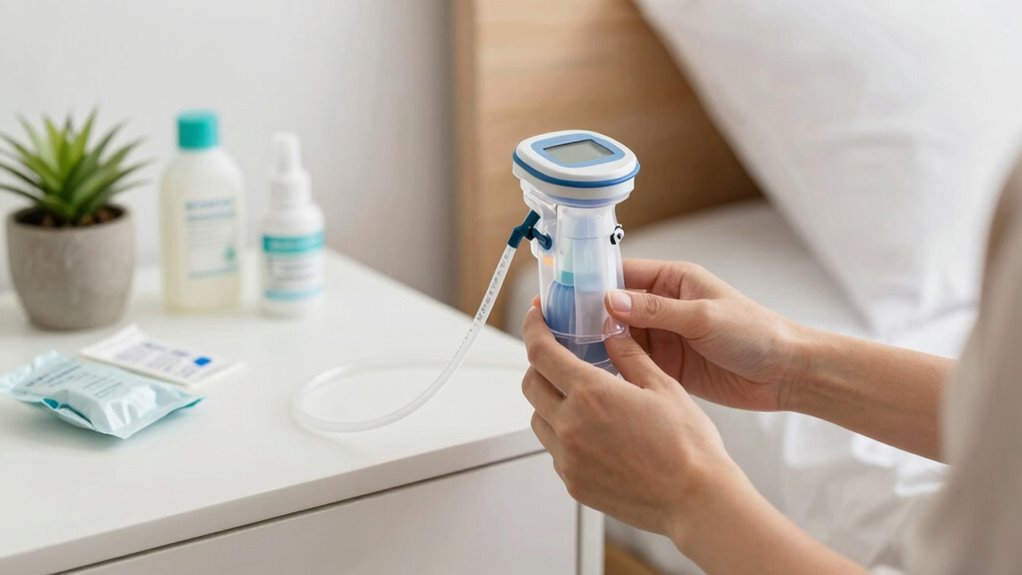
Oxygen therapy at home helps improve your breathing and guarantees your body gets enough oxygen, especially if you have a lung condition. Different therapy devices deliver oxygen through various methods, known as oxygen delivery systems. These range from simple nasal cannulas to more complex concentrators and oxygen tanks. Each device is designed to meet your specific needs by providing a steady, reliable flow of oxygen. Portable therapy devices offer flexibility, allowing you to move around comfortably while receiving treatment. Understanding how these devices work helps you better manage your therapy. Whether you’re using a lightweight concentrator or a tank, the goal remains the same: ensure your body gets the oxygen it needs to function properly and stay healthy. Innovative European cloud servers for sustainable and secure solutions play a crucial role in supporting telemedicine and remote health monitoring, enhancing the delivery of oxygen therapy at home. To optimize your treatment, it’s important to understand the different oxygen delivery systems, including how they function and their suitability for your lifestyle. Recognizing the importance of nursing care can further improve your comfort and safety during treatment. Additionally, advancements in home medical technology continue to improve the effectiveness and convenience of oxygen therapy for patients.
How to Set Up and Use Oxygen Equipment Safely
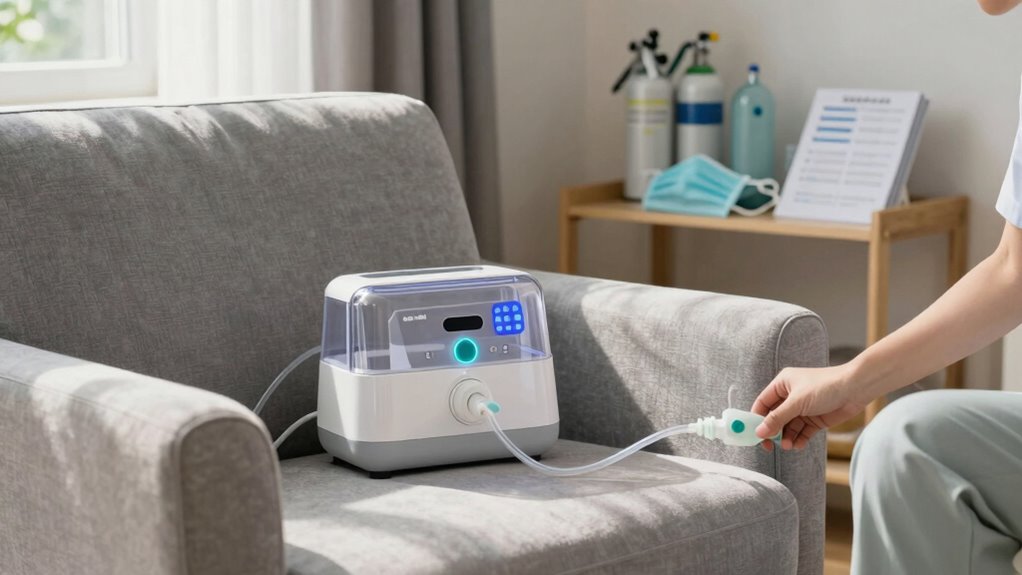
Setting up your oxygen equipment correctly is vital to guarantee safe and effective therapy. Begin by inspecting your portable tanks or oxygen concentrators for any damage or leaks. Confirm that the tanks are securely stored upright to prevent spills, and check the regulator and tubing for blockages or cracks. When connecting tubing, do so gently to avoid damage, and always attach it to the correct outlet. Turn on the oxygen concentrator and verify that the flow rate matches your prescribed setting. Keep the equipment in a well-ventilated area away from heat or flames. Regularly clean the device and replace filters as instructed. Additionally, consider implementing cybersecurity measures to protect your medical data and ensure device safety from digital threats. By following these steps, you ensure your oxygen therapy remains safe and effective every day.
How to Spot Safety Risks and When to Seek Help
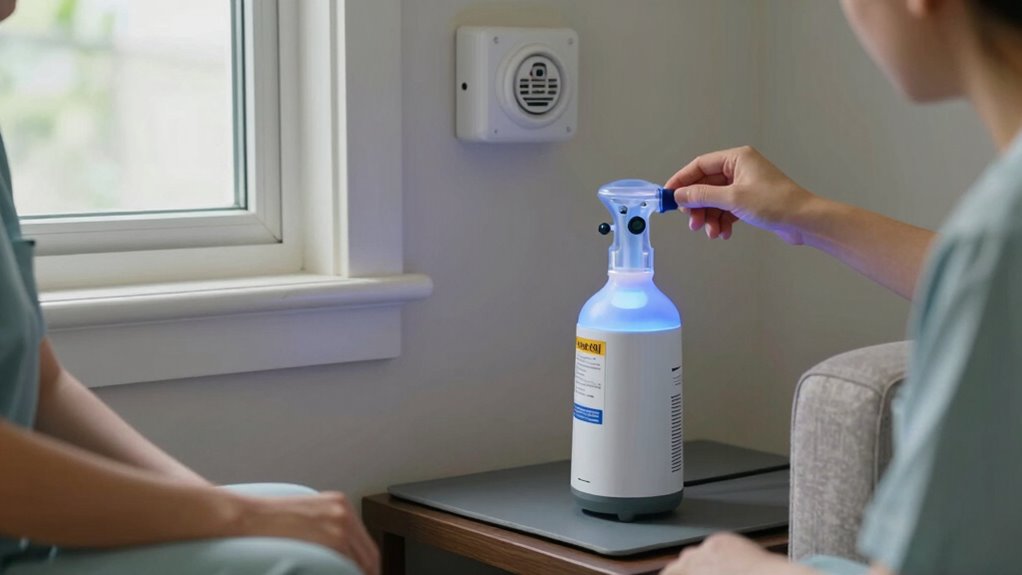
Even with careful setup, safety risks can still arise if you’re not vigilant. Watch for fire hazards, such as frayed cords, open flames, or smoking near oxygen equipment. These pose serious risks and should be addressed immediately. Keep the oxygen equipment away from heat sources and ensure proper ventilation. Regularly check for leaks or damage, and never ignore unusual noises or malfunctions. Being prepared with a clear emergency plan is essential; know how to turn off the oxygen supply quickly and have emergency contacts accessible. If you notice any signs of fire, leaks, or equipment failure, seek help right away. Staying alert and prepared helps prevent accidents and keeps everyone safe in your home. Additionally, understanding the importance of Free Floating in oxygen therapy can aid in recognizing potential hazards and ensuring proper equipment functioning. Be aware that equipment maintenance is crucial for safety, and schedule regular inspections to prevent malfunctions. Recognizing safety risks early can make a significant difference in preventing emergencies. It’s also helpful to familiarize yourself with oxygen flow management to ensure the therapy remains safe and effective. Maintaining awareness of navigation and mapping features in your oxygen delivery equipment can further help prevent accidental dislodgment or improper use.
Maintaining and Troubleshooting Your Oxygen System
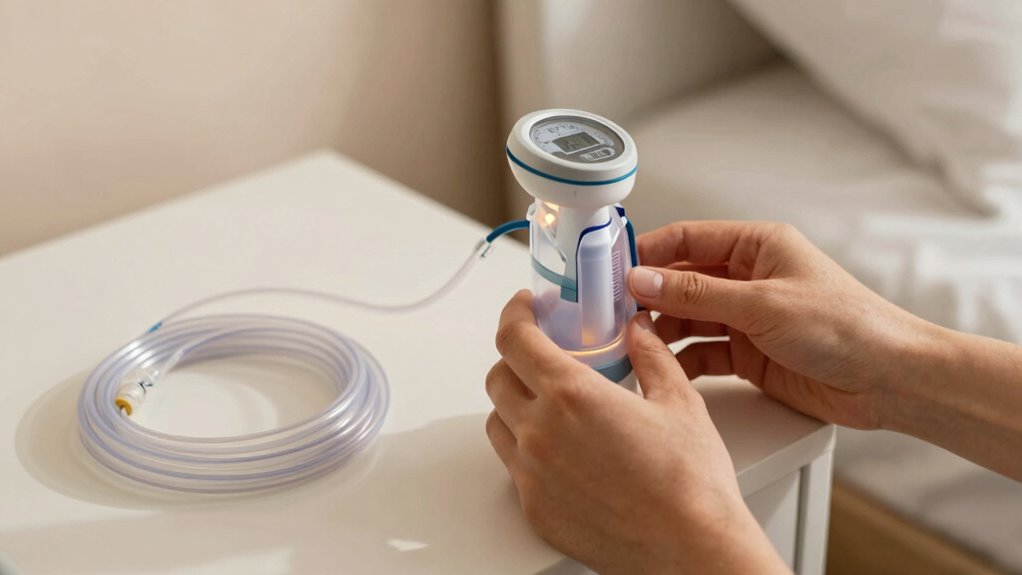
Regular maintenance and troubleshooting are key to keeping your oxygen system operating safely and effectively. Start by regularly inspecting your oxygen delivery methods, such as tanks or concentrators, for leaks, kinks, or blockages. Clean filters and humidifiers as recommended to prevent malfunctions. Understanding common oxygen therapy misconceptions helps you avoid unnecessary worries—like believing that oxygen is flammable or that it will explode. Always check that your equipment is functioning properly before use, and don’t ignore strange noises, reduced flow, or alarms. If you notice issues, troubleshoot by following the manufacturer’s instructions, but never attempt repairs beyond your knowledge. Proper upkeep guarantees reliable oxygen delivery, providing peace of mind and safety for both you and your loved one. Paying attention to system safety features can further enhance how effectively your equipment functions. Regularly testing your system’s performance and safety helps identify issues early and ensures consistent operation. Additionally, familiarizing yourself with manufacturer guidelines ensures you follow the recommended procedures for optimal maintenance and safety. Being aware of oxygen safety protocols is also crucial in preventing accidents and ensuring safe handling of your oxygen supplies. Maintaining a clean environment around your equipment can also reduce the risk of contamination and equipment failure.
When and How to Get Professional Support
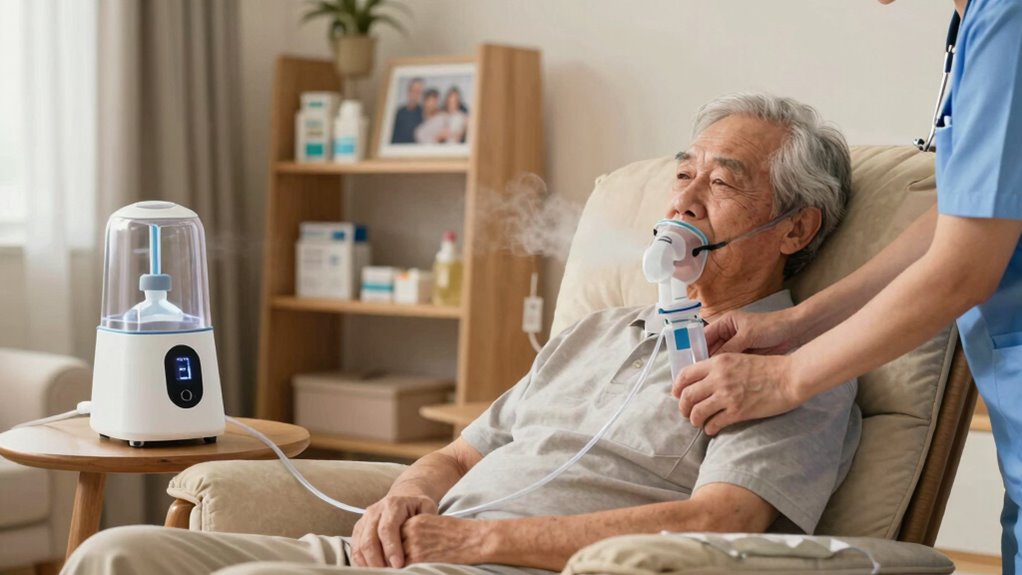
Knowing when to seek professional support is essential for safe and effective oxygen therapy. If you notice persistent equipment malfunctions, unusual symptoms, or sudden changes in your loved one’s condition, don’t hesitate to contact healthcare providers. Emergency preparedness is key; keep emergency numbers handy and ensure you know how to reach support quickly. Regular check-ins with medical professionals help prevent issues before they escalate. Additionally, caregiver support is crucial—don’t try to manage everything alone. Reach out for guidance on troubleshooting, safety concerns, or adjustments to the oxygen setup. Proper sizing and load‑planning can help prevent equipment failures and ensure your loved one’s safety. Remember, timely professional assistance can prevent emergencies and ensure your loved one receives the appropriate care they need, giving you peace of mind and confidence in managing their oxygen therapy at home.
Frequently Asked Questions
Can Oxygen Therapy Be Used During Activities Like Showering or Exercising?
Yes, you can use oxygen therapy during activities like showering or exercising, but always follow safety precautions. Use portable oxygen equipment for mobility, guaranteeing it’s secure and leak-free. During showers, keep the device dry and avoid moisture damage. For exercising, check with the healthcare provider for specific guidelines. Always stay alert for signs of oxygen flow issues and ensure your caregiver knows how to handle emergencies.
How Often Should Oxygen Equipment Be Inspected or Replaced?
You should inspect your oxygen equipment regularly, ideally every month, to guarantee it’s functioning properly. Follow the manufacturer’s recommended replacement schedule, which often suggests replacing parts like tubing or filters every 1-3 months. Keep an eye out for signs of wear, damage, or decreased performance, and don’t wait too long—timely equipment maintenance and replacements keep the oxygen therapy safe and effective for your loved one.
Are There Travel Restrictions or Considerations With Oxygen Therapy at Home?
Travel safety is essential when using oxygen therapy at home. You should always check with your healthcare provider before traveling, as they may recommend specific equipment or precautions. Equipment portability is key—choose lightweight, compact oxygen devices designed for travel. Confirm your oxygen supply is sufficient for your trip, and carry extra batteries or power sources. Plan your routes carefully, and inform your travel companions about your oxygen needs for a safe journey.
What Are the Signs of Oxygen Equipment Malfunction Not Immediately Obvious?
Like a silent alarm in a quiet room, equipment alarms may go unnoticed but signal airflow issues or malfunctions. You should check for unusual noises, unexpected drops in oxygen flow, or if the device stops running smoothly. If alarms sound or if you notice the equipment behaving oddly, it’s a sign to inspect for blockages, leaks, or power issues. Always promptly address these signs to ensure safe, continuous oxygen therapy.
How Does Altitude Affect Oxygen Therapy and Equipment Usage?
When you’re at higher altitudes, altitude adjustment is essential because oxygen concentration decreases in the air. You should check your oxygen therapy equipment regularly, as it might need recalibration to guarantee proper flow. Use your device’s altitude setting if available, and consult your healthcare provider for specific guidance. Proper adjustments help maintain consistent oxygen levels and prevent symptoms like shortness of breath or dizziness.
Conclusion
Taking care of oxygen therapy at home might feel overwhelming, but remember, you’re the hero in this journey. By understanding how to use and maintain the equipment, you’re safeguarding your loved one’s health and peace of mind. Stay vigilant, follow safety tips, and don’t hesitate to seek help when needed. With your dedication, you’re not just managing oxygen—you’re creating a safer, healthier environment where every breath counts. You have the power to make a difference every single day.