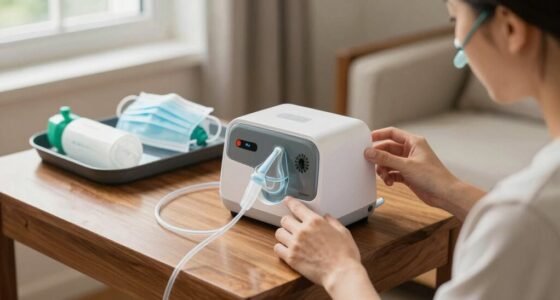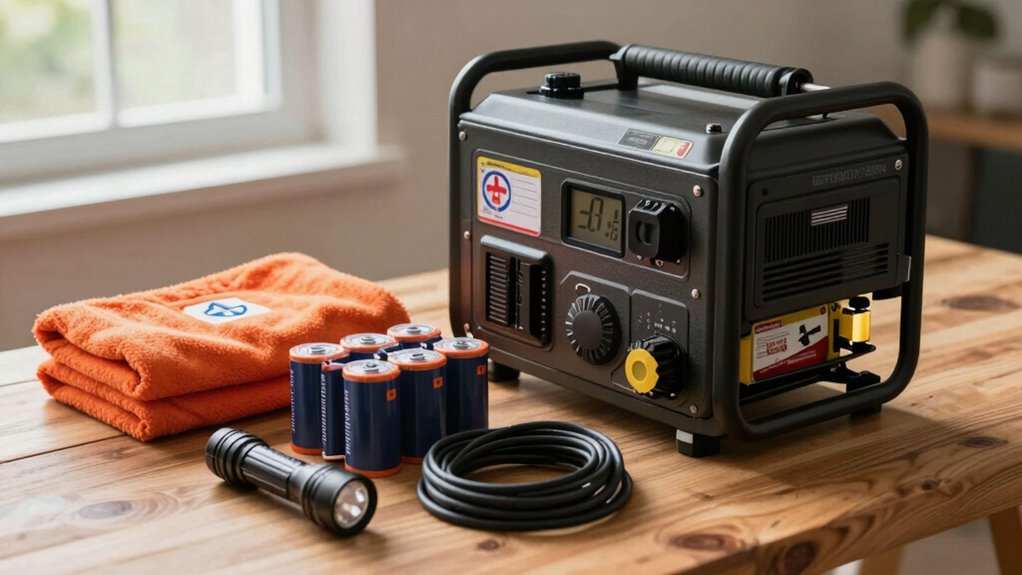
To plan for power outages with medical devices, first identify all your essential equipment and note their power needs. Set up reliable backup systems like batteries or generators, and test them regularly to verify they work properly. Keep communication devices charged and create a plan to stay in touch with emergency contacts. Stock emergency supplies and maintain your backup power sources. If you follow these steps, you’ll be prepared—more detailed guidance awaits as you continue.
Key Takeaways
- Identify all medical devices and calculate their power needs to ensure adequate backup solutions.
- Set up and regularly test reliable backup power systems, such as generators or battery backups, for medical device compatibility.
- Maintain an emergency supply kit with medications, batteries, and essential items to support health during outages.
- Develop a communication plan with emergency contacts and keep devices fully charged for updates and coordination.
- Conserve energy during outages by turning off non-essential devices and verifying seamless switch-over to backup power sources.
Identify Your Medical Devices and Their Power Needs
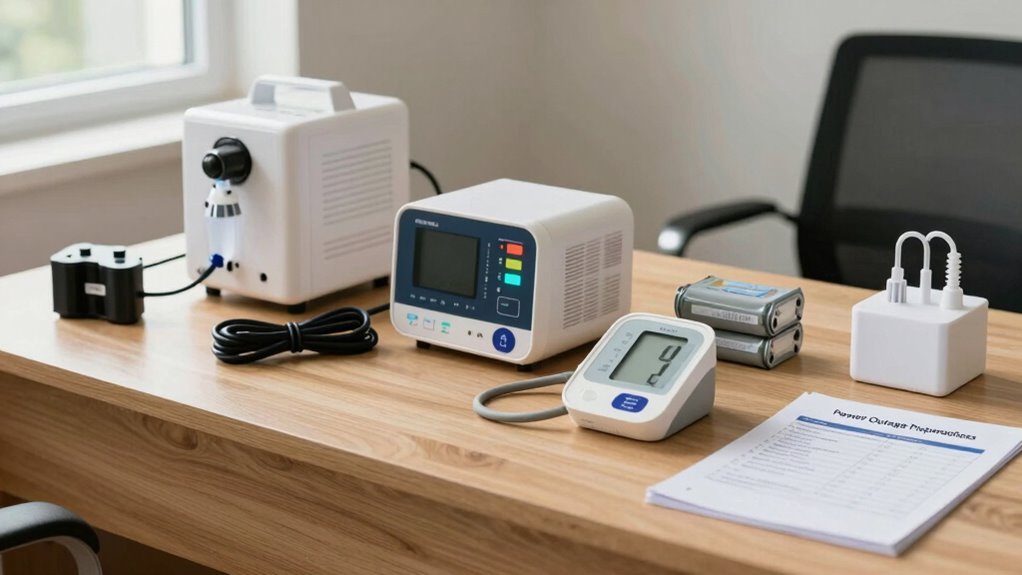
Understanding the power requirements of your medical devices is vital for effective emergency planning. Start by listing all your devices and noting their power needs. Check each device for battery monitoring features—these help you track remaining power and prevent unexpected shutdowns. It’s also important to verify device compatibility with backup power sources, ensuring they can operate safely during outages. Some devices may require specific voltage or wattage, so understanding these details helps you select suitable backup options. Keep documentation of each device’s specifications handy. Additionally, considering the contrast ratio of your backup power sources can ensure they deliver consistent and reliable power. Understanding the load capacity of your backup system helps prevent overloads and ensures all critical devices can operate simultaneously. Familiarizing yourself with power management features can further optimize device performance during outages. Being aware of power quality can help you choose backup solutions that provide stable and clean electricity, reducing the risk of device malfunction. Regularly testing your backup power system and understanding its performance capabilities can help you identify potential issues before an emergency occurs. By knowing your equipment’s exact power demands and monitoring capabilities, you’ll be better prepared to maintain continuous operation and avoid interruptions during emergencies. This proactive approach ensures your devices remain reliable when you need them most.
Set Up a Backup Power System for Medical Devices
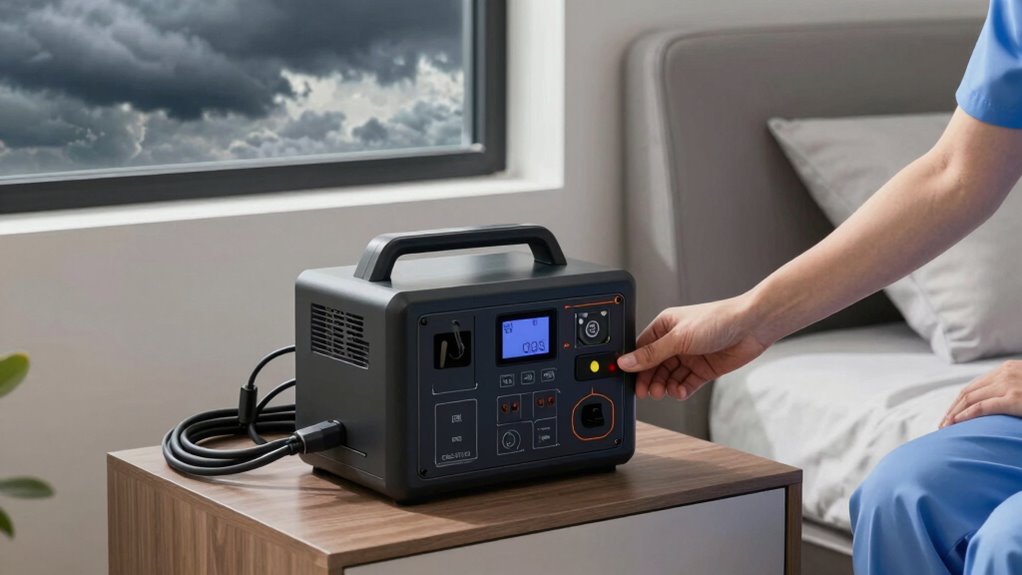
To guarantee your medical devices stay powered during an outage, you need to assess their power needs and select a reliable backup system. Once you have the right backup, it’s essential to test it regularly to confirm it works when needed. Proper setup and maintenance help you stay prepared and avoid unexpected disruptions. Incorporating backup power systems designed specifically for medical devices enhances reliability and safety during emergencies. Regularly reviewing your power supply options ensures your system remains effective and up-to-date as your needs evolve. Understanding safe wiring practices can also prevent potential hazards and ensure your backup system functions properly during an outage. Additionally, choosing a generator type suitable for medical applications can provide peace of mind during extended outages. Considering natural disaster preparedness measures can further protect your power setup and ensure continuous operation when traditional systems fail.
Assess Power Needs
Evaluating your power needs is a crucial step before setting up a backup system for your medical devices. You need to determine how much battery storage is required to keep your devices operational during an outage. Start by listing all essential devices and their power consumption. Check each device’s wattage and estimate how long they must run without power. Focus on energy efficiency to maximize your backup system’s effectiveness; choose devices and batteries that use power wisely. Knowing your total power requirements helps you select an appropriate backup solution, whether it’s a generator or rechargeable batteries. Understanding home energy integration can also inspire natural, backup solutions or remedies that support your overall well-being during emergencies. Additionally, assessing energy conservation strategies can help reduce overall power needs, making your backup system more manageable and cost-effective. Incorporating reliable power sources is essential to ensure continuous operation of your medical devices during outages, preventing interruptions that could compromise your health. Conducting a comprehensive power assessment ensures you won’t underestimate your needs, providing peace of mind during outages and keeping you safe and connected when it matters most.
Choose Reliable Backup
How can you guarantee your backup power system is dependable during an outage? Start by choosing a quality battery backup designed for medical devices. Look for units with enough capacity to power your equipment for the necessary duration. Verify it has a stable output to prevent surges that could damage your devices. Surge protectors are essential; they shield your equipment from power spikes when switching between main power and backup. Regularly check your battery backup’s charge and replace batteries as needed. Invest in surge protectors for all connected devices to prevent damage during outages or voltage fluctuations. A reliable backup system minimizes risks, giving you peace of mind that your medical devices will stay operational when you need them most. Ensuring your system is properly maintained helps guarantee it remains dependable in an emergency, especially when selecting systems with reliable performance as highlighted in current security zone info. Additionally, choosing systems with advanced navigation and safety features can further enhance reliability during unexpected power issues. Incorporating wilderness-grade tech into your backup plan can provide extra assurance in remote or off-grid situations.
Test System Regularly
Regularly testing your backup power system guarantees it will function properly when you need it most. Start by verifying your battery types, ensuring they’re fully charged and in good condition. Different batteries, like lithium-ion or lead-acid, require specific maintenance routines, so familiarize yourself with their needs. During tests, check that your surge protection devices are working correctly to prevent power surges from damaging your medical devices. Run your backup system under real or simulated conditions to confirm it activates promptly and supplies consistent power. Keep a log of each test to track performance and identify potential issues early. Regular testing not only ensures reliability but also helps you feel confident that your medical devices will operate safely during an outage. Incorporating connected equipment into your testing routine can help ensure all devices communicate properly with your backup system. Additionally, understanding power management principles can improve your system’s overall efficiency and readiness during emergencies. A thorough understanding of battery maintenance can further enhance your system’s longevity and dependability. Paying attention to solar panel efficiency can also provide insights into optimizing your solar setup for backup power.
Plan How to Communicate During Power Outages
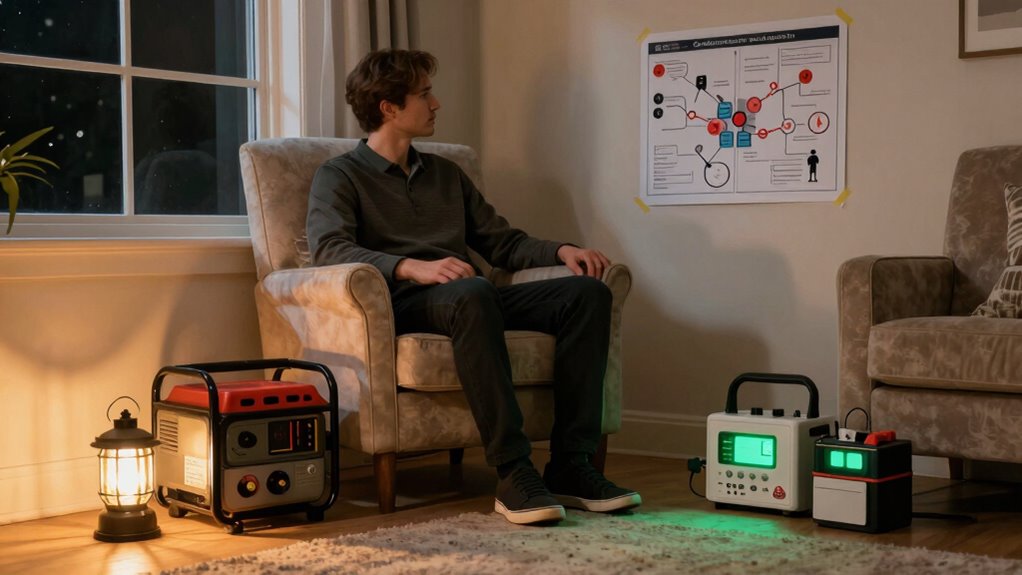
During a power outage, clear communication is essential to guarantee your safety and that of your caregivers. Make sure you have a list of emergency contacts readily accessible, including neighbors, family members, and local emergency services. Decide on reliable communication methods, such as cell phones, battery-powered radios, or messaging apps, and keep devices fully charged. Establish a plan to check in with your emergency contacts regularly, so someone knows you’re safe and can assist if needed. Keep a printed list of important phone numbers in an easy-to-find place. Inform your caregivers and family about your communication plan beforehand, so everyone knows how to reach you during an outage. This preparation minimizes confusion and ensures help is just a click away. Additionally, familiarize yourself with power outage preparedness tips specific to your medical devices to ensure continuous operation or proper backups.
Stock Emergency Supplies and Backup Resources
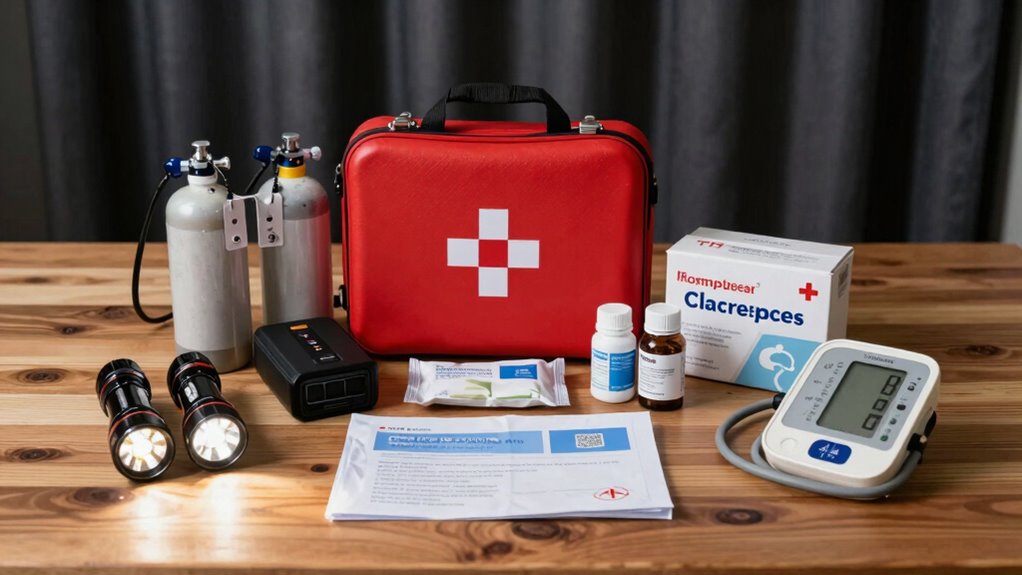
Having emergency supplies and backup resources on hand is essential to guarantee your safety when power outages occur. Store enough non-perishable food, water, and essential medications to last several days. Make certain your medication storage includes a cool, safe place, and consider an emergency refrigeration option if you need to keep temperature-sensitive medicines cold. A portable cooler or a backup power source can help maintain proper storage during outages. Keep a well-stocked first aid kit and extra batteries for medical devices that rely on power. Having these supplies ready ensures you can manage your health needs without interruption. Regularly check expiration dates and replenish supplies as needed. Being prepared with emergency refrigeration and adequate medication storage keeps you safe and minimizes health risks during an outage.
Test and Maintain Your Preparedness Regularly
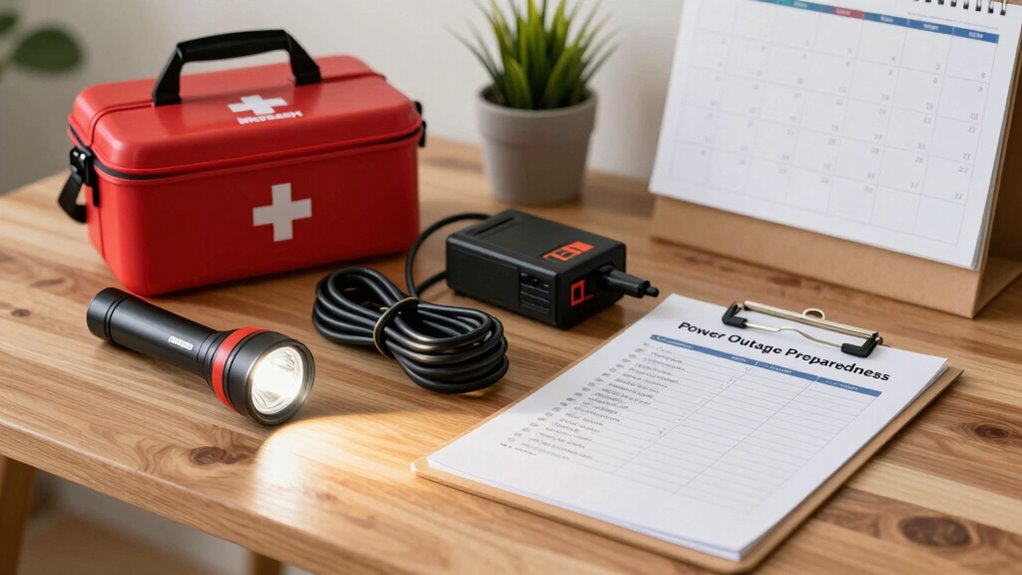
To guarantee your emergency plan remains effective, it’s essential to test your backup systems and preparedness measures periodically. Regularly check battery compatibility to ensure your backup power sources work with your medical devices. Replace batteries as needed and verify they hold a charge. Also, inspect surge protection devices to prevent power surges from damaging sensitive equipment during outages. Test your backup power system by simulating a power loss, confirming your devices switch over smoothly. Keep a maintenance schedule to address any issues promptly. Consistently reviewing and testing your setup helps identify potential problems before an emergency occurs, giving you peace of mind. Staying proactive ensures your medical devices remain operational and protected when you need them most.
What to Do When Power Goes Out
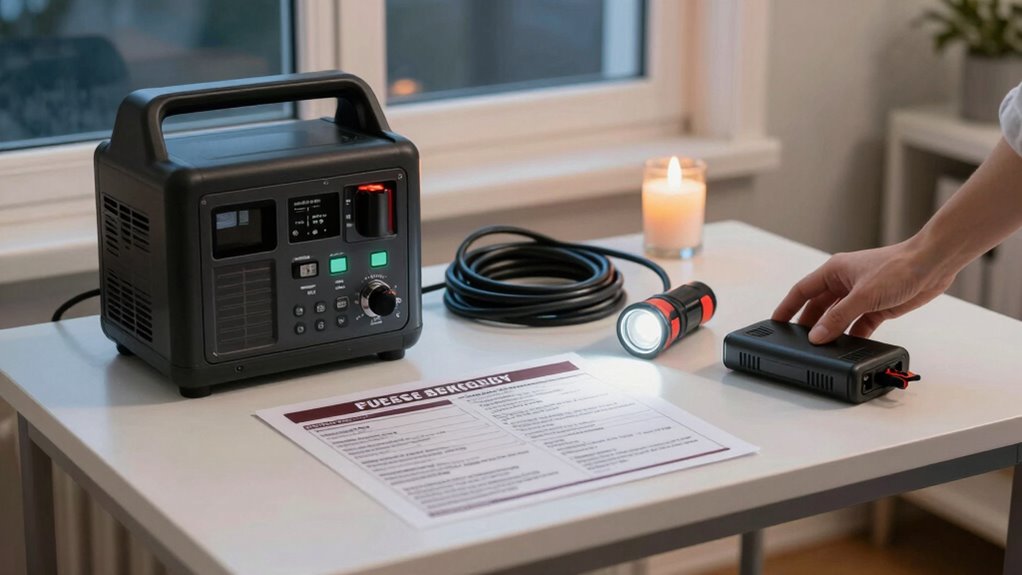
When the power suddenly goes out, your immediate priority should be guaranteeing safety and maintaining access to your medical devices. First, check your backup power sources, such as batteries or generators, and guarantee they’re working safely. Avoid overloading batteries to prevent safety hazards. Conserve power by turning off non-essential devices and lights. If you rely on battery-operated medical devices, switch to battery power promptly and confirm they’re functioning correctly. Keep your devices within reach and have a plan for quick access. Stay informed with a battery-powered radio or smartphone. Remember, proper battery safety is vital—never mix old and new batteries, and replace them as recommended. Power conservation helps prolong your backup sources, guaranteeing your needs are met until mains power is restored.
Frequently Asked Questions
How Do I Prioritize Which Devices Need Immediate Backup Power?
You should prioritize backup power based on device dependency, focusing first on devices essential for your health and safety. Identify which devices are critical, like ventilators or insulin pumps, and guarantee they have reliable backup power sources. Use backup prioritization to organize your plan, so the most vital devices stay operational during outages. Regularly review and test your backup systems to confirm they work when needed most.
What Are the Best Portable Power Options for Medical Devices?
You don’t have to worry about limited options—solar chargers and battery packs are your best portable power choices for medical devices. Solar chargers are eco-friendly and reliable when sunlight’s available, while battery packs provide immediate backup power on the go. Both are lightweight, easy to use, and make certain your devices stay powered during outages. Investing in quality options guarantees peace of mind and continuous health management.
How Can I Ensure My Communication Devices Will Work During an Outage?
To guarantee your communication devices work during an outage, regularly maintain their batteries and check signal reliability. Keep spare batteries charged and on hand, and test your devices periodically to confirm they operate correctly. Consider investing in backup communication options like a portable radio or satellite phone. Staying proactive with battery maintenance and signal checks helps you stay connected when power goes out, ensuring your safety and communication needs are met.
What Are Cost-Effective Ways to Maintain Emergency Preparedness Over Time?
Like a wise owl, you can save costs and build long-term preparedness by implementing simple strategies. Regularly review and update your emergency plan, buy supplies in bulk, and use multi-purpose items to cut costs. Consider community resources or local programs for free or discounted preparedness tools. These cost-saving strategies guarantee you’re ready for emergencies without breaking the bank, keeping you prepared for whatever comes your way.
How Can I Update My Emergency Plan as My Medical Needs Change?
You should regularly review and update your emergency plan to reflect your changing medical needs. Keep an updated medical supply list and communicate these updates with your caregiver. Coordinate with them to ensure they understand your current medications and devices. This proactive approach helps guarantee your emergency plan remains effective, tailored to your evolving health requirements, and that your caregiver is prepared to assist you during power outages or other emergencies.
Conclusion
Being prepared for power outages guarantees your safety and peace of mind. Did you know that over 60% of medical device failures during outages are due to lack of backup plans? By identifying your devices, setting up backups, and staying informed, you can minimize risks. Regularly test your system and keep emergency supplies ready. Stay proactive, so when power goes out, you’re confident you can handle it smoothly and keep yourself safe.