
To prevent falls in advanced Parkinson’s, focus on combining environmental modifications, like removing hazards and installing grab bars, with proper assistive devices such as walkers or canes. Regularly assess your home to keep pathways clear and well-lit, ensuring a safe space for movement. Using these strategies together helps improve stability, reduces injury risk, and boosts confidence. To discover more about creating a safe environment tailored for you, continue exploring ways to enhance fall prevention.
Key Takeaways
- Employ a multidisciplinary approach combining assistive devices and environmental modifications to reduce fall risk.
- Regular home assessments ensure safety hazards are identified and addressed proactively.
- Tailor assistive devices and home adaptations to individual needs to enhance stability and confidence.
- Educate caregivers and patients on proper device use and environmental adjustments for optimal safety.
- Incorporate palliative care principles to focus on quality of life and fall prevention in advanced Parkinson’s stages.
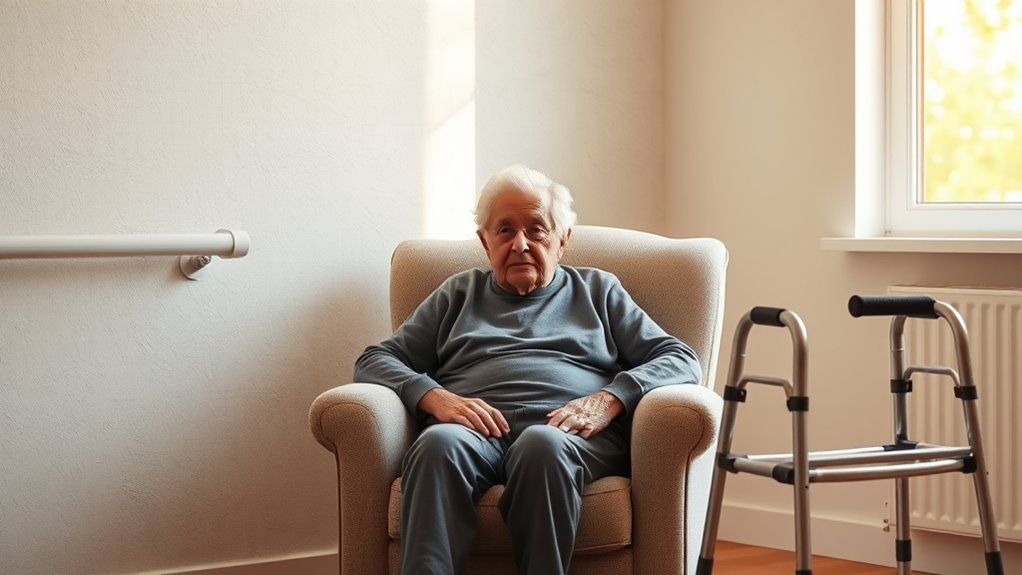
Falls are a common and serious challenge for people with Parkinson’s, often leading to injuries and reduced independence. As the disease progresses, your balance, coordination, and muscle strength may decline, making falls more likely. To help manage this risk, it’s essential to explore practical solutions like assistive devices and environmental modifications. These tools and changes can empower you to stay safer and maintain some level of independence, even as your condition advances.
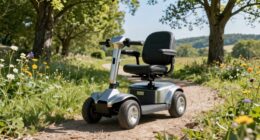
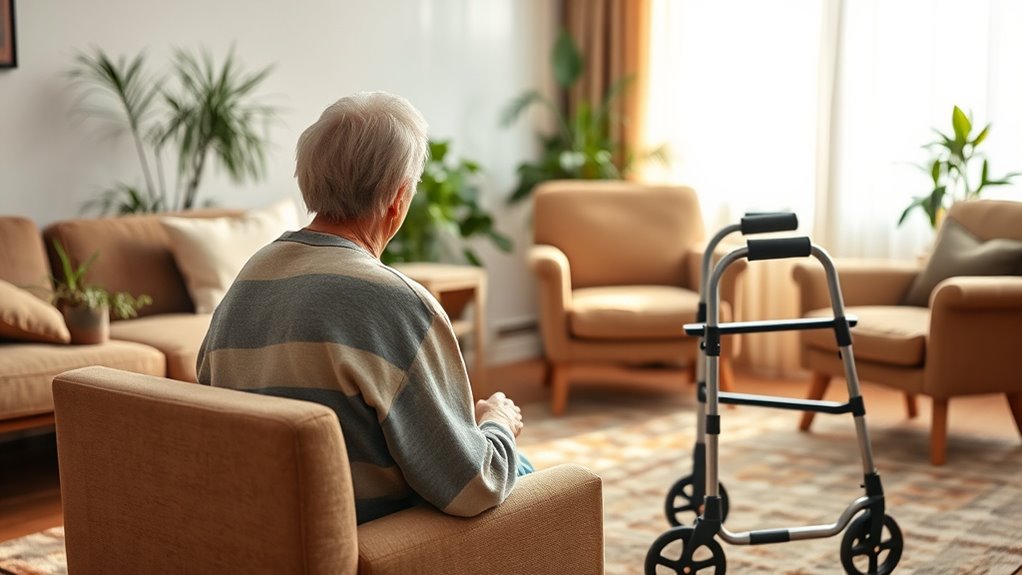
Assistive devices are designed to support your mobility and stability. Walkers, canes, and grab bars provide extra points of contact, helping you balance better during movement. For example, a cane with a sturdy grip can prevent falls if you feel unsteady, while a walker offers a broader base of support for longer distances. It’s important to choose devices that fit your needs and comfort level, and to use them consistently. Proper training on how to use these aids can make a significant difference, reducing the chance of missteps or accidents.
Using assistive devices like walkers and canes improves stability and reduces fall risk.
Environmental modifications are another key aspect of fall prevention. Your living space should be adapted to minimize hazards and improve safety. Simple changes like removing loose rugs, securing cords along walkways, and ensuring adequate lighting can make a big difference. Installing grab bars in the bathroom, non-slip mats in the shower, and handrails along staircases can provide additional support where you need it most. Keep pathways clear of clutter and arrange furniture to allow easy navigation. These adjustments not only lower your risk of falling but also help you feel more confident moving around your environment.
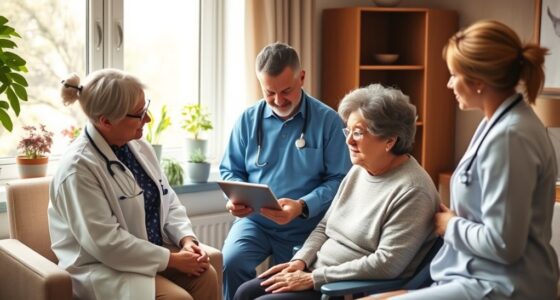
It’s essential to assess your home regularly and make adjustments as your needs change. Engage family members or caregivers in the process—they can offer valuable perspectives and help implement modifications. Remember, the goal is to create a safe environment where you can move freely without fear of falling. Combining assistive devices with environmental modifications offers a broad approach, addressing both your physical stability and your surroundings.
Frequently Asked Questions
How Does Medication Management Influence Fall Risk?
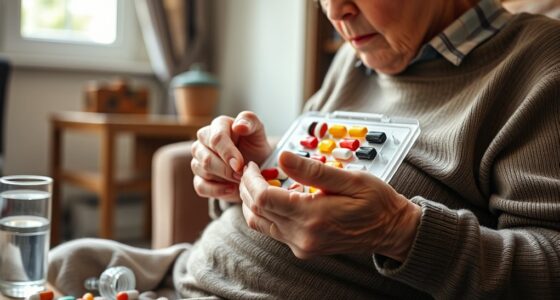
Medication management can critically influence your fall risk. When you experience medication side effects like dizziness, drowsiness, or hypotension, you’re more likely to lose your balance. Additionally, drug interactions may amplify these effects, increasing the chance of falls. It’s crucial to work closely with your healthcare provider to adjust dosages or switch medications to minimize these risks, helping you stay safer and more stable.
Are There Specific Assistive Devices Recommended for Advanced Parkinson’s?
You absolutely need the right assistive devices for advanced Parkinson’s—think of mobility aids as your best allies in conquering daily challenges. Canes, walkers, and wheelchairs are essential, especially those tailored for stability and support. These mobility aids help reduce fall risk by offering extra balance, safety, and independence. Choosing the right device depends on your specific needs, so consult with a healthcare professional to find the perfect fit for you.
Can Diet Modifications Help Reduce Falls?
Yes, diet modifications can help reduce falls. You should focus on nutritional strategies that improve muscle strength and balance, such as incorporating calcium and vitamin D-rich foods. Proper meal planning guarantees stable blood sugar levels, preventing dizziness and weakness. Eating regular, balanced meals with adequate hydration supports overall stability. By making these dietary adjustments, you can enhance your physical resilience and reduce the risk of falls.
How Do Environmental Modifications Prevent Falls?
You can prevent falls by making environmental modifications that improve home safety. Address potential environmental hazards like loose rugs, clutter, and poor lighting to reduce trip risks. Installing grab bars, handrails, and non-slip mats further enhances safety. These changes create a safer environment, helping you avoid falls, especially in areas prone to accidents. Keeping your home hazard-free promotes confidence and independence while managing Parkinson’s progression.
What Role Does Caregiver Support Play in Fall Prevention?
Think of caregiver support as your sturdy lighthouse guiding you through stormy seas. Your caregiver boosts your emotional resilience and encourages social engagement, which helps you stay alert and confident. Their presence offers reassurance, reducing fears that might cause you to stumble. By actively supporting your daily routines and safety measures, caregivers play a essential role in preventing falls, helping you navigate your environment more securely and maintain independence.
Conclusion
Taking a palliative approach to falls prevention in advanced Parkinson’s means you’re addressing more than just the physical risks—you’re embracing comfort and dignity. By focusing on tailored strategies, you can help reduce falls and improve quality of life. Remember, sometimes the best way to navigate rough waters is to go with the flow and adapt. You’re not alone in this journey; with the right support, you can keep moving forward, even when the going gets tough.