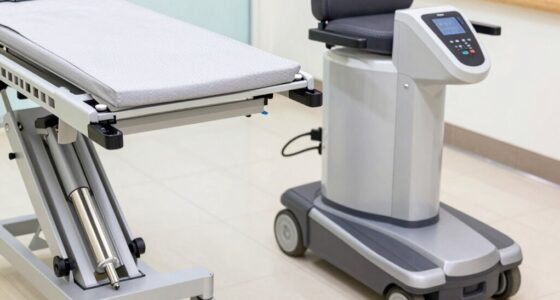
To select a lift for a bariatric patient, focus on key factors like weight capacity, size, and space. Guarantee the lift fits your environment and supports the patient’s safety and comfort. Prioritize features like easy operation, safety alarms, and durable construction. Consider your budget but don’t compromise on quality. Proper assessment helps prevent accidents and ensures long-term reliability. If you want to know more about making the best choice, keep exploring for detailed guidance.
Key Takeaways
- Assess the patient’s weight, size, and transfer needs to select a lift with adequate weight capacity and appropriate dimensions.
- Evaluate available space, ceiling height, and environmental factors to ensure proper fit and safe maneuverability.
- Choose a lift type (e.g., ceiling, Hoyer, sit-to-stand) that aligns with the facility layout and patient mobility.
- Prioritize safety features like emergency stops, backup power, and ease of access for caregivers.
- Consider budget, durability, and maintenance requirements to ensure long-term safety and cost-effectiveness.
Why Is Choosing the Right Bariatric Lift So Important?
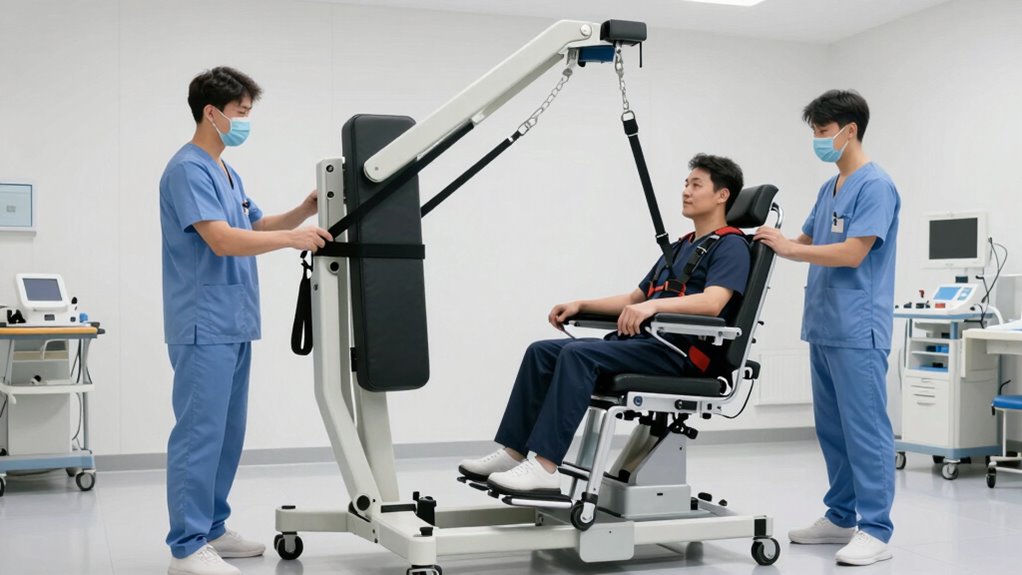
Choosing the right bariatric lift is essential because it directly impacts patient safety and comfort. When selecting a lift, consider how it enhances patient experience through better comfort and support. A well-designed lift not only ensures stability but also minimizes discomfort during transfers, reducing anxiety for patients. The aesthetic design matters too; a sleek, unobtrusive lift can help create a more comfortable environment, easing patient stress and promoting dignity. Comfort and visual appeal work together to foster trust and confidence in the equipment. Remember, the right lift isn’t just about capacity—it’s about providing a safe, supportive, and respectful experience for your patients. Additionally, understanding safe transfer techniques can further improve patient safety during lifts. Incorporating ergonomic design features can also reduce caregiver strain and improve overall handling during patient transfers, which is an important consideration for maintaining caregiver safety and efficiency. Paying attention to equipment stability ensures secure and reliable patient handling, further enhancing safety and confidence. Proper weight capacity assessment is crucial to accommodate individual patient needs safely.
What Are the Key Factors Like Weight Capacity and Size?
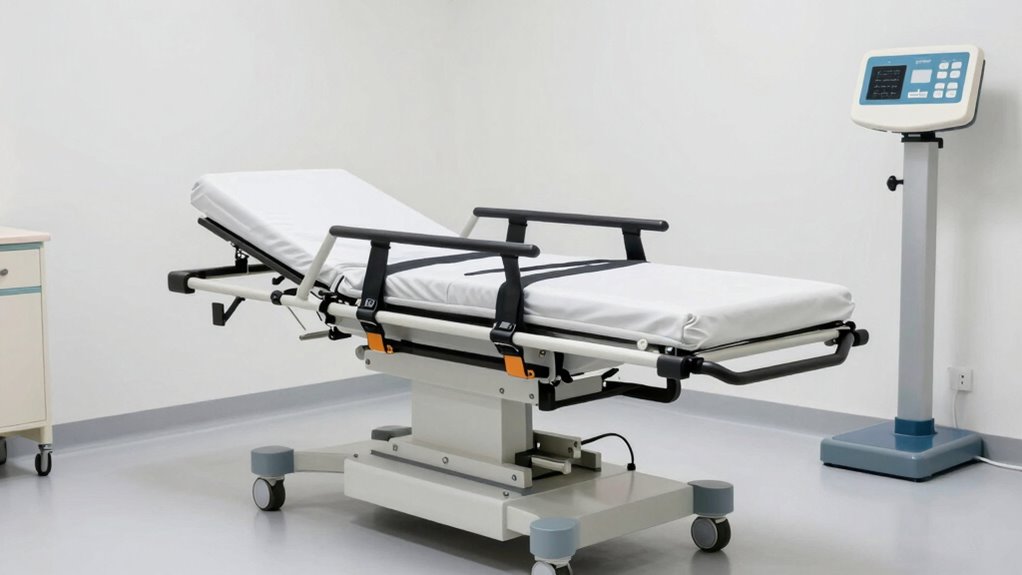
What are the key factors to contemplate when evaluating a bariatric lift? First, consider the weight capacity. Ensure the lift can comfortably support the patient’s current weight and any potential increases. This prevents safety issues and reduces the need for frequent replacements. Next, assess the size of the lift, including its width, length, and height. It should fit comfortably within your space and accommodate the patient’s size without feeling cramped. A lift that’s too small or too large can compromise safety and comfort. Additionally, check if the lift’s dimensions align with your facility’s layout and door openings. Understanding the Rhythm Failure concept can help in selecting equipment that maintains consistent performance under varying conditions. It is also important to evaluate the lift’s weight distribution to ensure stability during transfers. Ultimately, selecting a lift with the appropriate weight capacity and size guarantees safety, functionality, and ease of use for both caregivers and patients.
Which Safety Features Should You Prioritize in a Bariatric Lift?
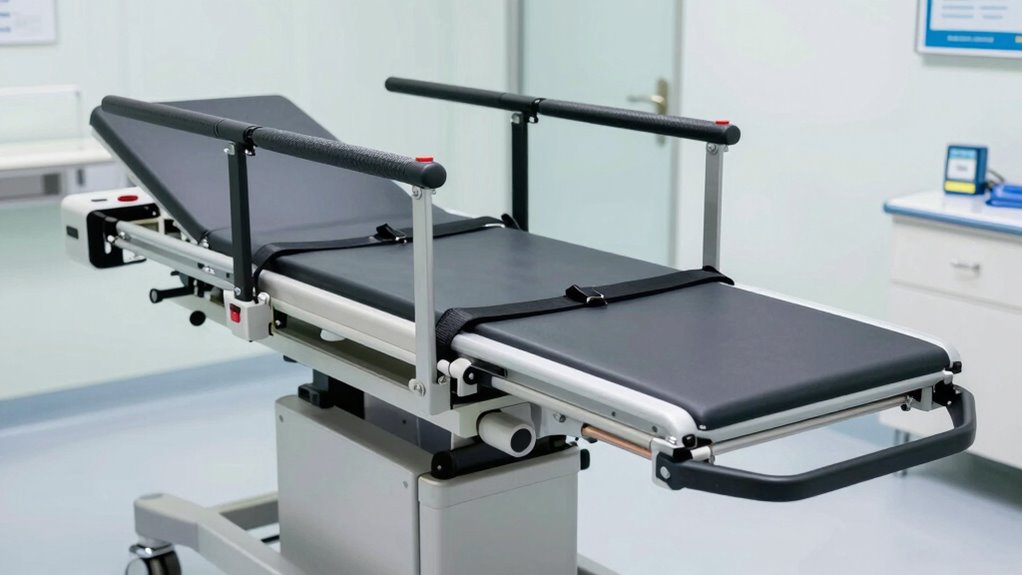
Safety features are a top priority when selecting a bariatric lift, as they directly impact patient security and caregiver confidence. Look for emergency features like an alarm system or backup power, which guarantee safety if the main power fails. Emergency stop buttons should be easily accessible, allowing quick halts during an issue. Battery life is equally vital; a lift with a long-lasting battery ensures continuous operation during power outages or extended use, reducing risks. Confirm that the battery can hold a charge long enough for your typical transfers, and check how easy it is to recharge or replace. Prioritizing these safety features helps protect your patient and provides peace of mind during every transfer. Additionally, filtration and pump protection are important to keep the lift’s components functioning smoothly and prevent unexpected failures. Incorporating safety testing protocols can further ensure that the lift meets all necessary standards and operates reliably under demanding conditions. Regular maintenance checks are also crucial to identify potential issues early and maintain optimal safety performance. Implementing user training ensures that caregivers are knowledgeable about safety features and proper operation, which is essential for preventing accidents. Ensuring that the lift is equipped with emergency communication systems can further enhance safety by allowing caregivers to summon help quickly in case of an emergency.
How Do You Assess Ease of Use for Caregivers and Patients?
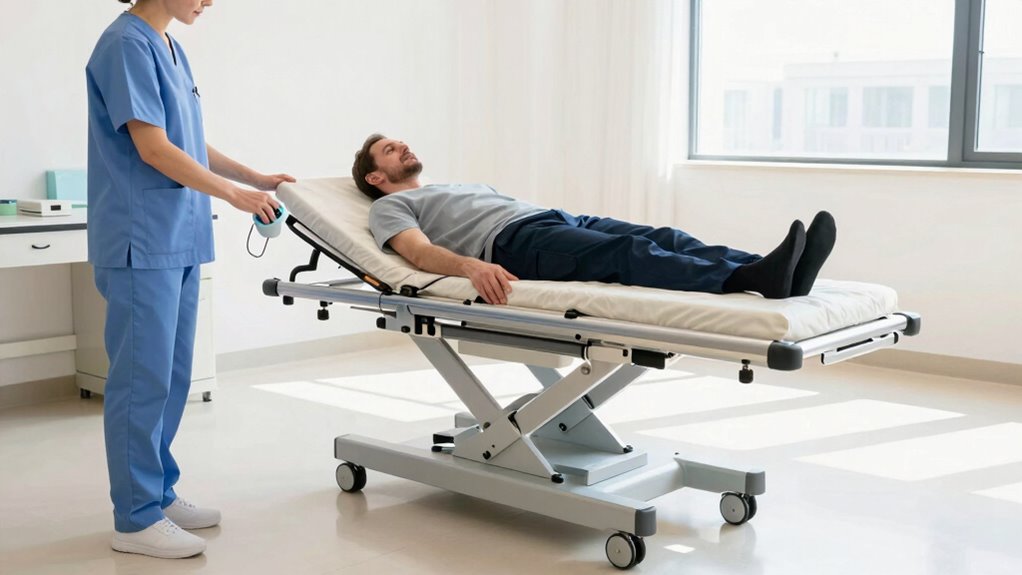
Evaluating how easy a bariatric lift is for caregivers and patients to operate is essential to guarantee safe and efficient transfers. Focus on the ergonomic design, ensuring controls are accessible and comfortable to use for different user heights and hand sizes. A well-designed ergonomic layout reduces fatigue and minimizes errors during operation. Additionally, assess the user interface—look for intuitive, straightforward controls that don’t require extensive training. Clear labels, simple buttons, and logical placement improve ease of use, especially in high-pressure situations. Testing the lift with actual users allows you to identify potential challenges and confirm that the design promotes safety and confidence. Incorporating ergonomic principles—such as automation and user-centered design—can further enhance ease of use. Considering technological advancements in lift design can also contribute to improved safety and user experience. Prioritizing these factors helps ensure that both caregivers and patients can operate the lift safely and comfortably. Additionally, evaluating ease of cleaning and maintenance is important to ensure ongoing safety and hygiene standards. Regular maintenance checks and hygiene protocols further support safe operation and longevity of the equipment.
What Types of Bariatric Lifts Are Available, and Which Is Best for Your Needs?
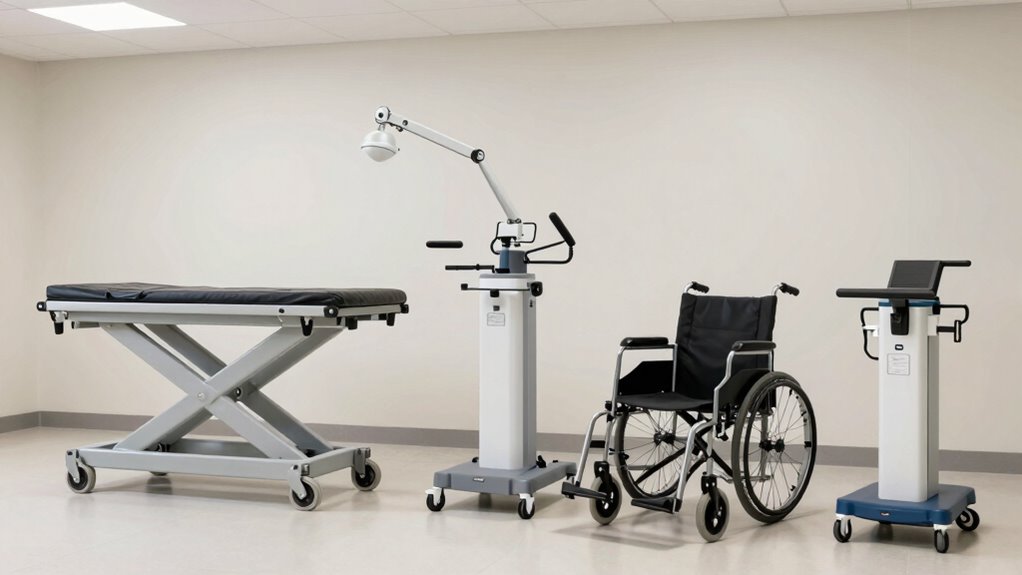
Choosing the right bariatric lift begins with understanding the various types available to meet different needs. Each offers unique features focused on patient comfort and aesthetic design. To help you visualize, consider these options:
Explore various bariatric lifts designed for comfort, efficiency, and sleek aesthetics to suit every patient’s needs.
- Hoyer Lifts – versatile and adjustable, ideal for different patient sizes, with smooth operation for comfort.
- Sit-to-Stand Lifts – promote independence, featuring sleek designs that blend into any environment.
- Overhead Ceiling Lifts – maximize space, providing silent, gentle transfers with a minimalistic look.
- Stand Assist Lifts – lightweight and portable, ensuring ease of use while maintaining a discreet, modern appearance.
Choosing the best depends on your patient’s specific needs, comfort preferences, and the space’s aesthetic.
How Do Environment and Space Constraints Affect Your Choice?
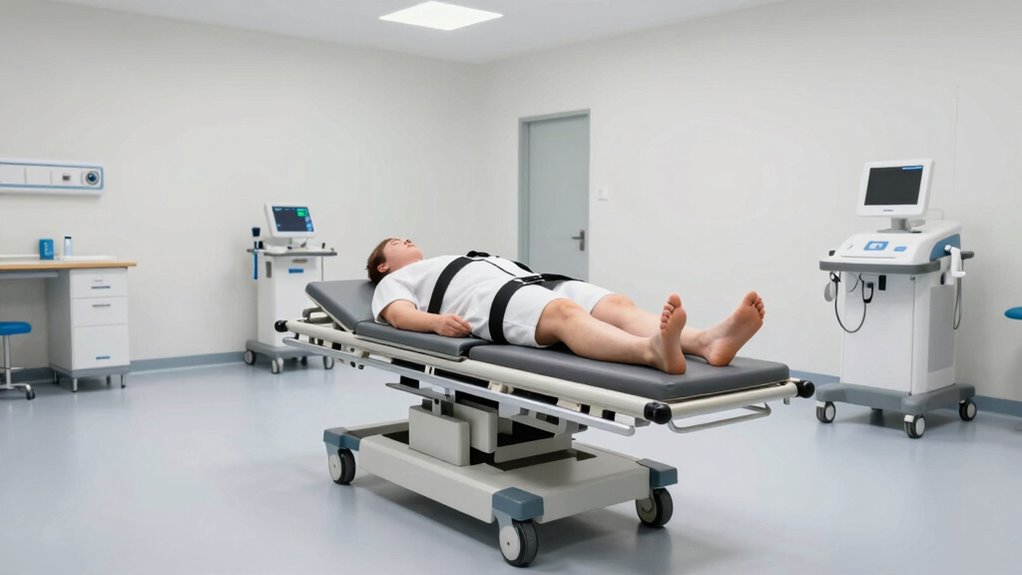
Your space limitations and building structure directly influence which lift options are feasible. You need to contemplate how much room is available, whether the environment can support the lift’s weight, and if it allows for easy access and maneuvering. Making the right choice depends on balancing these environment and space constraints with your patient’s needs. Additionally, considering Free Floating features can help ensure the lift integrates seamlessly into the existing backyard or home layout. Evaluating space optimization strategies can further enhance the functionality within limited areas. Understanding heat distribution and load capacity can also be crucial to selecting a lift that maintains safety and efficiency within your space constraints. Incorporating space-saving design principles can optimize functionality and ensure comfortable operation in constrained environments. Exploring field-of-view considerations can assist in identifying lifts that maximize accessibility while fitting within your spatial limitations.
Space Availability Considerations
Environmental and space constraints play a crucial role in determining the appropriate bariatric lift. Your space planning must consider room dimensions to guarantee the lift fits comfortably without overcrowding. Visualize a few key factors:
- The width of the room—can it accommodate the lift’s base and door clearance?
- The ceiling height—does it allow safe operation and movement?
- Nearby furniture or fixtures—are they obstacles during installation or use?
- Pathways—are hallways and doorways wide enough for easy access?
- Considering smart-home integrations can enhance safety features and streamline lift operation within your available space.
- Additionally, understanding European cloud solutions and their adaptability can inform your planning for future technological upgrades or integrations.
- Incorporating space optimization strategies can further maximize your available environment and ensure seamless functionality.
- Evaluating modular lift designs can provide flexible options tailored to your specific spatial limitations.
Structural Support Requirements
When selecting a bariatric lift, ensuring the space can support its weight and structural requirements is essential. You must evaluate how the lift’s weight distribution impacts the environment, preventing stress on floors or walls. Structural integrity is critical; the room must withstand the lift’s load without risking damage or failure. Check the foundation and support beams to confirm they can handle the increased weight, especially if the lift is permanently installed. Consider ceiling height and wall strength to accommodate the lift’s design. Failing to account for these factors can lead to unsafe conditions or costly modifications later. Proper assessment guarantees the environment is capable of supporting the lift safely, ensuring long-term durability and patient safety.
Accessibility and Maneuverability
Space constraints and layout considerably influence the choice of a bariatric lift, as they determine how easily the device can be maneuvered and operated safely. You need to take into account the available room for movement and the lift’s placement. Think about:
- The width of doorways and hallways to ensure smooth passage.
- Adequate space around the lift for safe transfer and turning.
- Lighting considerations to improve visibility and safety during use.
- Aesthetic options that blend with your environment without compromising function.
Choosing a lift that fits well within your space minimizes hazards. Opt for models with customizable aesthetic features that match your decor, and ensure lighting enhances usability without creating glare or shadows. Proper planning guarantees safe, easy access for the patient.
What Is the Budget for a Reliable and Durable Bariatric Lift?
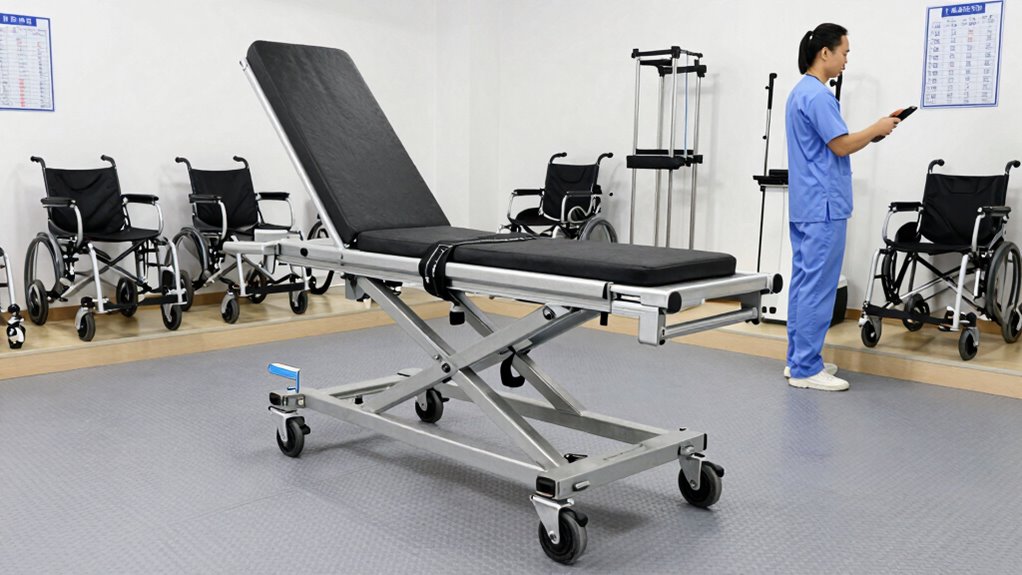
Establishing a realistic budget for a bariatric lift is essential to make sure you get a reliable and durable device that meets your needs. Begin with a thorough cost analysis, comparing prices from different brands to understand what fits your financial plan. Remember, a low-cost lift may save money upfront but could lack durability or safety features, leading to higher expenses later. Prioritize brand reputation, as established companies often offer better quality, warranty support, and reliable performance. Investing in a dependable lift ensures safety and longevity, reducing the risk of costly repairs or replacements. Balancing your budget with these factors helps you choose a device that provides long-term value, safety, and peace of mind for both caregivers and patients.
How Can You Ensure Compliance and Maintain Long-Term Safety?
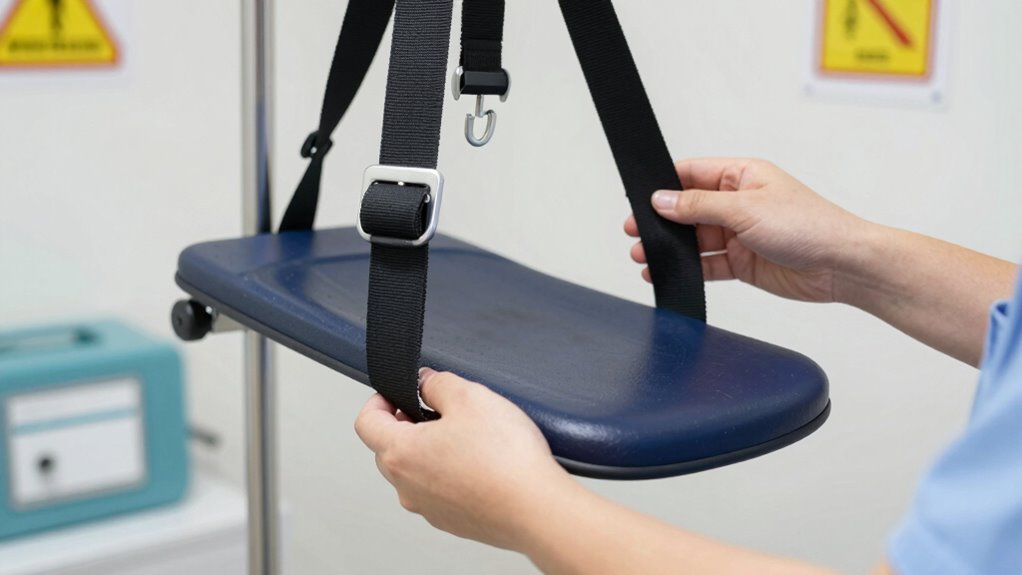
To guarantee ongoing compliance and safety, you need to prioritize regular equipment inspections and keep detailed records. Training your staff thoroughly and certifying their skills helps prevent accidents and misuse. Implementing strict patient safety protocols keeps everyone protected and maintains high standards over the long term.
Regular Equipment Inspections
Regular equipment inspections are essential for ensuring both compliance and long-term safety when using a bariatric lift. These inspections help identify potential issues early, preventing accidents and costly repairs. To stay on top of lift maintenance, follow a strict inspection schedule and document every check. Visualize these key steps:
- Check for signs of wear or damage on the platform and arm components.
- Test safety features like brakes, locks, and emergency stops.
- Review hydraulic or electrical systems for leaks or irregularities.
- Confirm that all bolts and connections are secure.
Adhering to consistent inspection schedules keeps the equipment reliable and compliant with safety standards. Regular inspections aren’t just a necessity—they’re your best defense against unexpected failures and long-term safety risks.
Staff Training and Certification
Ensuring staff are properly trained and certified is essential for maintaining compliance and long-term safety when operating bariatric lifts. You need to prioritize thorough staff training that covers all aspects of lift operation, safety procedures, and emergency protocols. Adhering to certification standards guarantees your team meets industry and regulatory requirements, reducing risks for both patients and staff. Regularly update training programs to reflect equipment changes and evolving safety guidelines. Certification verifies that your staff has the necessary skills and knowledge to operate lifts safely and effectively. By investing in ongoing education and strict adherence to certification standards, you create a safer environment, minimize liability, and promote confidence in your facility’s bariatric care practices.
Patient Safety Protocols
Proper staff training and certification lay the foundation for safe lift operation, but maintaining long-term safety also depends on strict patient safety protocols. To guarantee compliance, you should:
- Regularly inspect equipment for durability, preventing unexpected failures that could compromise patient comfort.
- Follow standardized procedures for patient positioning, reducing the risk of injury.
- Keep detailed records of safety checks and maintenance routines for accountability.
- Educate staff consistently on safety updates, fostering a culture of vigilance.
Frequently Asked Questions
How Often Should a Bariatric Lift Undergo Maintenance Checks?
You should perform lift safety checks regularly, ideally weekly, and follow the manufacturer’s maintenance schedules strictly. Routine inspections guarantee the lift remains in top condition and prevents accidents. Schedule professional maintenance at least every six months or more frequently if used heavily. By adhering to these intervals, you keep the bariatric lift safe, reliable, and compliant with safety standards, ultimately protecting both patients and staff.
Are There Weight Limits for Different Lift Models?
You’ll find that different lift models have specific weight limits, which is crucial for safety. For example, a bariatric lift with a 1,000-pound weight capacity ensures it can accommodate patients of various sizes comfortably. The model variety offers options for different needs, but always double-check the weight capacity before selecting a lift. This way, you guarantee both safety and comfort for your patients and staff.
What Training Is Necessary for Caregivers to Operate Lifts Safely?
You need to complete equipment safety training and obtain staff certification before operating lifts. This training teaches you proper techniques, safety protocols, and how to handle bariatric patients securely. By staying certified, you guarantee you’re up-to-date on best practices, reducing injury risks. Always review manufacturer instructions and follow facility policies to maintain a safe environment. Proper training and certification are essential for safe, effective lift operation and patient comfort.
How Do Lifts Accommodate Patients With Limited Mobility?
Imagine a gentle cradle that supports your patient like a caring hand. Lifts accommodate patients with limited mobility through specialized transfer techniques and built-in safety features, ensuring stability and comfort. You operate these devices smoothly, guiding them with confidence. The lift’s design minimizes strain and risk, making transfers safer for both patient and caregiver. With proper training, you master these tools, turning challenging moves into seamless, dignified progressions.
Can Lifts Be Used in Both Home and Clinical Settings?
Yes, lifts can be used in both home and clinical settings. You should look for portable options that are easy to maneuver and set up in various environments. Make certain the lift has safety features like secure harnesses, sturdy frames, and emergency stop buttons. These features ensure patient safety and ease of use, whether you’re transferring someone at home or in a healthcare facility.
Conclusion
Choosing the right bariatric lift isn’t just about specifications; it’s about safety, comfort, and peace of mind. Remember, the perfect lift supports your loved one’s well-being while fitting seamlessly into your space and budget. By prioritizing key features and safety, you create a foundation of trust and care. So, take your time, weigh your options, and choose wisely — because the right lift is more than equipment; it’s a lifeline in every sense.