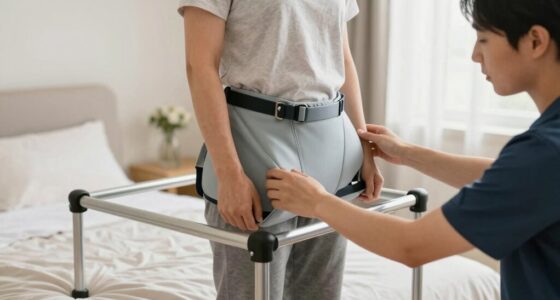

To protect your back as a caregiver, focus on proper ergonomics by using good body mechanics, keeping loads manageable, and avoiding twisting during lifts or transfers. Recognize early signs of strain like muscle fatigue or stiffness and take breaks often. Use assistive tools, maintain good posture, and organize your workspace for safety. Staying mindful of these tips helps prevent injury and promotes long-term back health—skills you’ll find helpful to strengthen as you continue caring.
Key Takeaways
- Use proper body mechanics: bend hips and knees, keep back straight, and hold loads close to prevent strain.
- Incorporate assistive devices and ergonomic equipment to reduce physical effort during transfers and lifts.
- Maintain good posture and take regular breaks to stretch and avoid muscle fatigue.
- Organize your workspace to keep items within easy reach, minimizing unnecessary bending or twisting.
- Strengthen core muscles and practice proper lifting techniques for long-term back health and injury prevention.
As an affiliate, we earn on qualifying purchases.
Why Ergonomics Is Crucial for Caregiver Back Health

Since caregivers frequently lift, bend, and hold patients, poor ergonomics quickly lead to back injuries. An ergonomic assessment helps identify risky movements and areas where your posture may be compromised. By analyzing your caregiver posture, you can pinpoint habits that strain your back and develop strategies to improve. Proper ergonomics isn’t just about comfort; it’s essential for preventing long-term injury. When you maintain good posture during lifts and transfers, you reduce unnecessary stress on your spine and muscles. Taking the time to evaluate your techniques ensures you use your body efficiently and safely. Incorporating ergonomic principles into your routine can significantly lower the risk of injury and promote better long-term health. Additionally, understanding proper equipment use can further enhance your safety and reduce strain. Using body mechanics correctly is critical for maintaining your back health and preventing fatigue. Practicing sustainable movement habits can help you preserve your overall well-being and work more effectively in demanding caregiving roles. Being aware of proper load handling techniques can also make a substantial difference in reducing back strain, especially during extended caregiving shifts. Ultimately, prioritizing ergonomic principles allows you to work more effectively and stay healthy in the demanding role of caregiving.
How to Recognize Early Signs of Back Strain

How can you tell if your back is starting to strain from caregiving tasks? One sign is muscle fatigue, where your back feels achy or tired after lifting or bending. You might notice discomfort that worsens with activity or persists afterward. Posture awareness is also key—slouching or uneven positioning can lead to early strain. Watch for these signs:
| Symptom | Description | Action |
|---|---|---|
| Muscle fatigue | Aching or tiredness in your back muscles | Take breaks and stretch regularly |
| Sharp pain | Sudden discomfort during or after tasks | Adjust your posture immediately |
| Stiffness | Reduced mobility or feeling tight | Maintain proper ergonomics |
Being mindful of proper ventilation considerations can also help reduce muscle strain by improving overall comfort during caregiving activities. Additionally, maintaining good body mechanics can significantly decrease the risk of injury. Proper lifting techniques and awareness of your environment play crucial roles in injury prevention. Incorporating ergonomic principles into your routine can further support back health. Recognizing these early signs helps you prevent further injury and preserve your back health. Being aware of muscle fatigue and other symptoms can guide you in making necessary adjustments before discomfort worsens.
Simple Ergonomic Tips to Protect Your Back During Caregiving

To protect your back during caregiving, incorporating simple ergonomic tips can make a significant difference. Use proper lifting techniques by bending at your hips and knees, keeping your back straight, and holding the object close to your body. Avoid twisting your torso; instead, pivot your feet to turn. Wearing proper footwear with good arch support and non-slip soles helps maintain stability and reduces strain. Keep your load manageable and ask for help when needed, especially with heavy or awkward items. Remember to maintain good posture—shoulders back and relaxed—and take regular breaks to stretch and relieve tension. These small adjustments can prevent injury and keep you comfortable while providing care. Staying aware of your surroundings and planning your movements can further enhance safety and reduce the risk of strain. Utilizing ergonomic tools or aids designed for caregiving activities can further reduce physical stress. Additionally, incorporating proper body mechanics into your routine can support long-term back health.
Top Tools and Environment Setups for Safe Caregiving
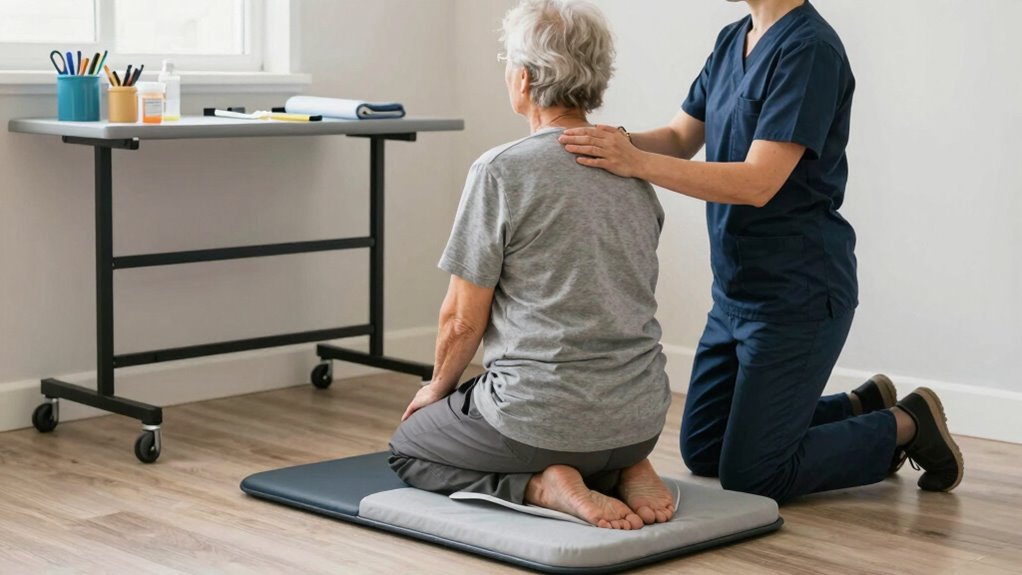
Are you making the most of your caregiving environment to guarantee safety and efficiency? Using the right assistive devices can markedly reduce strain and improve your comfort. Consider tools like transfer belts, grab bars, and ergonomic chairs that support proper body mechanics. Proper workspace organization is equally important—keep frequently used items within easy reach to avoid unnecessary bending or stretching. Clear clutter and create a dedicated, well-lit area for caregiving tasks to minimize hazards. Adjust your workspace height to match the task, preventing awkward postures. Implementing these tools and setups helps protect your back and streamlines your caregiving routine. Additionally, being mindful of virtual reality environments can help you maintain better awareness of your surroundings, reducing the risk of accidents. Incorporating ergonomic principles into your setup can further enhance comfort and reduce fatigue during caregiving tasks. Paying attention to proper posture during activities can also significantly decrease the likelihood of back injury. Ensuring your workspace supports correct body mechanics is essential for long-term health. Being aware of ergonomic tools and how they can be integrated into your environment can further optimize safety and efficiency. Ultimately, a thoughtfully arranged environment makes caregiving safer, more comfortable, and less physically taxing.
How to Maintain Back Health and Prevent Injury Long-Term

Maintaining back health is key to avoiding injuries that can sideline your caregiving efforts. To do this long-term, focus on posture correction and muscle strengthening. Proper posture reduces strain on your spine and prevents chronic pain. Strengthening core muscles provides better support and stability, making lifts and transfers safer. Regular stretching keeps muscles flexible and prevents stiffness. Additionally, stay aware of body mechanics during tasks to avoid awkward movements. Incorporating simple, consistent habits can make a significant difference in long-term back health and prevent injuries. Good body mechanics are essential for safe lifting and transferring. Here are four essential tips:
- Correct your posture consistently—sit and stand tall.
- Incorporate core and back exercises into your routine.
- Stretch daily to maintain flexibility.
- Use proper body mechanics when lifting or transferring patients. Practicing these ergonomic principles can further protect your back during caregiving tasks. These habits help sustain your back health and reduce injury risk over time. Remember, understanding ergonomics can empower you to make safer choices in your daily caregiving activities.
Frequently Asked Questions
How Often Should I Take Breaks During Caregiving Tasks?
You should take rest break intervals every 30 to 60 minutes during caregiving tasks. Regular breaks help prevent strain and fatigue, so plan your ergonomic schedule accordingly. Use these intervals to stretch, change positions, or rest your back. Staying mindful of your body’s signals and scheduling breaks ahead of time guarantees you maintain good ergonomics, reducing the risk of injury and keeping you energized to provide the best care.
Can Specific Stretches Improve My Back Resilience?
Yes, specific stretches can improve your back resilience by enhancing stretch benefits and increasing flexibility. Incorporate flexibility exercises like gentle spinal twists, hamstring stretches, and shoulder rolls into your routine. These exercises target key muscles, reduce tension, and promote better posture. Regularly doing these stretches helps prevent injuries, eases discomfort, and keeps your back stronger and more adaptable, allowing you to care for others with less strain and more resilience.
What Are Common Mistakes That Cause Back Injury?
You often cause back injuries by neglecting proper lifting techniques and poor posture. Avoid bending your back instead of your knees when lifting, and don’t twist your torso while carrying weight. Make sure to maintain proper posture by keeping your spine aligned and shoulders back. These common mistakes put unnecessary strain on your back muscles and spine, increasing injury risk. Always focus on correct lifting and posture to protect your back.
How Do I Adjust Caregiving Routines for Different Patient Needs?
You should adjust your caregiving routines based on each patient’s mobility level and use assistive devices properly. For highly mobile patients, encourage independence while supporting them carefully. For less mobile patients, plan safe lifting techniques and use wheelchairs or transfer belts. Always assess their needs first, communicate clearly, and modify your approach to prevent strain and injury. Properly utilizing assistive devices makes tasks safer for both of you.
Is There Specialized Ergonomic Equipment for Caregivers With Limited Space?
You’re in a tight spot, but there are ergonomic tools designed for small spaces. Look for compact storage equipment and multi-purpose tools that save space while providing support. These versatile options can be easily stored away when not in use, making your caregiving routine safer and more efficient. With the right gear, you can protect your back without sacrificing space or functionality—turning a squeeze into an advantage.
Conclusion
Taking care of your back isn’t just about comfort—it’s about your long-term health. Did you know that caregivers are 25% more likely to experience back injuries? By applying ergonomic principles and using the right tools, you can prevent pain and stay strong. Remember, protecting your back today means staying healthy and able to care for others tomorrow. Prioritize your back health now, and you’ll both benefit for years to come.