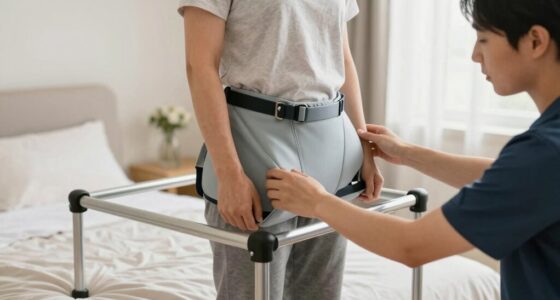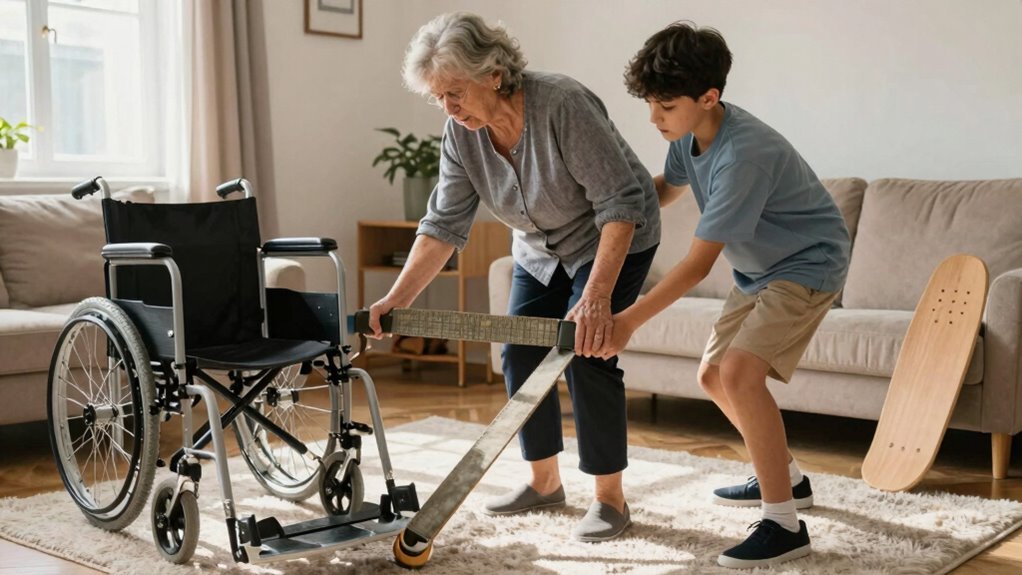

Many families make common mistakes with in-home transfer equipment that can compromise safety and comfort. These include choosing the wrong equipment without considering the user’s size or needs, rushing transfers or skipping steps, and neglecting regular maintenance. Not properly training everyone involved or ignoring environmental risks can also cause accidents. To guarantee safer, more effective transfers, it’s essential to understand proper selection, use, and upkeep. Continue exploring to discover essential tips that can help you improve your transfer safety practices.
Key Takeaways
- Using transfer equipment that doesn’t match the user’s size, weight, or mobility needs.
- Rushing transfers or skipping safety steps, increasing risk of falls or injuries.
- Failing to regularly inspect, clean, and maintain equipment for safety and effectiveness.
- Ignoring proper training, supervision, and emotional support during transfers.
- Not adapting equipment or environment to meet ergonomic and safety standards.
How to Choose the Right Transfer Equipment for Safety
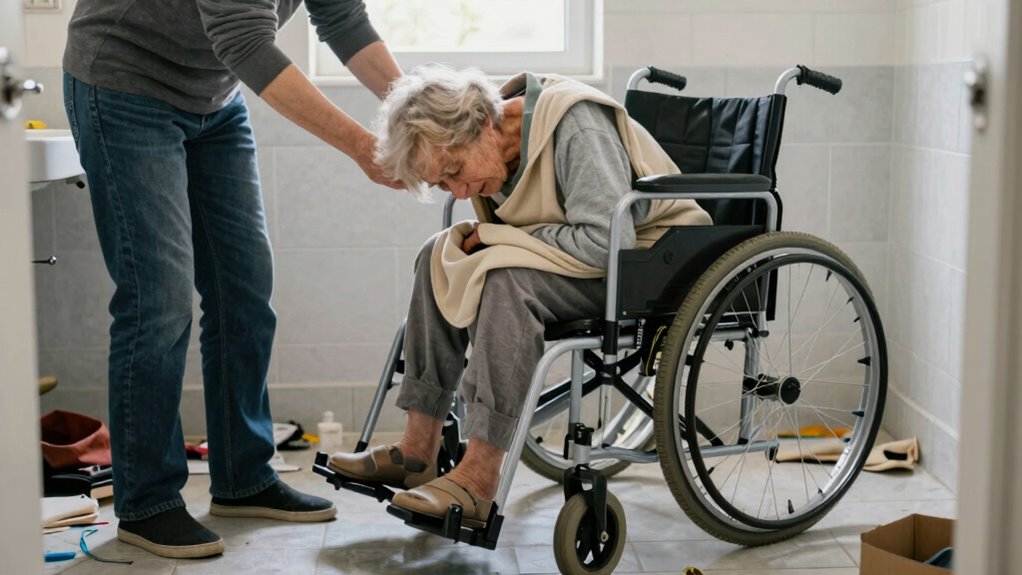
Choosing the right transfer equipment is pivotal to guarantee safety during mobility assistance at home. You should look for assistive technology designed with ergonomic principles to reduce strain and improve comfort for both the user and caregiver. An ergonomically designed device offers proper support, minimizes the risk of injury, and promotes proper body mechanics. When selecting equipment, consider the user’s weight, height, and mobility limitations, ensuring the device can accommodate those needs safely. Look for features like adjustable heights, secure grips, and stable bases. Properly chosen transfer equipment not only enhances safety but also boosts confidence during transfers. Additionally, selecting devices that incorporate ergonomic design can significantly decrease the physical stress on caregivers and users alike. Incorporating proper safety practices ensures that transfers are conducted with minimized risk and maximum comfort. Regularly inspecting transfer devices for wear and tear can further prevent accidents and ensure ongoing safety. Furthermore, understanding the ergonomic standards involved in device design can help in selecting the most suitable equipment for individual needs. Being aware of equipment maintenance routines can extend the lifespan of transfer devices and maintain safety standards over time.
Using Transfer Devices Properly and Following Safety Guidelines

To guarantee safe and effective transfers, it’s vital to use transfer devices correctly and follow established safety protocols. Common mistakes include neglecting to secure straps properly, rushing the transfer process, or ignoring weight limits. Always read manufacturer instructions thoroughly and ensure the device is in good condition before use. Remember, safety protocols are designed to protect both you and your loved one; skipping steps or improvising can lead to accidents. Keep the transfer area clear of obstacles, communicate clearly throughout the process, and never attempt a transfer without proper preparation. Additionally, understanding the importance of proper technique can significantly reduce the risk of injuries during transfers. Proper training and practice can also help caregivers feel more confident and competent during each transfer. Incorporating navigation and mapping principles from household robots can help plan a safe transfer route and avoid hazards. Being aware of device safety features can further enhance transfer safety by alerting you to potential issues before they occur. Using precise movement control can improve transfer accuracy and minimize discomfort for the person being transferred. By adhering to these guidelines, you minimize risks and promote confidence in each transfer, helping to prevent injuries and guaranteeing the safety of everyone involved.
Training Your Family to Use Transfer Equipment Confidently
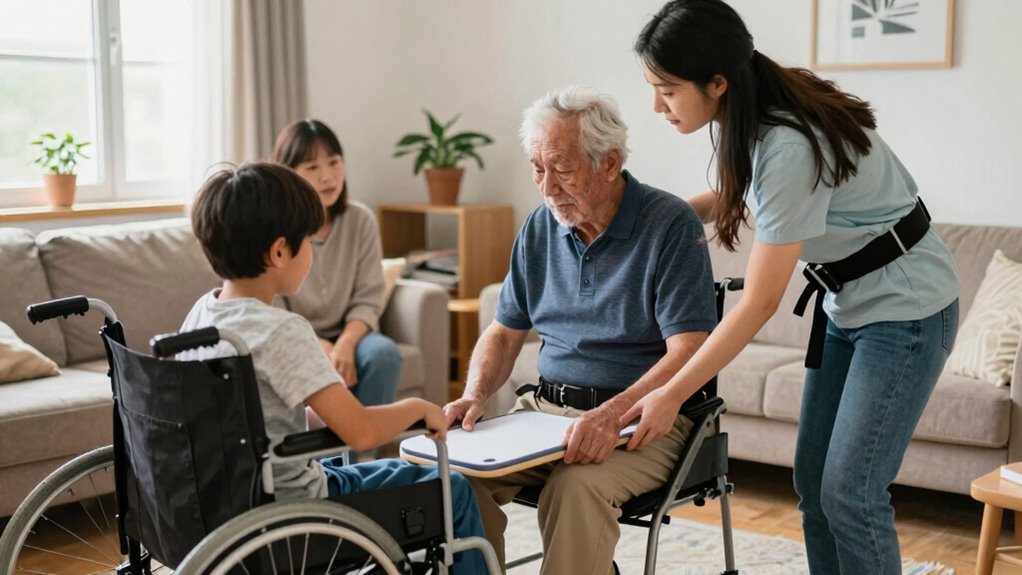
Training your family to use transfer equipment confidently is essential for ensuring safe and smooth transfers. Clear caregiver communication helps everyone understand their roles, reducing anxiety and mistakes. Providing emotional support encourages your loved ones to feel comfortable asking questions and practicing skills. To build confidence, hold step-by-step demonstrations and supervised practice sessions. Use this table to reinforce key points:
| Tip | Explanation | Example |
|---|---|---|
| Communicate clearly | Speak calmly and directly | “I’ll support your back.” |
| Practice regularly | Repetition builds confidence | Weekly training sessions |
| Offer encouragement | Boost emotional support | “You’re doing great!” |
| Use visual aids | Reinforce understanding | Diagrams or videos |
| Address concerns | Discuss fears openly | “Let’s talk about your worries.” |
Additionally, incorporating trusted training methods ensures your family feels more prepared and secure during transfers. Paying attention to proper technique can significantly improve safety and reduce the risk of injury during transfers.
Regularly Inspect and Maintain Equipment for Safety and Reliability

Regularly inspecting and maintaining transfer equipment is essential to guarantee it functions safely and reliably. Establishing simple maintenance routines helps catch issues early, preventing accidents or breakdowns. Check for signs of wear, loose parts, or damage after each use, and clean equipment according to manufacturer instructions. Staying proactive also means considering equipment upgrades when necessary; newer models often feature safety enhancements or improved durability. Proper maintenance not only extends the lifespan of your devices but also ensures they perform at their best during critical moments. Regularly inspecting the equipment can also reveal wear and tear early, reducing the likelihood of sudden failures. Remember, neglecting routine inspections can lead to equipment failure, increasing risks for everyone involved. Make it a habit to review your transfer equipment regularly, follow recommended maintenance routines, and invest in upgrades to keep your family safe and confident. Incorporating a holistic SEO approach can also help ensure your safety information reaches more families effectively. Additionally, paying attention to hydrotherapy benefits can inform you about water-based therapeutic techniques that support safe usage and maintenance. Moreover, understanding proper sanitation procedures is vital for preventing microbial growth and ensuring safe water conditions. Regular maintenance also involves checking the manufacturer guidelines to stay aligned with safety standards and optimize performance.
Adapting Transfer Solutions to Meet Each User’s and Environment’s Needs

Since every user and environment presents unique challenges, adapting transfer solutions is essential for safety and effectiveness. You’ll face customization challenges, such as tailoring equipment to fit different body sizes, mobility levels, and comfort preferences. Environmental considerations, like space constraints, flooring types, and accessibility, also influence your choices. To meet these needs, you must carefully evaluate each situation and modify the transfer equipment accordingly. This might mean adding padding, choosing specific transfer aids, or altering the setup to reduce risk. Additionally, incorporating smart home technology can provide real-time monitoring and alerts to enhance safety during transfers. Recognizing the importance of personalized assessments ensures that transfer adaptations are precise and effective. Understanding the equipment compatibility with the user’s environment helps prevent accidents and promotes independence. Conducting thorough environmental assessments can further identify potential hazards and facilitate proper adjustments. Moreover, considering ergonomic principles can improve comfort and reduce strain for both users and caregivers. By understanding the specific demands of the user and their environment, you ensure the transfer process is safer, more comfortable, and more efficient. Proper adaptation minimizes accidents and promotes independence, making at-home transfers more successful.
Frequently Asked Questions
What Are Common Mistakes Families Make When Storing Transfer Equipment?
You might store transfer equipment improperly, leading to storage hazards. Avoid cluttering or placing it in places where it could fall or get damaged. Also, guarantee you use proper labeling; improper labeling can cause confusion or accidents. Always store transfer equipment in a secure, designated area, and double-check labels to keep everyone safe. Proper storage practices help prevent injuries and make transfers safer for your loved ones.
How Can Families Prevent Injuries During Transfer Equipment Use?
Think of transfer safety as steering a ship through calm waters—your steady hand guides the way. To prevent injuries, always guarantee proper training and check equipment before each use. Keep emergency preparedness tools nearby and know how to respond quickly if something goes wrong. By staying vigilant and practicing safe transfer techniques, you create a secure environment that shields both your loved ones and yourself from harm.
Are There Specific Transfer Devices Recommended for Children or Elderly Users?
For children, look for child-friendly transfer devices that are easy to use and gentle on their bodies, like pediatric transfer slings or low-height transfer chairs. For elderly users, choose elderly-specific devices such as gait belts, transfer benches, or ceiling lifts designed for stability and safety. Always make certain the devices fit properly and are used according to the manufacturer’s instructions to prevent injuries and promote comfort during transfers.
How Often Should Transfer Equipment Be Replaced or Upgraded?
You should replace or upgrade transfer equipment based on its maintenance schedule and equipment lifespan. Check manufacturer guidelines regularly, and inspect for signs of wear, damage, or decreased stability. Typically, equipment lasts several years but may need replacement sooner if it shows cracks, tears, or becomes less reliable. Staying proactive guarantees safety, comfort, and effectiveness, so don’t wait until failure occurs—regular assessments help determine the right time to upgrade.
What Are Signs That Transfer Equipment Is No Longer Safe to Use?
Did you know that nearly 80% of injuries from transfer equipment happen due to unsafe equipment? You’ll know it’s no longer safe if you notice cracks, tears, or corrosion, and if it doesn’t support weight properly. Regular equipment maintenance and proper user training are essential. Always check for these signs before use, and don’t hesitate to replace or repair equipment to keep everyone safe.
Conclusion
By avoiding these common mistakes, you protect your loved ones and create a safer environment. Imagine a sturdy transfer device standing strong like a shield, versus one neglected and fragile, risking harm. When you choose, use, train, and maintain your equipment properly, you build a foundation of confidence and safety. It’s your steady hand that transforms a simple device into a reliable support, turning everyday moments into secure, reassuring experiences for everyone involved.