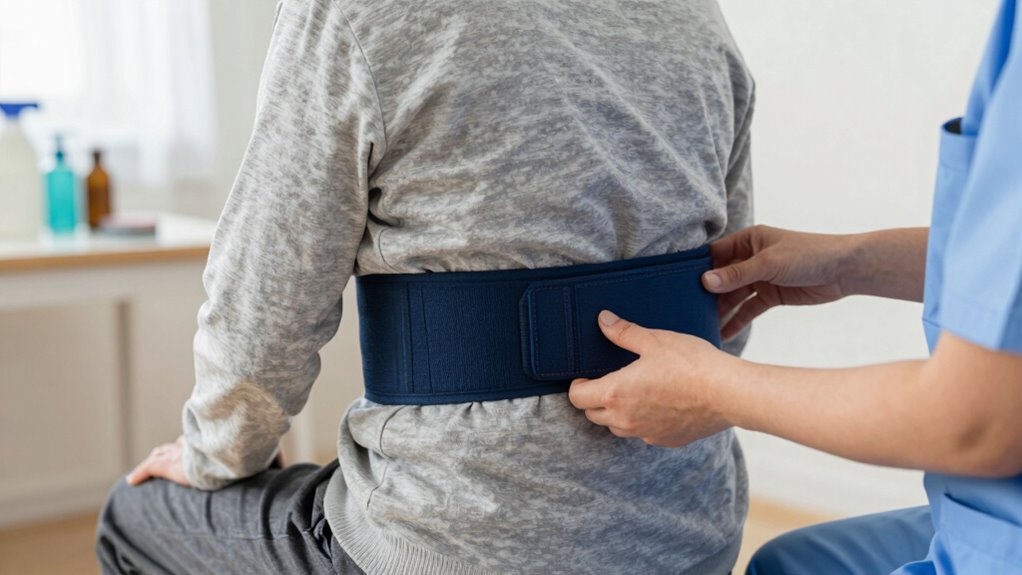

To use a gait belt safely, make certain it fits snugly around the patient’s waist, positioned above the hips, and check that it isn’t too tight or loose. Support your patient steadily, communicate clearly, and explain each step to reduce anxiety. Always prepare the environment by removing hazards and maintaining hygiene by cleaning the belt after use. Following these practices helps prevent injuries and preserves the patient’s dignity—continue exploring for more detailed guidance.
Key Takeaways
- Ensure the gait belt fits snugly but comfortably around the patient’s waist, allowing space for two fingers to prevent tightness.
- Position the belt at the natural waistline, above the hips, avoiding the abdomen or lower back.
- Secure the belt with a quick-release buckle or Velcro, ensuring it is firmly fastened without restricting breathing or movement.
- Communicate clearly with the patient throughout, explaining each step to promote understanding and cooperation.
- Check for environmental safety, remove obstacles, and maintain proper body mechanics to prevent caregiver injury and patient falls.
Why Proper Gait Belt Use Is Critical for Patient Safety and Comfort

Using a gait belt correctly is essential because it directly impacts both patient safety and comfort. When used properly, it helps prevent falls and injuries during transfers or ambulation, ensuring the patient feels secure. Maintaining patient dignity is vital; adjusting the belt to fit snugly without causing discomfort shows respect for their modesty. Proper use also provides emotional support, reassuring patients that they are in capable hands and reducing anxiety about movement. When you handle the gait belt with care and professionalism, you foster trust and promote a positive experience. This not only keeps the patient safe but also preserves their sense of independence and dignity, making mobility easier and more comfortable for everyone involved. Additionally, understanding the importance of proper technique can further enhance patient outcomes and safety during mobility assistance. Recognizing the role of proper fit is crucial because an ill-fitting gait belt can cause discomfort or even injury, undermining the safety measures you aim to provide. Being attentive to patient comfort can significantly improve cooperation and overall experience during transfers, as proper positioning encourages better movement and reduces the risk of strain or soreness. Ensuring that the gait belt is applied with appropriate tension helps maintain safety without causing unnecessary pressure or restriction.
How to Choose the Right Gait Belt for Your Needs

When selecting a gait belt, consider the material and comfort to guarantee it feels secure without causing discomfort. Make sure the size is adjustable to fit different patients properly, and check for safety features that prevent slipping or accidental release. Additionally, choosing a gait belt made from comfortable, high-quality materials can significantly enhance patient safety and comfort during use. Using a gait belt made from durable, non-slip materials can help prevent accidents and ensure reliable support. Incorporating European cloud innovation principles into manufacturing can also promote sustainability and environmental responsibility. By focusing on these factors, you can choose a gait belt that meets both your needs and your patient’s safety.
Material and Comfort
Choosing the right gait belt starts with considering its material and how comfortable it feels against your skin. You’ll want to explore different fabric options, such as nylon, cotton, or vinyl, to find what suits your needs best. Each material offers distinct benefits: nylon is durable, cotton is soft, and vinyl is easy to clean. Padding comfort is also important; a well-padded belt reduces pressure points and prevents discomfort during transfers. Look for gait belts with enough padding to support secure grip without causing irritation. The fabric’s breathability matters if you’ll be using the belt for extended periods. Additionally, selecting a gait belt with advanced safety features can further enhance patient security during transfers. Incorporating proper fit ensures the belt provides optimal safety and comfort. Consider the material durability when choosing, especially if the belt will be used frequently or in demanding environments. When selecting a gait belt, it’s also helpful to check for compliance standards to ensure safety and reliability. To ensure proper usage, understanding the ergonomics of transfer techniques can help prevent injury. Ultimately, selecting a gait belt made from comfortable, high-quality material guarantees safety while keeping both you and your patient comfortable throughout the process.
Size and Adjustability
Selecting a gait belt that fits well and adjusts easily is essential for safety and comfort. Proper belt sizing ensures it stays secure without causing discomfort. When choosing a gait belt, consider these key points:
- Measure your waist accurately to find the correct belt size, ensuring it’s neither too tight nor too loose.
- Check the adjustment techniques, like buckles or Velcro, to confirm they allow for easy and secure fitting.
- Opt for a belt with adjustable features that accommodate changes in body size or swelling, providing a customized fit.
- Understanding modern safety features incorporated into gait belts can enhance both safety and ease of use. Additionally, selecting belts made from durable materials can improve longevity and reliability over time.
- Selecting a belt with appropriate width and padding can help distribute pressure evenly and increase comfort during use.
A well-fitted gait belt prevents slipping and skin irritation, making transfers safe and comfortable. Always test the adjustment to ensure it holds firmly but isn’t restrictive, promoting both safety and ease of use.
Safety Features and Design
How can you guarantee the gait belt you choose provides maximum safety? Start by examining the gait belt design—look for sturdy materials like reinforced nylon or leather that withstand tension. Safety features are essential; choose belts with quick-release buckles for easy removal and secure closures that won’t loosen during use. Padded interiors enhance comfort and prevent skin irritation, reducing the risk of injury. Consider belts with reflective strips if use occurs in low-light environments, adding visibility for caregivers. Adjustable straps ensure a snug fit, minimizing slippage while allowing freedom of movement. Always verify that safety features align with your specific needs, whether for patients with limited mobility or active individuals. A well-designed gait belt prioritizes both safety and comfort, ensuring effective assistance without harm. Additionally, selecting a system that aligns with safety standards and safety standards further enhances overall safety and reliability. Incorporating ergonomic design principles can also help prevent caregiver fatigue and improve user safety. Ensuring proper training and technique when using the gait belt is also crucial to avoid accidental injury.
Preparing the Environment and Patient Before Gait Belt Assistance

Before assisting a patient with a gait belt, it’s vital to prepare both the environment and the patient to guarantee safety and smooth movement. First, ensure the area is free of obstacles, clutter, or hazards that could cause falls. Second, communicate clearly with the patient, explaining each step to build trust and ease anxiety, which enhances patient communication. Third, verify that staff training is up-to-date so everyone understands proper techniques and safety protocols. Creating a safe environment involves adjusting lighting and positioning furniture if needed. Engaging the patient and staff ensures everyone is prepared, reducing the risk of injury during gait assistance. Proper preparation is key to a safe, effective transfer. Additionally, reviewing the organization of the home environment can help identify potential hazards and improve overall safety. Conducting a safety assessment can further help in identifying specific risks and implementing preventative measures. Ensuring the environmental safety standards are maintained minimizes the chance of accidents or injuries during patient handling. Incorporating knowledge from Floating on Water can also promote calming techniques that may help reduce patient anxiety during transfers. Being aware of proper body mechanics is essential for caregivers to prevent injury during assistance.
Position the Gait Belt Correctly for Comfort and Safety

To guarantee both comfort and safety, you need to position the gait belt correctly on the patient. Proper positioning ensures the belt provides support without causing discomfort or restricting movement. Place the belt around the waist, snug enough to stay secure but loose enough to allow breathing and movement. The belt should sit above the hips, typically at the natural waistline, avoiding the abdomen or lower back. Check for a comfortable fit by ensuring you can slide two fingers between the belt and the patient’s body. Correct placement prevents slipping or pinching, reducing the risk of injury during assistance. Remember, a properly positioned gait belt promotes safety and comfort for both you and the patient during mobility tasks. Additionally, understanding body mechanics helps ensure the correct application and adjustment of the gait belt to prevent strain or injury.
How to Secure a Gait Belt for Maximum Support

To guarantee maximum support, you need to secure the gait belt properly. Focus on correct placement, adjust it for a comfortable fit, and make sure the fastener is securely in place. Doing this helps keep the patient safe and stable during transfers.
Proper Placement Techniques
Ensuring proper placement of a gait belt is essential for providing maximum support and safety during transfers or ambulation. To do this effectively, follow these steps:
- Position the belt around the waist, above the hips, making sure it sits snug but not too tight. Check footwear considerations—ensure the patient’s shoes are secure and appropriate for walking.
- Confirm the belt lies flat against the skin, avoiding bunching or twisting that could cause discomfort.
- After use, prioritize post-use sanitation by thoroughly cleaning the gait belt according to infection control protocols, preventing cross-contamination and maintaining hygiene.
Proper placement ensures stability and comfort, reducing injury risk while supporting safe mobility.
Adjusting for Comfort and Fit
After confirming the gait belt is positioned correctly, you need to adjust it to guarantee a secure and comfortable fit. This involves tightening or loosening the belt so it sits snugly around the waist without causing discomfort. During dressing procedures or mobility exercises, a proper fit ensures support without restricting movement. Check that the belt isn’t too tight; the person should be able to breathe easily and move comfortably. If the belt feels loose, tighten it slightly, but avoid over-tightening, which can cause skin irritation or hinder circulation. Always communicate with the individual to confirm they feel secure yet comfortable. Proper adjustment helps prevent slipping or chafing during transfers, making the process safer for both of you.
Ensuring Secure Fastening
Securing the gait belt properly is essential for maximum support during transfers and mobility assistance. First, choose the right gait belt type—preferably one with a secure buckle or Velcro for easy adjustment. When fastening, ensure the belt sits snugly around the patient’s waist but isn’t too tight. Communicate clearly with your patient to confirm comfort and understanding. To secure the belt effectively, follow these steps:
- Place the belt around the waist, above the hips.
- Fasten the buckle or Velcro, making sure it’s snug but not restrictive.
- Check the fit by inserting a finger between the belt and patient’s body, ensuring it’s firm but comfortable.
Proper fastening, combined with patient communication, ensures safety and maximum support.
Assisting Patients With Standing and Walking Using a Gait Belt

When assisting a patient with standing and walking, using a gait belt provides added safety and control. Ensure the patient is well-hydrated, as dehydration can cause dizziness or weakness during mobility. Before helping them up, check that the gait belt is securely fastened and properly positioned at the waist. Use your hands to support their gait belt, guiding them steadily while they stand. Keep the environment safe by removing obstacles and ensuring the floor is dry. After use, immediately clean and sterilize the gait belt to prevent infection transmission. Communicate clearly throughout the process, offering reassurance and instructions. Proper technique reduces the risk of falls and injury, promoting safe and effective patient mobility.
Common Mistakes to Avoid When Using a Gait Belt

Using a gait belt incorrectly can increase the risk of falls or injuries for both you and the patient. To avoid this, pay attention to gait belt sizing—make sure it’s snug but not too tight, allowing comfort and security. Avoid common mistakes like:
- Using an ill-fitting gait belt that causes discomfort or slips during use.
- Neglecting patient communication, which can lead to confusion or fear.
- Applying the gait belt improperly, such as placing it too high or too low on the waist.
Always communicate clearly with the patient, explaining what you’re doing and why. Proper gait belt sizing and effective patient communication help ensure safe, effective assistance, reducing the chance of accidents or injury.
Recognizing and Correcting Improper Gait Belt Use

Recognizing improper gait belt use starts with paying close attention to how the belt fits and functions during assistance. An ill-fitting belt can cause discomfort or skin irritation, which compromises gait belt hygiene and increases infection risk. Watch for signs of slippage, uneven placement, or too-tight fits, all of which can harm the patient physically and emotionally. Correcting these issues involves adjusting the belt’s position and ensuring it is snug but not restrictive. Proper technique promotes patient emotional support by making them feel secure and respected. Also, regularly inspect the belt for wear or dirt, maintaining good hygiene practices. By staying alert to these cues, you ensure safe, effective assistance while fostering trust and comfort during mobility support.
How to Talk to Patients During Gait Belt Assistance

When assisting a patient with a gait belt, speak clearly and calmly to reassure them and keep them comfortable. Always respect their dignity by using respectful language and maintaining a gentle tone. Make sure to listen actively to their concerns and respond thoughtfully throughout the process.
Use Clear, Calm Language
Speaking clearly and calmly helps reassure patients and makes gait belt assistance safer. Your tone influences their confidence and trust during the process. To improve patient communication, focus on:
- Using simple, direct language to explain each step.
- Speaking at a steady pace to avoid confusion or anxiety.
- Encouraging the patient with positive comments, which helps maintain their balance techniques and confidence.
Keep your voice calm and steady, especially if the patient appears nervous. Clear communication helps them understand what’s happening and reduces their fear. Use reassuring words to promote cooperation, and always be attentive to their responses. Remember, confident, patient communication supports both safety and dignity during gait belt assistance.
Maintain Patient Dignity
Maintaining a patient’s dignity during gait belt assistance is essential for building trust and promoting cooperation. Respect their patient privacy by ensuring they’re covered appropriately and minimizing unnecessary exposure. Speak softly and reassure them, offering emotional support to ease anxiety. Use respectful language and avoid sounding condescending or hurried. Explain each step before proceeding, so they feel informed and involved. Maintain eye contact if possible, demonstrating your attentiveness. Keep a calm tone and gentle touch, showing care and respect. Remember, your attitude can considerably influence how comfortable they feel during the process. By prioritizing their dignity, you help create a positive, respectful environment that encourages cooperation and enhances safety for both of you.
Listen Actively Throughout
Listening actively during gait belt assistance is essential for ensuring the patient feels heard and safe. It helps you gauge their comfort and confidence, which is crucial during balance training and gait analysis. To do this effectively:
- Ask open-ended questions like, “How do you feel about your balance right now?” This encourages patient feedback.
- Observe non-verbal cues such as facial expressions or hesitation, adjusting your support accordingly.
- Provide reassurance and clear instructions, fostering trust and cooperation throughout the process.
How to Maintain and Inspect Your Gait Belt for Safety and Hygiene

To guarantee your gait belt remains safe and hygienic, regular maintenance and inspections are essential. Start by routinely checking for signs of wear, such as fraying or tears, during gait belt maintenance. Ensure that the buckle and strap are functioning properly and securely fastened. Conduct hygiene inspections by cleaning the belt after each use with soap and water or a hospital-approved disinfectant. Look for any buildup of dirt, sweat, or residue that could compromise hygiene. If you notice any damage or deterioration, replace the gait belt immediately to prevent accidents or infections. Proper storage is also important—keep it in a clean, dry place. Regular upkeep ensures the gait belt remains safe, effective, and hygienic for every use.
Frequently Asked Questions
Can Gait Belts Be Used on All Patient Sizes and Conditions?
Gait belts can be used on most patient sizes and conditions, but you need to take into account patient size and gait belt material. For larger or bariatric patients, choose a heavy-duty gait belt designed for increased weight capacity. Always ensure the belt fits snugly without causing discomfort. Check the material for durability and comfort, opting for padded or reinforced options if needed. Proper assessment helps prevent injury and ensures safe mobility support.
How Often Should Gait Belts Be Replaced for Safety?
You should replace gait belts regularly based on their condition and your facility’s patient safety protocols. Check for signs of wear, fraying, or damage during routine gait belt maintenance. If you notice any issues, substitute the belt immediately. Following these protocols ensures patient safety, prevents accidents, and maintains effective support during transfers. Regular inspections and timely replacements are essential to keep gait belts safe and reliable for all patients.
Are There Specific Training Requirements for Proper Gait Belt Use?
Yes, there are specific training requirements for proper gait belt use. You should complete training programs that cover proper technique, including securing the belt correctly and supporting patient safety. These programs often include hands-on practice and assessments to make certain you understand how to use the gait belt properly. Staying updated with these trainings helps prevent injuries and ensures safe, effective assistance during patient mobility.
What Materials Are Safest for Gait Belts to Prevent Skin Irritation?
You should look for gait belts made of materials like cotton, nylon, or vinyl that are designed for skin safety. These materials help prevent skin irritation and are gentle on the skin. Always check for smooth, non-abrasive textures, and avoid belts with rough seams or synthetic fabrics that might cause discomfort. Prioritizing material safety guarantees a comfortable, irritation-free experience for the person you’re assisting.
How Do I Handle a Patient Who Resists Wearing a Gait Belt?
Imagine gently guiding a hesitant bird to safety; you handle a resistant patient with patience and understanding. Use clear, calm patient communication to explain the importance of the gait belt, ensuring they feel respected. If resistance persists, consider alternative transfer aids that might feel more comfortable. Building trust helps reduce fear, making it easier to assist them safely while maintaining dignity and promoting cooperation during mobility assistance.
Conclusion
Remember, using a gait belt properly keeps your patient safe and comfortable—think of it as your trusty steed in the healthcare domain. Always choose the right belt, prepare your environment, and communicate clearly. Avoid common pitfalls, inspect your gear regularly, and treat each patient with care. With patience and practice, you’ll master this skill faster than a knight drawing his sword, ensuring both safety and dignity in every assist.