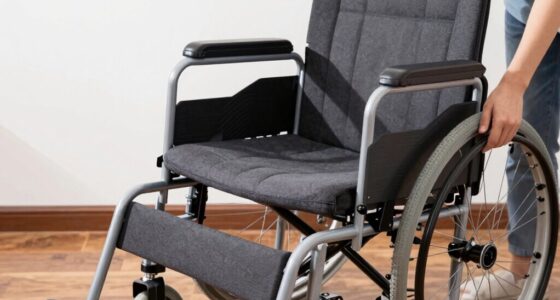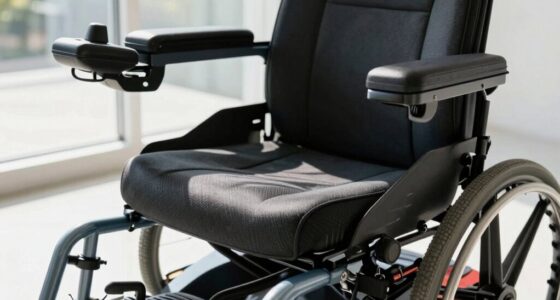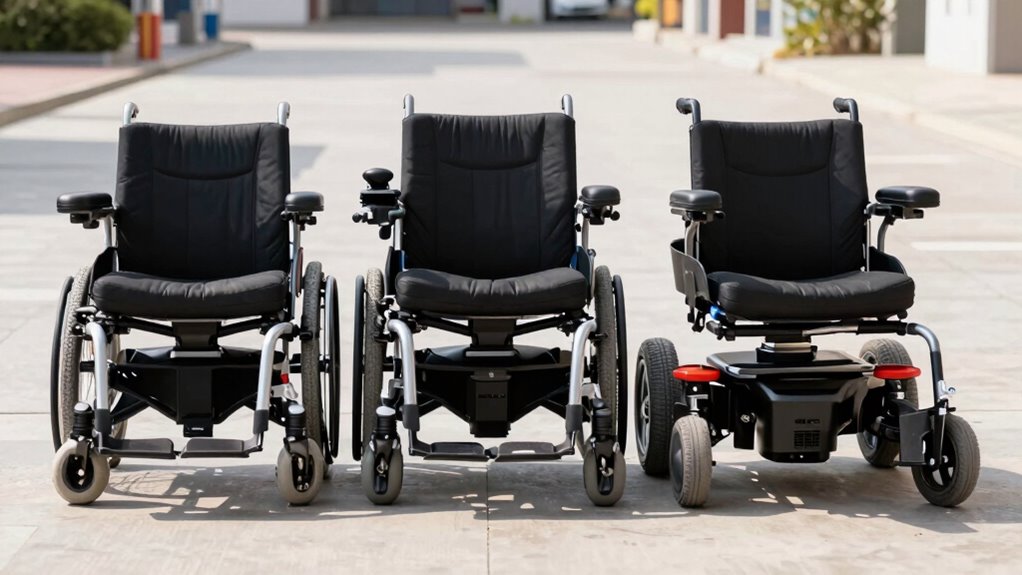

Choosing the best drive system depends on your environment and mobility needs. Front-wheel drive offers excellent maneuverability indoors, while mid-wheel drive provides a balanced mix of tight turns and stability in small spaces. Rear-wheel drive excels outdoors with better terrain handling, stability, and higher speeds. To find the perfect fit, consider where you’ll primarily use your wheelchair. Keep exploring to discover which system aligns best with your lifestyle and terrain challenges.

Get comfort and care essentials delivered free — and shop member deals
- Fast, free delivery on millions of items
- Access to Prime Big Deal Days deals on October 6–7
- Prime Video, Amazon Music and more included
Key Takeaways
- Front wheel drive offers superior maneuverability indoors with tight turns, ideal for confined spaces.
- Mid-wheel drive balances indoor agility and stability, suitable for small and crowded environments.
- Rear wheel drive provides better outdoor stability and higher speed handling on uneven terrains.
- Choose based on typical environments: indoor use favors front/mid-wheel, outdoor terrains suit rear-wheel systems.
- Consider battery capacity and maintenance needs to ensure reliable performance tailored to your travel and terrain needs.
power wheelchair front wheel drive
As an affiliate, we earn on qualifying purchases.
As an affiliate, we earn on qualifying purchases.
What Are Power Wheelchair Drive Systems and How Do They Work?

Have you ever wondered how power wheelchairs move so smoothly and efficiently? It all comes down to their drive systems, which are powered by motors with impressive motor power. These motors convert electrical energy into mechanical motion, allowing you to navigate comfortably. The battery life plays a vital role, determining how long you can use your wheelchair before needing a recharge. A high-quality drive system balances motor power and battery capacity, ensuring reliable performance and longer usage. Different drive systems are designed to optimize smoothness, speed, and control. By understanding how these components work together, you’ll better appreciate the engineering behind your wheelchair’s movement and how it can support your daily activities. Additionally, motor technology advancements have significantly improved the responsiveness and efficiency of modern power wheelchairs. Recognizing the significance of drive system design can help users choose the most suitable wheelchair for their specific needs. Furthermore, selecting the right drive system configuration can enhance overall stability and user confidence during navigation.
How Do Front Wheel Drive Wheelchairs Perform Indoors and Outdoors?

Wondering how front wheel drive wheelchairs handle different environments? Indoors, they excel in tight spaces thanks to their good indoor maneuverability. The front wheels turn sharply, making it easier to navigate around furniture and corners. Their design allows for smooth, precise control on flat surfaces, so you can move confidently inside your home or other indoor settings. Additionally, the air quality in your environment can impact overall comfort and health while using a wheelchair. Maintaining good air quality can help improve user safety and comfort during daily use. The maneuverability of front wheel drive wheelchairs makes them especially suitable for navigating crowded or complex indoor spaces. Furthermore, their design simplicity often results in easier maintenance and fewer mechanical issues over time. It is also important to consider terrain adaptability for outdoor use, as different surfaces can affect performance. Outdoors, front wheel drive wheelchairs offer decent stability, especially on even terrain. However, they might struggle on uneven or rough surfaces, as the front wheels can lift or lose traction. While they handle indoor tasks with ease, outdoor performance can vary depending on terrain. Overall, front wheel drive wheelchairs are a practical choice for users needing agility indoors, with moderate outdoor stability.
Pros and Cons of Mid Wheel Drive Wheelchairs

Mid wheel drive wheelchairs offer a unique balance of maneuverability and stability that many users find advantageous. Their design allows for tight turns and easy navigation in confined spaces, making indoor use seamless. However, their battery life can be be a concern, especially if you rely on frequent or extended trips, as some models may drain quickly due to complex motor demands. Additionally, weight capacity varies among models, so it’s essential to choose one that supports your body size and weight comfortably and safely. Battery efficiency is an important factor to consider, as it directly impacts how long your wheelchair can operate between charges. Furthermore, understanding the performance of a mid wheel drive wheelchair in different environments can help users select the most suitable model. It’s also helpful to evaluate user reviews and expert recommendations to ensure the model meets your specific needs. To optimize your experience, paying attention to maintenance practices can help extend battery life and overall durability. Proper user training can also enhance safety and efficiency during daily use. Overall, they’re ideal for indoor environments but require attention to battery life and weight capacity for best use.
Why Are Rear Wheel Drive Wheelchairs Known for Stability and Speed?
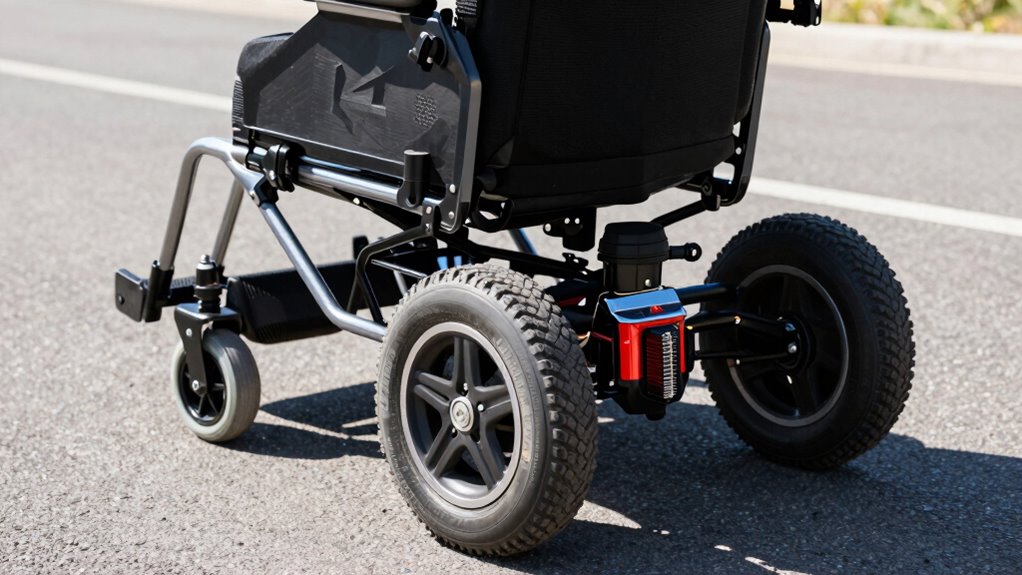
Rear wheel drive wheelchairs offer enhanced traction and grip, making them more stable on various surfaces. This design also provides better handling at higher speeds, giving you more control. As a result, they’re known for their combination of speed and stability. Additionally, understanding ventilation considerations can help optimize comfort and safety during extended use. Proper thermal management is crucial to prevent overheating and ensure user comfort over long periods. Incorporating advanced cooling technologies can further improve comfort during prolonged use. Furthermore, ensuring adequate airflow within the wheelchair’s components can help maintain optimal operating temperatures and prevent overheating. Attention to component ventilation can significantly extend the lifespan of the wheelchair’s electronics and mechanical parts.
Enhanced Traction and Grip
Because of their design, rear wheel drive wheelchairs offer superior traction and grip, which enhances both stability and speed. This is due to larger, more textured tires that provide better tire grip, especially on varied surfaces. The traction control system ensures power is efficiently transferred to the wheels, reducing slippage. Additionally, the traction management system further optimizes performance across different terrains. Visualize the following:
| Surface Type | Tire Grip Level | Traction Control Effectiveness |
|---|---|---|
| Smooth Floor | Moderate | Good |
| Carpeted Floor | High | Excellent |
| Gravel Path | Very High | Superior |
| Wet Surface | Good | Reliable |
| Incline | Excellent | Absolute |
This setup assures you maintain control confidently, even at higher speeds or challenging terrains.
Better Handling at Speed
The design of rear wheel drive wheelchairs inherently promotes better handling at higher speeds, making them a popular choice for users who value stability. With the drive wheel positioned at the back, weight distribution shifts toward the rear, enhancing traction and control during fast turns or sudden movements. This setup also improves battery efficiency, as the motors work more effectively without extra strain from uneven weight. Because the rear wheels bear most of the weight, you’ll notice increased stability, especially when steering through uneven surfaces or sharp corners at speed. This design minimizes wobbling and enhances confidence during quick maneuvers. Weight distribution plays a crucial role in the overall stability and performance of rear wheel drive wheelchairs. Additionally, the traction provided by the rear wheels helps prevent slipping on slick or uneven surfaces, further supporting safe and confident mobility. Overall, rear wheel drive wheelchairs deliver smoother, more controlled handling at higher speeds, ideal if you prioritize stability and efficient battery use.
Comparing Maneuverability, Stability, and Terrain Handling Across Drive Types

Different drive types offer distinct advantages in maneuverability, stability, and terrain handling. You’ll notice that some setups excel indoors, while others perform better outdoors on rough surfaces. Understanding these differences helps you choose the best wheelchair for your specific needs.
Maneuverability Differences Explored
When comparing wheelchair drive types, maneuverability plays a crucial role in how easily you can navigate various environments. Front-wheel drive offers tight turning radii, making it ideal for confined spaces, while rear-wheel drive provides smoother handling on open surfaces. Mid-wheel drive excels in tight maneuvering, thanks to its compact design and precise control. Battery longevity varies across types; rear-wheel models often have longer-lasting batteries, supporting extended use. Aesthetic design also influences maneuverability perception—sleek, streamlined models tend to be more agile, while bulkier designs might hinder movement. Your choice depends on your environment and preferences: if tight spaces are common, front or mid-wheel drive may serve you best; for stability and longer outings, rear-wheel drive could be preferable.
Terrain Adaptability Variations
Understanding how various wheelchair drive types handle different terrains helps you choose the best fit for your lifestyle. Front-wheel drive wheelchairs typically excel on uneven surfaces, thanks to their smaller, more adaptable tire types and better front-wheel articulation, offering improved stability and maneuverability on rough terrain. Mid-wheel drive models often provide a smooth ride indoors but may struggle outside due to larger tire types and limited terrain handling. Rear-wheel drive chairs usually handle outdoor terrains well because of robust tire types and better weight distribution, enhancing stability. Keep in mind that terrain adaptability also impacts battery life; rugged terrains demand more power, reducing overall battery endurance. Additionally, artistic expression and creative thinking can enhance your ability to adapt to various environments, making terrain navigation more intuitive. Choosing a drive type aligned with your typical terrains ensures you get superior maneuverability, stability, and battery efficiency.
Which Drive System Is Right for Your Lifestyle and Environment?
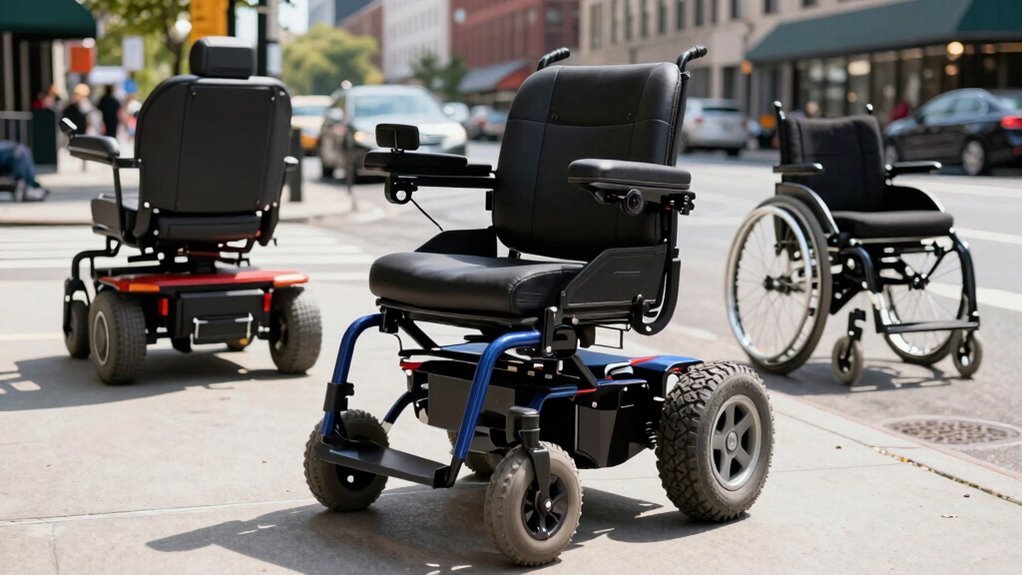
Choosing the right wheelchair drive system depends heavily on your daily activities and the environment you navigate. Your lifestyle influences whether you need a system with longer battery life, easier maintenance, or better maneuverability. For instance, if you frequently travel long distances outdoors, a drive system with extended battery life is essential. If your environment demands tight turns or indoor use, a system with responsive handling is preferable. Keep in mind that different drive types have varying maintenance requirements; rear-wheel drives often need more frequent upkeep, while front-wheel systems tend to be lower maintenance. Consider your environment and activity level carefully to select a drive system that minimizes downtime and enhances your independence. Additionally, understanding the drive system benefits can help you make an informed choice tailored to your needs. Regular maintenance and awareness of repair requirements can also prolong the lifespan of your wheelchair and prevent unexpected issues. Being aware of how drive system types affect your mobility can further assist in making the best decision.
Tips for Choosing the Best Power Wheelchair Drive System for You
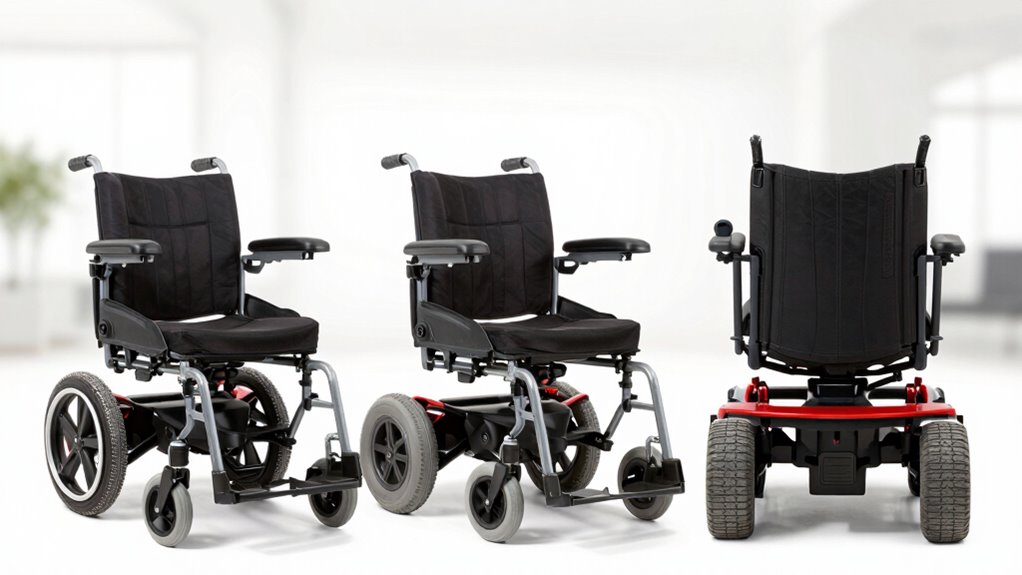
Selecting the best power wheelchair drive system starts with evaluating your daily routines and environment. Think about how often you’ll need to travel and the typical surfaces you’ll encounter. Battery life is vital—if you go on long outings, choose a drive system with extended battery capacity to avoid frequent charging. Consider weight considerations too; a heavier wheelchair might be less portable but could offer better stability, while a lighter model is easier to transport. If you mainly use your wheelchair indoors or on smooth surfaces, a rear or mid-wheel drive might suit you best. For outdoor or uneven terrain, front-wheel drive can provide better maneuverability. Matching these factors to your lifestyle ensures you select a drive system that offers comfort, convenience, and reliability. Additionally, understanding filtration and pump protection options can help maintain your wheelchair’s motor and extend its lifespan.
Frequently Asked Questions
How Do Drive Systems Impact Wheelchair Battery Life?
Your drive system directly impacts your wheelchair’s battery efficiency and drive system longevity. Front-wheel drive tends to use energy effectively on smooth surfaces, while rear-wheel drive offers better traction on uneven terrain, potentially conserving battery life. Mid-wheel drive provides smooth turns, but may drain the battery faster due to complex mechanics. Choosing the right drive system guarantees maximum battery efficiency and extends the longevity of your wheelchair’s drive components.
Are Certain Drive Types Better for Specific Disabilities?
Think of drive system compatibility as the key to unlocking your wheelchair’s potential. For those with limited upper body strength, rear-wheel drive offers stability like a steady ship, while front-wheel drive provides nimbleness around tight corners. Mid-wheel drive balances maneuverability and smoothness, perfect for indoor use. Your disability impacts which drive type suits you best, ensuring your wheelchair moves in harmony with your needs and environment.
Can Drive Systems Be Customized for Individual Needs?
Yes, drive system customization is possible to suit your individual needs. You can work with your healthcare provider or wheelchair specialist to tailor features like drive type, speed, and control options. This guarantees your power wheelchair offers peak mobility, comfort, and safety based on your specific disability, terrain, and daily activities. Customizing the drive system helps you navigate more confidently and comfortably, enhancing your overall independence.
How Do Drive Types Affect Wheelchair Maintenance?
Imagine you’re choosing a wheelchair for daily use; your drive system impacts maintenance considerably. Front-wheel drive offers good maneuverability but may require more frequent tire checks, affecting durability. Rear-wheel drive tends to be more durable due to simpler manufacturing, reducing maintenance costs. Mid-wheel drive, with its complex components, might need more regular servicing. Your choice influences ongoing maintenance needs, so consider drive system durability and manufacturing considerations when selecting your wheelchair.
What Safety Features Are Associated With Different Drive Systems?
Different drive systems come with safety features like enhanced stability, automatic braking, and low-speed alerts that improve user control options. Front-wheel drive offers better maneuverability on uneven terrain, while rear-wheel drive provides more stability during turns. Mid-wheel drive typically offers tight turning radius and smooth control. Confirm drive system compatibility with your needs, and look for features like responsive controls and safety sensors to stay secure and confident while using your wheelchair.
Conclusion
Choosing the right drive system is like finding the perfect pair of shoes—you need comfort, support, and confidence to move freely. Whether you prefer the agility of front or mid-wheel drives or the stability of rear-wheel models, understanding your environment and needs is key. By weighing the pros and cons, you’ll steer toward a wheelchair that feels like an extension of yourself, helping you navigate life’s journey with ease and confidence.
Halloween Picks
halloween
As an affiliate, we earn on qualifying purchases.