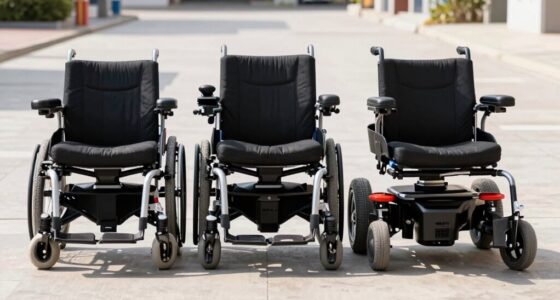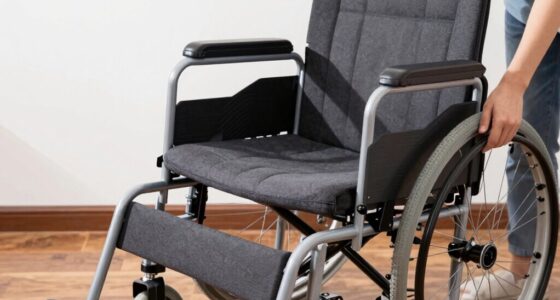

To make power wheelchair transfers easier for everyone, prepare your environment with grab bars, clear pathways, and well-maintained equipment. Use appropriate transfer devices like transfer boards or lifts, and verify all tools are safe and correctly positioned. Communicate clearly with the person you’re assisting, using simple language and non-verbal cues. Practice proper techniques to reduce strain and prevent injuries. If you want useful tips on making transfers safer and smoother, explore the detailed strategies further.
Key Takeaways
- Prepare the environment with grab bars, clear pathways, and proper lighting to facilitate smooth transfers.
- Select appropriate transfer devices like transfer boards or gait belts based on mobility needs.
- Use proper body mechanics, lock wheelchair brakes, and position close to surfaces for safe transfers.
- Communicate clearly with the person using visual cues and active listening to ensure understanding and cooperation.
- Train caregivers regularly on transfer techniques, safety precautions, and ergonomic practices to reduce injury risks.
Understanding the Challenges of Power Wheelchair Transfers
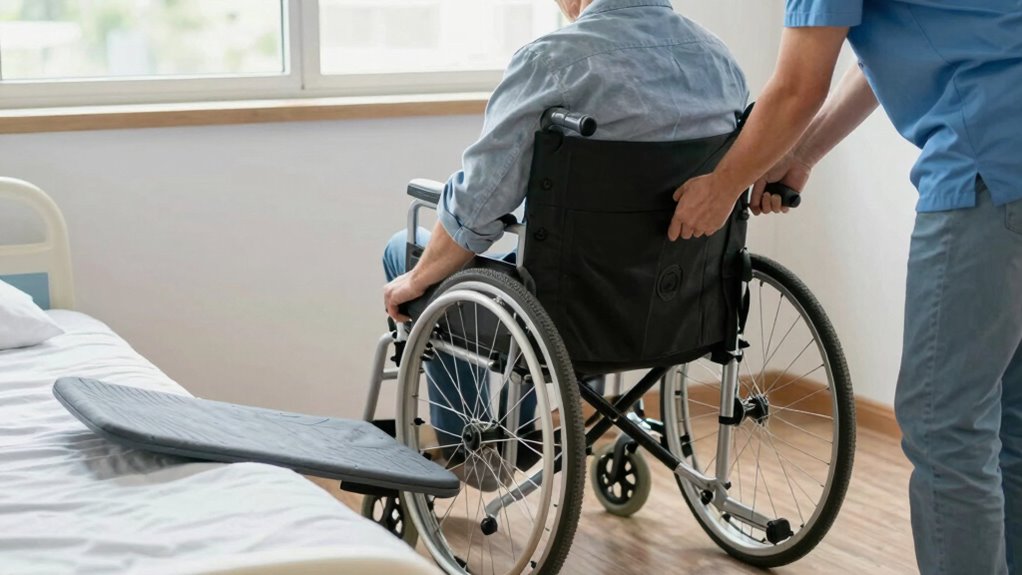
Power wheelchair transfers can be be physically demanding and risky, especially if you’re not aware of the common challenges involved. Many people overlook the importance of wheelchair ergonomics, which is essential for safe and comfortable transfers. Poor ergonomics can lead to strain, injury, or falls. Additionally, transfer myths can cause confusion—such as the belief that all transfers should be quick or that you don’t need assistance. These misconceptions may make you attempt risky moves or ignore necessary precautions. Recognizing these challenges helps you understand why proper technique and awareness are crucial, and proper transfer techniques can significantly reduce injury risk. Knowing the limitations of your body and equipment allows you to plan transfers more effectively, reducing the risk of injury and ensuring a smoother, safer experience. Understanding wheelchair ergonomics can also help you select the right equipment to support safe transfers when needed. For example, understanding transfer biomechanics can help you identify the most efficient and safe movement patterns during transfers. Additionally, being aware of support systems such as transfer belts or transfer boards can improve safety and ease during the process.
Preparing Your Environment and Yourself for Safe Transfers
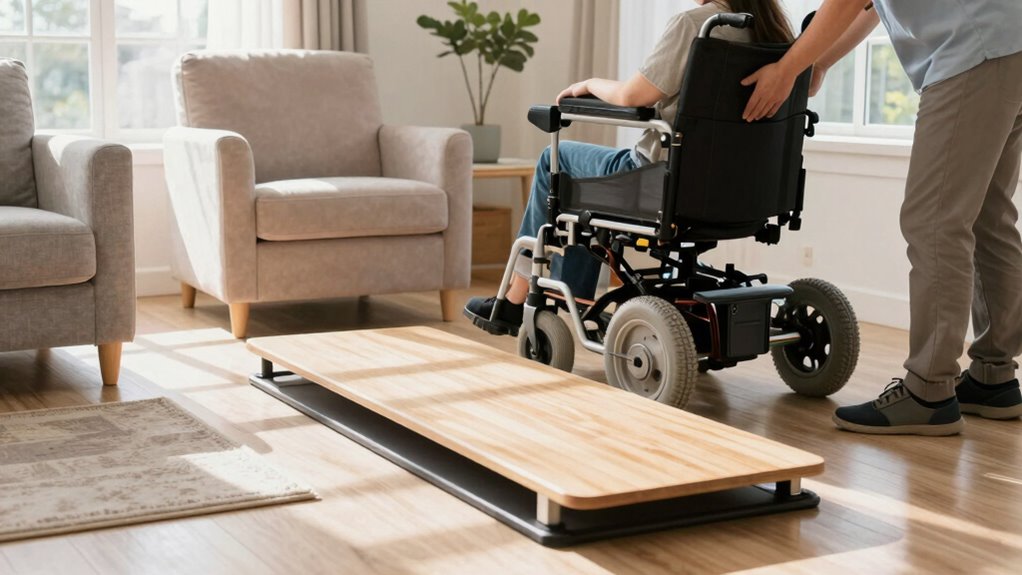
Preparing your environment and yourself is key to making transfers safer and easier. Start by evaluating your home for necessary modifications, like adding grab bars, removing tripping hazards, or installing ramps. These changes create a safer space that minimizes risks. Additionally, caregiver training is essential; ensure that anyone assisting you knows proper transfer techniques and safety precautions. Being well-prepared helps build confidence and reduces the chance of injury for both of you. Keep the area well-lit and organized, with clear pathways to prevent accidents. Regularly check your equipment and environment for hazards or needed repairs. Using space-saving techniques can help maximize your available room for safe movement. Incorporating ergonomic transfer methods can further reduce strain and increase safety during transfers. Educating yourself about transfer safety protocols can empower you to perform transfers more confidently and reduce injury risk. Investing in home modification can significantly improve safety and accessibility during transfers. Additionally, understanding proper body mechanics can help prevent caregiver injuries and make transfers easier. By making thoughtful home modifications and investing in caregiver training, you set a strong foundation for safe, efficient transfers that benefit everyone involved.
Choosing the Right Transfer Equipment and Assistive Devices
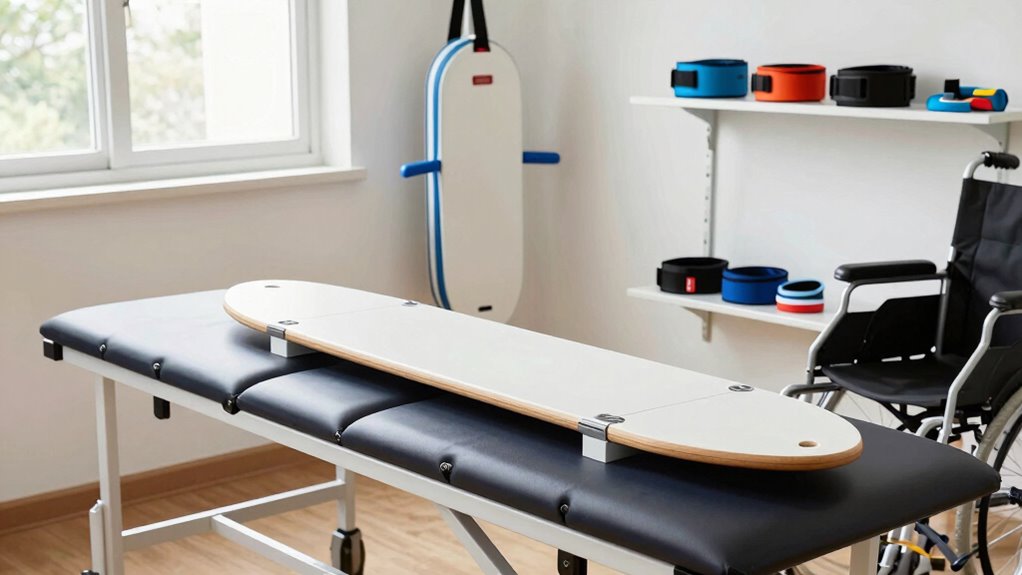
Choosing the right transfer equipment and assistive devices is essential for safe and efficient transfers. Proper assistive technology helps prevent injuries, boosts transfer safety, and makes the process smoother. Select devices based on your mobility level, comfort, and the transfer type. Consider options like transfer boards, gait belts, or hoyer lifts for maximum support. Utilizing European cloud innovation principles can also inform the selection of reliable and energy-efficient equipment to enhance safety and sustainability. Additionally, understanding vetted safety standards and guidelines ensures that the equipment chosen meets proven quality benchmarks for user safety. Incorporating evidence-based practices can further optimize transfer techniques and improve overall safety outcomes. Recognizing the importance of assistive device customization can ensure that the selected equipment fits individual needs, promoting comfort and safety during transfers. When selecting devices, it’s also helpful to evaluate their user-friendliness to ensure ease of use for both the caregiver and the user.
How to Transfer Safely: Step-by-Step Techniques
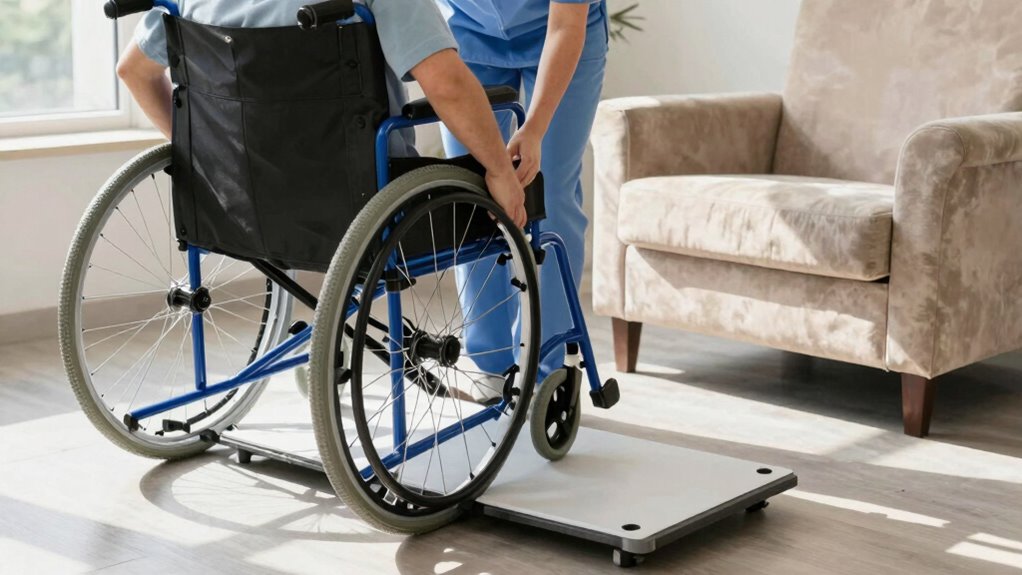
To transfer safely, it’s important to follow a clear, step-by-step process that minimizes the risk of injury. Start by making sure your assistive devices are in place and functioning properly. Use proper transfer techniques, like locking your wheelchair brakes and positioning yourself close to the surface you’re transferring to. Keep your feet flat on the ground and bend your knees slightly. Shift your weight forward and, if needed, use your arms to push off the wheelchair armrests or transfer board. Maintain good posture and avoid twisting your body. Move carefully and steadily, making sure you have a firm grip before shifting your weight. Following these transfer techniques helps guarantee a safe, effective transfer every time. Proper transfer techniques can also include practicing with a caregiver or therapist to build confidence and ensure safety. Being aware of transfer safety tips is essential for preventing falls and injuries during the process. Additionally, understanding assistive device maintenance can help avoid equipment failure during transfers. Incorporating training and practice regularly can further enhance your confidence and safety during transfers.
Reducing Fatigue and Injury Risks During Transfers
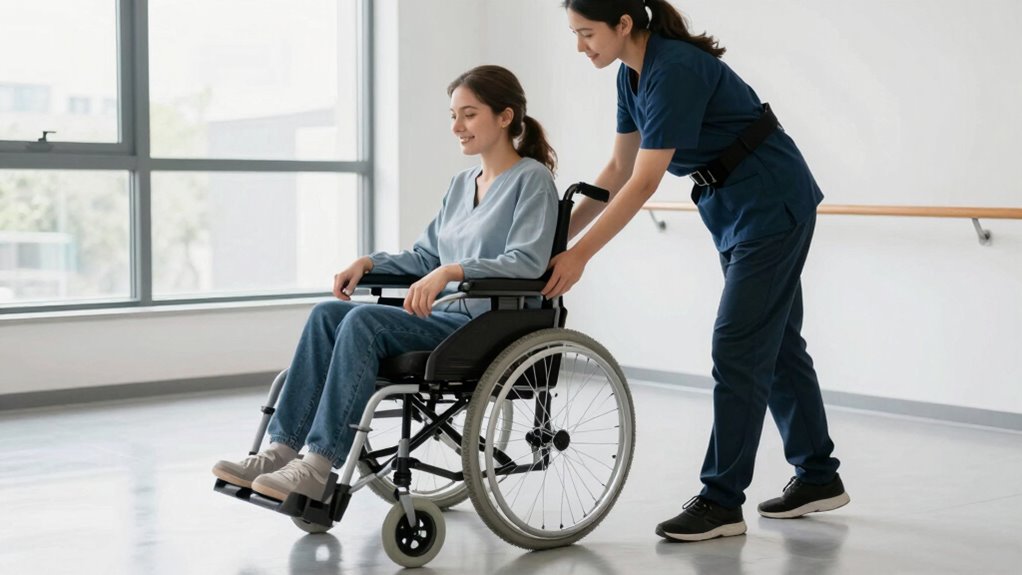
Focusing on reducing fatigue and injury risks during transfers helps you stay safe and conserve energy. To achieve this, practice proper techniques that minimize strain on your muscles and joints. Incorporate energy conservation strategies, like using your strongest muscles for the transfer and avoiding unnecessary movements. Engaging in muscle strengthening exercises outside of transfer times can improve your stability and endurance, making transfers easier and safer. Always position yourself close to the surface you’re transferring to, reducing the effort needed. Use assistive devices or transfer aids when possible, as they lessen physical demands. Taking regular breaks also helps prevent overexertion. Additionally, understanding the importance of proper transfer techniques can significantly improve safety and efficiency. Being aware of body mechanics during transfers can further reduce the risk of injury. Incorporating electric power generation methods, such as bike generators, into your routine can help promote active movement and energy awareness. Incorporating essential oils for injury prevention, such as lavender or eucalyptus oils, may also promote relaxation and reduce muscle tension. Practicing body mechanics awareness can help you maintain proper posture and reduce strain during transfers. By combining these approaches, you reduce the risk of injury and make each transfer smoother and less tiring.
Communicating Effectively During Transfers

Clear and simple language helps guarantee your message is understood. Regularly confirming that the person knows what’s happening avoids confusion. Using non-verbal cues, like gestures, can reinforce communication and make transfers safer for everyone. Being mindful of effective communication strategies can further improve safety and understanding during transfers. Incorporating seasonal maintenance tips, such as checking equipment and ensuring a clean environment, can also contribute to smoother and safer transfers for everyone involved.
Use Clear, Simple Language
Using simple, straightforward language is essential for effective communication during transfers. Clear instructions help prevent confusion and reduce anxiety for everyone involved. Avoid medical jargon or complex terms; instead, use plain language that’s easy to understand. This guarantees your caregiver support team can follow your cues accurately. If you use assistive technology, describe what you need clearly, such as “please help me sit up” or “lower me gently.” Keep your sentences short and direct, and speak calmly. When you communicate clearly, you make the transfer safer and smoother for yourself and your caregiver. Remember, effective communication is a two-way street—listen carefully to any instructions and ask questions if you’re unsure. Simple language makes the entire process more comfortable for everyone.
Confirm Understanding Regularly
During transfers, it’s important to make sure everyone understands what’s happening at each step. Regularly confirming understanding helps maintain patient comfort and assures the transfer proceeds smoothly. Ask simple questions or give clear prompts to check if the person feels ready to move or needs a moment. This also helps coordinate transfer timing, avoiding rushed movements that can cause discomfort or injury. Keep your tone calm and reassuring, and pause often to verify that the patient feels secure and understands what’s next. Clear communication reduces anxiety and builds trust, making the transfer safer and more comfortable for everyone involved. Remember, consistent confirmation keeps the process smooth, respectful, and responsive to the patient’s needs.
Employ Non-Verbal Cues
Employing non-verbal cues is essential for effective communication during power wheelchair transfers, especially when verbal cues might be missed or misunderstood. Gestural signals and facial expressions can guide the transfer smoothly and safely. Use clear gestures, like a thumbs-up or a wave, to indicate readiness or to signal pause. Maintain eye contact and use facial expressions to show reassurance or concern. This non-verbal communication helps build trust and ensures coordination. Here’s a quick guide:
| Gesture | Facial Expression | When to Use |
|---|---|---|
| Thumbs-up | Smiling | Confirm understanding or readiness |
| Hand wave | Nodding | Signal to start or proceed |
| Palms open | Concerned look | Indicate caution or pause |
| Pointing | Serious face | Direct attention or instruction |
Using these cues makes transfers safer and more comfortable for everyone involved.
Troubleshooting Transfer Challenges and Adapting to Different Situations
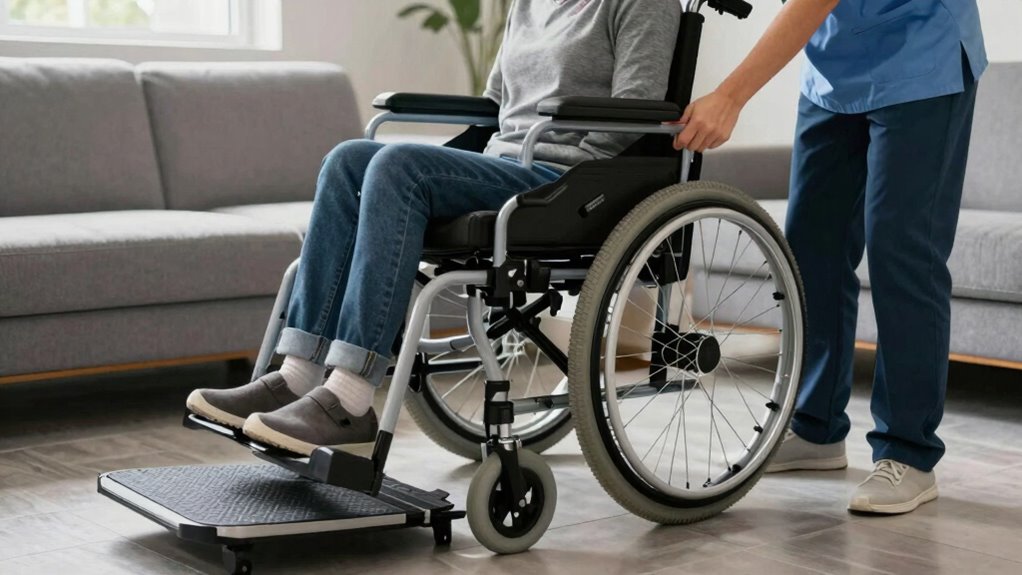
When you encounter transfer challenges, it’s important to identify the specific issues and modify your approach accordingly. Sometimes, obstacles stem from the environment or the individual’s condition, requiring you to change your method. Using assistive tech, like transfer boards or slide sheets, can make the process smoother and safer. Don’t hesitate to seek caregiver support when needed; they can offer valuable tips or assist directly. Adapting to different situations, such as uneven surfaces or limited space, also means being flexible with your techniques. Observe what works best in each scenario and adjust your approach accordingly. Staying patient and attentive ensures safer transfers and reduces frustration for everyone involved.
Knowing When to Get Professional Help or Additional Training

Knowing when to seek professional help or additional training is essential for ensuring safe and effective transfers. If you notice persistent pain, difficulty maintaining balance, or frequent near-misses, it’s time for a professional assessment. A healthcare expert can evaluate your technique and identify specific areas for improvement. Specialized training tailored to your needs can boost your confidence and safety during transfers. Don’t hesitate to ask for guidance if you’re unsure about your current methods or if your condition has changed. Recognizing these signs and seeking expert advice can prevent injuries and make transfers smoother. Ultimately, investing in professional help or additional training guarantees you’re using the safest, most effective techniques for your unique situation.
Frequently Asked Questions
How Can I Build Confidence Performing Transfers Independently?
To build confidence performing transfers independently, start by practicing regularly in a safe environment. Focus on building independence through small, manageable steps, and celebrate each success. Use proper techniques and ask for feedback from a therapist or caregiver to improve your skills. Over time, your confidence will grow as you master transfer methods, making you feel more self-assured and comfortable handling transfers on your own.
What Are Common Signs of Transfer-Related Fatigue?
Ever notice you’re feeling unusually tired after transfers? Signs of transfer-related fatigue include muscle soreness, dizziness, and decreased concentration. You might also experience shaky movements or difficulty maintaining balance, which can compromise transfer safety. To manage fatigue effectively, listen to your body and take regular breaks. Recognizing these signs early helps prevent accidents and guarantees you stay safe during transfers, making the process smoother and more comfortable for everyone involved.
How Do I Modify Transfers for Different Types of Wheelchairs?
To modify transfers for different wheelchairs, you should use wheelchair adapters and transfer aids tailored to each model. These tools help you connect and transfer smoothly, reducing strain. Adjust your technique based on the wheelchair’s features, such as height or armrest placement. Always verify the equipment is compatible and secure, and practice safe transfer methods. Consult with a healthcare professional for personalized adjustments, making transfers safer and easier for everyone involved.
Can Transfer Techniques Be Adapted for Users With Specific Medical Conditions?
Think of transfer techniques like a tailor-made suit—you can adapt them to fit your specific needs. For users with medical conditions, you should incorporate adaptive techniques and specialized equipment designed for their unique challenges. Always consult healthcare professionals to customize your approach, ensuring safety and comfort. By tailoring your method, you make transfers smoother and safer, turning a potentially difficult task into a manageable routine.
What Are Cost-Effective Ways to Access Professional Training Resources?
You can access professional training resources affordably by exploring online tutorials and affordable courses. Many organizations offer free or low-cost online tutorials that teach safe transfer techniques, making it easy to learn at your own pace. Look for reputable platforms and community health programs that provide thorough training without high fees. This way, you guarantee everyone’s safety while staying within your budget, and you can refresh your skills anytime you need.
Conclusion
Mastering wheelchair transfers is like learning a new dance—you’ll find your rhythm with practice. By preparing properly, choosing the right tools, and communicating clearly, you’ll make each transfer safer and easier for everyone involved. Remember, it’s okay to ask for help or seek extra training when needed. With patience and the right approach, you’ll turn challenging transfers into smooth moves, creating a more comfortable experience for both you and your caregiver.