TL;DR

Get comfort and care essentials delivered free — and shop member deals
- Fast, free delivery on millions of items
- Access to Prime Big Deal Days deals on October 6–7
- Prime Video, Amazon Music and more included
Senior-friendly Halloween costumes combine personal style with comfortable clothes, easy dressing, clear vision, stable footwear, and room to move. Build a look around familiar clothing, adapt it to the weather and any mobility aid, and let the wearer choose how dressed up they want to be.
A Halloween costume can be memorable without a single scratchy mask, ankle-length cape, or shoe you’ve never worn before. For many older adults, the best outfit is one that feels like their own style—with a playful twist that stays comfortable from the first photo to the last piece of candy.
That’s the heart of senior-friendly Halloween costumes: dressing while keeping comfort, mobility, warmth, and personal choice in view. The expression of Halloween can be bold, silly, nostalgic, or wonderfully simple; it doesn’t mean costumes have to be subdued, and it doesn’t mean elaborate. A festive scarf can be enough.
Below, you’ll find easy costume ideas, tips for adapting an outfit to a wheelchair or walker, and a practical check before heading out. Whether you’re helping a family member, planning a community gathering, or choosing for yourself, let the person wearing the costume lead the way.
Build the outfit around clothes the wearer already finds comfortable, then add one or two recognizable details.
Ask the person how much dressing up they want; a themed shirt, badge, scarf, or cardigan counts.
Keep hems and decorations clear of walking paths, wheelchair wheels, walker frames, controls, and brakes.
Choose familiar, well-fitting footwear, and test the complete outfit indoors before leaving.
Adapt layers to the weather, keep glasses and hearing aids accessible, and bring a removable backup layer.
What makes a Halloween costume comfortable and senior-friendly?
Senior-friendly Halloween costumes are outfits that let the wearer enjoy the occasion while dressing, sitting, standing, and moving as comfortably as possible. They use familiar footwear, soft or breathable fabrics, manageable layers, clear sightlines, and details that reflect the wearer’s own taste. Comfort does not mean giving up on a funny or dramatic look.
Start with the person, not an age-based idea of what they should wear. Ask whether they want a full costume, a themed sweater, or simply a festive pin; preferences and comfort vary widely. A retired jazz fan might love a bright scarf and a musician’s badge, while someone else would rather wear a pumpkin-orange cardigan and enjoy the party without a hat.
Think about the clothes underneath, too. A roomy outfit that slips over everyday clothing can be easier than tight layers, small buttons, or a scratchy collar. If the celebration is outdoors, try the complete outfit indoors first: the wearer can sit, stand, turn, and check whether the fabric feels too warm or catches on a chair.
There’s no single rule for every person. Someone who enjoys face paint may be perfectly happy wearing it; someone else may prefer to keep their glasses, hearing aids, or skin free of costume extras. A thoughtful costume makes room for those choices rather than treating them as obstacles.
senior-friendly Halloween costumes
As an affiliate, we earn on qualifying purchases.
As an affiliate, we earn on qualifying purchases.
Which easy costume ideas look festive without a complicated outfit?
Senior-friendly Halloween costumes can be simple and still unmistakable: begin with clothes the wearer already likes, then add one or two clear themed details. A cozy base outfit often feels better than a store-bought costume with unfamiliar fabric, tight closures, or too many pieces. Here are easy ideas you can build from a wardrobe.
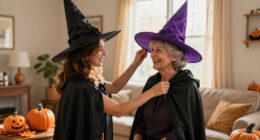
- Wizard: Wear a comfortable dark outfit and add a soft hat or star-patterned scarf. Skip a long robe if it drags or gets underfoot.
- Detective: Pair a familiar jacket with a checked scarf, notebook, or lightweight magnifying glass. The character comes through without a mask.
- Autumn pumpkin: Try an orange shirt or cardigan with a small green brooch. It offers a bright seasonal look without a bulky costume shell.
- Favorite decade or musician: Choose a familiar outfit inspired by a beloved singer, film, or era. A specific accessory—such as a colorful scarf—can carry the theme.
- Black cat or scarecrow: Use a themed top and a soft, removable detail. Avoid dangling pieces that could catch on a walker or chair.
For example, someone who loves classic detective stories might wear their own gray jacket and add a checked scarf. That outfit can feel personal and recognizable without requiring face paint, special shoes, or a difficult change of clothes. These ideas for a Halloween look work at home, a family dinner, or a community event.
A themed T-shirt, seasonal cardigan, badge, or scarf counts, too. When you’re looking for friendly Halloween costumes, remember that the point is to join in on the wearer’s terms—not to meet a standard costume checklist.
How can you make dressing up easier and safer?
To make a costume easier to wear, start with familiar clothes, add only a few comfortable details, and test the full outfit before the event. Simple changes can make a big difference: a soft scarf may replace a tight collar, and everyday shoes may work far better than costume boots. Use this short check before the celebration.
- Ask what sounds fun. Offer two or three ideas and let the wearer choose how much to dress up. They may prefer a complete character look, or just a festive hat.
- Build on a comfortable base. Select familiar clothes with enough room to sit and move. Avoid scratchy seams, heavy layers, tight collars, and closures that are difficult for the wearer.
- Check the fit and the path. Make sure hems stay clear of the floor and no accessory hangs near a walker, cane, or wheelchair wheel. Keep glasses and hearing aids unobstructed.
- Try it on indoors. Have the wearer sit, stand, turn, and reach as they normally would. If a hat slips over the eyes or a cape catches on the chair, remove or adjust that piece.
- Finish with familiar footwear and a backup layer. Stable, well-fitting shoes are usually a better choice than novelty footwear. Bring a coat or cardigan if the weather could turn cold.
Imagine a family preparing a detective costume for an evening party. A familiar jacket, checked scarf, and small notebook can create the look, while a quick indoor test catches a scarf that swings into the walker’s path. A little rehearsal keeps the costume fun instead of fussy.
If someone needs help dressing or adjusting accessories, ask before stepping in. Support should make the person more comfortable, not take the decision out of their hands.
How do you adapt a costume for a wheelchair, walker, or cane?
Adapt a costume to a mobility aid by keeping fabric and decorations clear of wheels, brakes, controls, handgrips, and walking space. A wheelchair, walker, or cane can join the theme, but it still needs to work exactly as the wearer expects. Check both function and comfort before adding anything.
A wheelchair could become a parade float, carriage, or spaceship using lightweight decorations secured away from the wheels and controls. For example, a few flat cardboard stars attached to a visible, non-moving area can suggest a spaceship without hanging near the tires. Keep transfers and access to the chair’s usual controls clear, and ask the wheelchair user before decorating their equipment.
For a walker, a festive ribbon or small, secure decoration may add color, while loose garlands can snag on doorways or get tangled. A cane can coordinate with a character through a removable ribbon, as long as the grip and tip remain unobstructed. If any decoration changes how the aid feels or moves, take it off.
When the wearer will be outdoors after dark, reflective or light-colored details can help make the outfit easier to see. They should not cover glasses, hearing aids, or the person’s view. A bright scarf over a dark jacket may add visibility without a mask or bulky headwear.
For anyone uncertain about a particular device or adaptation, ask the wearer what works for them or check with a qualified professional familiar with their mobility needs. The costume should fit around the aid—not force the person to adapt how they use it.
What can you wear when Halloween weather turns cold or warm?
Dress for the actual weather by building the costume around comfortable layers, then checking that the finished outfit stays manageable indoors and outside. A costume that looks perfect in a warm living room may feel chilly on a porch, while a thick cape can become uncomfortable in a crowded room. Keep the themed element visible without sacrificing comfort.
| Weather or setting | Comfort-first costume choice | What to check |
|---|---|---|
| Cold evening outdoors | Warm base layer, themed cardigan, coat, or blanket | Does the outer layer stay clear of shoes, wheels, and handgrips? |
| Warm indoor party | Lightweight themed shirt, scarf, or removable accessory | Can the wearer remove a layer easily if they feel too warm? |
| Uncertain temperatures | Everyday outfit with a festive layer that can come off | Can the person adjust the outfit without difficult fasteners? |
For example, a black-cat look could start with a familiar black sweater, then use a soft scarf as its festive accent. If the evening turns cold, the wearer can add a coat without losing the theme; if the party room feels warm, the scarf can come off easily.
Try the whole outfit at home, including the coat or blanket. Check whether it bunches behind the wearer when seated, blocks arm movement, or drapes near mobility equipment. A costume should feel good in the pose the person actually uses—not just while standing still for a photo.
How can you make a costume personal without spending much?
A low-cost costume can feel personal when you use a favorite piece of clothing and add one or two details that connect to a story, hobby, or character. Reusing what someone already owns can also make the outfit more familiar and comfortable. You don’t need a complete kit or a trip to a costume shop to join the celebration.
Say your aunt has a red scarf she wears every winter and loves old musicals. Start with clothes she enjoys, add the scarf, and choose a song-themed badge or a small accessory that she can handle comfortably. That single bright detail can make the outfit recognizable while keeping dressing simple.
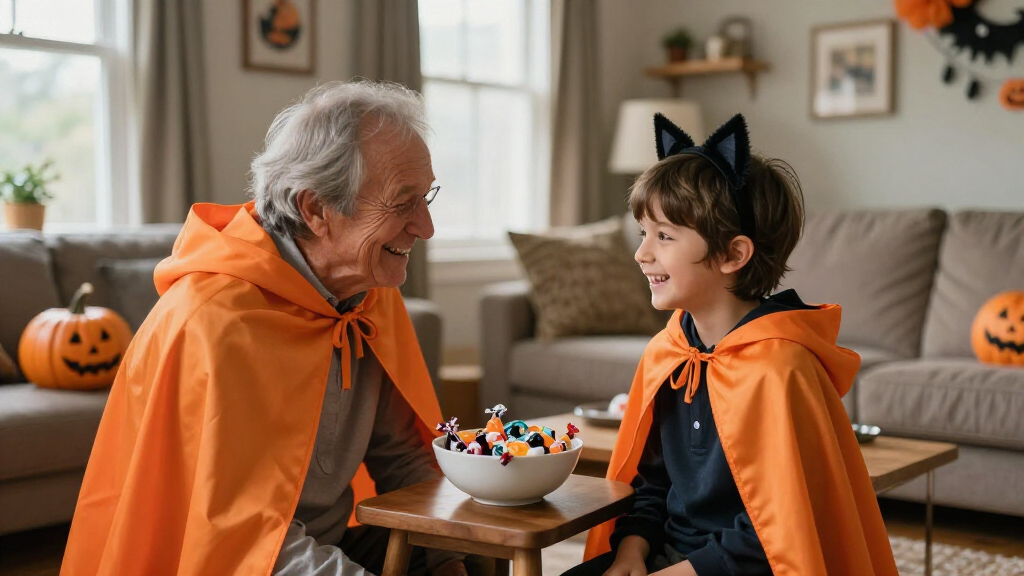
Friends and families can coordinate without asking everyone to wear matching outfits. One person might choose a wizard hat, another a pumpkin cardigan, and someone else might wear a themed pin; the shared colors or story can tie the group together. This inclusive approach lets each person choose their own level of participation.
Some retailers and craft communities offer adaptive costume products, but sizing, designs, and features vary. Read current product details and reviews before buying, and check whether an item can be worn over familiar clothes or adjusted without difficult fasteners. For many people, a familiar outfit with a removable festive accessory will be the simpler, more affordable choice.
And Halloween doesn’t have to mean going door to door. A costume can be enjoyed at home, during a care-setting event, at a family gathering, or just for a photo. Taking part can be as small—or as spirited—as the wearer wants.
What should you check before leaving home?
Before heading out, check warmth, fit, footwear, vision, hearing-device access, and whether every accessory stays clear of the wearer’s walking path or mobility aid. These quick checks help catch problems while you’re still near a chair, mirror, and spare layer. Give the wearer time to say what feels right.
Try a short indoor rehearsal: sit down, stand up if that is part of the person’s usual routine, turn, reach, and move through a doorway. For someone using a walker, check that scarves and costume pieces do not catch on the frame; for a wheelchair user, inspect the area around wheels, brakes, and controls. A mirror can show whether a hat blocks vision or a collar hides hearing aids.
Keep a familiar coat or cardigan nearby, and bring a small bag for accessories the wearer decides to remove. If you’re going to a party, ask about seating, lighting, and space to move around. Those practical details can help someone enjoy the visit instead of spending it adjusting a costume.
Most of all, don’t treat the checklist as a test the person has to pass. If a mask feels uncomfortable, take it off; if the costume stops being fun, a festive scarf is enough. A successful evening is one where the person feels comfortable, included, and free to change their mind.
Frequently Asked Questions
What makes a Halloween costume senior-friendly?
A senior-friendly costume fits comfortably, feels manageable to put on, suits the weather, and allows the wearer to see and move as usual. Personal preference matters, too: one person may love a full character outfit, while another prefers a festive scarf and familiar clothes.
What are easy costumes for someone with limited mobility?
Try a themed shirt, cardigan, poncho, or familiar outfit with one accessory, such as a soft hat or badge. Keep fabric away from wheels, walker frames, cane tips, and the floor, and check that the person can sit comfortably.
How do you make a costume wheelchair-friendly?
Choose a seated-friendly design and keep decorations clear of wheels, brakes, controls, transfer areas, and the wearer’s view. Ask the wheelchair user before decorating their chair, and test any lightweight, securely attached details before going out.
Are masks and face paint necessary for a costume?
No. A hat, scarf, themed top, or recognizable accessory can communicate the idea without covering the face. If masks or face paint feel uncomfortable or interfere with glasses, hearing aids, or personal preference, leave them out.
What shoes should someone wear with a Halloween costume?
Familiar, well-fitting shoes with stable soles are usually a practical choice. Design the costume around the person’s usual footwear rather than adding unfamiliar costume shoes that may feel awkward.
Conclusion
The best senior-friendly Halloween costume is not the most elaborate one. It’s the outfit the wearer chooses, feels good in, and can enjoy without fighting a scratchy mask, a dragging hem, or an unfamiliar pair of shoes.
Start with something comfortable, add one detail with personality, and check that it moves with the person—not against them. Then let the fun take center stage: sometimes all it takes is one bright scarf to turn an ordinary evening into Halloween.
Cold & flu season Picks
humidifiers
As an affiliate, we earn on qualifying purchases.