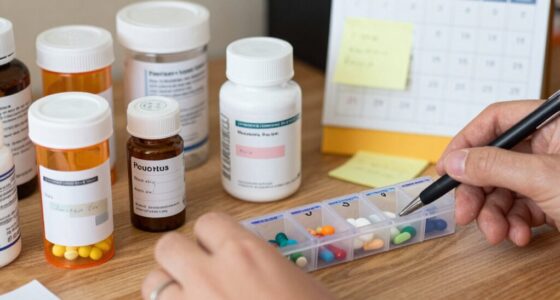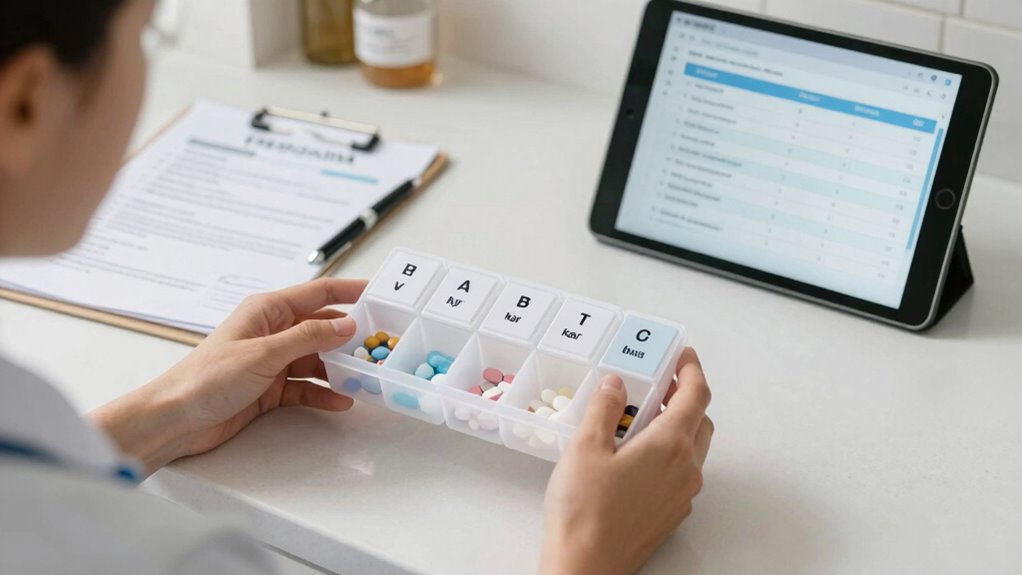

After a hospital discharge, you should ask about how each medication should be taken, including timing, dosage, and food restrictions. Check for potential drug interactions and signs of harmful side effects. Find out the duration of each medication and when to schedule follow-ups. Clarify storage needs, refill procedures, and if there are any tools to help organize medications. Asking these questions helps you stay on track and guarantee safe, effective recovery—stay with us to learn more tips.

Turn quiet afternoons into listening time
- Thousands of audiobooks, podcasts and originals
- Listen on your phone, tablet or Echo — also offline
- Cancel anytime
Key Takeaways
- Confirm medication routines, including timing, dosage, and whether they should be taken with food.
- Ask about potential drug interactions and signs of harmful side effects.
- Clarify the duration of medications and upcoming follow-up appointments or lab tests.
- Inquire about proper storage, refill procedures, and tracking tools for medications.
- Ensure understanding of all instructions and establish communication points for questions or emergencies.
Caring for a loved one often involves managing their medications, which can feel overwhelming without the right knowledge. After a hospital discharge, it’s essential to ask the right questions to guarantee medication safety and effective prescription management. You want to make sure you fully understand the new medication routines, potential side effects, and any necessary precautions. Asking about medication safety helps prevent errors, adverse reactions, or missed doses that could compromise your loved one’s health. It’s vital to clarify how each medication should be taken, including the timing, dosage, and whether it should be taken with food or on an empty stomach.
Ask about medication routines, side effects, and precautions to ensure safety and effective management after hospital discharge.
You should also ask about possible drug interactions, especially if your loved one is on multiple medications. Some drugs can interact negatively, leading to serious health problems. Confirm if there are any specific signs or symptoms that indicate a harmful interaction, so you can watch out for them. Additionally, find out what to do if a dose is missed—whether to take it immediately or skip it—and what to do if your loved one experiences side effects. Understanding these details helps you respond promptly and effectively, guaranteeing medication safety remains a top priority.
Prescription management involves more than just understanding how to administer medications. Ask your healthcare provider about the duration of each medication—how long your loved one needs to take them—and whether there are any upcoming follow-up appointments or lab tests to monitor progress. Request written instructions or a medication list to keep track of everything, especially if multiple doctors are involved. This can prevent confusion and accidental double-dosing. Additionally, discussing the importance of medication adherence can help ensure consistent use and optimal recovery outcomes. Recognizing the role of medication management in recovery can also empower you to stay organized and proactive.
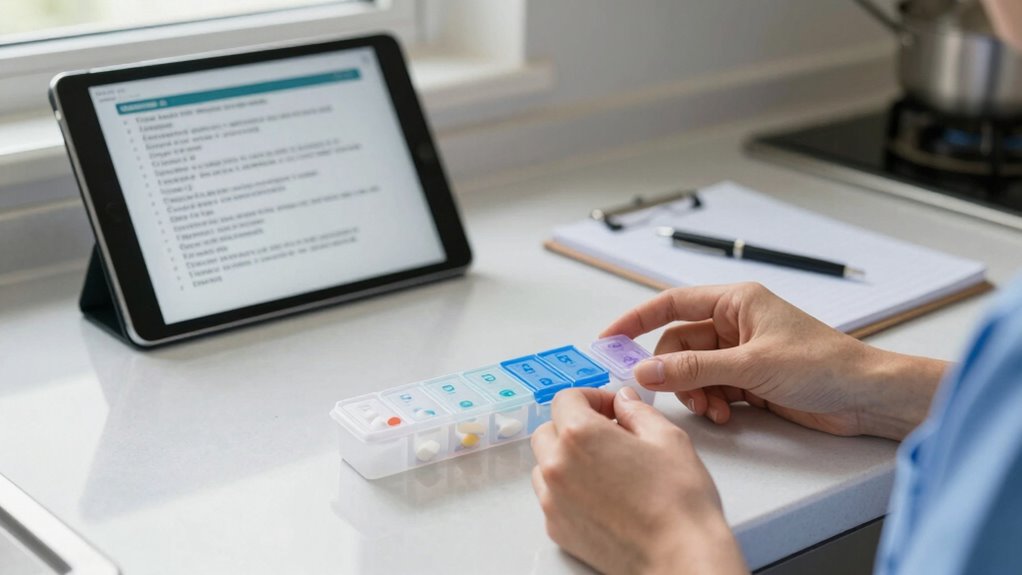
It’s also wise to discuss storage requirements for each medication, as some need to be kept in specific conditions like refrigeration or away from sunlight. Clarify if refills will be needed and how to obtain them before running out. Many caregivers find it helpful to have a medication calendar or organizer to track doses and refill dates, reducing the risk of missed doses. Proper storage and organization are crucial components of medication safety, ensuring medications remain effective and reducing the risk of accidental misuse. Plus, understanding the importance of medication instructions helps minimize errors and promotes proper use.
Finally, don’t hesitate to ask about additional resources, such as medication management tools or home health services, that might help you maintain safety and compliance. Remember, proactive communication with your loved one’s healthcare team guarantees you’re well-equipped to manage their medications confidently and safely after a hospital discharge. Your questions make a difference in safeguarding their health and promoting recovery.
As an affiliate, we earn on qualifying purchases.
Frequently Asked Questions
How Do I Handle Medication Side Effects or Adverse Reactions?
If you notice medication side effects or adverse reactions, contact the healthcare provider promptly. They can evaluate possible medication interactions and adjust the dosage or prescribe alternative remedies if needed. Keep track of symptoms and report any changes. Never stop or change medications without professional guidance. Staying informed and communicating openly helps guarantee your loved one’s safety and effective management of their medications after discharge.
What Should I Do if a Dose Is Missed?
Remember, a stitch in time saves nine. If you miss a dose, don’t panic—act quickly. Check the medication timing and follow the instructions on the label or your healthcare provider’s advice. Use pill organization to confirm if the dose was missed. If it’s close to the next dose, skip the missed one—don’t double up. Always contact the healthcare provider for guidance if you’re unsure about what to do next.
Are There Any Specific Storage Instructions for the Medications?
You should check the medication’s packaging or ask the healthcare provider for specific storage instructions, as proper medication storage guarantees effectiveness and safety. Keep medications in a secure, dry place away from children and pets. Also, familiarize yourself with disposal guidelines to safely discard expired or unused medications. Proper storage and disposal help prevent accidental ingestion and misuse, keeping everyone in your home safe and maintaining medication efficacy.
How Can I Tell if the Medication Is Working as Intended?
Thinking of medication effectiveness is like watching a garden grow; you’ll see the results over time. To tell if it’s working, observe your loved one’s symptoms and overall health. Keep track of medication adherence—are they taking it as prescribed? Regularly consult healthcare providers for treatment evaluation. If you notice side effects or no improvement, contact their doctor promptly to adjust the plan.
Who Should I Contact for Medication Questions After Hours?
If you have medication questions after hours, you should contact your loved one’s emergency contacts or the on-call healthcare provider listed in their medication schedule. Keep this information handy to guarantee quick access during emergencies or urgent concerns. Always review the medication schedule to understand any special instructions, and don’t hesitate to reach out to the designated emergency contacts or healthcare professionals when needed.
Conclusion
As you step into the next chapter of care, remember these vital questions—each one a key to opening safety and peace of mind. Will you catch every detail, or will something slip through the cracks? The answers you seek could make all the difference in your loved one’s recovery. Stay vigilant, ask boldly, and prepare to face the unexpected. Because in this journey, knowledge isn’t just power—it’s the safeguard that keeps them safe.
Halloween Picks
halloween
As an affiliate, we earn on qualifying purchases.