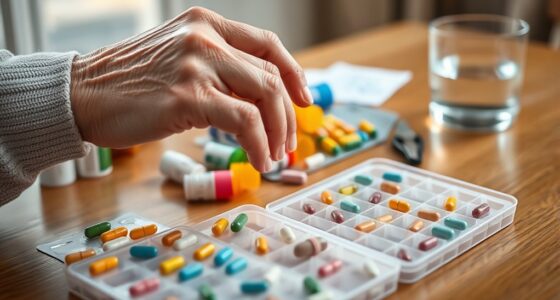
To keep your medications safe at home, store them in a secure, locked cabinet away from children and pets, avoiding humid areas like bathrooms. Proper disposal involves following instructions, using local take-back programs, or authorized disposal sites, and never flushing medications unless directed. Regularly review and discard expired or unused pills. Following these steps helps protect your loved ones and the environment. If you want to learn more about effective storage and disposal practices, keep exploring.
Key Takeaways
- Store medications in a locked, childproof cabinet away from heat, humidity, food, and water sources.
- Follow disposal instructions on packaging or use authorized take-back programs to prevent environmental harm.
- Regularly review your medication list and promptly dispose of expired or unused pills.
- Keep medications out of reach of children and pets to prevent accidental ingestion.
- Avoid flushing medications unless explicitly instructed, and never dispose of them in regular trash without proper packaging.

Properly storing and disposing of medications is vital to keep your home safe and prevent accidental poisoning. When medications are not stored correctly, they can become a risk, especially if children or pets have access to them. Additionally, improper disposal can lead to medication misuse, such as pill addiction or unintended ingestion of dangerous substances. It’s important to be proactive about how you handle your medications, from the moment you bring them home to when you no longer need them.
Storing medications in a secure, cool, and dry place is essential. Use a locked cabinet or a container that children and pets cannot access. Avoid bathroom medicine cabinets, as humidity and heat can degrade the medication’s efficacy and increase the risk of misuse. When medications are stored inappropriately, they may be accidentally ingested, leading to adverse reactions or medication side effects. For instance, someone might mistake pills for candy, or an individual with pill addiction issues might be tempted to misuse improperly stored drugs. Keeping medications out of reach helps prevent these dangers and reduces the risk of accidental poisonings.
It’s equally important to understand how to dispose of medications safely. Flushing certain drugs down the toilet or sink, especially opioids or medications with high abuse potential, can contaminate water sources and pose health risks to others. Many medications, however, have specific disposal instructions on their packaging or accompanying patient leaflets. If no guidance is provided, use local take-back programs or authorized disposal sites. These programs ensure that medications are disposed of safely and do not contribute to pill addiction or accidental poisoning. Never throw medications directly into the trash without proper packaging, as this can lead to environmental contamination or misuse if someone rummages through the trash.
Regularly review your medication list and dispose of expired or unused pills promptly. This reduces the chance of someone accidentally taking medication with harmful side effects or abusing pills. Proper disposal also minimizes the risk of medication diversion, which can contribute to pill addiction within your community. When in doubt, consult your pharmacist or healthcare provider for disposal recommendations tailored to your specific medications. They can advise you on safe practices to keep your environment secure and prevent potential health hazards. Additionally, understanding the caffeine content of medications or related products can help you avoid unintended overconsumption or interactions.

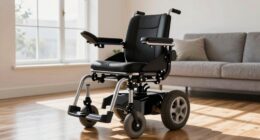
Spacewalk 4 Wheel Mobility Scooter for Seniors - with Dual Baskets, 350W Motor, 264 lbs Capacity, 15 Miles Range, USB Charging Port, Foldable Heavy Duty Mobile Scooter for Elderly
【Friendly control panel】: color battery indicator, horn, headlight switch, speed control knob and lock switch, forward, reverse levers,...
As an affiliate, we earn on qualifying purchases.
Frequently Asked Questions
Can I Store Medications in the Bathroom?
Storing medications in the bathroom isn’t recommended because humidity and heat can affect their safety and effectiveness. For medication safety, keep your medicines in a cool, dry place away from sunlight and children. Use storage tips like a locked cabinet or a drawer. Always follow the label instructions and avoid bathroom storage to make certain your medications stay effective and safe for use.
How Long Can I Keep Expired Medications?
Expired medications can be dangerous if kept too long, but generally, you should discard them as soon as they’re past their expiration date—imagine the medicines turning into toxic monsters! Medication expiration means their potency drops, risking ineffective treatment or harm. To stay safe, always follow safe disposal methods like drug take-back programs or mixing with unappealing substances before trashing. Don’t wait—dispose of expired meds promptly for your health’s sake!
Are There Safe Ways to Dispose of Liquids?
Yes, there are safe ways to dispose of liquid medication. You should follow proper liquid medication disposal methods, such as mixing the liquids with unappealing substances like dirt or cat litter and placing them in a sealed plastic bag before trashing. Avoid pouring liquids down the drain to prevent environmental harm. For safe liquid storage, keep medications in their original containers, tightly sealed, and out of children’s reach to prevent accidental ingestion.
What Should I Do if a Child Accidentally Ingests Medication?
What would you do if a child accidentally ingests medication? First, stay calm and call your emergency contact or poison control immediately. Keep the child safe and don’t try to induce vomiting unless instructed. Store medications in childproof containers to prevent accidents. Quick action can make a difference, so always have emergency numbers handy and follow the guidance they provide. Your prompt response can protect your child’s health.
Can I Share Medications With Family Members?
You should never share medications with family members because medication sharing can jeopardize family safety. Different people have unique health conditions and medication needs, so sharing can cause harmful interactions or side effects. Always keep medications prescribed for you separate, and encourage family members to consult their healthcare providers for their own prescriptions. This way, you guarantee everyone’s safety and proper treatment, avoiding potentially serious health risks.
Amazon Product B0F62GYY19
As an affiliate, we earn on qualifying purchases.
Conclusion
By storing medications safely and disposing of them properly, you protect your loved ones and the environment. Did you know that nearly 60% of people have unused or expired medicines at home? Taking simple steps like locking away pills and using designated disposal sites can make a big difference. Stay vigilant and responsible—your actions help prevent misuse and environmental harm, ensuring a healthier, safer home for everyone.

MAHOMICO Power Lift Recliner Chair for Elderly with Vibration Massage and Lumbar Heating, Electric Lift Recliner Single Sofa with Side Pocket, Two Cup Holders and USB Charge Port for Living Room
𝗣𝗼𝘄𝗲𝗿 𝗟𝗶𝗳𝘁 𝗥𝗲𝗰𝗹𝗶𝗻𝗲𝗿 𝗖𝗵𝗮𝗶𝗿: Elevate your relaxation with the MAHOMICO power recliner chair. This advanced lift chair recliner...
As an affiliate, we earn on qualifying purchases.

WayCare 15-25 Miles Long Range Mobility Scooter,Weight Capacity 300 LBS+ Powered Mobility Scooters for Seniors, Compact Duty Mobile for Travel with LED Headlight and Detachable Basket(Red)
WAYCARE Mobility Scooter: Equipped with a powerful 24V 250W motor and a 12AH battery, it delivers impressive performance...
As an affiliate, we earn on qualifying purchases.