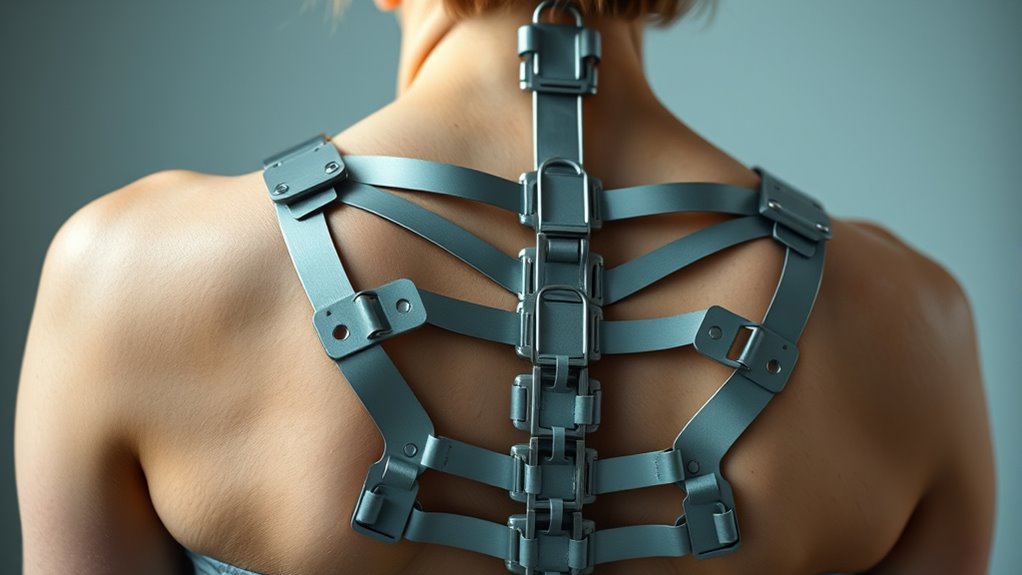

Using personalized braces and supports helps manage spinal fractures in osteoporosis by providing tailored stabilization that fits your body perfectly. This not only enhances comfort but also reduces skin irritation, promotes proper immobilization, and supports healing. Choosing the right material—rigid, semi-rigid, or breathable—depends on your activity level and skin sensitivity. Properly fitted braces can boost your confidence and recovery. To discover how these supports can be custom-made for you, stay with us for more details.
Key Takeaways
- Custom braces provide precise immobilization tailored to individual spinal fracture locations, enhancing support effectiveness.
- Personalized supports improve comfort, reduce skin irritation, and promote better adherence during osteoporosis recovery.
- Material choices like rigid plastics or breathable fabrics optimize immobilization and comfort based on patient activity and sensitivity.
- Properly designed braces help prevent secondary injuries and support confidence in movement during healing.
- Customization allows for brace adjustments, accommodating changing needs and facilitating faster, more effective recovery.
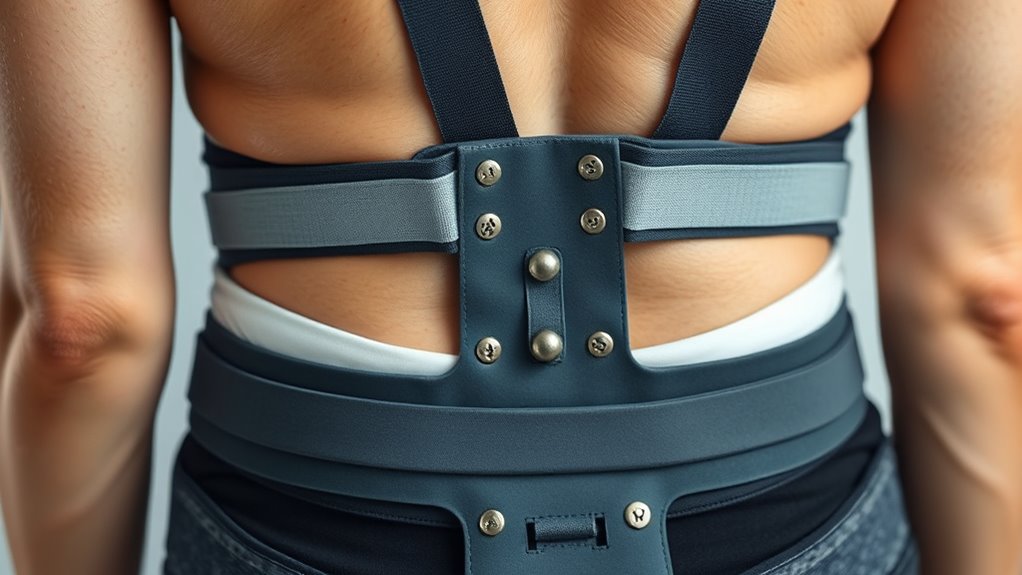
When you sustain a spinal fracture, braces and supports become essential tools in your recovery. They help stabilize your spine, reduce pain, and prevent further injury. One of the key aspects of choosing the right brace is understanding the importance of custom brace design. Unlike off-the-shelf options, a custom brace is tailored specifically to your body’s unique shape and the location of your fracture. This personalized approach ensures a better fit, improved comfort, and more effective support. The process involves precise measurements and sometimes imaging, allowing your healthcare provider to craft a brace that conforms perfectly to your body’s contours. This customization can make a considerable difference in how well you tolerate the brace and how effectively it supports your healing process.
Support material options are another critical factor in selecting a brace. Different materials offer varying degrees of flexibility, durability, and breathability. For instance, rigid plastics provide maximum immobilization, which is often necessary in the early stages of fracture healing. On the other hand, semi-rigid or flexible materials can offer a balance between support and comfort, especially for longer-term use. Mesh fabrics and breathable padding are also common support material options that help reduce sweating and skin irritation, making it easier to wear your brace for extended periods. Your healthcare provider will consider your activity level, skin sensitivity, and the specific demands of your fracture when recommending the best support material options for your situation.
Choosing a brace with custom design and suitable support materials ensures that you get the right level of immobilization and comfort. Proper support not only aids in healing but also helps you move more confidently, reducing the risk of secondary injuries. It’s crucial to follow your doctor’s advice about wearing your brace consistently and correctly. Keep in mind that adjustments might be necessary as your condition improves, and your healthcare team can help modify your support to match your evolving needs. Wearing the correct brace with the right support material options can profoundly influence your recovery timeline and overall comfort, making your journey toward healing smoother and more effective.
Ultimately, investing in a well-designed, personalized brace tailored to your specific fracture and needs empowers you to take an active role in your recovery. By understanding the importance of custom brace design and support material options, you can work closely with your healthcare provider to ensure you’re using the best possible support during this critical healing phase.
Frequently Asked Questions
Can Braces Fully Repair Spinal Fractures Caused by Osteoporosis?
No, braces can’t fully repair spinal fractures caused by osteoporosis. They mainly provide support, reduce pain, and prevent further injury, but have limitations in promoting fracture healing. Braces stabilize the spine, allowing your body to heal naturally, but they don’t directly mend the broken bones. To guarantee proper healing, you might need additional treatments like medication or surgery, as braces alone can’t fully restore the fractured vertebrae.
How Long Should I Wear a Brace for Optimal Healing?
You should wear a brace for about 6 to 12 weeks, depending on your healing timeline and the severity of your fracture. Your doctor will monitor your progress and adjust the duration accordingly. It’s important to follow their instructions closely, wear the brace consistently, and attend all follow-up appointments. Proper brace duration helps stabilize your spine, reduce pain, and promote ideal healing without risking further injury.
Are There Risks Associated With Long-Term Brace Use?
Imagine a plant left in the shade for too long; similarly, long-term brace use can cause muscle atrophy and skin irritation. You might notice weakened muscles or sore, irritated skin where the brace contacts your body. Prolonged use increases these risks, so it’s vital to guarantee your doctor’s advice and take breaks when possible. Regular check-ins help prevent complications and ensure your recovery stays on track.
Do Supports Prevent Future Spinal Fractures in Osteoporosis Patients?
Supports can help reduce your fracture risk by providing stability and alleviating pain, but they don’t fully prevent future spinal fractures in osteoporosis patients. To effectively promote osteoporosis prevention, you should combine support use with medications, proper nutrition, and weight-bearing exercises. This all-encompassing approach strengthens your bones and minimizes the chance of fractures, offering you better long-term protection and improved quality of life.
Can Braces Be Customized for Different Spinal Fracture Locations?
Yes, braces can be customized for different spinal fracture locations through custom brace design. This spinal support customization guarantees that the brace fits perfectly and targets the affected area effectively. By working with your healthcare provider, you can get a support that offers ideal stabilization and comfort, tailored specifically to your fracture’s location. Custom braces improve healing and reduce discomfort, making your recovery more efficient.
Conclusion
Think of braces and supports like a sturdy scaffold holding up a fragile building. When you suffered that spinal fracture, it was as if your spine was at risk of crumbling under pressure. With the right braces, you’re giving your body the stability it needs to heal—just like a scaffold keeps a structure safe during renovation. Remember, with proper support, you can rebuild strength and confidence, one step at a time.