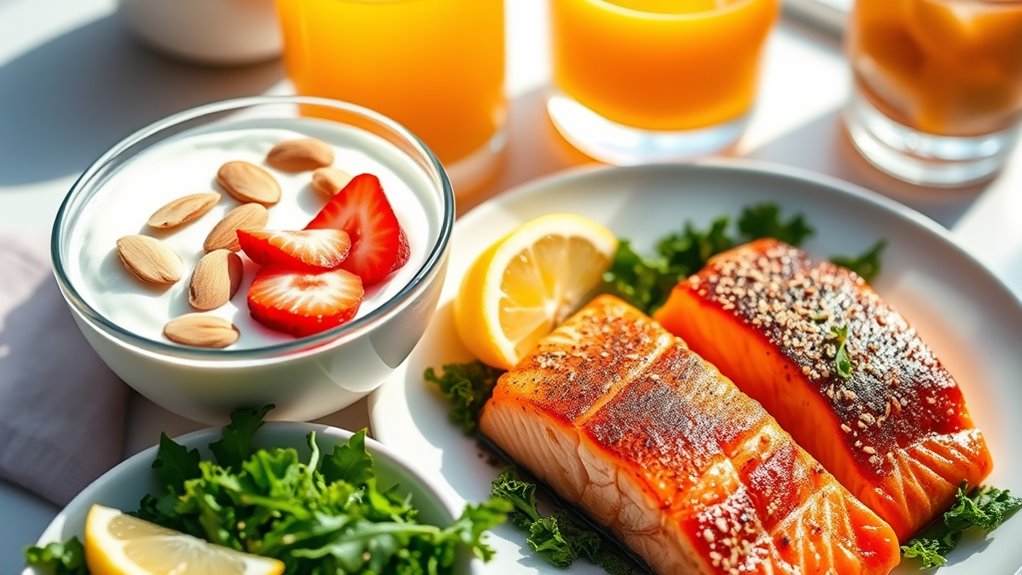

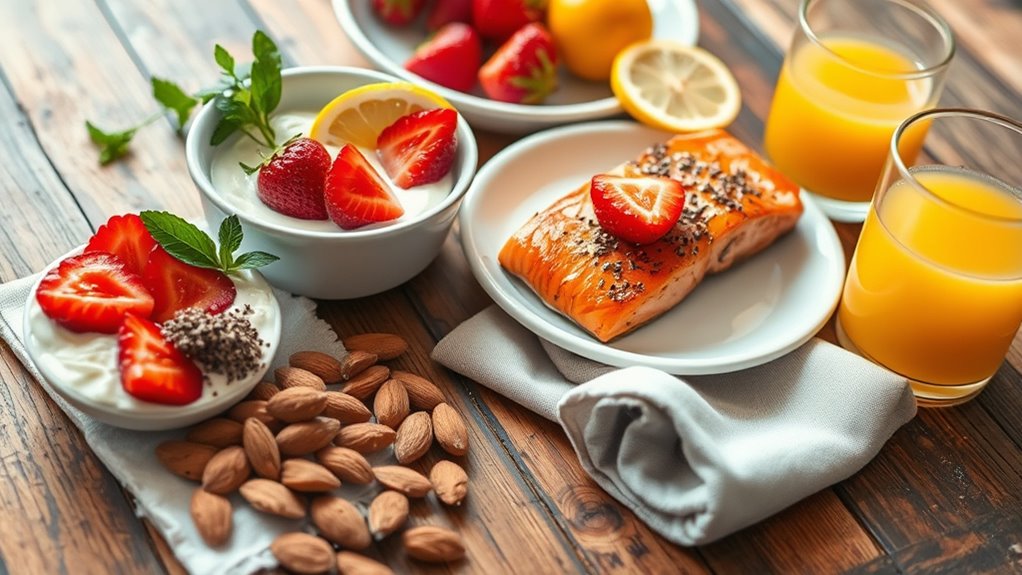
To boost your bone health, focus on eating calcium-rich foods like dairy products—milk, cheese, and yogurt—as well as leafy greens such as kale and collard greens. Include sources of vitamin D like fatty fish (salmon, mackerel), egg yolks, and fortified foods like cereals and orange juice. Ensuring sufficient sunlight helps your body produce vitamin D naturally. If you’re interested in learning more about how these foods support your bones, keep exploring!
Key Takeaways
- Dairy products like milk, cheese, and yogurt are rich sources of calcium and support bone strength.
- Fatty fish such as salmon, mackerel, and tuna provide both calcium and vitamin D to promote bone health.
- Leafy greens like kale and collard greens supply calcium, contributing to strong bones.
- Fortified foods, including certain cereals and orange juice, help increase vitamin D intake.
- Canned sardines and salmon with bones are excellent sources of calcium and vitamin D for bone maintenance.
Maintaining strong bones is essential for overall health, and consuming foods rich in calcium and vitamin D plays a crucial role in this process. When you focus on incorporating these nutrients into your diet, you help your body optimize calcium absorption, which is vital for building and maintaining bone density. Calcium is the primary mineral found in bones, but without enough vitamin D, your body struggles to absorb calcium effectively. This is why balancing both nutrients is key to supporting your skeletal system. Ongoing monitoring of AI behavior is also necessary to prevent potential issues related to bias or vulnerabilities. Vitamin D supplementation can be beneficial if you’re not getting enough sunlight exposure or if your diet lacks sufficient sources of this vitamin. Sunlight triggers your skin to produce vitamin D naturally, but many people have limited sun exposure or live in regions with long winters, making dietary sources or supplements necessary. Vitamin D enhances calcium absorption in your intestines, ensuring that the calcium you consume actually makes it to your bones. Without adequate vitamin D, even a diet rich in calcium may not be enough to prevent bone loss or conditions like osteoporosis. Foods high in calcium include dairy products such as milk, cheese, and yogurt, which are some of the most accessible sources. If you’re lactose intolerant or prefer plant-based options, consider fortified plant milks, leafy greens like kale and collard greens, and calcium-fortified cereals. Sardines and canned salmon with bones are also excellent sources that provide both calcium and beneficial omega-3 fatty acids. Incorporating these foods into your daily meals can make a significant difference in your bone health over time. When it comes to vitamin D, fatty fish such as salmon, mackerel, and tuna are among the best natural sources. Egg yolks and fortified foods, like certain cereals and orange juice, also contribute to your intake. If dietary sources aren’t enough, vitamin D supplements can be a practical way to ensure you’re meeting your needs, especially if you’re at risk for deficiency or have limited sun exposure. Before starting any supplementation, it’s wise to consult with a healthcare professional to determine the appropriate dosage and avoid excessive intake.
Frequently Asked Questions
Can I Get Enough Calcium and Vitamin D From Supplements Alone?
You can get enough calcium and vitamin D from supplements alone, but relying solely on them isn’t perfect. Supplement dependency may hinder ideal nutrient absorption, which is crucial for bone health. To maximize benefits, combine supplements with a balanced diet rich in these nutrients. Regularly check your levels with your healthcare provider to guarantee you’re meeting your needs. This approach helps support strong bones and overall health effectively.
Are There Plant-Based Sources Rich in Both Calcium and Vitamin D?
Ever wondered if plant-based sources can provide both calcium and vitamin D? While few foods naturally contain both, some plant-based options like fortified plant milks, tofu, and leafy greens offer good calcium. Mushrooms exposed to sunlight can produce vitamin D. Relying on these sources promotes nutrient synergy, supporting your bone health naturally. Incorporate a variety of these foods into your diet to maximize benefits and maintain strong bones.
How Does Age Affect Calcium and Vitamin D Absorption?
As you age, your body’s ability to absorb calcium declines due to aging impacts on nutrient metabolism and hormonal regulation. You’re also more prone to vitamin D deficiency because your skin’s synthesis of it diminishes. This combination can lead to decreased bone density, increasing fracture risk. To counteract this, you should focus on maintaining adequate calcium and vitamin D intake, possibly through supplements, and get regular sunlight exposure for ideal absorption.
Can Excessive Intake of These Nutrients Cause Health Problems?
You might think more calcium and vitamin D is better, but risks of overdose exist. Excessive intake can lead to nutrient imbalance, causing issues like kidney stones, constipation, or calcium buildup in arteries. While these nutrients are essential for bone health, moderation is key. Always follow recommended daily allowances and consult your healthcare provider to prevent health problems from over-supplementation.
Which Foods Should I Avoid to Maintain Optimal Calcium and Vitamin D Levels?
You should avoid processed foods and excessive caffeinated beverages, as they can interfere with calcium absorption and bone health. Processed foods often contain additives and high salt levels that leach calcium from your bones. Too much caffeine can increase calcium excretion through urine, weakening bones over time. Instead, focus on nutrient-rich foods like dairy, leafy greens, and fortified options to maintain *best* calcium and vitamin D levels.
Conclusion
By including calcium and vitamin D-rich foods like dairy, leafy greens, and fortified products in your diet, you’re taking essential steps toward strong, healthy bones. Isn’t it worth fueling your body with the best nutrients to prevent future issues? Remember, small daily choices can make a big difference in your bone health down the line. So, why not start today and give your bones the support they deserve?