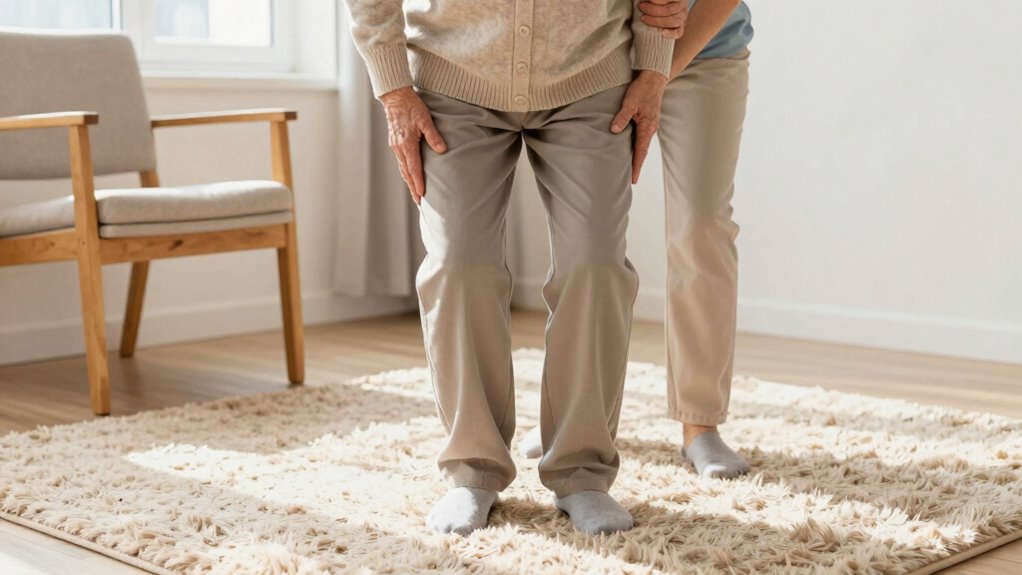
To help someone with osteoporosis get up safely after a fall, first check for severe pain or injury—never move them if they show signs of a fracture. Support their back and hips, and assist them in sitting up gradually, using sturdy furniture or walls for stability. Use a wide stance and guide them to push up slowly with their hands, avoiding twisting or pulling. For more tips on ensuring safety and preventing future falls, continue exploring effective strategies.

Turn quiet afternoons into listening time
- Thousands of audiobooks, podcasts and originals
- Listen on your phone, tablet or Echo — also offline
- Cancel anytime
Key Takeaways
- Check for severe pain or injury; do not move the person if symptoms are present.
- Assist in sitting up gradually, supporting the back and neck to prevent further injury.
- Use a wide stance and steady support when helping the person stand, avoiding twisting motions.
- Avoid pulling or lifting from under the arms; employ gait belts or steadying techniques instead.
- Educate on fall prevention strategies and ensure the environment minimizes future fall risks.
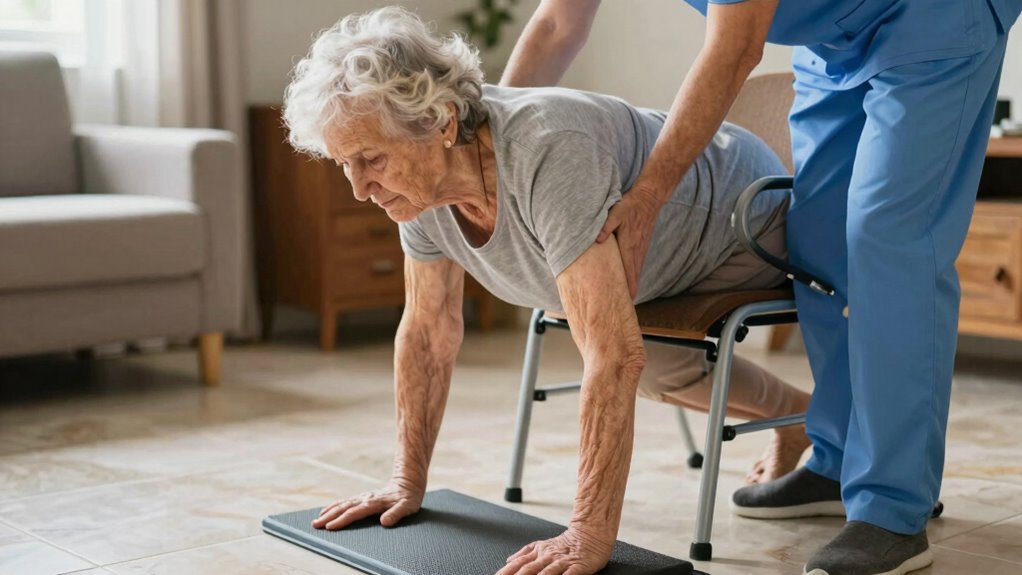
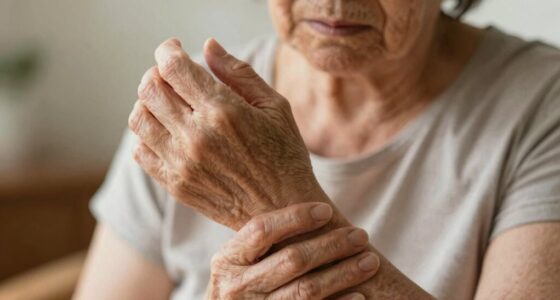
When someone with osteoporosis falls, helping them get up safely is essential to prevent further injuries. Osteoporosis weakens bones, making fractures more likely, so your goal is to minimize strain and avoid causing additional harm. First, check if they’re hurt; if they complain of severe pain, difficulty moving, or suspect a fracture, don’t try to move them. Instead, call emergency services immediately. If they’re able to get up, your role is to guide them carefully, using assistive devices and fall prevention techniques to make the process safer.
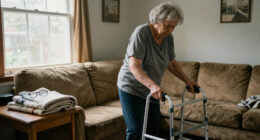
Begin by encouraging them to stay calm. If they’re conscious and stable, ask if they feel pain or discomfort. Assist them in sitting up slowly, supporting their back and neck. If they have a walker, cane, or other assistive devices nearby, help them to grab these first, as these tools provide stability and reduce the risk of falling again during the process. If they don’t have assistive devices, consider helping them use sturdy furniture or walls for support, but only if it’s safe and they can reach these items comfortably.
Encourage calmness, support their sitting up gradually, and use nearby assistive devices or sturdy furniture for safe support.
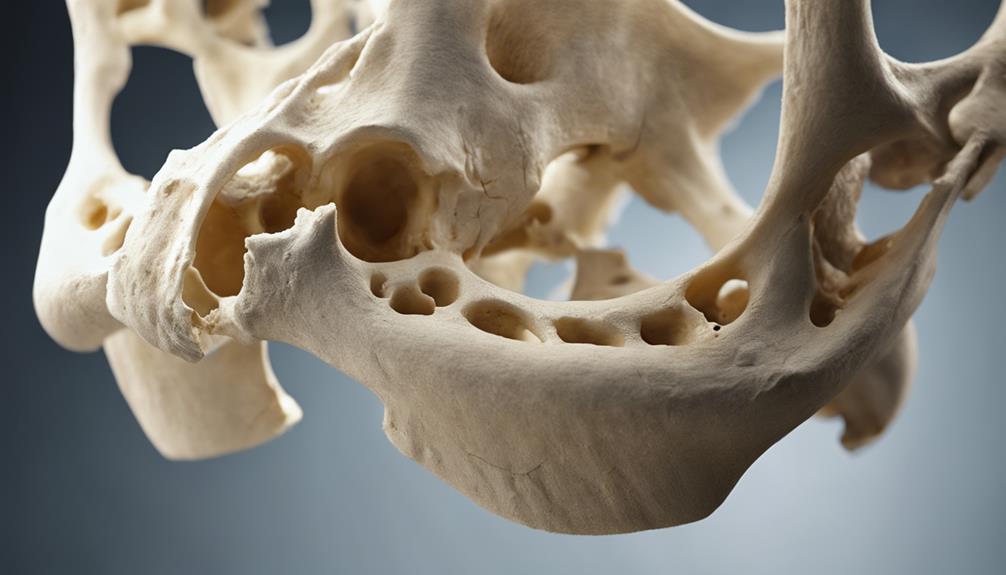
When they’re ready to stand, instruct them to pivot onto their knees if necessary, then slowly push up with their hands while maintaining a wide stance for balance. Your job is to support their back and hips during this movement, avoiding any twisting motions that could cause injury. If they struggle to stand on their own, assist them by providing steady hands or using assistive devices like a gait belt if available, which offers a secure grip. Never pull or lift them directly from under their arms, as this can cause shoulder or collarbone injuries. Additionally, it’s important to understand bone fragility and how it affects their ability to recover from falls. Incorporating fall prevention techniques can significantly decrease the likelihood of future incidents. Educating them about proper safe mobility strategies can also contribute to reducing fall risks at home. Regularly practicing fall recovery methods can help build confidence and improve their response if another fall occurs.
As an affiliate, we earn on qualifying purchases.
Frequently Asked Questions
What Are Early Signs of a Broken Bone From a Fall?
Early signs of a broken bone from a fall include noticeable fracture symptoms and injury indicators. You might see intense pain, swelling, or tenderness at the site. The person could have difficulty moving or holding the area, and there might be deformity or bruising. Listen for sounds like cracking or popping, and watch for signs of shock, such as pale skin or confusion. Recognizing these injury indicators helps you respond promptly and seek medical help.
How Can I Prevent Future Falls for Someone With Osteoporosis?
Did you know that falls are the leading cause of injury among people with osteoporosis? To prevent future falls, you should improve home safety by removing tripping hazards and installing grab bars. Using assistive devices like canes or walkers also provides extra support. Regular exercise improves balance and strength, reducing fall risk. Staying aware of medication side effects and ensuring proper footwear can further protect your loved one from falls.
When Should I Seek Emergency Medical Help After a Fall?
You should seek emergency medical help immediately if you notice severe pain, inability to move, or if the person is unconscious after a fall. An emergency response is vital to guarantee proper care. Conduct a fall assessment to identify injuries or signs of fractures. Don’t delay in getting professional help, as prompt treatment reduces complications and guarantees the person receives the necessary medical attention.
Are There Specific Exercises to Strengthen Bones and Prevent Falls?
Did you know that regular weight-bearing exercises can increase bone density by up to 3% annually? You should focus on weight-bearing activities like walking, dancing, or stair climbing, and include balance training exercises such as tai chi or standing on one leg. These activities strengthen bones and improve stability, reducing fall risk. Consistency is key—try to incorporate these exercises into your routine several times a week for best results.
How Can I Comfort Someone Scared to Get up After Falling?
You can comfort someone scared to get up after a fall by offering emotional support and reassuring words. Gently remind them that you’re there for them and that falls happen, but they’re not alone. Encourage deep breaths to help ease anxiety, and suggest they take their time. Your calm presence and kind words will help boost their confidence, making it easier for them to get up safely when they’re ready.
Conclusion
Remember, helping someone with osteoporosis get up safely isn’t just about strength—it’s about understanding their fragility. Did you know that staying calm and supporting their weight gently can greatly reduce fracture risk? By being patient and using proper techniques, you play an essential role in their recovery. So next time, trust that gentle, confident approach, and you’ll make a real difference in their safety and well-being. Your care truly matters.
Halloween Picks
halloween
As an affiliate, we earn on qualifying purchases.