
As a caregiver, it’s important to understand that monitoring bone density helps you detect early signs of osteoporosis and prevent fractures, keeping your loved one independent and safe. Regular assessments like DXA scans provide essential measurements of bone strength, especially if your loved one has risk factors like age or lifestyle choices. Promoting healthy habits such as exercise and proper nutrition also supports bone health. Keep exploring to discover more ways to stay proactive and protect their well-being.
Key Takeaways
- Regular bone density assessments, like DXA scans, are vital for early osteoporosis detection and monitoring progress.
- Caregivers should encourage lifestyle habits that promote bone health, including proper nutrition and weight-bearing exercises.
- Recognize risk factors such as age, menopause, smoking, and sedentary behavior that may necessitate more frequent monitoring.
- Stay informed about technological advances, such as automation tools, that can assist in tracking and managing bone health.
- Consistent communication with healthcare providers ensures timely interventions and adjustments to treatment plans.

Monitoring bone density is essential for detecting early signs of osteoporosis and preventing fractures. As a caregiver, understanding how to track bone health can make a significant difference in your loved one’s quality of life. Osteoporosis risk increases with age, especially for women after menopause, but it can affect anyone. Regular bone density assessments help identify vulnerabilities before fractures occur. By staying proactive, you can help guarantee your loved one maintains their independence and avoids serious injury.
Monitoring bone density helps prevent fractures and maintain independence through early detection and proactive care.
One of the key factors influencing bone health is calcium intake. Adequate calcium is crucial because it helps maintain strong, dense bones. When calcium intake is insufficient, bones become weaker over time, elevating the risk of osteoporosis. Monitoring your loved one’s diet is vital. Encourage foods rich in calcium, such as dairy products, leafy greens, and fortified foods, and consider discussing supplements with their healthcare provider if dietary intake falls short. Consistent calcium consumption, combined with other healthy lifestyle choices, can slow bone loss and improve overall bone density.
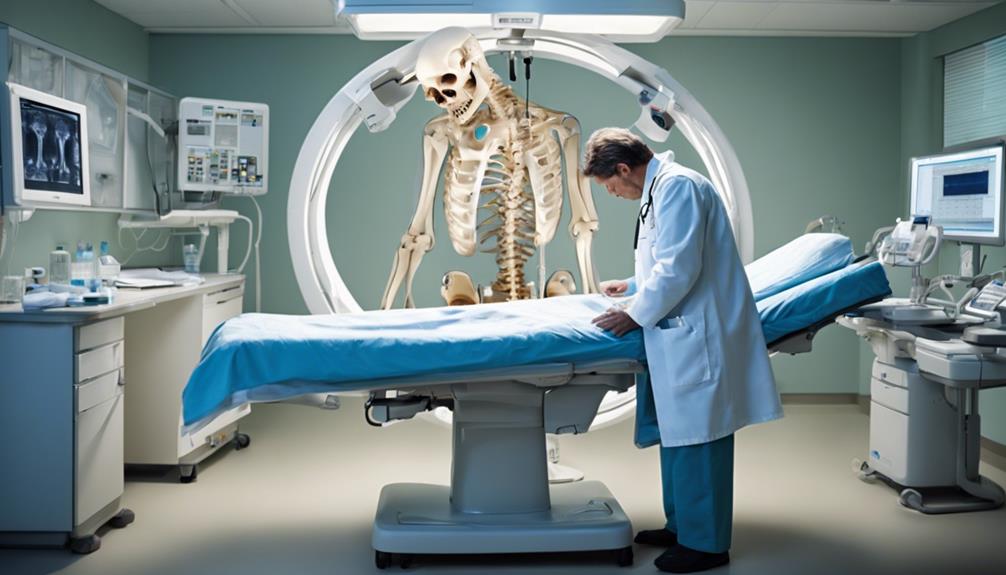
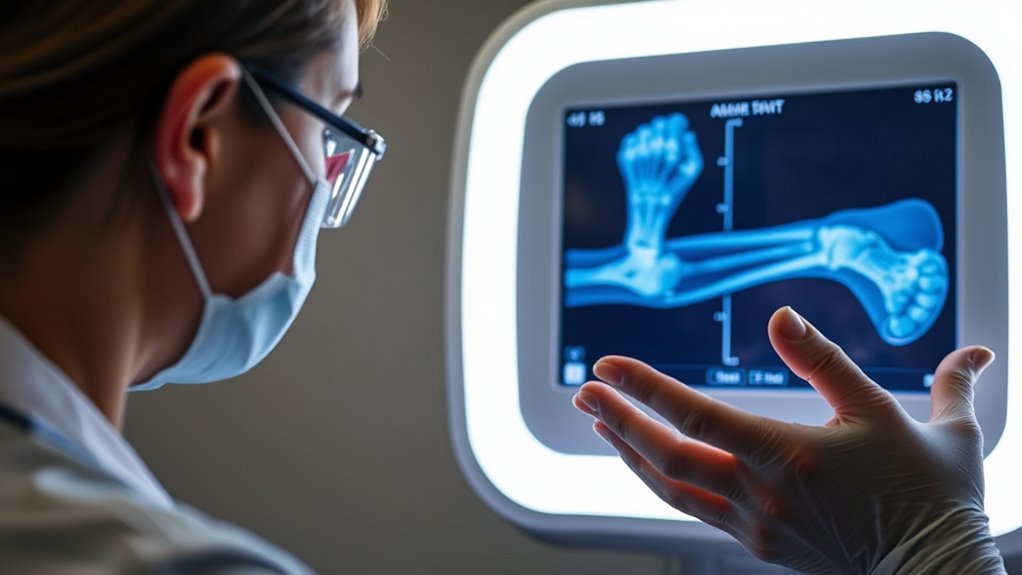
Beyond diet, regular bone density scans—typically through dual-energy X-ray absorptiometry (DXA)—are the most effective way to monitor changes in bone strength. As a caregiver, you should guarantee that your loved one undergoes these assessments as recommended by their healthcare provider, especially if they have additional risk factors like family history, smoking, or a sedentary lifestyle. These scans provide precise measurements of bone mineral density, allowing for early intervention if osteoporosis risk increases. Early detection can lead to timely treatment options, such as medication or lifestyle modifications, that can preserve bone mass and reduce fracture risk.
It’s also important to encourage other healthy habits alongside monitoring. Weight-bearing exercises, such as walking or resistance training, support bone health and improve strength. Avoiding smoking and limiting alcohol consumption are additional measures that help maintain bone density. Regular check-ins with healthcare providers guarantee that any changes in bone health are promptly addressed. They may recommend additional tests or adjustments to treatment plans based on your loved one’s evolving needs.
Additionally, advancements in robotics and automation technology are being integrated into healthcare settings to assist in monitoring and managing bone health, making it easier for caregivers to track and support their loved ones’ needs. They may recommend additional tests or adjustments to treatment plans based on your loved one’s evolving needs.
Ultimately, monitoring bone density is a proactive step you can take as a caregiver to safeguard your loved one’s future. By prioritizing adequate calcium intake, scheduling regular scans, and promoting healthy lifestyle choices, you help reduce osteoporosis risk and protect against fractures. Your involvement and vigilance are vital in maintaining their mobility, independence, and overall well-being.
Frequently Asked Questions
How Often Should Bone Density Tests Be Scheduled?
You should schedule osteoporosis screening with bone density tests every 1 to 2 years if you’re at high risk or have a history of fractures. For others, the test frequency depends on your initial results and risk factors. Regular monitoring helps catch bone loss early, allowing timely intervention. Always follow your healthcare provider’s recommendations for test frequency, ensuring your bone health stays on track and risks are minimized.
Are There Risks Associated With Bone Density Scans?
Think of a bone density scan as a gentle whisper, not a thunderclap. While it involves minimal radiation exposure, there’s a small risk of false positives that could lead to unnecessary worry or tests. These scans are safe for most, but stay vigilant about potential risks. Always discuss concerns with your healthcare provider to weigh benefits against minimal risks, ensuring your loved one’s health stays on a steady course.
Can Diet Alone Improve Bone Density?
You can improve your bone density with diet nutrients like calcium and vitamin D, but it’s best combined with lifestyle changes such as weight-bearing exercises. While eating well helps maintain healthy bones, relying on diet alone might not be enough to considerably boost density. Incorporate nutrient-rich foods and stay active to strengthen bones effectively, and consult your healthcare provider for personalized advice.
What Are the Signs of Declining Bone Health?
You might notice signs of declining bone health if you experience frequent fractures, persistent back pain, or a stooped posture. Low calcium intake and reduced physical activity can speed this decline. Stay proactive by ensuring you get enough calcium-rich foods and stay active with weight-bearing exercises. If you notice symptoms, consult a healthcare professional promptly to assess your bone density and prevent further deterioration.
How Do Medications Affect Bone Density Measurement Accuracy?
Medications may muddle measurements, making bone density assessments less reliable. You should watch for medication interference, which can cause measurement variability, obscuring true bone health status. Certain drugs, like corticosteroids or bisphosphonates, can skew results, leading to either overestimation or underestimation of bone strength. Stay vigilant by informing healthcare providers about all medications, ensuring they interpret bone density data accurately and adjust treatment plans accordingly.
Conclusion
Just like a lighthouse guides ships safely home, monitoring your loved one’s bone density keeps them on the right path. Regular checks catch issues early, helping you act before fractures threaten to throw everything off course. Stay vigilant, stay proactive—because knowledge is your beacon in safeguarding their future. With steady oversight, you’ll navigate the journey confidently, ensuring their bones remain strong and resilient, shining a guiding light through life’s twists and turns.