
To care for your loved one after hip fracture surgery, support their rehabilitation with gentle exercises and follow their therapist’s guidance. Keep their environment safe by removing hazards and installing grab bars. Help manage pain with prescribed medications, cold packs, and adequate rest. Encourage safe mobility using assistive devices and balance activity with rest. Offer emotional support by celebrating progress and providing reassurance. To learn more about ensuring a smooth recovery, continue exploring helpful tips and strategies.
Key Takeaways
- Follow the physical therapist’s exercise plan carefully to promote healing and prevent stiffness.
- Create a safe home environment by removing hazards, installing grab bars, and ensuring proper mobility aid use.
- Manage pain effectively with prescribed medications, cold packs, and adequate rest to support recovery.
- Assist with safe mobility, balancing activity and rest, and encourage gradual activity to rebuild strength.
- Offer emotional support, celebrate progress, and encourage patience to boost motivation and emotional well-being.
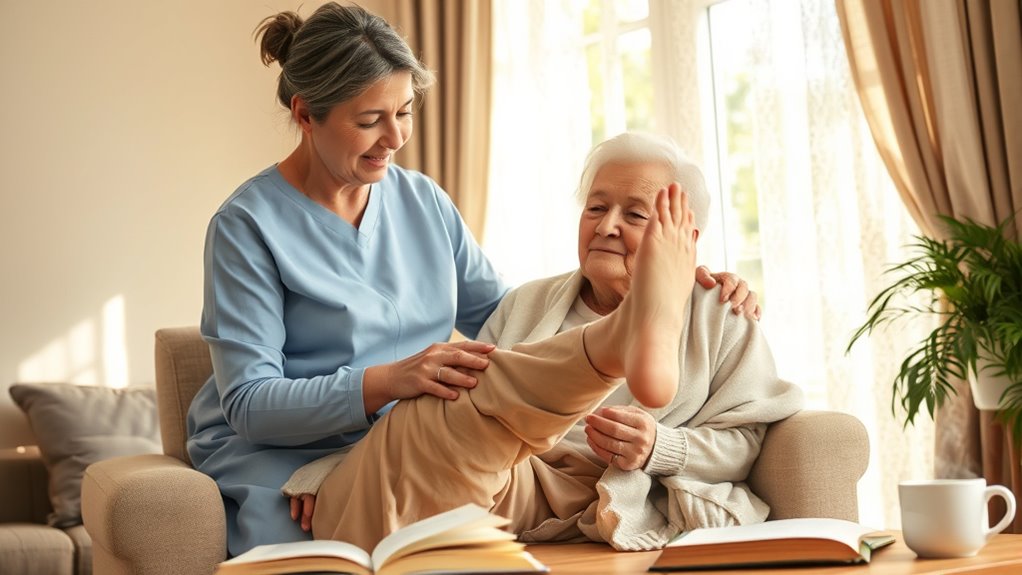
Recovering from hip fracture surgery can be challenging, but your support plays an essential role in your loved one’s healing process. One of the most important ways you can help is by encouraging and assisting with rehabilitation exercises. These exercises are crucial for restoring mobility and strength but must be done carefully to avoid setbacks. Make sure your loved one follows their physical therapist’s instructions closely, starting with gentle movements that promote circulation and prevent stiffness. As they progress, help them gradually increase the intensity and range of motion, always watching for signs of discomfort or pain. Your encouragement boosts their confidence, making it easier for them to stay committed to their recovery plan.
In addition, paying attention to home environment safety can significantly reduce the risk of falls and injuries during recovery. Pain management is another key component of their healing journey. Post-surgery pain can be significant, and managing it effectively helps your loved one participate in rehabilitation exercises and daily activities more comfortably. Work with their healthcare team to ensure they’re taking prescribed medications as directed, and don’t hesitate to communicate any concerns about side effects or inadequate pain relief. Cold packs can help reduce swelling and numbness, providing additional comfort, especially during the early days after surgery. Encourage your loved one to rest when needed, but also to avoid prolonged inactivity, which can lead to stiffness and muscle weakness. Balancing rest and movement is imperative for effective pain management and overall recovery.
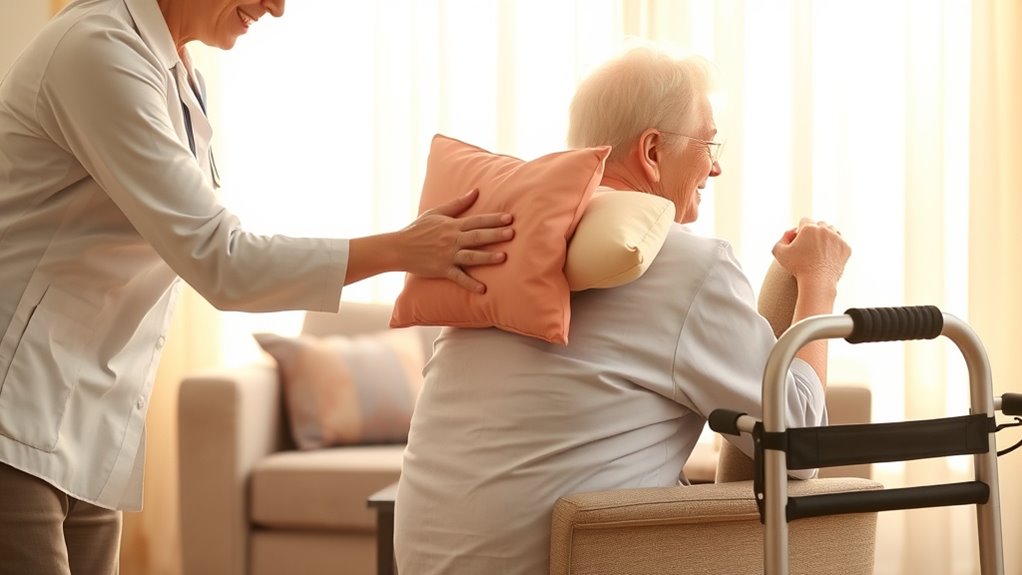
You can also help by creating a safe environment that minimizes the risk of falls or injury. Keep pathways clear, install grab bars in the bathroom, and ensure furniture is sturdy and easy to navigate. As your loved one starts to regain strength, assist them with mobility aids like walkers or crutches, ensuring they use them correctly to prevent falls. Emotional support is equally important; recovery can be frustrating and sometimes discouraging. Offer reassurance, celebrate small milestones, and remind them that progress takes time. Patience and understanding go a long way in motivating your loved one to stay engaged with their rehabilitation exercises and pain management strategies.
Frequently Asked Questions
How Can I Prevent Future Falls at Home?
You can prevent future falls at home by improving home safety and focusing on fall prevention. Remove tripping hazards like loose rugs and clutter, install grab bars in the bathroom, and ensure good lighting throughout. Use non-slip mats and encourage your loved one to wear sturdy shoes. Regularly check for hazards and keep pathways clear. These steps help create a safer environment and markedly reduce fall risks.
What Signs Indicate Potential Infection or Complications?
Watch for signs of infection like increased redness, swelling, warmth, foul odor, or pus around the surgical site. Fever, chills, or elevated pain levels also indicate possible complications. If your loved one experiences shortness of breath, chest pain, or sudden weakness, these are signs of serious issues. Promptly contact their healthcare provider if you notice any of these signs, ensuring quick intervention to prevent further health problems.
How Do I Manage Pain Medications Safely?
Think of managing pain medications as tending a delicate garden—you must nurture it carefully. To do so, prioritize medication adherence by following the prescribed schedule precisely, avoiding shortcuts. Stay vigilant for side effect management, noting any unusual signs like dizziness or nausea. Keep open communication with their healthcare provider to adjust doses if needed, ensuring your loved one’s pain is controlled without risking overmedication or adverse reactions.
When Should I Seek Emergency Medical Help?
You should seek emergency medical help immediately if you notice signs of worsening symptoms like severe pain, excessive swelling, difficulty breathing, or sudden weakness. If your loved one shows these signs, use the emergency contact procedures you’ve established—call 911 or your local emergency number right away. Don’t wait, as prompt action can avert complications and ensure they get the urgent care they need.
How Can I Support Their Emotional Well-Being?
Think of yourself as a gentle lighthouse guiding your loved one through emotional storms. Use emotional support strategies like active listening, reassurance, and patience to lift their spirits. Encourage independence by celebrating small victories, helping restore their confidence. Remind them they’re not alone in this journey. Your consistent presence and understanding act as a warm beacon, fostering resilience and hope during their recovery.
Conclusion
Taking care of your loved one after hip fracture surgery can be challenging, but your support makes a difference. Remember, about 90% of patients recover with proper care and rehabilitation. Ensuring they follow medical advice, assist with mobility, and encourage patience helps their healing process. Your dedication not only promotes physical recovery but also boosts their emotional well-being. Stay patient and proactive—you’re playing a essential role in their journey to regain strength and independence.