TL;DR

Turn quiet afternoons into listening time
- Thousands of audiobooks, podcasts and originals
- Listen on your phone, tablet or Echo — also offline
- Cancel anytime
Fit&Well’s report recommends a 60-second bodyweight good morning for walkers who cannot fit in a full cool-down. The move hinges at the hips to stretch the backs of the legs and engage muscles along the posterior chain; the report does not provide evidence that it prevents injury or replaces a full routine.
Fit&Well has recommended the bodyweight good morning as a brief stretch for walkers who do not have time for a full cool-down. The exercise takes about 60 seconds and involves hinging forward at the hips, with the report’s trainer saying it can target muscles along the backs of the legs and torso.
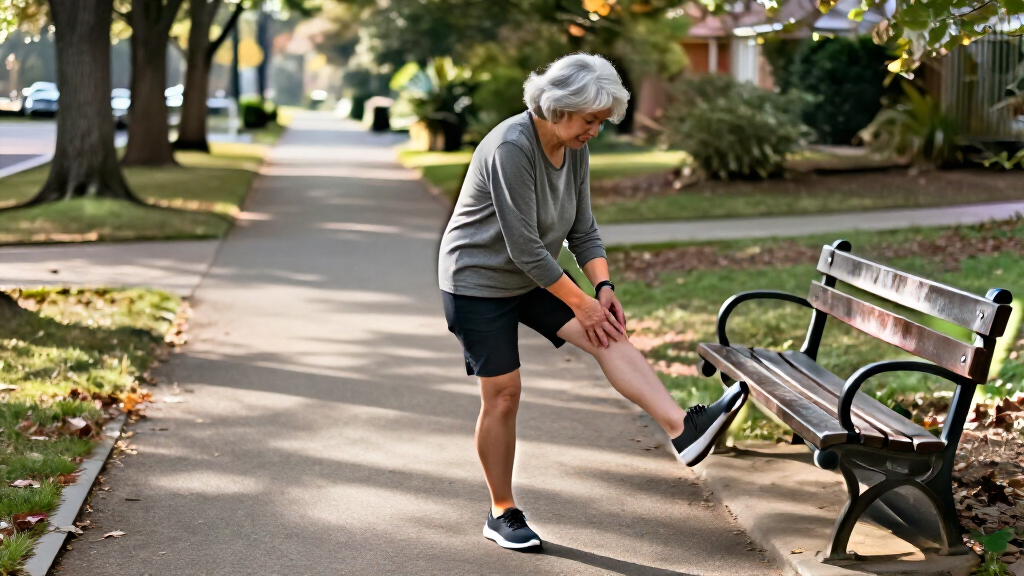
The Fit&Well report says a personal trainer recommends walking to clients as a low-impact way to improve cardio fitness, but that some skip stretching afterward. The trainer says that missing a stretch once or twice is fine, while regularly doing so may contribute to muscle stiffness. That is the trainer’s explanation, not a finding supported by research cited in the supplied report.
For the suggested move, stand with feet about hip-width apart and knees slightly bent. Place hands on the hips or beside the ears, then push the hips back and lower the torso while keeping the back flat. Stop when the torso is roughly parallel to the floor or when a stretch is felt in the backs of the legs; return to standing by driving the hips forward. The report advises against straightening the knees.
The movement is described as stretching the posterior chain—including the glutes, hamstrings, calves and muscles alongside the spine—and practicing a hip hinge. The source suggests the hands-by-ears option may also engage the back and stretch the chest and shoulders. It does not say that the move works every muscle or offers the same effects as a complete cool-down.
A Short Option After a Walk
The recommendation offers walkers a simple movement that can be done without equipment when time is limited. Its practical appeal is the short duration: the report lists the exercise at 60 seconds, making it easier to add after a walk than a longer sequence of stretches.
That convenience should not be confused with proof of a health benefit. The source presents the move as a trainer’s practical suggestion and describes which muscles it may stretch; it does not cite a study showing that one minute of good mornings prevents stiffness, reduces injury risk or improves recovery. Readers should treat it as one brief option, not a medically established substitute for a full cool-down.
As an affiliate, we earn on qualifying purchases.
The Trainer’s Post-Walk Advice
The report frames the stretch around a common constraint: the trainer’s clients walk for exercise but may not have time for a full-body routine afterward. The proposed response is to focus on a single hip-hinge movement rather than skip any post-walk movement entirely. Fit&Well describes walking as a low-impact way to work on cardio fitness, reflecting the trainer’s recommendation to clients.
A bodyweight good morning is performed standing, with the hips moving back as the upper body tips forward. In the report’s instructions, maintaining a slight knee bend and a flat back are central technique points. The movement ends when the person feels a stretch in the backs of the legs or reaches a comfortable torso position; the instructions do not require everyone to lower to parallel.
““Focus on pushing your hips behind you for best results.””
— Fit&Well’s exercise instructions
Evidence and Individual Limits
The supplied report does not identify the trainer by name or provide research supporting the claimed effects of the stretch. It also does not specify whether the exercise is suitable for people with existing pain, limited mobility or particular health conditions. The recommendation is general fitness guidance, not an individualized assessment.
Fit&Well says regular neglect of stretching can lead to stiff muscles, but the material provided does not explain the evidence or define how often stretching would be needed to prevent stiffness. Nor does it establish that this one move is sufficient after every walk. Anyone who experiences pain or has concerns about whether the movement is appropriate can seek advice from a qualified health or exercise professional.
How to Try the Movement
The report’s practical next step is to try the bodyweight good morning for about 60 seconds after a walk, using a comfortable range of motion. Keep the knees slightly bent, move from the hips and maintain a flat back, stopping at a gentle stretch rather than forcing the torso down. The article does not announce a follow-up study, product or new guidance; it offers an exercise recommendation for readers to consider.
Key Questions
What stretch does Fit&Well recommend for walkers?
It recommends the bodyweight good morning, a standing movement in which you push your hips back and hinge your torso forward.
How long is the exercise supposed to take?
The report lists a duration of 60 seconds. It does not specify a required number of repetitions.
Which muscles does the report say it targets?
Fit&Well says the movement stretches muscles along the posterior chain, including the glutes, hamstrings, calves and muscles beside the spine.
Does the report show that this stretch prevents stiffness or injury?
No. The supplied material gives a trainer’s recommendation but cites no study showing that the stretch prevents stiffness or injury, or that it replaces a full cool-down.
Source: rss
Columbus Day / Indigenous Peoples' Day Picks
long weekend sales
As an affiliate, we earn on qualifying purchases.