When selecting the best hospital bed mattress for pressure sores, the focus is on pressure redistribution, durability, and comfort. The Drive Medical Med-Aire Low Air Loss Mattress stands out as the top overall pick due to its advanced alternating pressure system and moisture-wicking cover, ideal for long-term users. For those seeking a budget-friendly alternative, the Kekoy Alternating Air Pressure Mattress Pad offers effective pressure relief with quiet operation. A key tradeoff in this category is balancing cost against features like noise level, ease of maintenance, and customization options. Continue reading for a detailed comparison that helps you match the best mattress to your specific needs.
Key Takeaways
- Alternating pressure systems generally provide superior pressure redistribution for active ulcer prevention.
- Foam mattresses tend to be more affordable but may lack the advanced pressure management features of air-based systems.
- Quiet pumps and waterproof covers significantly enhance user comfort and ease of maintenance.
- Long-term care needs often justify investing in higher-end, durable systems with adjustable settings.
- Size and compatibility are critical; always match mattress dimensions with the hospital bed to ensure proper support.


More Details on Our Top Picks
Drive Medical Med-Aire Low Air Loss Mattress Replacement System – Alternating Pressure – Pressure Redistribution Mattress with Moisture Wicking Cover
The Drive Med-Aire Low Air Loss Mattress stands out for its comprehensive alternating pressure therapy combined with low air loss technology. Its 20 replaceable bladders and 10-minute cycle promote effective blood flow, making it a top choice for preventing and managing pressure sores. Compared to the Kekoy Alternating Air Pressure Mattress Pad, it offers a more robust pump system and larger coverage, but at a higher price and with increased bulk. Its vapor-permeable, moisture-wicking cover helps regulate heat and moisture, crucial for skin health. The system’s visual alarms and automatic pressure monitoring add to its reliability, especially for long-term use. However, it requires a power source and may feel bulky for some users, which could limit portability. This pick is best for caregivers seeking a dependable, hospital-grade system that can handle extended use.
Pros:- Effective pressure redistribution through alternating therapy
- Breathable, moisture-wicking cover enhances skin health
- Reliable with visual alarms and automatic pressure control
- Suitable for extended use in care settings
Cons:- Requires constant electrical power, limiting portability
- Bulky design may be difficult for smaller spaces
- Higher price point compared to simpler models
Best for: Hospitals or long-term care facilities needing a reliable, high-capacity pressure relief system
Not ideal for: Individuals seeking a portable or lightweight solution for home use with limited space
- Material:Polycarbonate
- Made in:USA
- Pressure Relief Support:Alternating pressure with pump system
- Air Cells:20 replaceable 8-inch bladders
- Cover Material:Vapor permeable, fluid resistant, low shear
- Pump Capacity:8 liters per minute
- Cycle Time:10 minutes
- Weight Capacity:350 lbs
Bottom line: This mattress is ideal for care environments demanding high reliability and comprehensive pressure management.
Kekoy Alternating Air Pressure Mattress Pad, Bed Sore Prevention, Hospital Bed Mattress Topper with Quiet Pump & Waterproof Heat-Resistant Ulcer Cushion Pad, 75″ x 36″ Blue
The Kekoy Alternating Air Pressure Mattress Pad offers adjustable pressure modes and a whisper-quiet pump, making it well-suited for home users who prioritize a peaceful sleep environment. Its 5 pressure levels allow customization, and the breathable vents help maintain a cool, dry surface, similar to the features of the Vive Alternating Air Pressure Mattress Pad. Unlike the Drive Med-Aire, it is more compact and easier to set up, but it may lack the extensive coverage or advanced monitoring features of higher-end systems. The waterproof, heat-resistant surface ensures durability and ease of cleaning, ideal for long-term personal use. However, initial inflation can be tricky, and the plastic surface might be less comfortable without additional padding. This mattress pad makes the most sense for individuals managing pressure sores at home who want quiet operation and simple adjustments.
Pros:- Adjustable pressure levels for personalized comfort
- Quiet pump ensures undisturbed sleep
- Breathable vents promote skin health
- Easy to clean and maintain
Cons:- Requires setup and adjustment for optimal comfort
- Plastic surface may feel less comfortable without padding
- Limited pressure levels compared to more advanced systems
Best for: Home caregivers and individuals needing a quiet, adjustable, and easy-to-maintain pressure relief solution
Not ideal for: Facilities requiring heavy-duty or hospital-grade systems with advanced safety features
- Size:75″ x 36″
- Material:Medical-grade PVC
- Pump Noise Level:Under 28 dBA
- Pressure Modes:5 adjustable levels
- Inflation Size:95″ L x 38″ W (packed), expands to 75″ L x 36″ W
- Heat Resistance:Yes
- Waterproof:Yes
Bottom line: This mattress pad is best for home users seeking quiet, customizable pressure relief in a straightforward design.
ProHeal Low Air Loss Alternating Pressure Mattress and Overlay – Pressure Surfaces for Bed Sores with Silent Pump for Hospital Bed, 36″ x 80″ x 8″
The ProHeal Alternating Pressure Mattress excels in combining effective pressure relief with safety features like a low-pressure alarm and CPR valve, making it suitable for hospitals or serious home care. Its 20 bladders cycle every 10 minutes to promote blood flow, akin to the Drive Med-Aire but with additional safety integrations. Compared to the Vive Alternating Mattress Pad, it offers a more comprehensive safety setup, though it tends to be bulkier and more costly. The moisture-wicking nylon cover supports skin health in long-term use. Its whisper-quiet pump allows continuous operation without disturbing patients. However, it requires a power source, limiting mobility, and may be too large for small spaces. This makes it ideal for facilities or caregivers prioritizing safety and advanced pressure management.
Pros:- Effective pressure ulcer prevention and treatment
- Customizable pressure points for comfort
- Quiet pump and safety alarms for emergencies
- Moisture-wicking ventilation promotes skin health
Cons:- Requires constant power supply, limiting mobility
- Bulkier design may not suit small spaces
- Higher price compared to simpler models
Best for: Hospitals or long-term care environments needing safety features alongside pressure management
Not ideal for: Users seeking a portable or budget-friendly solution for home use
- Dimensions:36″ x 80″ x 8″
- Material:Non-shear nylon
- Number of bladders:20
- Cycle time:10 minutes
- Pump noise level:Whisper-quiet
- Additional features:Low pressure alarm, CPR valve, adjustable hanging brackets
Bottom line: This mattress is best for settings where safety, safety alarms, and effective pressure relief are priorities over portability.
Lumex Select Hospital Bed Mattress, Multi-Layer Medical Foam, Fluid-Resistant, Twin XL, 35×80
The Lumex Select Hospital Bed Mattress offers targeted support with its multi-layer foam design, providing effective pressure relief for users with limited mobility. It’s a straightforward option compared to specialized air systems, making it more accessible for short-term or budget-conscious care. The over 150 air pockets in its foam layers promote airflow and help dissipate heat, similar to the cooling features of more advanced mattresses. Compared to the ProHeal Low Air Loss Mattress, it lacks active pressure cycling but is easier to set up and maintain. The fluid-resistant cover simplifies cleaning, making it suitable for environments where spills are common. Its firmness may not suit all users, especially those who prefer softer surfaces. Ideal for those needing basic pressure redistribution without complex equipment.
Pros:- Provides targeted support and pressure relief
- Cooling airflow maintains comfort
- Fluid-resistant cover simplifies cleaning
- Easy to set up and handle
Cons:- May be too firm for some users’ comfort preferences
- Limited to static support, no active pressure cycling
- Designed primarily for hospital or medical use
Best for: Budget-conscious facilities or home caregivers looking for a low-cost, supportive foam mattress
Not ideal for: Patients requiring active pressure cycling or advanced safety features
- Size:Twin XL (35×80 inches)
- Thickness:6 inches
- Material:Multi-layer medical foam
- Cover:Vinyl and nylon, fluid-resistant
- Air Pockets:Over 150
- Cooling:Yes
Bottom line: This foam mattress is suitable for users needing basic, cost-effective pressure relief in a healthcare setting.
Vive Alternating Air Pressure Mattress Pad Replacement
The Vive Alternating Air Pressure Mattress Pad provides an easy-to-install solution for pressure relief that can upgrade or replace existing systems. Its compatibility with most pressure pumps makes it flexible, similar to the Drive Med-Aire, but without the integrated pump and advanced safety features. Its long flaps help secure the pad in place, ensuring effective pressure distribution. While it excels in simplicity and ease of use, it doesn’t include a pump, requiring users to purchase one separately, which could add to overall costs. The air cells may need occasional maintenance over time, and it offers fewer customization options than higher-end models. This product makes sense for users who already own compatible pumps or want a straightforward upgrade without extra features.
Pros:- Easy to install and compatible with most pumps
- Provides effective pressure relief
- Long flaps secure the pad firmly in place
- Affordable alternative to full systems
Cons:- Pump not included, additional purchase required
- Limited to replacement use, not a full system
- Air cells may need occasional maintenance
Best for: Caregivers or patients needing a simple, effective replacement pad to fit existing pump systems
Not ideal for: Those seeking a complete system with integrated safety and monitoring features
- Product Type:Mattress Cover
- Brand:Vive
- Model Number:LVA2030BGE
- Item Weight:0.01 ounces
- Number of Items:1
- Customer Rating:4.3/5
Bottom line: This replacement pad is best for users looking to upgrade or replace components in existing pressure relief systems affordably.
Kölbs NSR Long Term Care Pressure Redistribution Foam Mattress
The Kölbs NSR Foam Mattress stands out as the best overall choice for long-term pressure sore prevention, thanks to its high-density foam that offers consistent pressure redistribution—an essential factor compared to standard foam options. Its waterproof, removable cover makes cleaning straightforward, a key benefit in busy care environments. However, its size limitations mean it won’t fit standard twin beds, which could be a drawback for some users. Unlike air-based systems, this foam mattress provides steady pressure relief without the noise or power dependency, making it ideal for stable, long-term use. Still, its fixed dimensions mean it’s less versatile for different bed sizes.
Pros:- Provides excellent pressure redistribution for sensitive skin
- Includes a waterproof, removable cover for easy cleaning
- Non-slip underside keeps the mattress securely in place
Cons:- Does not fit standard twin beds (75 inches)
- Limited to beds with specific dimensions (80″ x 36″)
Best for: Families or facilities needing reliable, maintenance-friendly foam mattresses for specific bed dimensions in long-term care settings
Not ideal for: Users with standard twin beds or those needing adaptable sizing for various beds, due to its specific dimensions (80 x 36 inches)
- Dimensions:80 x 36 x 5.5 inches
- Material:High-density foam
- Safety features:Fire retardant, waterproof cover
- Intended use:Hospital beds, homecare beds
Bottom line: This foam mattress is best suited for long-term care environments where specific bed dimensions and easy maintenance are priorities.
Livaclean Twin XL 80″x36″x6″ Gel Memory Foam Hospital Bed Mattress with Waterproof Cover
The Livaclean Gel Memory Foam Mattress offers a compelling balance of pressure relief and spinal support, making it a strong alternative to foam-only options like the Kölbs NSR. Its gel memory foam layer adapts to body contours, providing enhanced comfort and reducing pressure points—an essential feature for preventing bedsores. Compatibility with adjustable beds and the secure fit via corner straps add to its versatility. Nonetheless, it requires up to 48 hours to fully expand after unboxing, which can delay setup. While its support capacity of 242 lbs suits most users, it might not meet the needs of heavier individuals, unlike the Invacare Glissando’s higher weight capacity. This mattress’s focus on comfort and support makes it ideal for home or clinical settings where pressure relief is a priority.
Pros:- Provides excellent pressure relief and spinal support
- Compatible with adjustable beds and secure fit with corner straps
- Includes a waterproof, breathable cover for hygiene
Cons:- May take up to 48 hours to fully expand after unboxing
- Supports up to 242 lbs, which may not suit heavier users
Best for: Caregivers and individuals seeking a pressure-relieving, supportive mattress for long-term or daily use on adjustable beds
Not ideal for: Heavier users exceeding 242 lbs or those needing quick setup, due to expansion time and support limits
- Size:80″ x 36″ x 6″
- Material:Gel Memory Foam over high-density support foam
- Weight Capacity:242 lbs
- Includes:Waterproof cover
- Compatibility:Adjustable beds
- Warranty:8-year foam, 1-year cover
Bottom line: This gel memory foam mattress makes the most sense for users prioritizing pressure relief and spinal support in a home or clinical setting.
Kekoy Alternating Air Pressure Mattress Pad, Bed Sore Prevention, Hospital Bed Mattress Topper with Whisper Quiet Pump & Waterproof Heat Resistant Ulcer Cushion Pad for Home Use 75″ x 35″ – Beige
The Kekoy Alternating Air Pressure Mattress Pad excels at preventing bedsores through its medical-grade alternating air system, comparable to specialized systems like the Alcedo. Its whisper-quiet pump operates below 28 dBA, making it suitable for sleep environments where noise matters. The adjustable pressure modes provide personalized comfort, a step above basic foam or static air mattresses. However, size adjustments after inflation can be tricky, and it’s not designed for heavier users, as no specific weight capacity is listed. Its bulky nature may require careful setup, especially on uneven beds. This mattress pad is ideal for home use where active pressure redistribution and quiet operation are priorities, though it’s less suitable for institutional settings with larger, heavier patients.
Pros:- Quiet operation with noise levels under 28 dBA
- Effective pressure relief and bed sore prevention
- Waterproof, heat-resistant, and easy to clean
Cons:- Size may require adjustment after inflation
- No specific weight capacity mentioned
- Requires power source for operation
Best for: Home users seeking effective, quiet prevention of bedsores with adjustable pressure settings
Not ideal for: Heavier patients or those who need a highly portable or space-efficient mattress, due to its size and setup requirements
- Size:75″ x 35″
- Material:Medical-grade PVC
- Pump Noise Level:Under 28 dBA
- Air Cells:130
- Cycle Time:Every 10-12 minutes
- Power Cord Length:67 inches
Bottom line: This alternating pressure mattress pad suits home environments where quiet, adjustable pressure relief is a priority for bed sore prevention.
Invacare Glissando Friction Reducing Hospital Bed Mattress, 36″ x 80″
The Invacare Glissando Mattress offers a unique advantage over traditional foam or standard air mattresses by incorporating friction-reducing layers, which significantly decrease skin shear—a common culprit in pressure sore development. Its high weight capacity of 500 lbs makes it suitable for heavier patients, outperforming models like the Kekoy in terms of durability. The three-zone foam support further ensures proper pressure redistribution across different body areas, and the fluid-resistant polyurethane cover enhances longevity. However, it is more costly than basic foam mattresses and is designed for specific hospital bed models, limiting versatility. This mattress makes the most sense for hospitals or care facilities prioritizing shear reduction and durability over cost or universal compatibility.
Pros:- Reduces friction and skin shear to prevent pressure injuries
- High weight capacity of 500 lbs
- Fluid-resistant cover extends mattress lifespan
- Supports proper pressure redistribution with 3-zone construction
Cons:- May be more expensive than standard mattresses
- Specific to certain hospital bed models, limiting versatility
- Requires careful handling due to specialized materials
Best for: Hospitals or long-term care facilities needing friction-reducing support for patients at high risk of pressure injuries
Not ideal for: Home users or facilities with beds outside the specified models, due to model-specific compatibility and higher price point
- Width:36 inches
- Length:80 inches
- Thickness:6 inches
- Weight Capacity:500 lbs
- Material:High-density foam, polyurethane cover
- Construction:3-zone foam support
Bottom line: This mattress is ideal for clinical settings where shear reduction and durability are essential to pressure sore prevention efforts.
Alcedo Alternating Air Pressure Mattress Pad for Bed Sore and Ulcer Prevention
The Alcedo Alternating Air Pressure Mattress provides an effective, adjustable solution for bed sore prevention, comparable to more expensive air systems like Kekoy but at a more budget-friendly price. Its ultra-quiet pump and customizable pressure modes allow for tailored comfort, making it suitable for both hospital and home use. The waterproof surface and durable high-density materials support up to 300 lbs, ensuring long-term reliability. Nonetheless, proper setup is vital to ensure a secure fit on various beds, and its bulkiness might be inconvenient for some users. While it lacks a specific weight capacity, its overall design favors moderate to heavier users needing consistent pressure relief without the complexity of more advanced systems.
Pros:- Effective in preventing and treating bedsores
- Adjustable pressure settings and ultra-quiet pump
- Durable, high-density materials supporting up to 300 lbs
- Waterproof and breathable surface for easy cleaning
Cons:- Requires proper setup to ensure secure fit on most beds
- May be bulky for some users
Best for: Budget-conscious caregivers or individuals seeking adjustable, effective pressure relief at home or in clinics
Not ideal for: Users requiring lightweight, portable solutions or those with very specific bed dimensions, due to bulkiness and setup considerations
- Product Type:Mattress Cover
- Brand:Alcedo
- Age Range:Adult
- Number of Items:1
- Manufacturer:Alcedo
- Warranty:60 days
- Included Components:Alternating Pressure Pad, Pump
Bottom line: This mattress pad offers a flexible, affordable option for pressure sore prevention, especially suitable for home use.
Medacure Pressure Redistribution Foam Hospital Bed Mattress – 3 Layered Visco Elastic Memory Foam – 80″ x 36″ x 6″ with Nylon Cover
This mattress stands out for its thoughtful three-layer design of high-density memory foam that effectively distributes pressure and reduces the risk of sores. Compared to the Airflow Foam Mattress Topper, it offers more comprehensive pressure relief for long-term use, but it is heavier and less portable. Its waterproof, removable nylon cover ensures easy cleaning, making it suitable for both hospital and home environments. The tradeoff lies in its weight and slightly higher price, which might be a concern for users needing frequent repositioning. Overall, this model makes the most sense for caregivers prioritizing pressure relief and patient comfort over portability.
Pros:- Provides excellent pressure relief and comfort
- Removable and washable nylon cover
- Suitable for various patient sizes and needs
- Quick to decompress and ready for use
Cons:- May be heavier due to multiple foam layers
- Limited color options for the cover
- Could be pricier than standard foam mattresses
Best for: Patients needing consistent pressure redistribution and caregivers looking for a supportive, easy-to-clean mattress surface.
Not ideal for: Users requiring a lightweight, portable mattress that can be moved frequently or those on a strict budget.
- Size:80″ x 36″ x 6″
- Layers:3
- Material:Visco Elastic Memory Foam, High-Density Foam
- Cover:Removable Nylon Cover
- Waterproof:Yes
- Non-skid Bottom:Yes
Bottom line: This mattress is ideal for long-term pressure redistribution needs where comfort and support are top priorities.
MedVance Medical Low Air Loss Mattress Replacement System with Alarm, 8 Inch, Quilted Cover, Digital Control, Firm Option – Blue
This low air loss mattress excels in maintaining consistent pressure relief through its cell-on-cell design and quiet pump, making it suitable for patients with active or complex needs. Unlike the Lunderg Alternating Air Pressure Mattress Pad, it offers more precise digital controls and diagnostic alarms, but it is heavier and more expensive. Its waterproof quilted cover simplifies cleaning, and the 24-hour outage protection delivers reliability. The tradeoff is the need for a power connection and higher cost, potentially limiting use in settings with limited outlets. This system makes the most sense for caregivers who want customizable pressure management and real-time feedback for high-risk patients.
Pros:- Quiet operation with less than 20 dB noise
- Digital controls with diagnostic alarms
- Cell-on-cell design prevents bottoming out
- Removable, water-resistant quilted cover
Cons:- Heavy at 28 pounds, less portable
- Requires consistent power source
- Higher price point for hospital-grade equipment
Best for: Hospital or home care settings that require adjustable, monitored pressure redistribution for high-risk or healing patients.
Not ideal for: Caregivers seeking a lightweight or budget-friendly solution for occasional use or short-term needs.
- Brand:MedVance
- Model Name:QUILTED COVER
- Item Weight:28 Pounds
- Dimensions:80″L x 36″W x 8″H
- Material:Hospital grade nylon with water-resistant quilted cover
- Weight Capacity:450 pounds
Bottom line: This mattress system is best suited for users needing customizable, monitored support for long-term or complex pressure sore management.
Airflow Foam Mattress Topper, Egg Crate Foam Pad, Hospital Mattress Pad and Bed Topper for Support, Pressure Relief and Weight Distribution, Hospital Size Mattress, 2x33x72 Made in USA
This egg crate foam topper offers targeted support and air circulation, making it a good option for preventing bed sores on standard hospital beds. Unlike the Medacure Foam Mattress, it is more affordable and lighter, but it provides less overall pressure redistribution and may be too firm for some users. Its CertiPUR-US certification reassures about hypoallergenic, chemical-free materials, and its USA-made quality adds to reliability. The main tradeoff is its limited size and firmness, which could be a drawback for patients needing more comprehensive support or for those with very sensitive skin. This topper is best suited for patients who need supplemental support on an existing mattress without the need for a full replacement.
Pros:- Provides excellent pressure relief and support
- Made with hypoallergenic, chemical-free foam
- Supports air circulation to prevent bed sores
- Durable and made in the USA
Cons:- Limited to hospital size dimensions
- May be too firm for some users
- Requires a compatible mattress for optimal use
Best for: Facilities or caregivers seeking a supportive, breathable foam overlay to enhance existing mattresses for pressure relief.
Not ideal for: Patients requiring full-pressure redistribution mattresses or those with very fragile skin needing maximum support.
- Material:CertiPUR-US certified foam
- Type:Egg crate foam pad
- Thickness:2 inches
- Width:33 inches
- Length:72 inches
- Made in:USA
Bottom line: This foam topper is ideal for enhancing support and airflow on existing beds to prevent pressure sores, especially in budget-conscious settings.
Lunderg Alternating Air Pressure Mattress Pad with Static Mode and Waterproof Cover
This alternating air pressure mattress offers effective pressure relief with its quiet pump and static mode, making it suitable for long-term bed sore prevention. Compared to the MedVance Low Air Loss System, it is simpler and more affordable, but it may lack the advanced diagnostics and pressure customization. Its waterproof cover adds durability and ease of cleaning, and its straightforward setup suits home or hospital use. The main tradeoff is the longer setup time and the need to connect to an outlet, which could be inconvenient for some users. This mattress pad makes the most sense for users prioritizing a reliable, long-term pressure relief solution without complex features.
Pros:- Effective pressure relief for bedsores
- Quiet operation with static mode
- Durable and waterproof design
- Supports long-term use
Cons:- Setup may take around 20 minutes
- Requires connection to an outlet
- Inflation process may be time-consuming
Best for: Patients at risk of pressure sores who need a straightforward, durable, and effective alternating pressure support system for long-term use.
Not ideal for: Users seeking advanced pressure monitoring or those with limited outlet access who need a quick setup.
- Weight Capacity:300 lbs
- Pump Noise Level:23 dBA
- Modes:Alternating, Static
- Material:Waterproof
- Setup Time:Approximately 20 minutes
- Cycle Count:3 cycles
Bottom line: This alternating pressure mattress pad is well-suited for long-term prevention where simplicity and durability are key.
How We Picked
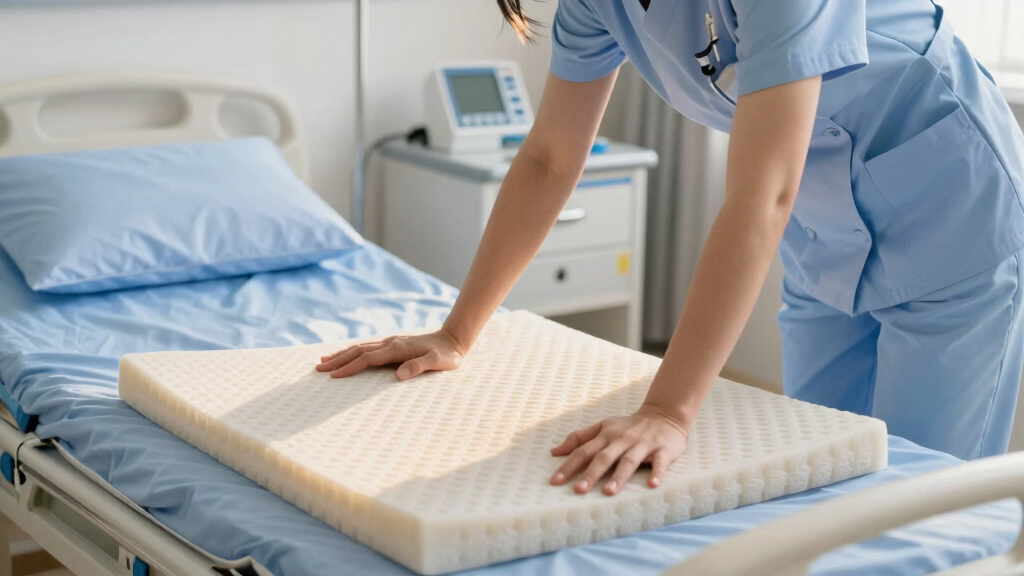
Our evaluation focused on performance, usability, durability, and value. We prioritized products with proven pressure redistribution capabilities, especially those with alternating pressure systems that help prevent pressure sores. Ease of use, quiet operation, and maintenance requirements were also key, as these impact day-to-day comfort. We considered build quality and how well each product suited long-term care scenarios versus short-term or home use. The ranking reflects a balance between advanced features and affordability, ensuring options for different budgets and care levels.
Factors to Consider When Choosing Best Hospital Bed Mattresses For Pressure Sores
Choosing the right hospital bed mattress for pressure sores involves understanding several important factors that influence effectiveness and user comfort. It’s not only about price but also about how well the mattress supports pressure relief, fits your bed, and integrates into your care routine. Knowing what features matter most can help you avoid common pitfalls like selecting a mattress that lacks durability or fails to provide adequate support over time. Here are key considerations to guide your decision.
Pressure Redistribution Technology
Effective pressure relief is the cornerstone of preventing and managing pressure sores. Mattresses with alternating pressure systems, which gently shift weight to reduce constant pressure points, tend to be more effective than foam-only options. However, these systems can be noisier and more maintenance-intensive. For active ulcer prevention, prioritizing a mattress with proven pressure redistribution capabilities is vital, even if it comes at a higher cost.
Ease of Use and Maintenance
Look for models with user-friendly controls, quiet operation, and easy-to-clean surfaces. Waterproof and heat-resistant covers help maintain hygiene and prolong mattress lifespan. Poorly designed pumps or complicated controls can lead to frustration and inconsistent pressure management. For long-term care, reliability and straightforward maintenance become as important as the mattress’s pressure relief features.
Durability and Material Quality
Durability is especially important for mattresses intended for daily use. High-quality materials, sturdy seams, and reliable pumps contribute to longevity. Cheaper options may save money upfront but could require frequent replacement. Consider the environment—whether at home or in a medical facility—and select products designed to withstand frequent cleaning and mechanical wear.
Compatibility and Size
Ensuring the mattress fits your hospital bed precisely is essential for optimal pressure distribution. Measure your bed’s dimensions carefully and compare with product specs. A poorly fitting mattress can lead to gaps, uneven support, and increased risk of pressure sores. Some models also offer compatibility with adjustable beds or specialty frames, which is worth considering for specific care setups.
Cost versus Features
Higher-priced mattresses often provide advanced pressure redistribution, quieter operation, and longer durability. However, for short-term or less severe cases, basic foam or less sophisticated air systems might suffice. Weigh your budget against the level of care needed; investing in a higher-quality mattress can reduce long-term medical costs and improve comfort, especially for those with chronic or severe pressure ulcer risks.
Frequently Asked Questions
How long does a hospital bed mattress for pressure sores typically last?
The lifespan of a hospital bed mattress varies depending on its construction and usage. Foam mattresses generally last 3 to 5 years with proper care, while air-based systems with durable components can last 5 to 7 years or more. Regular maintenance, cleaning, and adherence to manufacturer instructions extend the mattress’s usability. Investing in a higher-quality model usually offers better longevity and consistent pressure relief over time.
Are alternating pressure mattresses suitable for home use?
Yes, many alternating pressure mattresses are designed for both clinical and home settings. They typically include quieter pumps and user-friendly controls, making them accessible for personal care. However, they require regular maintenance and a power source, so consider whether the user or caregiver can manage these aspects comfortably. For home use, selecting a model with straightforward operation and reliable support is advisable.
What features should I prioritize if I need a mattress for long-term care?
For long-term use, durability, ease of maintenance, and consistent pressure relief are critical. Look for models with high-quality materials, waterproof covers, and quiet pumps. Adjustable settings can also enhance comfort and support personalized pressure management. Investing in a durable system reduces replacement costs and ensures sustained ulcer prevention, especially for users with ongoing care needs.
Can foam mattresses be effective for pressure sore prevention?
Foam mattresses can provide basic pressure distribution at a lower cost, but they generally lack the advanced redistribution features of air-based systems. High-density foam can reduce pressure points but may not adapt dynamically to changes in pressure or movement. For active or severe pressure sore prevention, foam alone might not suffice, and combining it with other support measures is recommended. For best results, air systems with alternating pressure are preferred.
How important is waterproofing in a hospital bed mattress?
Waterproofing is essential for maintaining hygiene and prolonging the life of the mattress. It prevents fluid absorption that can lead to bacterial growth and deterioration of the support surface. Waterproof covers also simplify cleaning, making maintenance easier and reducing infection risks. For anyone at risk of incontinence or requiring frequent cleaning, selecting a waterproof model is a smart choice.
Conclusion
For caregivers and patients seeking the best overall solution, the Drive Medical Med-Aire Low Air Loss Mattress offers comprehensive pressure relief with ease of use. Budget-conscious buyers should consider the Kekoy Alternating Air Pressure Mattress Pad, which provides effective support at a lower price point. Those with long-term needs or higher budgets might find the MedVance Low Air Loss Mattress or ProHeal Alternating Pressure Mattress worth the investment for durability and advanced features. Beginners or occasional users should opt for simpler foam options, while chronic care situations merit more sophisticated, adjustable systems. Your choice should align with your specific care requirements and budget constraints to ensure effective pressure sore prevention.