When a medical alert system is too complicated to use, it fails at its one job — which is why I focused this comparison on devices that a senior can operate confidently on day one. Medical Guardian MGMini earns my best overall pick for pairing a genuinely simple one-button design with clear voice prompts and a setup that takes minutes, not hours. Freedom Alert stands out as the best value thanks to no monthly fees, while ADT On-The-Go offers the strongest all-in-one protection if you want a professional monitoring brand behind the device. The core tradeoff in this category is simplicity versus capability: the easiest devices often skip fall detection or GPS, while feature-rich models demand more charging, pairing, and button-pressing know-how. Keep reading for the full breakdown of which system fits which household.

Turn quiet afternoons into listening time
- Thousands of audiobooks, podcasts and originals
- Listen on your phone, tablet or Echo — also offline
- Cancel anytime
Complete the kit


Key Takeaways
- One-button operation and voice prompts were the biggest differentiators — devices like the MGMini and Guardian Alert 911 Plus could be used without any training, while GPS models required app setup that some seniors can’t do alone.
- Monthly fees created a wider cost gap than hardware prices: no-fee devices like Freedom Alert and Guardian Alert 911 Plus cost nothing after purchase, while monitored systems like ADT On-The-Go run $30–50 per month indefinitely.
- Fall detection was the feature most often sacrificed for simplicity — of the eight systems, only four offered it, and two of those (Safety+ 4G and SecuLife models) added complexity that offset their safety benefit.
- Battery charging habits matter more than battery life specs: wristbands like the SecuLife SOS need nightly charging like a phone, whereas pendants and base units run for months or years on a single charge.
- Water resistance varied enough to change where a device can actually be worn — only some pendants are shower-safe, yet the bathroom is statistically the most common fall location in the home.
| Freedom Alert Landline Personal Emergency Device with 2-Way Call |  | Best No-Monthly-Fee Pick | Connection Type: Landline | Communication: 2-way voice | Monthly Fees: None | VIEW LATEST PRICE | See Our Full Breakdown |
| SecuLife Medical Alert Pendant for Seniors with Fall Detection and GPS Tracking |  | Best for Active Seniors | Fall Detection: Automatic | GPS Tracking: Yes, with geo-fence zones | Waterproof Rating: IP67 | VIEW LATEST PRICE | See Our Full Breakdown |
| ADT On-The-Go Emergency Medical Alert for Seniors |  | Best Professional Monitoring | Device Type: All-in-one mobile medical alert | Monitoring: 24/7 professional (ADT), monthly plan required | Fall Detection: Optional, additional cost | VIEW LATEST PRICE | See Our Full Breakdown |
| Safety+ 4G Medical Alert System with Fall Detection and GPS |  | Best Value for Full Features | Connectivity: 4G LTE | Battery Life: Up to 6 days | Water Resistance: Water-resistant (not submersible) | VIEW LATEST PRICE | See Our Full Breakdown |
| Nomo Medical Alert System with Fall Detection for Seniors at Home |  | Best Privacy-Focused Home System | Included: Smart Hub, two Satellites, Smart Tags, Nomo app | Connectivity: WiFi (2.4 GHz required) | Monitoring: Fall detection, motion/sound sensing, caregiver alerts | VIEW LATEST PRICE | See Our Full Breakdown |
| SecuLife SOS Wristband for Seniors with Fall Detection, GPS Tracking, and Two-Way Calling |  | Best for Active Seniors On the Go | Fall Detection: Yes | GPS Tracking: Yes | Geofencing: Yes | VIEW LATEST PRICE | See Our Full Breakdown |
| Guardian Alert 911 Plus – No Monthly Fees, 2-Way Emergency Pendant for Seniors with Fall Detection and Water Resistance |  | Best Value — No Subscription | No Monthly Fees: Yes | Fall Detection: Yes | Water Resistant: Yes | VIEW LATEST PRICE | See Our Full Breakdown |
| Medical Guardian MGMini Medical Alert Device for Seniors |  | Best Premium Monitoring | Connectivity: AT&T and Verizon 4G LTE | Battery Life: 3 days | Recharge Time: 4 hours | VIEW LATEST PRICE | See Our Full Breakdown |
| easy-to-use medical alert system | Fall Detection | Connectivity | Battery Life | Monitoring |
|---|---|---|---|---|
| Freedom Alert Landline Persona | No | — | — | — |
| SecuLife Medical Alert Pendant | Automatic | 2-way calling | Up to 6 days | — |
| ADT On-The-Go Emergency Medica | Optional, additional cost | Built-in GPS and cellular | — | 24/7 professional (ADT), monthly plan required |
| Safety+ 4G Medical Alert Syste | Included | 4G LTE | Up to 6 days | 24/7 nationwide, subscription required |
| Nomo Medical Alert System with | — | WiFi (2.4 GHz required) | — | Fall detection, motion/sound sensing, caregiver alerts |
| SecuLife SOS Wristband for Sen | Yes | — | Not specified | — |
| Guardian Alert 911 Plus | Yes | — | — | — |
| Medical Guardian MGMini Medica | Optional, $10/month | AT&T and Verizon 4G LTE | 3 days | 24/7 professional monitoring center |
More Details on Our Top Picks
Freedom Alert Landline Personal Emergency Device with 2-Way Call
For buyers who resent recurring fees, this option stands out as the only true no-subscription choice in this lineup. The Freedom Alert works over an existing landline and lets a senior speak directly through the pendant with family, neighbors, or 911 — no call center in the middle. Compared with the SecuLife Pendant, which charges $20 every month for GPS and monitoring, the Freedom Alert pays for itself within a year. The tradeoff is real, though: it is tethered to the home and useless without landline service, so active seniors should look elsewhere. The rechargeable battery with 24-hour backup covers short power outages. This pick makes the most sense for homebound seniors on a fixed income who already pay for a landline and mainly need a way to shout for help.
Pros:- No monthly fees or subscriptions, ever
- Direct 2-way voice communication with family or 911
- Rechargeable battery with 24-hour backup
- Simple operation with no apps or setup complexity
Cons:- Requires an active landline, which many households have dropped
- No protection outside the home
- No automatic fall detection
Best for: Homebound seniors with existing landline service who want emergency help without monthly bills
Not ideal for: Active or independent seniors who leave the house — the landline dependency means zero protection outside the home
- Connection Type:Landline
- Communication:2-way voice
- Monthly Fees:None
- Battery Backup:24 hours
- Rechargeable:Yes
- Fall Detection:No
- Portability:In-home only
Our verdict“If your loved one stays home and has a landline, this is the cheapest long-term safety net you can buy.”
SecuLife Medical Alert Pendant for Seniors with Fall Detection and GPS Tracking
The SecuLife Pendant is the strongest choice here for seniors who still get out and about. With automatic fall detection, real-time GPS, and geo-fence zones, caregivers can get an alert the moment a loved one wanders beyond a set area — something the Freedom Alert simply cannot do. The IP67 waterproof rating means it can stay on in the shower, where many falls happen, and the up-to-6-day battery beats most wearables in this guide. Compared with the ADT On-The-Go, it trades professional monitoring for direct calls to family and caregivers, which some families actually prefer. The $20 monthly subscription is the main drawback, and the feature-rich design assumes a user (or family member) willing to manage an app and charging routine.
Pros:- Automatic fall detection included at no extra cost
- GPS tracking with customizable geo-fence zones
- IP67 waterproof — safe to wear in the shower
- Direct 2-way calling to emergency contacts rather than a call center
Cons:- $20 per month subscription required
- App-dependent features may frustrate non-technical users
- Battery life of 6 days can shrink with heavy GPS use
Best for: Active seniors with mild cognitive concerns whose families want GPS location and geo-fence alerts
Not ideal for: Seniors who want zero ongoing costs or who are confused by apps and recharging routines
- Fall Detection:Automatic
- GPS Tracking:Yes, with geo-fence zones
- Waterproof Rating:IP67
- Battery Life:Up to 6 days
- Subscription:$20 per month
- Connectivity:2-way calling
- Display:Large SOS button, time, battery, signal
Our verdict“The best pick for wander-prone or active seniors whose families will pay for location visibility.”
ADT On-The-Go Emergency Medical Alert for Seniors
What separates this model is the name behind it: ADT’s 24/7 professional monitoring, meaning a trained dispatcher answers every SOS rather than a family member who might miss the call. The all-in-one design needs no external pendant or wristband, which makes it more comfortable and less stigmatizing than the SecuLife Pendant for seniors who resist wearing obvious medical devices. Built-in GPS and cellular cover both home and away. Be aware of the pricing structure, though: fall detection is optional and costs extra, and the monthly plan never ends — unlike the fee-free Freedom Alert. The lack of published battery and charging details is another gap that careful buyers should ask about before ordering.
Pros:- 24/7 professional dispatch from a trusted security brand
- All-in-one design with no separate pendant to lose
- Built-in GPS and cellular works at home and away
- Simple one-button SOS operation
Cons:- Fall detection is optional and costs extra
- Monthly monitoring plan required indefinitely
- Battery life and charging details not clearly documented
Best for: Seniors living alone whose families want a professionally staffed response rather than relying on relatives answering calls
Not ideal for: Budget-conscious buyers — the required monthly plan plus fall detection add-ons add up fast
- Device Type:All-in-one mobile medical alert
- Monitoring:24/7 professional (ADT), monthly plan required
- Fall Detection:Optional, additional cost
- Connectivity:Built-in GPS and cellular
- Accessories:None required
- Operation:One-button SOS
Our verdict“The right choice when a live dispatcher — not a family group chat — is who you want answering the alert.”
Safety+ 4G Medical Alert System with Fall Detection and GPS
This option stands out for bundling everything most families want — fall detection, GPS, caregiver app, and 24/7 monitoring — at a lower effective entry price, with the first month of service included. Compared with the ADT On-The-Go, fall detection comes standard rather than as a paid add-on, which closes the price gap quickly. The flexible wearing options (lanyard or belt clip) and up-to-6-day battery match the SecuLife Pendant’s convenience, while the caregiver app adds check-in peace of mind. The compromises: it is only water-resistant rather than fully waterproof like the SecuLife, and service is tied to 4G LTE coverage, so rural buyers should verify signal strength at home before committing.
Pros:- Fall detection included rather than a paid add-on
- First month of service included for easy trial
- Up to 6-day battery life means less frequent charging
- Wearable as lanyard or belt clip, plus caregiver app
Cons:- Subscription required after the first month
- Water-resistant only — not rated for shower use like IP67 competitors
- Dependent on local 4G LTE coverage
Best for: Families who want fall detection and caregiver app access bundled together without à la carte pricing
Not ideal for: Seniors in rural areas with weak cellular signal, or anyone unwilling to take on subscription costs after month one
- Connectivity:4G LTE
- Battery Life:Up to 6 days
- Water Resistance:Water-resistant (not submersible)
- Fall Detection:Included
- Monitoring:24/7 nationwide, subscription required
- Extras:Caregiver app, charging dock, lanyard, belt clip
- Activation:First month of service included
Our verdict“The most complete feature set per dollar here, as long as cellular coverage at home is solid.”
Nomo Medical Alert System with Fall Detection for Seniors at Home
Many seniors refuse monitoring devices because they fear cameras watching them — the Nomo solves that with a camera-free design that senses motion, sound, and falls through a smart hub and satellites instead. Setup is genuinely easy: WiFi connection, no professional installation, and a 60-day free trial that outlasts most competitors’ return windows. Compared with the Freedom Alert, it adds fall detection and automatic caregiver notifications without needing a landline, though the $19.99 monthly fee after the trial undercuts the Freedom Alert’s cost advantage. The limitations are clear: it is strictly an in-home system, and it demands a 2.4 GHz WiFi network, so households running 5 GHz-only routers will need an adjustment first.
Pros:- Camera-free design respects privacy while still detecting falls
- Self-setup with no professional installation visit
- Generous 60-day free trial with no contracts
- Automatic caregiver alerts beyond just emergency buttons
Cons:- In-home only — no GPS or cellular portability
- Requires a 2.4 GHz WiFi connection
- $19.99/month subscription kicks in after the trial
Best for: Privacy-sensitive seniors who resist wearables and cameras but still need in-home fall detection
Not ideal for: Seniors who need protection outside the home, or households without compatible 2.4 GHz WiFi
- Included:Smart Hub, two Satellites, Smart Tags, Nomo app
- Connectivity:WiFi (2.4 GHz required)
- Monitoring:Fall detection, motion/sound sensing, caregiver alerts
- Camera:None — privacy-focused design
- Trial Period:60 days free
- Subscription:$19.99/month after trial
- Coverage:In-home only
Our verdict“The smartest option for a senior who wants fall protection at home without wearing a pendant or being filmed.”
SecuLife SOS Wristband for Seniors with Fall Detection, GPS Tracking, and Two-Way Calling
Unlike home-bound pendants such as the Guardian Alert 911 Plus, this wristband is built for seniors who still garden, walk the neighborhood, or travel. The GPS tracking and geofencing are the standout differentiators here — caregivers can set a safe radius and get alerts if a loved one with dementia wanders beyond it, something the Guardian Alert simply cannot do. Wearing it as a wristband also removes the most common failure point in medical alerts: seniors forgetting or refusing to clip on a pendant each morning. The IP67 waterproof rating means it survives showers, which is where many falls happen.
The tradeoff is cost and clarity. A monthly subscription unlocks the full feature set, and the manufacturer is vague about battery life, which matters a lot for a GPS device. Compared with the Medical Guardian MGMini, you get location features at a similar wearing style, but less transparency about what you’ll pay long term.
Pros:- GPS tracking with geofence alerts for wandering safety
- Wristband format is harder to forget than a pendant
- IP67 waterproofing survives showering, where falls are common
- One-button operation keeps emergency calls simple
Cons:- Monthly subscription required for full functionality
- Battery life is not specified, making charging routines a guessing game
- No screen, so users cannot see status or confirm connection
Best for: Active seniors and dementia families who need GPS wandering protection outside the home
Not ideal for: Budget-conscious buyers who want predictable costs, since battery life and subscription pricing are unclear upfront
- Fall Detection:Yes
- GPS Tracking:Yes
- Geofencing:Yes
- Waterproof Rating:IP67
- Two-Way Calling:Yes
- Battery Life:Not specified
- App Compatibility:iOS and Android
Our verdict“This wristband makes the most sense for seniors who leave the house regularly and need location monitoring, not just emergency calling.”
Guardian Alert 911 Plus – No Monthly Fees, 2-Way Emergency Pendant for Seniors with Fall Detection and Water Resistance
The single biggest barrier to medical alert adoption isn’t technology — it’s the recurring bill. The Guardian Alert 911 Plus eliminates it entirely, which sets it apart from nearly everything else in this lineup, including the Medical Guardian MGMini at $43.95/month. Over a year, that difference adds up to over $500, and this pendant connects directly to 911 dispatchers without a landline or monitoring center in between. For seniors who mainly want a reliable way to call for help at home, this simplicity is the whole point.
But that simplicity cuts both ways. There’s no professional monitoring, so a fall detection event routes to 911 rather than a trained agent who can also notify family. Compared with the SecuLife SOS Wristband, there’s no GPS or geofencing, so it’s strictly an at-home device. The senior must also actually wear or mount it, since it only works when within reach.
Pros:- No monthly fees — one-time purchase only
- Connects directly to 911 dispatchers without a landline
- Water-resistant enough for bathroom wear
- Two-way voice built into the pendant itself
Cons:- No professional monitoring or family notification — 911 only
- No GPS, so protection ends at home
- Must be worn or mounted to be of any use
Best for: Cost-conscious families who want emergency protection without a lifetime of monthly fees
Not ideal for: Seniors who live alone and benefit from professional monitoring, family notifications, or away-from-home coverage
- No Monthly Fees:Yes
- Fall Detection:Yes
- Water Resistant:Yes
- Two-Way Voice:Yes
- Landline Required:No
- Professional Monitoring:No — direct 911
- GPS Tracking:No
Our verdict“The clear pick for buyers who refuse to pay subscriptions and only need a straightforward at-home path to 911.”
Medical Guardian MGMini Medical Alert Device for Seniors
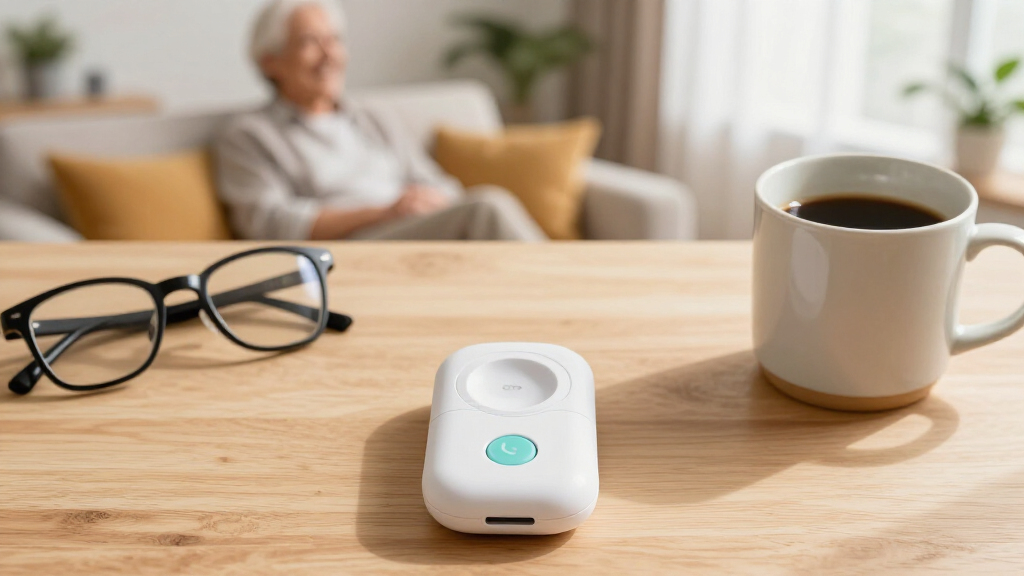
What separates the MGMini from budget devices like the Guardian Alert 911 Plus is the infrastructure behind the button. Instead of routing straight to 911, presses connect to Medical Guardian’s 24/7 monitoring center, where trained agents assess the situation, dispatch appropriate help, and contact family — a meaningful difference when the emergency might be a fall that isn’t ambulance-worthy. The device runs on AT&T and Verizon 4G LTE, so it works away from home, and the three-day battery beats most GPS pendants that demand nightly charging.
That protection isn’t cheap. The $43.95/month subscription is the going rate for monitored service, and fall detection tacks on another $10/month — unlike the SecuLife SOS Wristband, which bundles it. The discreet necklace design is a genuine plus for style-conscious seniors, but the tiny profile means no screen either. One active device per member also limits households covering multiple people.
Pros:- 24/7 professional monitoring with trained emergency agents
- Works on both AT&T and Verizon 4G LTE networks
- 3-day battery life with a quick 4-hour recharge
- Discreet lanyard or belt-clip design seniors actually want to wear
Cons:- Subscription required at $43.95/month after trial
- Fall detection costs an extra $10/month instead of being included
- Limited to one active device per member
Best for: Seniors living alone who want professionally monitored, away-from-home protection with family follow-up
Not ideal for: Budget-driven buyers or those who only want basic 911 access, since costs exceed $640 in the first year with fall detection
- Connectivity:AT&T and Verizon 4G LTE
- Battery Life:3 days
- Recharge Time:4 hours
- Subscription:Required, $43.95/month after trial
- Fall Detection:Optional, $10/month
- Monitoring:24/7 professional monitoring center
- Wearing Options:Lanyard or belt clip
Our verdict“Worth the recurring cost for seniors who need real humans monitoring them around the clock, not just a 911 shortcut.”
How We Picked
I evaluated each system through a single lens: could an 80-year-old with limited tech experience use it correctly during an emergency? That meant prioritizing one-button operation, clear two-way audio, and setup that doesn’t require a smartphone app. Devices earned higher rankings when their emergency flow — press button, connect to help — worked without menus, pairing steps, or remembering sequences. I also weighed whether fall detection and GPS features genuinely helped or just added failure points, since a feature the user can’t manage is a liability, not a benefit.
Beyond usability, I compared total cost of ownership (hardware plus monitoring fees over three years), battery demands, water resistance, and whether professional monitoring or family notification fits the household better. Devices that hide fees, require frequent charging, or lock users into long contracts ranked lower regardless of their feature lists. The final ordering reflects a balance: simplest operation first, then value, then advanced capability for seniors who can handle — or have a caregiver to manage — more technology.
| easy-to-use medical alert system | Fall Detection |
|---|---|
| Freedom Alert Landline Persona | No |
| SecuLife Medical Alert Pendant | Automatic |
| ADT On-The-Go Emergency Medica | Optional, additional cost |
| Safety+ 4G Medical Alert Syste | Included |
| Nomo Medical Alert System with | — |
| SecuLife SOS Wristband for Sen | Yes |
| Guardian Alert 911 Plus | Yes |
| Medical Guardian MGMini Medica | Optional, $10/month |
Factors to Consider When Choosing Easy-to-use Medical Alert Systems
Choosing an easy-to-use medical alert system involves more than picking the device with the fewest buttons. These are the factors that most often determine whether a system gets used correctly — or ends up in a drawer.Monitored vs. No-Fee Systems: The Decision That Shapes Everything Else
Before comparing buttons and batteries, decide whether you want a professionally monitored system or a direct-dial device with no monthly fee. Monitored systems connect to a 24/7 response center that can dispatch emergency services and access your medical profile, which is safer if the user lives alone and may be unable to speak. Direct-dial devices like Freedom Alert and Guardian Alert 911 Plus call family members or 911 straight from the pendant, costing nothing after purchase but relying on someone answering the phone. The mistake I see most often is families choosing a no-fee device for a senior who has no nearby contacts available during the day — the savings become a coverage gap. Run this decision through the user’s actual support network, not the sticker price.
Charging Burden: The Hidden Usability Killer
Battery life numbers on spec sheets hide the real question: how often does someone need to charge this, and will they remember? A wristband requiring nightly charging works only if the user — or a caregiver — builds that habit reliably. Pendants and base units that run months or years on a charge are dramatically more foolproof for people with memory challenges. When comparing devices, ask what happens when the battery dies: does the device warn clearly, fail silently, or stop working mid-emergency? A lower-capacity device with loud low-battery alerts and an easy dock beats a longer-lasting one that dies without warning.
Fall Detection: Help or Hindrance?
Automatic fall detection sounds like an obvious upgrade, but it introduces two problems worth weighing honestly. First, false alarms — sitting down quickly or bumping the device can trigger an emergency call, and repeated false alarms make some seniors stop wearing the device altogether. Second, fall detection usually requires the device to be worn correctly and charged, adding usability demands that conflict with the ‘easy to use’ goal. It makes the most sense for seniors with a documented fall history or balance conditions. If falls aren’t a current concern, a simple button device worn consistently protects better than a fall-detecting device worn sporadically.
Home-Only vs. On-the-Go Coverage
Base-unit systems with a wearable pendant cover the house and yard but go silent the moment the user leaves — a serious gap for seniors who garden, walk, or drive. Mobile systems with cellular and GPS tracking protect everywhere but cost more monthly and need regular charging. Be honest about the user’s actual routine rather than buying maximum coverage ‘just in case’: a homebody with a landline and a yard gets excellent protection from a $50 no-fee system. Also check whether a mobile device works on the current cellular network, since several older 3G-based systems stopped working when networks shut down.
Water Resistance: The Bathroom Problem
More falls happen in the bathroom than any other room, yet water resistance is where budget devices cut corners most aggressively. Look for specific ratings — ‘shower-safe’ or IP67 — rather than vague claims like ‘water-resistant,’ which sometimes means only light splash protection. A device that must be removed before bathing will spend its most important hours on the counter. If the user refuses to wear a pendant in the shower, consider devices with separate shower-safe buttons or wall-mounted emergency units as a supplement.
Who Sets It Up — and Who Fixes It Later?
The easiest device on day one can become a burden if it needs re-pairing, app updates, or SIM management that the senior can’t handle independently. Before buying, decide who the household’s tech support person is and whether they’re local. Devices with no app at all are the most self-sufficient; app-based systems work well when an adult child can monitor battery levels and location remotely. Also check the warranty and cancellation terms — some monitored services lock you into annual contracts, which is painful if the user’s needs change or they move to assisted living.
Frequently Asked Questions
Do any of these systems work without a monthly fee, and is that actually safe?
Yes — Freedom Alert and Guardian Alert 911 Plus both work with no recurring fees because they dial 911 or pre-programmed family numbers directly instead of routing through a monitoring center. Whether that’s safe depends entirely on the household. If the senior has responsive family or neighbors nearby who answer their phones reliably, direct-dial coverage can be adequate and saves hundreds of dollars per year. The risk appears when nobody answers: a monitored system guarantees a trained operator responds within seconds and can dispatch EMS with the user’s medical history. For seniors who live alone with no dependable daytime contacts, I’d treat the monthly fee as insurance rather than an upsell.
Are these systems too complicated for someone with dementia or memory loss?
Complexity varies more in this category than almost any other factor, so the diagnosis matters when choosing. Devices with one large button, voice prompts, and no charging routine — like Guardian Alert 911 Plus — can work in early-stage cognitive decline, especially with caregivers reinforcing the habit. GPS smartwatch-style devices that need nightly charging and menu navigation are generally a poor fit beyond mild impairment. One honest caveat: no medical alert system reliably serves moderate-to-advanced dementia, because the user may not remember to press the button at all. In those cases, automatic fall detection plus caregiver location monitoring, like the Safety+ 4G offers, becomes the more realistic safety net.
Is fall detection worth paying extra for?
It’s worth it for a specific profile: seniors with a prior fall, balance disorders, neuropathy, or medications causing dizziness. Automatic detection summons help even when the person is unconscious or unable to press a button — a scenario a standard pendant can’t cover. The tradeoffs are real, though: fall detection typically adds $5–10 per month, generates occasional false alarms that erode trust, and requires diligent wearing and charging to function at all. If the user has no fall history and consistently wears a simple device, the button alone provides most of the protection. I’d only skip fall detection when the budget is genuinely tight or the user finds false alarms distressing.
What happens if I press the button accidentally — will police show up?
With monitored systems like ADT On-The-Go or Medical Guardian, an accidental press is low-stakes: the operator comes on the line, you say it was a mistake, and the event ends there. This is one of the quiet advantages of professional monitoring, and it’s why I encourage users to test their devices monthly — a good monitoring center expects test calls. Direct-dial devices are less forgiving. If a no-fee pendant dials 911, stay on the line and explain the accidental activation rather than hanging up, which can trigger a welfare check. If it calls family numbers, just let them know you’re fine. Practicing one accidental-press scenario with the user removes most of the anxiety around wearing the device.
Can I use one of these systems for a parent who still drives and goes out daily?
You need a mobile system with cellular connectivity and GPS — home base units provide zero protection outside their range, no matter how good they are indoors. ADT On-The-Go and SecuLife’s GPS pendant are built for exactly this profile, tracking location and connecting to help from anywhere with cell coverage. The honest tradeoff is maintenance: mobile devices need charging every one to two days, so the habit has to exist or a caregiver has to manage it. Check coverage maps for the parent’s usual routes, since rural dead zones still defeat cellular devices. And if wandering is a concern, prioritize models with caregiver apps that show real-time location and let you set geofence alerts.
Conclusion
The right choice here depends less on feature counts and more on matching the device to the person using it. For best overall, I recommend the Medical Guardian MGMini: it balances simple one-button operation with reliable monitoring and enough portability for an active routine. The best value pick is Freedom Alert, which delivers genuine two-way emergency calling with zero monthly fees — ideal for budget-conscious households with involved family nearby. For best premium, the ADT On-The-Go justifies its higher cost with a trusted monitoring brand, nationwide cellular coverage, and support infrastructure that discount brands can’t match.
For beginners — seniors anxious about technology or families setting up a first system — the Guardian Alert 911 Plus is the gentlest entry point: no app, no fees, no learning curve. For specific needs: the SecuLife SOS Wristband suits seniors who refuse pendants but will wear a watch; the Safety+ 4G fits fall-risk users who need automatic detection; SecuLife’s GPS pendant serves active seniors who leave home daily; and Nomo covers large homes where base-station range matters. Whatever you choose, order it early, test it in every room and the shower, and make monthly test presses part of the routine — the easiest system to use is the one that’s actually being worn when it’s needed.
Cold & flu season Picks
humidifiers
As an affiliate, we earn on qualifying purchases.