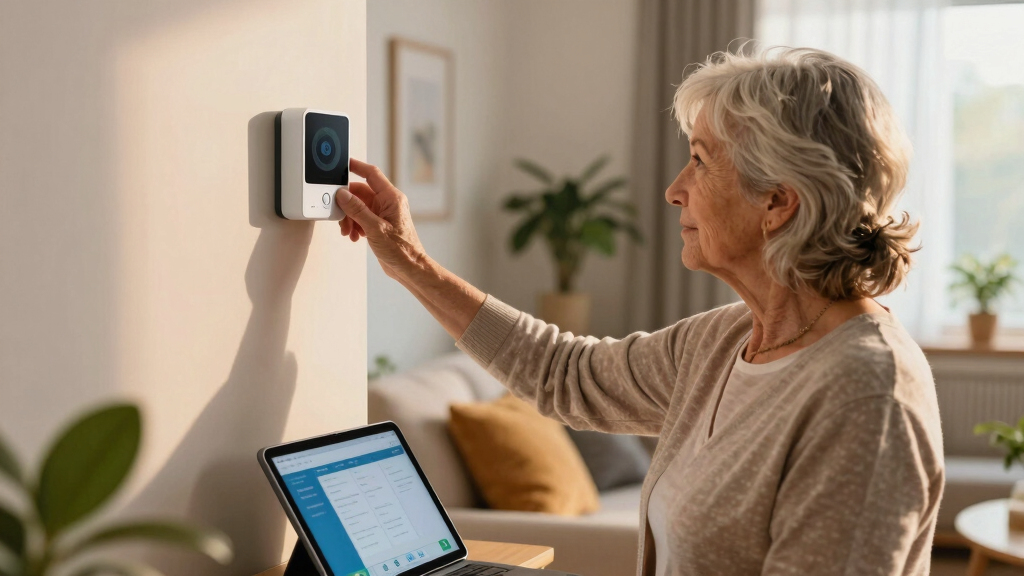

For families seeking reliable safety solutions without recurring costs, the best no subscription indoor monitoring systems for seniors offer peace of mind and independence. The Life Alert System with Dual Wi-Fi and 433MHz stands out as the overall top pick thanks to its robust connectivity and protection features. Other favorites include the CallToU Elderly Monitor, praised for its integrated camera and audio, and the NOMO Smart Care System, known for its fall detection capabilities. These systems balance ease of use, safety features, and cost, but each involves tradeoffs like limited smart home integration or higher upfront costs. Continue reading for a detailed breakdown of the top options and what makes each suitable for different needs.
Key Takeaways
- The top-ranked systems combine reliable connectivity with straightforward setup, making them accessible for all tech comfort levels.
- Fall detection remains a key feature for added safety, especially in systems with medical alert capabilities.
- Ease of use and minimal maintenance are common priorities, but some models sacrifice smart home compatibility for simplicity.
- Upfront cost varies significantly; investing in a more feature-rich system often reduces long-term expenses but may be pricier initially.
- Battery backup and clear alerts are vital, as they ensure the system functions during power outages or emergencies.
| Life Alert System with Dual Wi-Fi and 433MHz Protection for Seniors |  | Best Overall for Reliable, No-Subscription Emergency Alerts | Wireless Technology: Wi-Fi (2.4G) + 433MHz | Signal Range: 100m (328ft) | Buttons Included: 2 Call Buttons + 2 Watch Buttons | VIEW LATEST PRICE | See Our Full Breakdown |
| CallToU Elderly Monitor with Camera and Audio for Seniors and Dementia Patients (1 Camera) |  | Best for Privacy-Focused Video Monitoring Without Wi-Fi | Product Type: Security Camera | Power Source: Corded Electric | Batteries Required: Yes | VIEW LATEST PRICE | See Our Full Breakdown |
| Elderly Monitor with Camera and Audio, 2-Way Talk Room Monitors for Elderly Care |  | Best for Extended Range and Customizable Alerts | Connectivity Technology: 2.4GHz FHSS | Range: 1000ft | Power Source: Corded Electric with Battery Backup | VIEW LATEST PRICE | See Our Full Breakdown |
| NOMO Smart Care Medical Alert System with Fall Detection |  | Best for Advanced Fall Detection and Privacy | Manufacturer: Nomo Smart Care | Part Number: KIT1001R-01 | Item Weight: 2.72 lbs | VIEW LATEST PRICE | See Our Full Breakdown |
| Hapippofa Wireless Home Security System with WiFi/4G and Alexa Compatibility |  | Best for DIY Home Security with No Subscription Fees | Voltage: 3.7 Volts | Control Method: App, Push Button, Remote | Battery Life: 3 years | VIEW LATEST PRICE | See Our Full Breakdown |
| Senior Elderly Medical Alert System with SOS |  | Best No-Subscription Landline Medical Alert System | Range: 150 feet (70,000 sq ft coverage) | Connectivity: Landline or optional cell phone adaptor | Waterproof Rating: Shower/tub safe | VIEW LATEST PRICE | See Our Full Breakdown |
| Elderly Monitor with Camera and Audio for Senior Care |  | Best Privacy-Focused, All-in-One Senior Care Monitor | Battery Capacity: 2000mAh | Screen Size: 2.8 inches | Pan/Tilt/Zoom: 355° Pan / 90° Tilt / 4X Zoom | VIEW LATEST PRICE | See Our Full Breakdown |
| WiFi Medical Alert System for Seniors with 2 Buttons & 1 Receiver |  | Best Wi-Fi-Enabled, App-Connected Medical Alert System | Power Source: Battery (1 C alkaline included) | Control Method: App | Maximum Range: 426 Feet (130 meters) | VIEW LATEST PRICE | See Our Full Breakdown |
More Details on Our Top Picks
Life Alert System with Dual Wi-Fi and 433MHz Protection for Seniors
This system stands out for its dual-channel protection, combining Wi-Fi and 433MHz signals to ensure coverage even if one network fails. Compared with the NOMO Smart Care, it doesn’t rely on Wi-Fi alone, which enhances reliability in areas with spotty internet. Its waterproof call/watch buttons make it versatile for bathroom or outdoor use, and customization options improve user experience. However, it doesn’t support 5G Wi-Fi networks, which could limit future compatibility, and it’s limited to a single hub setup. This pick makes the most sense for seniors living in homes where connectivity stability is a concern, and ease of use is critical.
Pros:- Dual-channel protection ensures reliable alerts even during Wi-Fi outages
- No monthly subscription needed for core emergency functions
- Waterproof buttons suitable for outdoor or bathroom use
- Customizable ringtones and volume for personal preferences
Cons:- Limited to 2 call/watch buttons and no multi-hub expansion
- Does not support 5G Wi-Fi networks, potentially limiting compatibility
Best for: Seniors or families needing dependable, no-subscription emergency protection with reliable connectivity
Not ideal for: Households with advanced Wi-Fi networks (5G) or those wanting multi-hub expandability
- Wireless Technology:Wi-Fi (2.4G) + 433MHz
- Signal Range:100m (328ft)
- Buttons Included:2 Call Buttons + 2 Watch Buttons
- Water Resistance Rating:IP66
- Wi-Fi Compatibility:2.4G only
- Setup Type:Plug-and-play hub with app
Bottom line: This system is ideal for seniors who prioritize dependable, no-cost emergency alerts in a straightforward home setup.
CallToU Elderly Monitor with Camera and Audio for Seniors and Dementia Patients (1 Camera)
This system provides real-time video and audio without Wi-Fi, making it a solid choice for families concerned about privacy or Wi-Fi dependency. Unlike the NOMO Smart Care, which relies on Wi-Fi for virtual caregiver support, CallToU’s wired setup limits placement flexibility but enhances security. The infrared night vision and SOS button support immediate emergency response, while the portable 2.8-inch screen allows caregivers or family members to monitor remotely. The main tradeoff is its reliance on batteries and a corded power source, which can restrict where it’s used. It’s best suited for those who want a simple, privacy-first monitoring option for specific areas of the home.
Pros:- No Wi-Fi required, enhancing privacy and security
- Real-time video and audio with infrared night vision
- Portable receiver enables on-the-go monitoring
- SOS button for emergency calls
Cons:- Requires batteries and corded power, limiting mobility
- Placement flexibility is constrained by power cord length
Best for: Families seeking private, Wi-Fi-free video monitoring for seniors or dementia patients
Not ideal for: Users needing flexible placement or wireless operation for on-the-go monitoring
- Product Type:Security Camera
- Power Source:Corded Electric
- Batteries Required:Yes
- Screen Size:2.8 inch
- Resolution:720P
- Night Vision:Infrared
Bottom line: This pick is best for caregivers prioritizing privacy and straightforward video monitoring in fixed home locations.
Elderly Monitor with Camera and Audio, 2-Way Talk Room Monitors for Elderly Care
Compared to the CallToU, this monitor offers a longer, 1000ft range thanks to 2.4GHz FHSS technology, making it suitable for larger homes or multi-room setups. Its one-touch SOS button and customizable alerts enhance safety, while the medication reminders support ongoing care routines. The inclusion of infrared night vision and a soothing sound feature improves comfort at night. The main tradeoff is the need for a physical power cable and mounting hardware, which might complicate installation. It’s best suited for families who want broad coverage within the home and a device that can double as a medication reminder system.
Pros:- Up to 1000ft range allows flexible placement across large homes
- One-touch SOS button with customizable alerts
- Medication and meal reminders support daily routines
- Infrared night vision with sound melodies for comfort
Cons:- Requires power cable and mounting hardware, limiting mobility
- Limited to line-of-sight range, potentially obstructed by walls
Best for: Families needing a long-range, multi-purpose monitoring device for different rooms
Not ideal for: Users seeking a fully wireless or portable solution for on-the-go monitoring
- Connectivity Technology:2.4GHz FHSS
- Range:1000ft
- Power Source:Corded Electric with Battery Backup
- Battery Capacity:2000mAh
- Video Format:AVI
- Night Vision:Infrared
Bottom line: Ideal for families needing extensive coverage and functional reminders in a fixed home environment.
NOMO Smart Care Medical Alert System with Fall Detection
This system emphasizes privacy by avoiding cameras and landlines, focusing instead on fall detection and emergency alerts. It’s a strong choice over the simpler Life Alert in terms of safety features, with advanced fall sensitivity and 24/7 virtual caregiver support. Setup is straightforward, and it includes wearable Tags, but the need for a WiFi connection and a monthly fee after the trial can be drawbacks. Unlike the Hapippofa, which offers broader home security, NOMO concentrates solely on health and safety alerts, making it ideal for those who prioritize privacy and fall prevention over surveillance.
Pros:- Advanced fall detection with customizable sensitivity
- No cameras, maintaining privacy
- Easy plug-and-play setup
- 24/7 virtual caregiver support included
Cons:- Requires a monthly subscription after free trial
- Dependent on WiFi, limiting mobility outside the home
- No physical emergency call button—relies on wearable Tags
Best for: Seniors at risk of falls who prefer a camera-free, subscription-based safety system
Not ideal for: Households that want ongoing professional monitoring without monthly fees or those needing video surveillance
- Manufacturer:Nomo Smart Care
- Part Number:KIT1001R-01
- Item Weight:2.72 lbs
- Dimensions:10.6 x 4.75 x 7.1 inches
- Batteries:4 CR2430 (included)
- Power Source:AC with battery backup
Bottom line: Best suited for seniors prioritizing fall safety and privacy over in-home video monitoring and willing to pay a subscription fee.
Hapippofa Wireless Home Security System with WiFi/4G and Alexa Compatibility
This system offers a self-monitored, professional-grade security setup with WiFi/4G connectivity, making it versatile for quick installation. Its compatibility with Alexa and Google Home allows voice control, and its sensors for doors, windows, and motion provide comprehensive coverage. Unlike the others, this system doesn’t require ongoing subscription fees, appealing to budget-conscious families. However, the batteries last up to three years, but they are not user-replaceable, which could lead to downtime if not monitored. It’s perfect for households seeking a customizable, tech-savvy security system that’s easy to install without monthly costs.
Pros:- No subscription fees, reducing ongoing costs
- Easy DIY setup with wireless sensors
- Real-time mobile alerts and app control
- Smart home integration with Alexa and Google
Cons:- Battery life is up to 3 years but not user-replaceable
- Lacks professional monitoring or emergency call buttons
- Limited warranty details available
Best for: Tech-savvy families wanting a flexible, self-monitored security solution without monthly fees
Not ideal for: Seniors needing a dedicated medical or emergency alert system with tailored features
- Voltage:3.7 Volts
- Control Method:App, Push Button, Remote
- Battery Life:3 years
- Sensor Technology:Contact Sensor
- Smart Home Compatibility:Alexa, Google Home
- Dimensions:9 x 6.3 x 3.6 inches
Bottom line: This system suits homeowners seeking budget-friendly, customizable security without ongoing subscription commitments.
Senior Elderly Medical Alert System with SOS
This system stands out for its straightforward, one-time purchase model, making it ideal for those seeking a reliable, no-monthly-fee solution. Unlike the WiFi-based WiFi Medical Alert System, it relies on landline or an optional cellular adaptor, which can be a limitation in areas without landline access. Its waterproof design ensures safety in the bathroom, a common concern in senior care. However, the 150-foot range may restrict mobility in larger homes or outdoor spaces. Setup is simple, with a plug-and-play approach that doesn’t require technical expertise. The customizable emergency contacts add a personal touch, but the dependency on landline limits flexibility for some users.
Pros:- No monthly subscription fees, reducing ongoing costs
- Waterproof design ensures safety in bathroom environments
- Easy plug-and-play setup for quick installation
- Customizable emergency contact list for tailored responses
Cons:- Requires landline or additional cell adaptor, adding upfront cost
- Limited to 150-foot range, restricting mobility in large or multi-story homes
Best for: Older adults living in homes with landline service who want a simple, no-subscription emergency system.
Not ideal for: Homeowners without landlines or those needing longer-range coverage for outdoor areas, due to its 150-foot limit.
- Range:150 feet (70,000 sq ft coverage)
- Connectivity:Landline or optional cell phone adaptor
- Waterproof Rating:Shower/tub safe
- Button Types:Wristband + necklace
Bottom line: This pick suits seniors in landline-equipped homes who prioritize simplicity and affordability without ongoing fees.
Elderly Monitor with Camera and Audio for Senior Care
This device excels for users who want a comprehensive monitoring solution without Wi-Fi vulnerabilities. Its 2.8-inch screen is compact, but can be limiting for those needing larger visual displays, especially compared to larger-screen options like the WiFi Medical Alert System. The long-lasting 2000mAh battery ensures up to 15 hours of use, which beats many basic units that require frequent recharging. It offers multiple emergency buttons, including fall and toilet alerts, making it versatile for varied needs. The built-in temperature monitoring adds an extra layer of safety. However, its lack of Wi-Fi connectivity means it can’t integrate with smart home systems, which might be a downside for tech-savvy users seeking centralized control.
Pros:- Long battery life with 15-hour runtime for extended use
- Privacy-focused design without Wi-Fi vulnerabilities
- Multiple emergency buttons for various alerts
- Includes medication reminders and temperature monitoring
Cons:- Small 2.8-inch screen may hinder visibility
- No Wi-Fi limits smart home integration options
- Limited to stand-alone operation, not compatible with other smart devices
Best for: Caregivers and seniors prioritizing privacy and a dedicated device for medication and safety alerts without Wi-Fi concerns.
Not ideal for: Those wanting smart home integration or a larger display, as the small screen may limit usability.
- Battery Capacity:2000mAh
- Screen Size:2.8 inches
- Pan/Tilt/Zoom:355° Pan / 90° Tilt / 4X Zoom
- Temperature Monitoring:Yes
- Night Vision Type:Infrared
- Privacy Feature:FCC-Certified 2.4GHz FHSS (No Wi-Fi)
Bottom line: This monitor is ideal for seniors and families seeking a private, all-in-one safety device with key health features, but not for those needing smart home connectivity.
WiFi Medical Alert System for Seniors with 2 Buttons & 1 Receiver
This system offers extensive range and customizable alerts, making it a strong choice for users comfortable with smartphone apps. Its 426-foot range surpasses the other two options, providing coverage for larger homes and outdoor areas. Unlike the Senior Elderly Medical Alert System with SOS, it relies on Wi-Fi, which can be problematic in homes with dead zones or unstable connections. Its waterproof design ensures safety in bathroom or kitchen settings, and the ability to mount the system on walls or tables adds versatility. The need for a separate subscription for notifications makes it less appealing for those seeking a completely no-cost setup. Still, for households with stable Wi-Fi, this system combines convenience with a broad coverage area.
Pros:- Instant alerts via app and physical receiver for flexibility
- Large 426-foot range suitable for multi-room or outdoor use
- Customizable volume and ringtones for personalized alerts
- Waterproof design for bathroom and kitchen safety
Cons:- Notifications require a separate subscription, adding ongoing cost
- Dependent on Wi-Fi, which can have dead zones or connectivity issues
- Battery-powered with no mention of rechargeable batteries
Best for: Tech-savvy seniors and caregivers seeking a flexible, app-controlled alert system with extensive range.
Not ideal for: Homes with unreliable Wi-Fi or users who prefer a system with no ongoing subscription or app reliance.
- Power Source:Battery (1 C alkaline included)
- Control Method:App
- Maximum Range:426 Feet (130 meters)
- Mounting Type:Wall or Tabletop
- Waterproof Rating:Splash-resistant
- Sensor Technology:Contact Sensor
Bottom line: This Wi-Fi system works best for households with reliable internet that want broad coverage and app integration, but may not suit those avoiding subscriptions or Wi-Fi reliance.

How We Picked
The products in this roundup were evaluated based on their performance reliability, ease of use, build quality, and how well they meet the needs of seniors and their families without requiring ongoing subscriptions. We prioritized systems with straightforward installation, clear alert mechanisms, and robust safety features such as fall detection or two-way communication. Cost was also a key factor, balancing upfront investment against long-term value. Systems with positive user feedback and proven durability earned higher rankings, while those with complicated interfaces or limited coverage were rated lower. Our goal was to identify options that provide dependable safety without ongoing fees, making them accessible and practical for a wide range of users.Factors to Consider When Choosing Best No Subscription Indoor Monitoring Systems For Seniors
Choosing the right no subscription indoor monitoring system for seniors involves more than just feature lists. It’s essential to consider how the system integrates into daily life, its reliability during emergencies, and whether it offers features like fall detection or two-way talk. Cost upfront and maintenance ease also play significant roles in long-term satisfaction. Below are key factors to guide your decision and avoid common pitfalls.Ease of Use and Setup
Look for systems with simple installation processes and intuitive interfaces. Complex setups can discourage ongoing use or lead to misoperations during emergencies. Some units come with professional installation, reducing setup stress, while others are designed for quick DIY assembly. Prioritize models with clear instructions and straightforward controls to ensure your loved one can operate them confidently.
Reliability and Coverage
Ensure the system covers the intended indoor spaces effectively. Check for reliable Wi-Fi or cellular backup options, especially if the home experiences spotty internet. Systems with multiple sensors or cameras can provide more comprehensive coverage, but they often come at a higher cost. Confirm that alert mechanisms work consistently and that notifications are prompt and loud enough to alert caregivers or emergency services.
Safety Features and Functionality
Features like fall detection, two-way audio, and emergency SOS buttons significantly enhance safety. Fall detection is especially valuable, as it can alert caregivers even if the senior is unable to press a button. However, these features tend to increase upfront costs and complexity. Consider which safety functionalities are most critical based on your loved one’s health and mobility.
Cost and Long-term Value
While no subscription models eliminate ongoing fees, upfront costs can vary widely. Investing in a more comprehensive system might mean paying more initially but could save money over time by avoiding subscription fees and repairs. Balance your budget against the safety needs and features that matter most. Remember, sometimes paying a bit more initially results in better reliability and peace of mind.
Compatibility and Future-proofing
Evaluate whether the system integrates with other smart home devices or emergency services. Compatibility can add convenience and expand safety options, but it may also increase complexity. Consider your loved one’s comfort with technology—simple standalone units often work best for less tech-savvy users. Also, check for firmware updates and manufacturer support to ensure the system remains functional over time.
Frequently Asked Questions
Can these systems be used without Wi-Fi or cellular service?
Most no subscription indoor monitoring systems rely on Wi-Fi or cellular connectivity to send alerts and operate effectively. Some models include backup options like built-in cellular modules or dual Wi-Fi bands to maintain operation during outages. If your home has unreliable internet, look for systems with cellular backup or those that can operate on dedicated radio frequencies for continuous protection.
Are these systems suitable for seniors with dementia or cognitive impairments?
Yes, many of these systems feature easy-to-use interfaces, large buttons, and clear alerts that can accommodate seniors with cognitive challenges. Features like automatic fall detection and two-way communication help caregivers respond quickly if an emergency occurs. However, it’s essential to choose a system with simple controls and minimal setup to prevent confusion or accidental deactivation.
What should I consider when choosing a no subscription system for a multi-room home?
For larger or multi-room homes, coverage and sensor placement become critical. Look for systems with multiple sensors or cameras that can be strategically positioned to monitor key areas. Ensure the system’s range and signal strength are sufficient to cover all desired zones without dead spots. Additionally, consider ease of expanding the system with extra sensors if needed later on.
How durable are these systems for everyday use?
Durability varies by model, but most systems designed for senior safety are built to withstand daily use, including accidental bumps or spills. Check for features like water resistance or sturdy mounting options if sensors are placed in high-traffic areas. Reading user reviews can provide insight into long-term reliability and whether the device maintains performance over months or years.
Is it possible to monitor multiple seniors with one system?
While some systems are designed for individual use, others with multiple sensors or cameras can be configured to monitor more than one senior in the same household. However, managing multiple users often requires additional sensors or devices, which can increase complexity and cost. For shared living spaces, choosing a system with expandability and multiple user profiles can provide greater flexibility.
Conclusion
For families seeking a dependable safety net, the Life Alert System with Dual Wi-Fi and 433MHz offers comprehensive coverage and robust protection as the best overall choice. Those on a tighter budget or wanting straightforward monitoring may prefer the WiFi Medical Alert System with 2 Buttons for its simplicity and affordability. For caregivers prioritizing advanced safety features like fall detection, the NOMO Smart Care System stands out as a smart investment. Beginners or less tech-savvy users should opt for systems with intuitive controls, while households with multiple seniors or larger spaces should consider systems with expandable sensors. Ultimately, selecting the right system depends on your specific safety needs, budget, and comfort with technology.