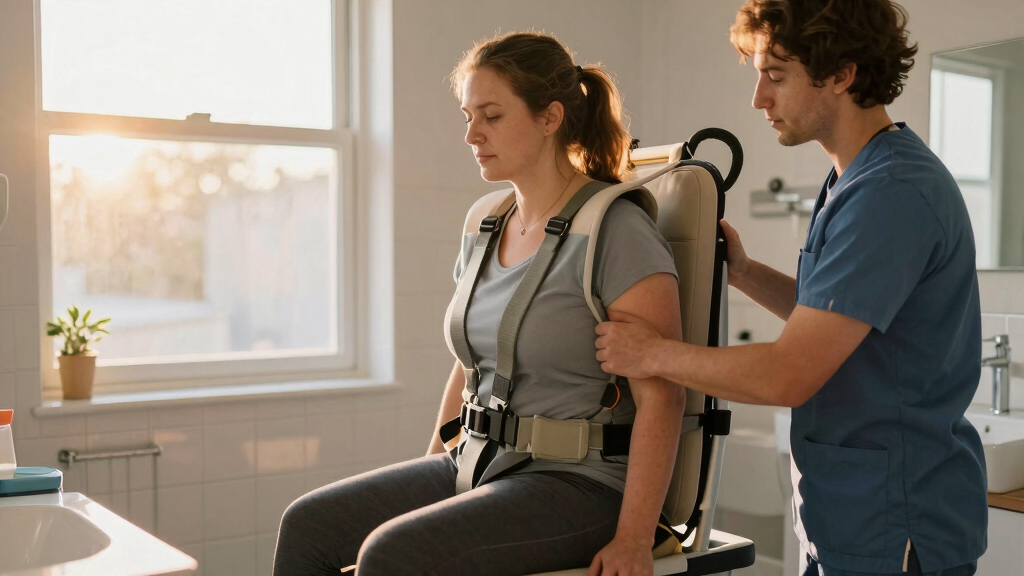

Choosing the best patient lift for bariatric home care involves balancing capacity, ease of use, safety features, and price. The Vive Electric Patient Lift stands out for its portability and straightforward operation, making it ideal for most home settings. The ProHeal Bariatric Full Body Transfer Lift offers a higher weight capacity and durable construction for more intensive needs. However, tradeoffs include higher costs or larger size for some models. Continue reading to see a detailed breakdown of the top options and what makes each suitable for different caregivers and patients.
Key Takeaways
- Capacity is a primary differentiator; models range from 340 lbs to 600 lbs, affecting suitability for different patients.
- Electric lifts generally offer easier operation but tend to be more expensive and require power sources, unlike hydraulic options.
- User-friendliness and safety features, such as padded slings and secure locking mechanisms, are crucial for confidence and safety.
- Portability varies greatly, with lightweight, foldable models suited for home use, while more robust lifts provide greater stability for heavier patients.
- Price often correlates with capacity, features, and build quality—investing in a reliable lift can reduce risks and improve care quality.


More Details on Our Top Picks
Patient Hydraulic Body Hoyer Lift with Medium Sling, 400 lbs Capacity, Unfoldable Manual
This hydraulic lift stands out for its robust 400-pound capacity and adjustable, foldable design, making it highly adaptable for various indoor transfer scenarios. Compared to the Joerns Hoyer Advance, which is lighter and more portable, this model offers greater stability and capacity but at a heavier weight—99 lbs—potentially requiring assistance to move. Its easy-to-assemble, battery-powered operation simplifies caregiver effort, especially in wet or dry environments, making it ideal for home use where versatility matters. The manual foldability aids storage, but the weight and assembly process might be less appealing for caregivers who need quick setup or minimal lifting effort. This pick makes the most sense for families seeking a durable, indoor-only lift with adjustable height and high capacity.
Pros:- Supports up to 400 lbs for versatile patient handling
- Adjustable height and foldable design for easy storage
- Includes premium transfer slings for safety and comfort
- Battery-powered operation reduces caregiver effort
Cons:- Heavier at 99 lbs, may need assistance to move
- Manual assembly can be time-consuming
- Limited to indoor environments due to weight and size
Best for: Caregivers and families needing a sturdy, indoor lift with adjustable height and high weight capacity.
Not ideal for: Users who require a lightweight, portable lift for frequent transport or outdoor use, since this model is heavy and less mobile.
- Maximum Load Capacity:400 lbs
- Lift Range:33 to 68 inches
- Maximum Fork Range:32 inches
- Net Weight:99 lbs
- Material:Polyester sling
- Power Source:Battery-powered
Bottom line: This lift suits families prioritizing durability and capacity for indoor use, despite its heavier weight and assembly requirements.
Patient Aid Padded U-Sling with Head Support – Soft Polyester Fabric – Safe Lifting for Elderly and Bariatric Patients – Extra Large, 600lb Capacity
This padded U-sling offers a generous 600-pound capacity, making it an excellent choice for bariatric patients who need secure, comfortable lifting. Its soft polyester fabric minimizes chafing and slipping, which is a step up from the mesh materials of the Vive Sling with Opening. Unlike the Electric Patient Lift for Home, which provides electric assistance, this sling is designed for manual or compatible electric lifts, adding flexibility but requiring compatible equipment. Its reinforced straps allow quick repositioning, benefiting caregivers who prioritize ease of use, though the sling’s weight and size may not suit smaller patients or those with specific height needs. It’s best for users wanting an affordable, high-capacity sling that’s comfortable and compatible with many lift systems.
Pros:- Supports up to 600 lbs for bariatric comfort and security
- Soft polyester fabric prevents chafing and sliding
- Reinforced straps enable quick repositioning
- Compatible with major lift brands
Cons:- Designed for specific height and weight ranges, limiting versatility
- Requires compatible lift systems for use
- Limited transfer applications, not suitable for other patient care needs
Best for: Bariatric patients and caregivers seeking a high-capacity, comfortable sling compatible with various lifts.
Not ideal for: Smaller or shorter patients who may find the extra-large size too cumbersome or for caregivers with incompatible lift systems.
- Material:Polyester fabric
- Maximum Capacity:600 lbs
- Size:Extra Large
- Supports:Head and neck support
- Compatibility:Fits 2-, 4-, and 6-point spreader bars
Bottom line: This sling offers excellent capacity and comfort for bariatric transfers, best suited for users with compatible lifts and larger patients.
Vive Electric Patient Lift for Home – Transfer Assist Device – Medical Transport Aid – Portable Lifter for Elderly, Bariatric, Handicap, Men & Women
The Vive Electric Patient Lift emphasizes ease of use with electric lifting, making transfers safer and less strenuous than manual options like the Patient Hydraulic Body Hoyer Lift. Its adjustable height and sturdy steel frame support up to 400 pounds, providing reliable, smooth lifts—ideal for caregivers who prioritize automation. Compared with manual lifts, this model’s powered operation reduces physical strain but requires access to an electrical outlet, which might limit placement options. Its bulkier profile needs adequate space for storage, and the higher price point might deter budget-conscious users. This lift is best for those who want a dependable electric system for frequent transfers in a dedicated home environment, accepting the need for space and power.
Pros:- Electric operation provides smooth, effortless transfers
- Adjustable height and sturdy steel frame support up to 400 lbs
- Removable rechargeable battery for convenience
- Includes a 2-year frame warranty
Cons:- Requires electrical power for operation
- Bulkier design may need extra storage space
- Higher cost compared to manual lifts
Best for: Home caregivers prioritizing electric-assisted transfers with high reliability and safety features.
Not ideal for: Caregivers with limited space or those seeking a lightweight, portable lift for occasional use or outdoor environments.
- Maximum Weight Capacity:400 pounds
- Lift Height Range:31″ to 68″
- Frame Material:Steel
- Battery Type:Removable rechargeable
- Warranty:2 years on frame
Bottom line: Ideal for users who want dependable electric transfers at home, provided space and power are available.
Electric Patient Lift with Sling – 400 lbs Capacity for Home and Healthcare Use
This electric lift combines space-efficient design with reliable capacity, supporting up to 400 pounds with a breathable polyester sling for patient comfort. Its adjustable base and safety features, like emergency descent and locking rear wheels, make it a solid choice for home environments needing dependable, easy-to-maneuver equipment. Compared to the Vive Electric Patient Lift, this model may be less bulky but still offers similar safety and performance features, though it still requires a power outlet. The space-saving design is perfect for smaller rooms but might be less suited for users needing maximum height adjustability or those who prefer a fully portable lift. This is a strong choice for caregivers seeking a compact, reliable electric lift for indoor use.
Pros:- Supports up to 400 lbs for reliable patient transfer
- Breathable sling enhances patient comfort and hygiene
- Space-saving, adjustable base fits through standard doorways
- Includes safety features like emergency descent and locking wheels
Cons:- Requires access to power outlet for operation
- Heavy to move without assistance
- Limited to indoor environments
Best for: Home users with limited space who need a reliable, easy-to-transport electric lift for indoor transfers.
Not ideal for: Caregivers who need outdoor or highly portable lifts, as this model is designed primarily for indoor use and requires power access.
- Capacity:400 lbs
- Operation:Plug-in
- Power Cord Length:10 ft
- Material:Reinforced alloy steel
- Sling Material:Breathable polyester
Bottom line: Best suited for space-constrained indoor settings where dependable electric operation is needed.
Vive Patient Lift Sling with Opening (400lb Capacity) – Mesh Support for Transfer and Repositioning
The Vive Mesh Lift Sling provides a breathable, water-resistant support system for patients up to 400 pounds, ideal for transfers and repositioning. Its mesh material promotes airflow, reducing discomfort and skin issues compared to polyester slings. Multiple handles and reinforced sling points enhance safety and ease of use, especially with most floor lift models, including the ProHeal Lift. Unlike electric lifts, this sling relies on manual or compatible lifts, making it a cost-effective option for caregivers who already own or prefer manual equipment. Its limited size details may pose challenges for very tall or short patients, and additional accessories might be required for certain transfer needs. This sling excels for users prioritizing hygiene, comfort, and versatility with most existing lifts.
Pros:- Supports up to 400 lbs for bariatric and elderly patients
- Breathable, water-resistant mesh improves comfort and hygiene
- Multiple handles and reinforced points enhance safety
- Compatible with most floor lift models
Cons:- Limited information on exact dimensions
- Color options not specified
- May need additional accessories for full transfer needs
Best for: Caregivers needing a breathable, water-resistant sling compatible with most floor lift models for repositioning or toileting.
Not ideal for: Smaller patients or those requiring a tailored fit, or users seeking a full transfer system rather than just a sling.
- Capacity:400 lbs
- Material:Mesh
- Machine Washable:Yes
- Supports:Most floor lift models
Bottom line: This mesh sling offers comfort and versatility for repositioning and toileting, especially for users who prioritize hygiene and airflow.
ProHeal Sit-to-Stand Lift – Bariatric Full Body Patient Transfer Lifter with Long-Lasting Battery and 600 lb Capacity
The ProHeal Sit-to-Stand Lift stands out as the most comprehensive option for bariatric patients needing frequent or long-term transfers. Its high 600-pound capacity and durable build make it ideal for both home and facility environments. Unlike the Bestcare PL400H, which is limited to 400 lbs, this model offers greater capacity, though it may be heavier to handle. The four sling hooks provide versatile support, but the lack of detailed instructions and its weight could pose challenges for less experienced caregivers. The long-lasting battery ensures fewer interruptions during transfers, adding to its reliability. However, the weight and potential need for training mean it’s best suited to skilled users or facilities with trained staff.
Pros:- Exceptional 600 lb capacity for bariatric patients
- Durable construction designed for long-term use
- Versatile with four sling hooks for different transfer styles
Cons:- Heavy and potentially cumbersome for some users
- Lack of detailed operation instructions
Best for: Families or facilities requiring high-capacity, durable lifts for frequent use
Not ideal for: Caregivers with limited strength or those seeking a lightweight, easy-to-maneuver lift
- Weight Capacity:600 pounds
- Battery:Long-lasting
- Number of Sling Hooks:4
- Use:Home and facilities
Bottom line: This lift is best for experienced caregivers or facilities needing a high-capacity, reliable transfer solution.
ProHeal Patient Lift – Bariatric Full Body Transfer Lifter for Home and Facilities – 600 lbs Capacity
The ProHeal Patient Lift is tailored for those seeking a straightforward, reliable bariatric lift that can handle up to 600 lbs. Its compact design makes it easier to maneuver in tight spaces, a clear advantage over bulkier models like the Bestcare PL400H. The six-point spreader bar enhances sling versatility, though the package’s missing screws and the need for an extra battery can complicate setup and operation. Its sturdy welded frame and simple assembly make it suitable for caregivers without professional training, but the lack of detailed instructions might frustrate new users. Overall, it offers a balance of capacity and user-friendliness for smaller-scale environments.
Pros:- Compact and easy to maneuver in small rooms
- Supports up to 600 lbs with a sturdy welded frame
- Compatible with various slings for versatile transfers
Cons:- Missing screws in the package, complicating assembly
- Optional extra battery needed for continuous operation
Best for: Home caregivers or small facilities needing a straightforward, high-capacity lift
Not ideal for: Caregivers seeking a lift with advanced electronic features or detailed assembly guidance
- Weight Capacity:600 lbs
- Number of Points:6 point spreader bar
- Suitable For:Home, nursing homes, medical facilities
- Assembly:Easy, no expertise needed
- Warranty:3 years on the frame
Bottom line: This lift is well-suited for users prioritizing simplicity and space-saving design without sacrificing capacity.
Bestcare PL400H Hydraulic Patient Lift with 400 lb Capacity
The Bestcare PL400H offers a practical solution for those who need a reliable lift but don’t require the higher capacity of models like the ProHeal Sit-to-Stand. Supporting up to 400 lbs, it’s a good choice for lighter bariatric patients or those on a budget. Its six-point spreader bar increases transfer versatility compared to models with fewer points, and the manual operation with locking brakes provides straightforward control. While assembly is tool-free, the absence of included batteries or digital scales means additional purchases are necessary for full functionality. Compared to electric lifts like the Joerns Hoyer Advance, this model requires more manual effort but remains suitable for home use where power sources may be limited.
Pros:- Supports up to 400 lbs, suitable for moderate bariatric patients
- Versatile six-point spreader bar for different sling options
- Tool-free assembly for quick setup
Cons:- Manual operation may require more effort
- No included battery or digital scale by default
Best for: Budget-conscious caregivers or small clinics needing dependable manual lifts
Not ideal for: Heavy-use environments or caregivers seeking electric operation for ease
- Weight Capacity:400 lbs
- Spreader Bar:Six-point
- Base Type:Manual with locking brakes
- Caster Diameter:4 inches
- Assembly:Tool-free
- Materials:Powder-coated steel
Bottom line: This lift is an economical yet effective choice for users needing reliable manual operation within moderate weight limits.
Joerns Hoyer Advance Portable Patient Lift – Electric, Lightweight, 340 lbs Capacity
The Joerns Hoyer Advance stands out for its lightweight portability and electric operation, making it ideal for home users or caregivers who need a lift that’s easy to store and transport. Its 340 lb capacity limits its use to smaller bariatric or senior patients, but the electric power and foldable design make transfers smoother and less strenuous for caregivers compared to manual lifts like the Bestcare PL400H. However, it requires specific slings not included in the package, and its price may be higher relative to weight capacity. For those prioritizing ease of use and transportability in a compact form, this model offers a compelling mix of features, despite its somewhat limited weight capacity.
Pros:- Lightweight at under 70 lbs for easy transport
- Electric operation simplifies transfers
- Foldable design for compact storage and travel
Cons:- Limited to 340 lbs capacity, not suitable for very heavy patients
- Requires specific slings, which may add to cost
Best for: Caregivers needing a portable, electric lift for smaller bariatric patients or elderly users
Not ideal for: Heavyweight bariatric users or those needing a lift with higher weight capacities
- Weight Capacity:340 lbs
- Weight:69.9 lbs
- Foldable:Yes
- Power:Electric
Bottom line: This lift is perfect for users valuing portability and electric operation for lighter patients, though it’s not suited for very heavy bariatric needs.

How We Picked
To determine the best patient lifts for bariatric home care, I evaluated each product based on weight capacity, ease of use, build quality, safety features, and portability. Durability and reliability in demanding home environments were also key factors. I prioritized models that balance performance with affordability, considering how intuitive they are for caregivers and their compatibility with common home setups. The ranking reflects a combination of these factors, aiming to recommend options suitable for various needs and budgets, from basic models to premium solutions.Factors to Consider When Choosing Best Patient Lifts For Bariatric Home Care
Selecting the right bariatric patient lift involves understanding several critical factors. Beyond capacity, you should consider ease of operation, safety features, portability, and maintenance requirements. Recognizing the differences between hydraulic and electric models can help you choose a lift that fits your comfort level and home environment. It’s also wise to evaluate the type of sling support, as comfort and security directly impact patient safety. Balancing these factors ensures a lift that reliably supports both caregiver and patient needs while fitting within your budget.Capacity and Weight Limits
The most obvious feature to consider is the lift’s maximum weight capacity. Bariatric lifts typically start at around 400 lbs and go up to 600 lbs or more, depending on the model. Choosing a lift with an appropriate capacity ensures safety and reduces the risk of equipment failure. Overestimating capacity can lead to unnecessary expense, but undersizing can compromise safety. Think about the patient’s current weight and potential future needs when selecting capacity to avoid needing a replacement soon after purchase.Ease of Use and Safety Features
A lift that is simple to operate minimizes caregiver fatigue and reduces the chance of errors. Electric lifts with intuitive controls and emergency stop features are preferable for frequent use. Look for safety features like secure locking mechanisms, padded slings, and stable bases. These elements help prevent accidents during transfers. Remember, a complicated lift may deter regular use or create hazards, so prioritize models that balance functionality with user-friendliness.Portability and Storage
Depending on your home setup, portability can be a major factor. Lightweight, foldable, or compact lifts are easier to store and transport between rooms. Heavier, more stable models often offer better support for higher weights but can be cumbersome to maneuver. Consider your physical space and caregiver strength when choosing a lift. A model that’s too bulky might be impractical, while one that’s too lightweight might sacrifice stability for larger patients.Maintenance and Durability
Patient lifts are long-term investments that should withstand regular use. Hydraulic models require periodic oil checks and may be messier, whereas electric lifts need battery maintenance and charging. Materials like stainless steel or high-grade plastics improve longevity. Think about the availability of replacement parts and customer support in your decision. Proper maintenance can extend the life of your lift, but choosing a model with simple upkeep reduces ongoing hassle.Cost and Value
While price varies widely, investing in a reliable lift can prevent costly accidents or replacements later. Cheaper models may save money upfront but often lack durability or safety features. Conversely, premium options with advanced features and higher capacities tend to last longer and provide greater peace of mind. Balance your budget with the expected frequency of use and required features to ensure you get a lift that offers good value over time.Frequently Asked Questions
How do I know if a patient lift has enough capacity for my bariatric patient?
To determine if a lift meets your needs, check the maximum weight capacity listed by the manufacturer. It’s best to select a model that exceeds your patient’s current weight by at least 10-15% to account for future weight gain or potential additional equipment. Ensuring the lift’s capacity is well above the patient’s weight reduces the risk of equipment failure and enhances safety during transfers. Always confirm that the sling supports and other accessories are rated for the same or higher weight limits.
Are electric lifts easier to operate than hydraulic models?
Generally, electric lifts are designed for easier operation, especially for caregivers who may have limited strength. They often feature push-button controls and smooth lifting motions, reducing physical effort. Hydraulic models, while simpler mechanically, require manual pumping or crank operation, which can be more tiring and less precise. However, electric lifts depend on batteries or power sources, meaning they require charging and maintenance. Consider your comfort with technology and your environment when choosing between the two types.
What safety features should I look for in a bariatric patient lift?
Key safety features include secure locking mechanisms for wheels or base, emergency stop buttons, and padded slings for comfort and security. Additionally, look for models with alarms or indicators that warn if the lift is not properly balanced or if the battery is low. An adjustable base and wide footprint provide stability, while sturdy, corrosion-resistant materials ensure durability. Safety features are essential for preventing accidents during transfers and for giving caregivers confidence in the equipment.
How important is portability for a home bariatric lift?
Portability is often a significant factor in home settings, especially if transfers need to happen in multiple rooms. Lightweight, foldable, or compact lifts save space and make storage easier, particularly in homes with limited room. Heavier, more stable lifts tend to be less portable but offer increased support for larger patients. Consider your home layout, caregiver strength, and how often you need to move the lift when evaluating portability options. A well-chosen portable lift balances ease of movement with stability and support.
Should I prioritize a higher weight capacity even if my patient is lighter?
Choosing a lift with a higher weight capacity than your patient’s current weight provides a safety margin and accommodates potential weight changes. It also ensures the lift’s components aren’t strained during use, which can extend its lifespan. While higher capacity models tend to be more expensive, they often offer better stability and durability. If your budget allows, selecting a lift with a capacity at least 25-50% above your patient’s weight can provide peace of mind and greater safety during transfers.
Conclusion
For most caregivers seeking a dependable, easy-to-use option, the Vive Electric Patient Lift offers a balanced mix of safety, portability, and affordability—making it the best overall pick. Those with higher weight needs or seeking maximum durability should consider the ProHeal Bariatric Full Body Transfer Lift, which provides superior capacity and robustness. Budget-conscious buyers or those new to lifts might find the Joerns Hoyer Advance Portable Lift a suitable entry point due to its lightweight design and straightforward operation. For facilities or heavy-duty needs, investing in premium models like the Bestcare PL400H guarantees long-term reliability and support for larger patients. Ultimately, matching the lift to your specific situation—considering capacity, ease of use, and environment—guides the best choice for safe, effective home care.