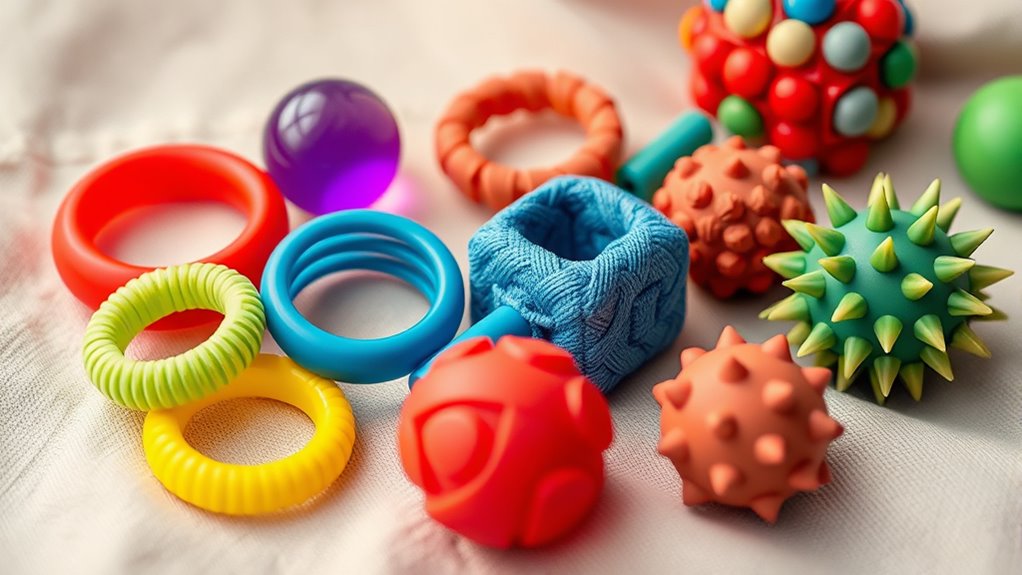

If you’re looking for the best fidget toys to help dementia patients stay calm and engaged, I recommend trying sensory-focused options like fidget blankets, boards, sensory balls, and wrist cuffs. These toys are designed with soft materials and varied textures to stimulate tactile senses, reduce anxiety, and promote relaxation. They’re portable, easy to use, and safe, making them perfect for daily routines. Keep exploring, and you’ll find even more ways to support their comfort and well-being.
Key Takeaways
- Choose tactile toys like fidget blankets, boards, and sensory balls made from soft, durable, and non-toxic materials for calming engagement.
- Opt for portable, wearable options such as wrist cuffs or finger fidgets to promote constant sensory stimulation.
- Select simple, intuitive designs with large, easy-to-grip components to support independence and ease of use.
- Prioritize safety features like smooth edges, secure parts, and supervision to prevent choking or breakage risks.
- Incorporate multi-sensory toys that evoke memories, reduce anxiety, and promote relaxation through diverse textures and sounds.
Fidget Boards for Adults with Dementia
Fidget boards for adults with dementia are an excellent choice for those seeking a safe, engaging way to manage stress and improve focus. These expertly crafted, high-quality boards feature a variety of sensory elements that stimulate touch, keep hands busy, and promote mental engagement. Their durable design guarantees they last and remain safe for seniors to use daily. Many users find them helpful in reducing anxiety and providing comfort. Whether for relaxation or gentle exercise of the mind, these boards serve as a therapeutic tool that offers both entertainment and calming benefits, making them a valuable addition to dementia care.
Best For: adults with dementia or Alzheimer’s seeking a safe, sensory-stimulating activity to reduce stress and enhance mental engagement.
Pros:
- Provides tactile stimulation to soothe anxiety and improve mood
- Durable construction ensures long-lasting safe use for seniors
- Helps exercise the mind and develop small daily life skills
Cons:
- May require supervision for individuals with severe cognitive impairments
- Some users might find certain sensory elements less engaging over time
- Not a replacement for comprehensive therapeutic or medical treatments
Fidget Ball for Alzheimer Dementia Patients and Anxiety Relief
For individuals with Alzheimer’s dementia who experience anxiety and agitation, a soft, easy-to-grip sensory ball can provide immediate comfort. These fidget balls reduce stress, promote calmness, and help manage behavioral challenges. Made from gentle, skin-friendly yarn crochet, they’re durable enough for frequent squeezing. Their small, lightweight size makes them easy to carry, providing soothing sensory input whenever needed. Whether at home or on the go, these balls help keep hands occupied, reduce loneliness, and create a calming effect. Their versatility makes them an essential tool for easing anxiety and enhancing focus in daily life.
Best For: individuals with Alzheimer’s dementia, autism, ADHD, OCD, or sensory needs seeking a calming, durable, and portable stress relief tool.
Pros:
- Effectively reduces stress, anxiety, and agitation for various sensory and behavioral challenges
- Made from soft, skin-friendly yarn crochet providing safe and gentle stimulation
- Compact, lightweight, and easy to grip, making it suitable for portability and use by those with limited hand strength
Cons:
- May wear out over time with frequent squeezing despite its durability
- Not suitable for children under a certain age due to small size and potential choking hazard if not supervised
- Limited color options or designs, which might not appeal to all individuals’ preferences
Fidget Blanket for Adults and Seniors with Dementia
Designed specifically to calm and engage adults with dementia, this fidget blanket offers a variety of sensory activities that help reduce anxiety and agitation. It features 13 stimulating items, such as textured fabrics, buttons, zippers, and small games, all designed to keep hands busy and promote relaxation. Measuring approximately 22 x 28cm folded and 45 x 28cm unfolded, it’s portable with handles for easy use anywhere. This versatile tool not only eases nervousness but also enhances fine motor skills and sensory development. Perfect for seniors in care homes or at home, it’s a thoughtful gift that encourages calmness and mental engagement.
Best For: adults and seniors with dementia, Alzheimer’s, autism, or sensory needs seeking a calming, engaging activity to reduce anxiety and improve motor skills.
Pros:
- Contains 13 sensory items to promote relaxation and sensory stimulation
- Portable with handles for easy use anywhere, including care homes or travel
- Supports fine motor skills and mental engagement, suitable for various age groups
Cons:
- May require supervision for very active or curious individuals to prevent choking hazards
- Limited to sensory activities; may not substitute for comprehensive care or therapy
- Fabric and components may require regular cleaning to maintain hygiene
Sensory Toys for Alzheimer Patients for Therapy and Anxiety Relief
Sensory toys, such as fidget wrist cuffs, are an excellent choice for individuals with Alzheimer’s or other cognitive impairments because they provide calming stimulation that can reduce anxiety and agitation. These lightweight, portable devices keep hands busy with colorful buttons, sequins, ribbons, and beads, promoting nerve stimulation and physical activity. Designed for easy wear, they help soothe restless minds and improve social behavior. Made with durable materials, they’re safe and suitable for therapy, offering comfort and sensory engagement. Regular use can ease anxiety and support emotional well-being, making them valuable tools for caregivers and loved ones alike.
Best For: individuals with Alzheimer’s, dementia, autism, ADHD, or OCD seeking calming, sensory engagement and anxiety relief through easy-to-wear, safe therapeutic tools.
Pros:
- Lightweight and portable, easy to wear around wrist or arm for convenient use anywhere.
- Features durable, colorful accessories like buttons, sequins, ribbons, and beads that stimulate nerve receptors and promote physical activity.
- Designed with safety in mind, sewn with strong nylon thread to prevent hazards and ensure long-lasting use.
Cons:
- May require supervision for very restless individuals to prevent pulling or twisting of accessories.
- Limited to sensory engagement, so may not address underlying medical or behavioral issues.
- As a wearable device, it might be less effective for users with severe cognitive impairments who cannot operate or benefit from the toy.
Fidget Sensory Dog Blanket for Seniors and Dementia Patients
The Fidget Sensory Dog Blanket stands out as an ideal comfort tool for seniors and individuals with cognitive impairments, thanks to its engaging tactile accessories. It features items like laces, zippers, tassels, sequins, and sound elements that keep restless hands occupied and stimulate the senses. Designed with enlarged embroidery edging and detachable accessories, it offers enhanced tactile engagement, especially for those with weak tactile nerves. This soft, sensory-rich blanket helps relieve stress, soothe anxiety, and promote feelings of safety and comfort. It’s a practical, therapeutic tool that supports emotional well-being and mental stimulation for seniors, dementia patients, and others with cognitive challenges.
Best For: seniors, dementia and Alzheimer’s patients, individuals with autism, stroke survivors, ADHD, and those experiencing anxiety who benefit from sensory engagement and comfort.
Pros:
- Provides engaging tactile accessories like zippers, tassels, and sequins that stimulate the senses.
- Enlarged embroidery edging and detachable accessories enhance tactile stimulation, especially for weak tactile nerves.
- Soft, sensory-rich material offers comfort, helps relieve stress, and soothes anxiety effectively.
Cons:
- May require supervision to ensure detachable accessories are safe and securely attached.
- Some users might find certain sound elements or textures overwhelming if hypersensitive.
- Not suitable for individuals with severe tactile sensitivities or allergies to certain materials.
Sensory Toys for Alzheimer Patients
For caregivers seeking effective ways to soothe Alzheimer patients, sensory toys like fidget rings offer a practical solution. These lightweight, portable accessories engage fingertips with features like marble mazes, beads, and press toys, stimulating nerve receptors and promoting hand, finger, and brain activity. Designed to calm nervousness and reduce restlessness, they help improve social behavior and relaxation. Easy to wear and carry, they’re perfect for on-the-go use or as thoughtful gifts. Suitable for seniors with cognitive challenges, these toys provide sensory engagement that can positively influence mood and focus, making daily routines calmer and more manageable for both caregivers and patients.
Best For: caregivers and family members seeking a portable, calming sensory tool to help manage anxiety and restlessness in seniors with Alzheimer’s or dementia.
Pros:
- Engages fingertips with diverse sensory features to stimulate nerve receptors and promote activity.
- Lightweight, portable, and easy to wear, ideal for on-the-go use or gifting.
- Helps reduce nervousness, improve relaxation, and positively influence social behavior.
Cons:
- Not suitable for children under 14 years old.
- May require supervision for users with severe cognitive impairments.
- Limited to sensory engagement; may not address underlying medical or behavioral issues.
SOFWO Fidget Blanket and Muff Dog for Adults
If you’re caring for adults with dementia or Alzheimer’s, the SOFWO Fidget Blanket and Muff Dog offer an effective way to soothe and engage restless hands. These tools provide sensory activities that stimulate fingertips, fingers, hands, joints, and the brain, helping to relax and calm individuals. The detachable fidget blanket is easy to share and store, making it ideal for care settings and homes. Made with soft, hand-sewn materials, they’re durable and safe for daily use. These items support mental and emotional well-being, reduce agitation, and encourage social interaction, making them valuable additions to any caregiving routine.
Best For: adults with dementia, Alzheimer’s, autism, Asperger’s, ADHD, or anxiety seeking sensory stimulation and calming activities.
Pros:
- Stimulates fingertips, hands, joints, and brain to promote relaxation and reduce agitation
- Detachable fidget blanket makes it easy to share, store, and use in care settings
- Soft, hand-sewn accessories ensure durability, safety, and comfort for daily use
Cons:
- Hand wash recommended, which may be less convenient for some users
- Accessories sewn securely but may still require careful handling to prevent breakage
- Limited to sensory activities, so may need to be combined with other therapeutic tools for comprehensive care
Fidget Blanket and Muff Dog for Adults with Dementia
Designed specifically for seniors with dementia or other sensory needs, the Fidget Blanket and Muff Dog offer a calming, tactile experience that helps keep restless hands engaged. The detachable fidget blanket provides sensory stimulation and anxiety relief, supporting those with memory loss, dementia, Alzheimer’s, autism, and related conditions. It stimulates nerve receptors on fingertips and keeps fingers, hands, joints, and the brain active. Ideal for nursing homes, care facilities, or home use, this soft, textured muff helps patients feel secure. It’s a thoughtful gift that promotes mental engagement and comfort, with durable, hand-sewn accessories easy to clean and maintain.
Best For: seniors with dementia, Alzheimer’s, autism, or sensory needs seeking calming tactile engagement and anxiety relief.
Pros:
- Provides sensory stimulation and anxiety reduction through tactile engagement
- Durable, hand-sewn accessories for long-lasting use and easy cleaning
- Suitable for all dementia stages and various care environments
Cons:
- Requires careful hand washing and flat drying to maintain quality
- May be too stimulating for individuals with severe sensory sensitivities
- Not adjustable in size, which might limit fit for some users
Fidget Blanket for Adults with Dementia
A fidget blanket for adults with dementia offers a hands-on way to provide sensory stimulation and comfort. It features colorful activities and textured elements designed to meet sensory needs, helping to reduce boredom, confusion, and loneliness. By engaging the senses, it encourages focus and independence while supporting cognitive and motor skills. Its compact, foldable design makes it easy to carry and use anywhere—at home, in care facilities, or on the go. Made from soft, durable fabric, it’s built to withstand daily use and provide long-lasting comfort. This thoughtful tool can be a meaningful gift for loved ones, offering relaxation and engagement.
Best For: adults with dementia, autism, or related conditions seeking sensory engagement, comfort, and cognitive stimulation.
Pros:
- Promotes independence and focus through interactive sensory activities
- Compact and portable design for easy use at home or on the go
- Made from soft, durable fabric for long-lasting comfort and resilience
Cons:
- May require supervision for individuals with severe cognitive or motor impairments
- Limited size may not accommodate all hand sizes or preferences
- Some users might find certain textures or activities less engaging over time
Sensory Fidget Toys for Alzheimer’s and Dementia
Sensory fidget toys are an excellent choice for seniors with Alzheimer’s and dementia because they provide calming sensory stimulation that helps reduce anxiety and agitation. These toys engage nerve receptors on fingertips, keeping fingers, hands, joints, and the brain active. They often include features like marble mazes, resistance rings, squeeze peas, and elastic rings, all made with soothing colors and materials. Compact and lightweight, wearable fidget rings are especially convenient for daily use. Designed for various conditions, these toys help keep hands busy, promote relaxation, and improve social behavior. They’re thoughtful gifts that offer comfort and engagement for individuals facing cognitive challenges.
Best For: seniors with Alzheimer’s, dementia, autism, Asperger’s, ADHD, or anxiety who need calming sensory stimulation and a portable, easy-to-use fidget toy.
Pros:
- Provides calming sensory engagement to reduce anxiety and agitation
- Includes multiple features like marble mazes and resistance rings for varied stimulation
- Compact, lightweight, and wearable, making it easy to carry and use daily
Cons:
- Customer ratings are mixed, with some users desiring more durability or variety
- Limited color and design options may not appeal to all preferences
- Small components could pose a choking risk for very young children or those with severe cognitive impairments
Sensory Toys for Alzheimer Patients and Autism Therapy
For individuals with Alzheimer’s or autism who experience anxiety, restlessness, or sensory processing challenges, sensory toys serve as an effective calming tool. These toys, like fidget blankets and wrist cuffs, stimulate nerve receptors on fingertips, promoting nerve activity in fingers, hands, joints, and the brain. They are lightweight, easy to wear, and perfect for daily use, featuring colorful sequins, ribbons, beads, and push-fidgets to keep hands busy. Crafted with durable, strong nylon thread, they are safe and resistant to pulling. Simply wrapping them around the wrist provides immediate calming, making them ideal for on-the-go therapy and supporting social interaction and cognitive engagement.
Best For: individuals with Alzheimer’s, dementia, or autism experiencing anxiety, restlessness, or sensory processing challenges seeking calming and engaging tactile stimulation.
Pros:
- Effectively relieves anxiety, restlessness, and loneliness through calming tactile stimulation
- Lightweight, easy to wear, and suitable for daily use and on-the-go therapy
- Durable construction with sewn accessories minimizes choking hazards and ensures longevity
Cons:
- May require supervision for very active individuals to prevent excessive pulling or twisting
- Limited variety of textures and accessories might not suit all sensory preferences
- Some users might need time to adapt to the tactile stimulation for optimal calming effects
Sensory Toys for Alzheimer Patients Fidget Blanket for Adults
When caring for adults with dementia or Alzheimer’s, a fidget blanket offers a practical way to soothe anxiety and reduce restlessness. These sensory toys provide calming effects through engaging tactile activities that help ease feelings of loneliness and agitation. Designed to be lightweight, adjustable, and safe, the sensory wrist cuff features various textures like ribbons, buttons, sequins, and beads, offering diverse sensory input. Its durable construction with strong nylon buckles guarantees safety and longevity. Using these blankets keeps hands busy, stimulates the senses, and promotes relaxation, ultimately improving focus and emotional well-being for seniors and individuals with sensory needs.
Best For: seniors and adults with dementia, Alzheimer’s, autism, or sensory needs seeking a calming, engaging tactile experience.
Pros:
- Provides soothing sensory stimulation to reduce anxiety and restlessness
- Lightweight, adjustable design ensures comfort and ease of use
- Durable construction with strong nylon buckles for safety and longevity
Cons:
- May require supervision for individuals with severe cognitive impairments
- Some users might need assistance in adjusting the fit initially
- Limited to tactile engagement, may not address all behavioral needs
Fidget Board for Dementia Patients, Seniors, Autism, and ADHD
A Fidget Board stands out as an ideal tool for seniors, individuals with dementia, autism, or ADHD, because it combines multiple tactile and visual activities into one compact design. It offers diverse sensory stimulation—touch, sight, and sound—that helps promote calmness and relaxation. The 12-in-1 design features real-life materials to engage the mind, evoke memories, and improve cognitive skills. Its durable, handmade wooden construction guarantees long-lasting use, making it perfect for ongoing therapy or entertainment. Whether as a gift or personal aid, this versatile fidget board provides a meaningful way to reduce anxiety, ease boredom, and support mental well-being.
Best For: seniors, dementia and Alzheimer’s patients, individuals with autism or ADHD seeking sensory engagement and cognitive support.
Pros:
- Provides diverse tactile, visual, and auditory stimulation to promote relaxation and calmness.
- Handmade from durable, high-quality natural wood ensuring long-lasting use.
- 12-in-1 multifunctional design that evokes memories and enhances cognitive abilities.
Cons:
- May be too small or simplistic for individuals seeking more complex or advanced activities.
- Handmade natural wood materials could be relatively expensive compared to plastic alternatives.
- Requires supervision for younger or more curious users to prevent potential choking hazards with small parts.
Fidget Blanket for Adults with Dementia
The fidget blanket for adults with dementia is an ideal sensory tool designed to calm restless hands and reduce agitation. It offers a variety of tactile activities that stimulate nerve receptors on fingertips, helping to relax and engage users. Crafted for comfort and durability, it supports conditions like Alzheimer’s, dementia, autism, and anxiety. Its portable design makes it easy to share in care settings, providing reassurance and a sense of safety. The soft, sewn accessories encourage daily use, promoting relaxation and social interaction. Easy to clean and store, this blanket is a practical, comforting aid for seniors needing sensory engagement and calming comfort.
Best For: adults with dementia, Alzheimer’s, autism, or anxiety seeking sensory engagement and calming comfort in care or home settings.
Pros:
- Provides soothing tactile stimulation to help reduce agitation and promote relaxation.
- Portable and easy to share in care environments, facilitating social interaction.
- Durable and easy to clean, making it suitable for daily use with seniors.
Cons:
- May not contain a wide variety of sensory activities for all preferences.
- Limited to sensory engagement; not a substitute for medical or therapeutic treatment.
- Slightly heavier than some similar products, which could affect portability for some users.
Fidget Sensory Ball for Autism and Dementia Therapy Stress Relief
Fidget sensory balls are an excellent choice for individuals with dementia or autism who seek gentle, calming stimulation. These soft, skin-friendly crochet balls provide soothing tactile engagement that helps reduce anxiety and promote relaxation. They’re safe and gentle, offering secure stimulation without discomfort, making them suitable for sensitive users. Built from durable materials, they withstand frequent squeezing, ensuring long-lasting use. Their compact size and lightweight design make them easy to hold and squeeze with one hand, ideal for all users, including those with arthritis. Whether at home, in therapy, or on the go, sensory balls foster calmness and focus in various environments.
Best For: individuals with autism, dementia, or anxiety seeking gentle, calming tactile stimulation for stress relief and focus.
Pros:
- Soft, skin-friendly crochet material provides soothing tactile engagement.
- Durable construction withstands frequent squeezing and handling.
- Compact and lightweight design makes it easy to hold and squeeze with one hand.
Cons:
- May not provide enough stimulation for those needing more intense sensory input.
- Limited size may restrict use for users with larger hands.
- Does not include additional features like texture variations or sound elements.
Factors to Consider When Choosing Fidget Toys for Dementia Patients

When selecting fidget toys for dementia patients, I consider several key factors to guarantee safety and effectiveness. It’s important to look at durability, sensory features, and how easy the toy is to use, especially for those with limited dexterity. Size, portability, and comfort also play a role in choosing the right options for daily use.
Safety and Durability
Choosing safe and durable fidget toys for dementia patients is essential because these individuals often handle toys frequently and may have limited ability to avoid hazards. I look for toys made from non-toxic, BPA-free materials to prevent any health risks. Ensuring the construction is sturdy is crucial, so I check that parts are securely sewn or glued, reducing choking hazards. I prefer toys with smooth edges and surfaces to prevent cuts or skin irritation. Durability is key—high-quality materials that can withstand squeezing, pulling, or twisting without breaking are best. Finally, I choose simple designs without small, removable parts to minimize the risk of choking or ingestion. Safety and durability give both caregivers and patients peace of mind, making the fidget toys truly beneficial.
Sensory Engagement Features
In selecting fidget toys for dementia patients, prioritizing sensory engagement features can make a significant difference in their experience. Sensory stimulation involves engaging multiple senses like touch, sight, and sound, providing holistic input that can soothe and focus. Incorporating varied textures, vibrant colors, and gentle sounds enhances tactile and visual appeal, catering to individual preferences. Multi-sensory elements such as buttons, beads, tassels, and sound components boost engagement and may reduce agitation. Well-designed sensory features are safe, durable, and easy to manipulate, encouraging repeated use and sustained feedback. Combining different stimuli in one toy can promote relaxation, improve focus, and support emotional well-being. Ultimately, thoughtful sensory engagement helps make fidget toys more effective and enjoyable for dementia patients.
Ease of Use
Selecting fidget toys for dementia patients requires a focus on simplicity and ease of use to guarantee they can operate the toy comfortably and confidently. Toys with straightforward, intuitive designs that need minimal instruction are best, as they reduce frustration. Look for items with large, easy-to-grip components to accommodate limited hand strength or dexterity. Avoid complex mechanisms that might confuse or discourage users. Clear textures and distinguishable features help users identify and engage with the toy independently. Ease of use promotes confidence and promotes independence, allowing dementia patients to enjoy the calming and engaging benefits of the toy without frustration. Ultimately, a simple, user-friendly design ensures they can operate the toy comfortably, fostering a sense of control and accomplishment.
Size and Portability
When it comes to fidget toys for dementia patients, size and portability are crucial factors that can greatly impact their usability and convenience. I recommend choosing compact, lightweight toys that are easy to carry and handle, making them more accessible for daily use. Toys between 4 to 8 inches in diameter or length are ideal, as they’re manageable for individuals with limited strength or coordination. Features like clips, straps, or handles are helpful, allowing attachment to clothing, bags, or mobility aids, which enhances portability. The size should also support quick, effortless use to promote frequent engagement without frustration. Travel-friendly options that fit easily into pockets, purses, or caregiver bags ensure the toys are ready for use anywhere, encouraging constant comfort and stimulation.
Material Comfort
Choosing the right materials for fidget toys is essential because it directly affects comfort and safety for dementia patients. I look for toys made from soft, non-toxic materials that are gentle on sensitive skin and reduce irritation risks. Smooth edges and seams are vital to prevent discomfort or injury during use. Durability matters too—materials should resist tearing or fraying, so the toys stay comfortable through frequent handling. I also prioritize a variety of textures to stimulate tactile senses without overwhelming the patient. For those with allergies or skin sensitivities, hypoallergenic options are best, ensuring safety and comfort. Overall, selecting high-quality, thoughtfully made materials helps create fidget toys that are both soothing and safe for everyday use.
Therapeutic Benefits
Therapeutic benefits play a essential role in determining the most effective fidget toys for dementia patients, as these toys are designed to provide meaningful sensory stimulation that can soothe anxiety and agitation. When choosing toys, I look for those that activate nerve receptors in fingertips, hands, and joints, delivering tactile experiences that promote relaxation. Engaging textures and gentle movements can markedly improve mood, focus, and overall mental well-being. The design should support calming effects while encouraging light physical and cognitive activity, helping to keep the mind engaged without overwhelming. I’ve seen that regular use of such therapeutic toys can foster social interaction and reduce feelings of loneliness or restlessness, making them valuable tools for enhancing quality of life in individuals with cognitive impairments.
Age and Ability Suitability
Selecting the right fidget toys for dementia patients involves more than just picking something engaging; it requires careful attention to their age and ability levels. I focus on choosing toys that match their cognitive and motor skills to avoid frustration or safety risks. For example, younger or more physically able patients may handle more complex toys, while others need simpler designs that are easy to grasp and manipulate. It’s also important to consider sensory feedback—whether tactile, visual, or auditory—to meet their specific needs. Safety is vital, so I avoid toys with small parts that could cause choking or injury. Ultimately, I pick toys that align with their attention span, ensuring they’re engaging without being overwhelming or confusing.
Frequently Asked Questions
Are Fidget Toys Suitable for All Stages of Dementia?
Fidget toys can be suitable for many stages of dementia, but not all. I recommend choosing simple, safe toys for early stages to encourage engagement, while more tactile or familiar items work better in later stages. It is crucial to observe each person’s reactions and preferences, adjusting the toys accordingly. Overall, fidget toys can be a helpful tool for calming and stimulating, but individualized choices ensure they’re appropriate and beneficial.
How Do I Ensure Safety When Choosing Fidget Toys?
To guarantee safety when choosing fidget toys, I always check for non-toxic, hypoallergenic materials and avoid small parts that could be a choking hazard. I look for sturdy, well-made toys that won’t break easily and keep an eye on the patient during use to prevent any accidental injuries. Regularly inspecting toys for wear and tear is also key to maintaining safety and peace of mind.
Can Fidget Toys Help Reduce Agitation and Aggression?
Yes, fidget toys can help reduce agitation and aggression in dementia patients. I’ve seen firsthand how they provide a calming outlet, helping individuals focus and feel more in control. When patients engage with a suitable toy, it distracts from distressing feelings, easing their mood. Just confirm the toys are safe, non-toxic, and appropriate for their needs. They’re a simple but effective way to promote calmness and reduce behavioral issues.
What Materials Are Best for Sensory Fidget Toys?
They say, “You are what you touch,” and that’s true for sensory fidget toys. I find that materials like silicone, soft fabrics, and textured rubber are best because they’re gentle, durable, and safe for dementia patients. These materials provide soothing tactile feedback, helping calm agitation. I always recommend choosing non-toxic, washable options that are easy to handle, ensuring a safe and engaging experience for the user.
How Often Should Dementia Patients Use Fidget Toys for Maximum Benefit?
I recommend dementia patients use fidget toys multiple times a day, ideally during periods of rest, agitation, or boredom. Short, frequent sessions—about 10 to 15 minutes—help maximize calming effects and engagement without overwhelming them. I find that consistency is key, so incorporating fidget toys into daily routines guarantees they benefit from sensory stimulation while reducing stress and enhancing focus throughout the day.
Conclusion
Choosing the right fidget toys can truly transform a dementia patient’s day, turning chaos into calm with just a simple touch. These tools aren’t just toys—they’re lifelines that bring peace, focus, and joy when they need it most. Trust me, finding the perfect fidget toy is like discovering a magic wand that soothes even the most restless spirits. So, take your time, pick wisely, and watch as serenity unfolds right before your eyes.