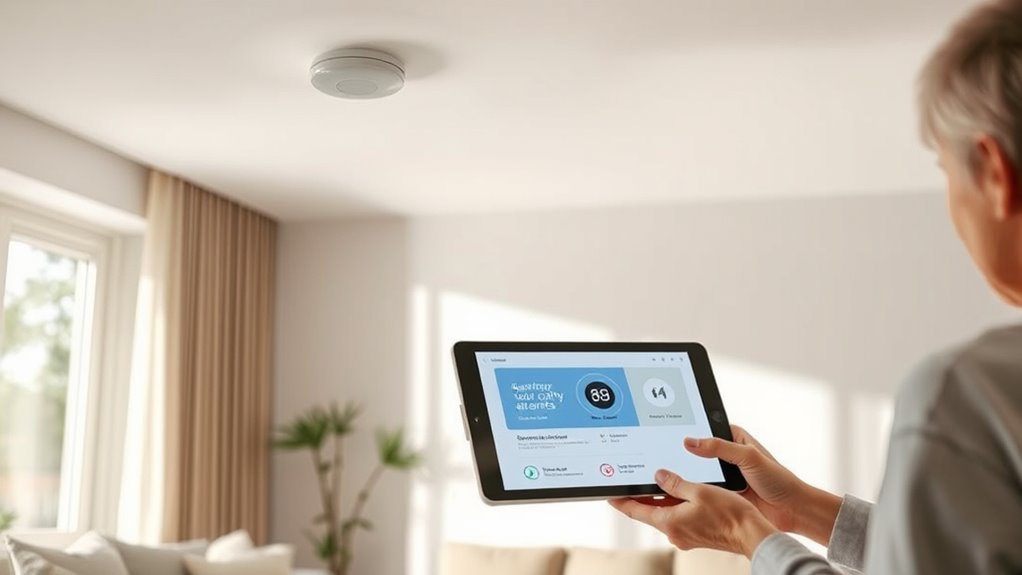

I’ve found that the best motion sensor alarms for dementia patients combine real-time alerts, long-range coverage, adjustable sensitivity, and multiple notification options. They’re designed to prevent falls, track wandering, and offer peace of mind by notifying caregivers instantly. These systems are flexible for indoor and outdoor use and support custom configurations. If you want to discover some top choices and how to find the right one, keep going—you’ll get helpful details here.
Key Takeaways
- Features like real-time alerts, adjustable detection ranges, and multiple notification modes ensure safety and peace of mind.
- Wireless setup with extended ranges up to 918 feet allows flexible indoor and outdoor monitoring.
- Customizable sensitivity and alert options reduce false alarms and cater to individual needs.
- Easy installation with tool-free mounting and rechargeable batteries support continuous, reliable operation.
- Compatibility with multiple sensors and pagers offers comprehensive coverage for dementia patient safety.
CallToU Wireless Motion Sensor Alarm System with 2 Sensors and Receiver
The CallToU Wireless Motion Sensor Alarm System is an excellent choice for caregivers seeking a reliable, easy-to-use solution for monitoring dementia patients indoors. It includes two sensors and a receiver, with a wireless range of up to 500 feet. The sensors detect motion within 33 feet and feature a 360° swivel mount, minimizing false alarms caused by sunlight or temperature changes. They can be placed under beds or near doors to monitor foot movement or prevent wandering. The system is pre-programmed, self-testing, and simple to set up, making it a practical and effective safety tool for home care.
Best For: caregivers and family members seeking a reliable, easy-to-install indoor safety system to monitor elderly or dementia patients and prevent wandering.
Pros:
- Wireless range of up to 500 feet allows flexible placement throughout the home
- 360° swivel sensors with adjustable detection range reduce false alarms from sunlight or temperature changes
- Easy setup with pre-programmed sensors and included batteries for immediate use
Cons:
- Limited to indoor use; not suitable for outdoor monitoring
- Requires batteries, which need replacement over time, possibly adding ongoing costs
- May have limited features compared to more advanced home automation or security systems
Bed Sensor Alarm and Fall Prevention for Elderly/Dementia
For caregivers seeking reliable fall prevention solutions, upgraded bed sensor alarms with motion sensors offer a proactive way to monitor elderly and dementia patients. These systems include wireless sensors placed under beds or at doorways within a 918-foot range, alerting caregivers before a fall occurs. Under-bed sensors detect when a patient’s foot touches the ground, while door sensors monitor exits. Unlike traditional pads, these sensors reduce false alarms caused by incontinence or displacement. The alarms feature LED indicators and sound alerts that don’t disturb the patient. With easy setup, dual power options, and reliable wireless transmission, they enhance safety and peace of mind for at-risk individuals.
Best For: caregivers and family members seeking an easy-to-use, reliable fall prevention system for elderly or dementia patients that minimizes false alarms and ensures safety.
Pros:
- Wireless sensors with a long 918ft open-area range for flexible placement
- Detects foot contact under the bed and monitors room exits to prevent falls
- Dual power options with batteries and Micro USB for versatile use
Cons:
- Requires initial testing of sensor range and direction before use
- Alarm sound does not sound inside the patient’s room, which might delay immediate alerts if caregivers aren’t nearby
- Setup may involve multiple components, which could be challenging for some users
Wireless Bed Alarms for Elderly Dementia Patients with Motion Sensor & Clip-On Caregiver Pager
Wireless bed alarms with motion sensors and clip-on caregiver pagers are ideal for families seeking reliable monitoring solutions for elderly dementia patients. These devices detect when a patient gets out of bed or approaches the room exit, alerting caregivers instantly. Infrared sensors focus on foot detection, reducing false alarms from incontinence or shifting. The caregiver pager displays sensor IDs and offers multiple alert modes, including vibration and LED flashes, with a range of up to 1,000 feet for whole-home coverage. Powered by batteries or USB-C, they’re easy to install and expand, providing a cost-effective, privacy-conscious way to enhance safety and respond quickly to emergencies.
Best For: families and caregivers seeking reliable, privacy-focused safety monitoring for elderly dementia patients at home or in care facilities.
Pros:
- No monthly fees or cloud storage, ensuring cost savings and privacy.
- Infrared motion sensors reduce false alarms from incontinence or shifting.
- Long-range wireless coverage up to 1,000 feet allows whole-home monitoring.
Cons:
- Requires battery replacements or USB-C power, which may need regular maintenance.
- Installation height and placement need to be optimized for accurate detection.
- Limited to motion detection; does not include audio/video monitoring or alerts.
Wireless Motion Sensor Door Chime with Multiple Tunes and Adjustable Volume
If you’re caring for someone with hearing impairments or cognitive challenges, this wireless motion sensor door chime is an excellent choice. It offers 32 unique ringtones, including alarms and doorbells, plus five adjustable volume levels from silent to 110dB. The flashing LED light provides visual alerts, helping those with hearing difficulties. Easy to install with plug-in receivers and battery-powered sensors, it detects movement up to 26 feet within a 110° range. With a wireless range of up to 500 feet and expandability to 20 sensors, it’s perfect for remote supervision, ensuring safety and peace of mind for caregivers and loved ones alike.
Best For: individuals caring for elderly or hearing-impaired family members who need remote alert systems for safety and supervision.
Pros:
- Offers 32 customizable ringtones, including alarms and doorbells, for versatile notifications
- Adjustable volume levels up to 110dB and a silent mode for personalized alert preferences
- Wireless range of up to 500 feet and expandability to 20 sensors for comprehensive coverage
Cons:
- Requires batteries (2 AAA for sensor) which need regular replacement
- Detection range is limited to 26 feet, which may not cover very large areas
- The system’s effectiveness depends on proper mounting and placement to avoid false alerts
Bed Alarm Caregiver Pager with Wireless Motion Sensors for Elderly Fall Prevention and Monitoring
The Bed Alarm Caregiver Pager with Wireless Motion Sensors is an excellent choice for families and caregivers seeking a reliable, non-intrusive way to monitor elderly loved ones and prevent falls. It includes two wireless motion sensors that can be placed in bedrooms, doorways, or on walls, with a portable pager that alerts caregivers silently or with loud sounds. The system offers flexible installation options, such as wall mounting or adhesive tape, and operates within a 500-foot range. Powered by 8 AA batteries, it’s ideal for small homes, care facilities, or any indoor setting, providing peace of mind and enhancing safety for seniors.
Best For: families, caregivers, and healthcare providers seeking a reliable, non-intrusive elderly fall prevention and monitoring system for indoor use.
Pros:
- Wireless motion sensors have a long 500-foot open-area range for versatile placement.
- Customizable audible alerts (DINGDONG or ALARM) to suit different monitoring needs.
- Easy installation options, including wall mounting or adhesive tape, and portable pager design for convenience.
Cons:
- Requires 8 AA batteries, which need regular replacement for continuous operation.
- Limited to indoor use; not suitable for outdoor environments.
- Operating temperature of 32°F may restrict placement in colder areas without proper insulation.
Newly Upgraded Bed Alarm System for Elderly Dementia Patients
Caregivers seeking reliable safety solutions for elderly dementia patients will find the newly upgraded bed alarm system to be a game-changer. This 2025 model features wireless fall detection and motion sensors that instantly alert you when your loved one exits the bed or room. It includes a sensor and receiver with a dual alert system—bright LED light and loud 110dB sound. Customizable options like 17 alarm tones, adjustable volume, and silent vibration make it suitable for day or night use. Quick to set up, it’s perfect for immediate deployment, providing peace of mind and enhanced safety with extended wireless range up to 918 feet.
Best For: caregivers and family members seeking a reliable, easy-to-use safety system to monitor elderly dementia patients at home.
Pros:
- Wireless fall detection and motion sensors provide real-time alerts for immediate response.
- Customizable alarm tones, volume, and silent vibration modes accommodate day and night needs.
- Extended wireless range of up to 918 feet allows flexible monitoring from anywhere in the home and yard.
Cons:
- Requires batteries or Micro USB charging, which may need regular maintenance.
- The initial setup, while quick, may still require careful placement of sensors for optimal detection.
- Customer ratings are good but not perfect, indicating some users may experience connectivity or alert issues.
Smart Caregiver Wireless Motion Sensor Alarm System with Pager
For those seeking a discreet and reliable way to monitor dementia patients, the Smart Caregiver Wireless Motion Sensor Alarm System with Pager offers an effective solution. It detects movement near beds or doorways and silently alerts caregivers via a pager within 300 feet, reducing disturbance. The system includes a mountable motion sensor and a portable pager, making it suitable for various locations. Powered by batteries, it’s easy to set up and use, providing peace of mind without loud alarms. With a range of up to 150 feet and a simple, standalone design, it helps prevent falls and wandering while giving caregivers flexibility and confidence in their monitoring.
Best For: caregivers and family members seeking a discreet, reliable way to monitor elderly or dementia patients for fall and wandering prevention within a 150-300 foot range.
Pros:
- Silent alerts via pager reduce disturbance to residents.
- Wireless design allows flexible placement near beds or doorways.
- Easy to set up with battery-powered operation and optional AC adapter.
Cons:
- Limited to standalone use; no integration with other Smart Caregiver products.
- Range maximum is 150 feet, which may be insufficient for larger properties.
- Batteries are sold separately, adding to initial setup costs.
Rechargeable Door & Bed Exit Alarm for Elderly Dementia Patients
Rechargeable door and bed exit alarms are essential tools for those caring for elderly dementia patients, especially since they eliminate the hassle of frequent battery replacements. These wireless devices feature intelligent infrared motion detection, accurately alerting caregivers when someone crosses into danger zones, like the doorway or bed exit area, without false alarms caused by shifting or turning. With a range of up to 918 feet, they’re suitable for large homes or care facilities. Easy to install, they come with rechargeable batteries that last long and include low battery alerts. Multiple alert modes—sound, flashing lights, and LED indicators—ensure caregivers respond promptly, enhancing safety and peace of mind.
Best For: caregivers of elderly, dementia patients, and sleepwalkers seeking reliable fall prevention and safety alerts in home or care facility settings.
Pros:
- Intelligent infrared motion detection minimizes false alarms caused by bed shifting or turning.
- Rechargeable batteries eliminate the need for frequent replacements, with low battery alerts for convenience.
- Multiple reminder modes, including sound, flashing lights, and LED indicators, provide customizable alerts for prompt caregiver response.
Cons:
- Requires 2 AA batteries (not included), which may be inconvenient for some users.
- The device’s size and weight (8.4 ounces) may require careful placement for optimal performance.
- The maximum wireless range of 918 feet might be limited in extremely large or outdoor areas without additional setup.
Bed Sensor Alarm and Fall Prevention System with Motion Detection and Adjustable Alerts
The Bed Sensor Alarm and Fall Prevention System with Motion Detection and Adjustable Alerts is an ideal choice for those seeking a reliable safety solution in large living spaces or care facilities. It uses wireless sensors, placed under beds, on floors, or near doors, to monitor when someone gets up or leaves the room. With a range of over 500 feet, it’s perfect for extensive areas. The system offers multiple alert options, including loud alarms, silent LED flashes, or vibrations, with adjustable melodies and volume levels. Compact and rechargeable, it’s easy to set up and customize, providing continuous, dependable fall prevention and safety monitoring.
Best For: individuals and caregivers in large homes, nursing facilities, or hospitals seeking reliable bed and room monitoring to prevent falls and ensure safety.
Pros:
- Extended wireless range of over 500 feet for large area coverage
- Multiple alert options including loud alarms, silent LED flashes, and vibrations for customizable alerts
- Rechargeable batteries with over 75 hours of operation, lightweight and portable design
Cons:
- May require proper placement and mounting for optimal detection accuracy
- Potential for false alarms if sensors are displaced or not correctly positioned
- Limited to wireless sensor setup, which may need initial configuration and testing
EverNary Bed Alarm for Elderly Dementia Patients
EverNary Bed Alarm stands out as an ideal choice for caregivers seeking discreet, reliable monitoring for elderly dementia patients. This portable wireless system offers bed alarms and fall prevention alerts, helping you oversee your loved one’s movements at home. It detects motion within 16.4 feet and a 110° angle, and can be mounted on walls, doorways, or floors for flexible placement. The system supports pairing multiple sensors and receivers, providing customizable coverage. The wireless pager is easy to carry, with adjustable volume up to 110dB and a range of 260 feet. Its discreet design guarantees safety without causing unnecessary disturbance.
Best For: caregivers and family members looking for a discreet, reliable, and customizable fall prevention monitoring system for elderly dementia patients at home.
Pros:
- Wireless and portable design allows for flexible placement and easy mobility for caregivers
- Supports pairing multiple sensors and pagers for comprehensive coverage tailored to individual needs
- Adjustable volume and range ensure discreet alerts without disturbing the patient or household
Cons:
- Battery dependence requires regular replacement or charging for consistent operation
- Setup may require some initial familiarization with pairing multiple devices
- Range limitations in enclosed or obstructed environments may reduce effectiveness
CallToU Wireless Bed Alarm for Elderly Adults with Motion Sensor and Fall Prevention System
For caregivers seeking a reliable way to monitor elderly loved ones, the CallToU Wireless Bed Alarm stands out as an excellent choice. This system uses a wireless motion sensor with a 33-foot detection range, adjustable angles, and 360° coverage to prevent false alarms. It can be placed under the bed or at doors, alerting caregivers when seniors try to get up or leave a room. The portable pager, with vibration and sound options, works within 500 feet, ensuring quick response. Its advanced wireless technology minimizes interference, making caregiving safer and less stressful, especially for those managing dementia or fall risks.
Best For: caregivers and families seeking a reliable, non-intrusive monitoring system to prevent falls and enhance safety for elderly loved ones, especially those with dementia or mobility issues.
Pros:
- Wireless motion sensor with a 33-foot detection range and 360° coverage minimizes false alarms.
- Portable pager with vibration and sound options provides quick alerts within a 500-foot range.
- Adjustable detection angle and placement flexibility under beds or at doors enhance versatility and ease of use.
Cons:
- The system may require initial setup and calibration for optimal performance.
- Battery replacement is necessary, which might be overlooked without proper monitoring.
- The alarm volume, while adjustable, may not be loud enough for very noisy environments.
WiFi Smart Bed Sensor Alarm and Fall Prevention for Elderly/Adults/Seniors
A WiFi Smart Bed Sensor Alarm is an excellent choice for caregivers seeking reliable fall prevention and monitoring for elderly or dementia patients, especially since it detects movement under the bed or on doorframes to alert you immediately. It sends alerts straight to your smartphone whenever movement is detected within its range, supporting quick responses. The system supports only 2.4GHz Wi-Fi and works up to 330 feet outdoors or 30-150 feet indoors, as long as the sensor and hub stay connected. Placed under the bed or on doorframes, it helps monitor when loved ones get up or leave a room, increasing safety and peace of mind.
Best For: families and caregivers seeking reliable, real-time fall prevention and activity monitoring for elderly, dementia patients, or children using Wi-Fi connectivity.
Pros:
- Supports immediate alerts sent to smartphones, enabling quick response.
- Expandable system allows multiple hubs and sensors for comprehensive coverage.
- Easy placement options under beds or on doorframes to monitor movement effectively.
Cons:
- Only compatible with 2.4GHz Wi-Fi networks, limiting connectivity options.
- Signal range indoors may vary between 30-150 feet depending on obstacles.
- Requires proper sensor placement for accurate detection and functioning.
Evernary Bed Alarm and Fall Prevention for Elderly Adults
Evernary Bed Alarm and Fall Prevention system stands out as an excellent choice for caregivers seeking reliable monitoring of elderly adults, especially those at high fall risk or with dementia. It features wireless motion detectors, a caregiver pager, and alarm alerts that activate when a senior gets out of bed or leaves the room. Sensors are adjustable and can be placed near beds or doorways, transmitting signals up to 918 feet in open areas. The system offers dual alerts—sound and LED light—and supports flexible mounting. Powered by batteries, it’s easy to install and customize, providing peace of mind knowing caregivers are promptly notified of movement or potential falls.
Best For: caregivers and family members seeking reliable, adjustable fall prevention and movement monitoring for elderly adults, especially those at high risk of falls or with dementia.
Pros:
- Wireless transmission range up to 918 feet in open areas allows flexible placement.
- Dual alert system with sound and LED light ensures prompt caregiver notification.
- Adjustable motion sensor with swivel mount reduces false alarms from environmental factors.
Cons:
- Range can be diminished by walls and metal objects, potentially limiting coverage.
- Requires six AAA alkaline batteries (included), which need replacement over time.
- Installation and testing of sensor placement are recommended to optimize performance, which may be time-consuming.
Upgraded Bed Sensor Alarm and Fall Prevention for Elderly/Dementia
The upgraded bed sensor alarm and fall prevention system stands out as an ideal choice for caregivers seeking reliable monitoring solutions for elderly or dementia patients. It includes a caregiver pager system that allows you to perform other tasks while receiving notifications when assistance is needed. The pager displays specific numbers to identify help requests and transmits wirelessly up to 800 feet in open areas. Sensors placed under beds or at doors monitor activity, triggering alarms if a patient is about to fall or leave the bed. With adjustable volume, melodies, silent modes, and easy setup, this system enhances safety and peace of mind for both caregivers and loved ones.
Best For: caregivers and family members seeking a reliable, customizable fall prevention and bed monitoring system for elderly or dementia patients to enhance safety and independence.
Pros:
- Wireless pager system with up to 800ft range allows caregivers to perform other duties while staying informed.
- Supports unlimited pairing of call buttons, enabling multiple caregiving points and flexible monitoring.
- Adjustable volume, melodies, silent modes, and vibration options cater to various needs and sensitivities.
Cons:
- Requires initial setup of sensors and pairing, which may be challenging for some users.
- Battery is nonstandard and included, potentially limiting replacement options.
- Only one review rated at 5 stars, indicating limited user feedback or testing in diverse environments.
Caregiver Wireless Door Alarm System for Elderly and Kids Safety
Caregiver Wireless Door Alarm Systems excel at safeguarding elderly individuals and children by providing reliable, immediate alerts when doors or windows are opened. These wireless systems include sensors and receivers with a detection range of up to 260 feet, offering customizable melodies and volume levels up to 110 dB. Visual LED indicators enhance accessibility, especially for hearing-impaired users. Easy to install with plug-and-play setup, the system is expandable—each receiver can pair with up to 20 sensors. It’s perfect for monitoring vulnerable loved ones, alerting caregivers instantly, and enhancing overall safety at home or in the workplace.
Best For: families and caregivers seeking a reliable, easy-to-install wireless door alarm system to monitor elderly loved ones, children, or vulnerable individuals for enhanced safety.
Pros:
- Easy plug-and-play installation with adhesive sensors and standard outlets
- Expandable system supporting up to 20 sensors per receiver for comprehensive coverage
- Multiple melodies and adjustable volume levels up to 110 dB to suit different needs and environments
Cons:
- Limited detection range of 260 feet may not cover very large properties
- Battery replacement required every so often, which could be inconvenient
- Some users may find the extensive customization options complex to set up initially
Factors to Consider When Choosing Motion Sensor Alarms for Dementia Patients
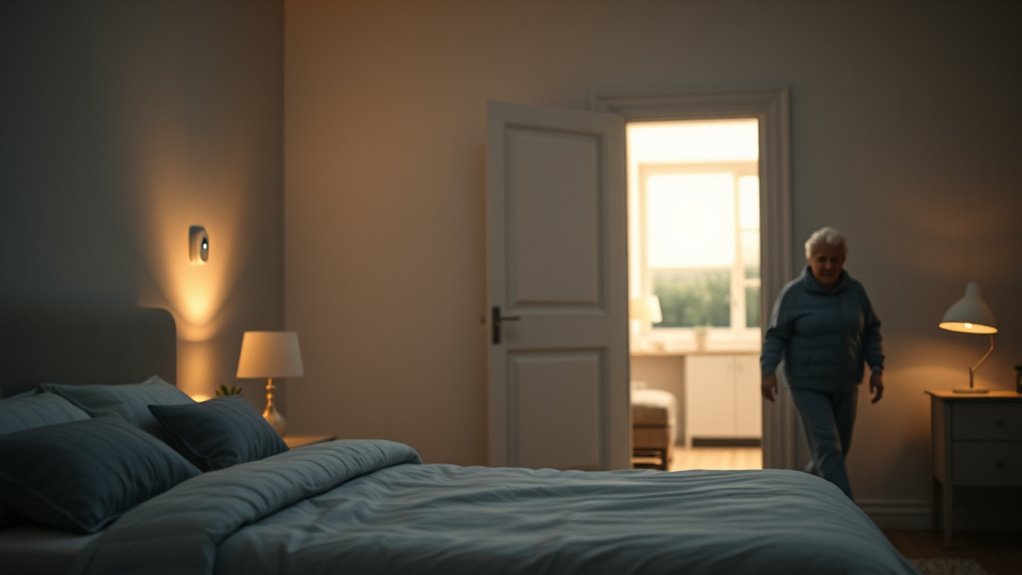
When choosing a motion sensor alarm for a dementia patient, I focus on factors like detection range, sensitivity, and false alarm prevention to guarantee reliable safety. Ease of installation and battery life are also vital to keep the system practical and low-maintenance. Additionally, I consider alert customization options to tailor notifications to the patient’s needs and environment.
Detection Range and Sensitivity
Choosing the right motion sensor alarm depends heavily on its detection range and sensitivity, as these factors determine how effectively it monitors specific areas and responds to patient movements. Detection range varies from 16 to 33 feet, so matching it to room size is essential—too short, and it may miss movements; too long, and it could trigger unnecessary alerts. Sensitivity settings are adjustable, allowing me to reduce false alarms caused by minor movements or environmental factors. Higher sensitivity detects small motions like foot contact or shifts, which is critical for early fall prevention. Additionally, the detection angle, often between 110° and 360°, influences coverage and zone monitoring. Proper placement height and adjustable mounts help optimize detection, ensuring the alarm responds accurately without unnecessary triggers.
False Alarm Prevention
To minimize false alarms with motion sensor alarms for dementia patients, proper placement and calibration are crucial. I recommend positioning sensors away from pets, bedding, or drafts that could trigger false alerts. Using sensors with adjustable detection angles and sensitivity settings allows you to customize the system for each room, reducing unintended alarms. Combining motion sensors with other detection methods, like infrared or door sensors, adds accuracy and helps prevent false triggers. Regular testing and self-diagnosis features are also necessary; they help identify issues early and ensure the system works reliably. Additionally, controlling environmental factors such as sunlight, airflow, and temperature fluctuations can greatly cut down on false alarms caused by external sources. Taking these steps ensures a more dependable and reassuring setup.
Ease of Installation
Selecting a motion sensor alarm that’s easy to install can save time and reduce frustration, especially for caregivers or family members without technical experience. Look for devices that feature simple, tool-free mounting options like adhesive tapes or magnetic mounts, making setup quick and straightforward. Devices with plug-and-play setup allow you to activate and configure them without dealing with complex wiring or technical skills. Adjustable detection angles and swivel mounts help customize placement for ideal coverage across different rooms. Clear, step-by-step instructions or manuals are essential to guide you through the installation process confidently. Additionally, wireless connectivity simplifies setup by eliminating the need for extensive wiring, making installation more adaptable to various home environments. Overall, ease of installation ensures you can focus more on care than setup.
Battery Life and Power
Battery life is one of the most critical factors to contemplate when selecting a motion sensor alarm for a dementia patient, as it directly impacts the device’s reliability and your peace of mind. Longer battery life means fewer replacements and less worry about gaps in monitoring. Devices with rechargeable batteries can offer extended use and reduce ongoing costs. Battery longevity varies based on alarm volume, sensor activity, and usage patterns, typically ranging from several months to over a year. Low battery alerts are essential—they prevent unexpected failures that could jeopardize safety. To maximize reliability, opt for energy-efficient sensors and alarms. This approach ensures continuous protection while minimizing maintenance, giving both you and your loved one added confidence in the device’s performance.
Alert Customization Options
When choosing a motion sensor alarm for a dementia patient, it’s important to contemplate how customizable the alert options are. I look for systems with adjustable volume levels, from silent to loud alarms up to 120dB, to match individual needs. The ability to select different alert tones or melodies is essential, as some sounds are less startling but still effective. Dual alerts, like LED flashes combined with sounds, help accommodate hearing impairments. I also appreciate options like vibration alerts or silent flashing lights for discreet notifications. Being able to program specific preferences—volume, tone, and notification type—ensures the alarm can be tailored to different environments and situations, ultimately providing safer and more personalized care.
Frequently Asked Questions
How Do Motion Sensors Differentiate Between Residents and Pets?
Motion sensors differentiate between residents and pets by using pet-friendly settings or advanced algorithms. I’ve found that many sensors can be adjusted to ignore small animals, preventing false alarms. Some models use infrared or weight-based detection to distinguish between humans and pets. By customizing sensitivity levels or enabling pet modes, I guarantee the system only alerts me to human movement, maintaining safety without unnecessary alarms.
Can These Alarms Be Customized for Individual Mobility Levels?
Yes, these alarms can be customized for individual mobility levels. I’ve found that many systems allow you to set sensitivity levels or create specific zones, guaranteeing they detect movements relevant to each person’s needs. This flexibility helps prevent false alarms and ensures the safety of residents with different mobility, giving peace of mind. I recommend checking the product features to see how easily you can tailor the system to your loved one’s abilities.
What Is the Typical Battery Lifespan of These Sensor Systems?
The battery lifespan of these sensor systems usually ranges from six months to a year, depending on the model and usage. I recommend checking the manufacturer’s guidelines for specific details. I personally find that regular battery checks and timely replacements are essential for ensuring continuous safety. Using rechargeable batteries can also be a smart option to reduce ongoing costs and maintenance, giving me peace of mind knowing the system stays active.
Are These Alarms Compatible With Smart Home Automation Systems?
Yes, many of these alarm systems are compatible with smart home automation setups. I’ve found that brands like Philips Hue and Samsung SmartThings integrate seamlessly, allowing me to control and monitor the alarms through my existing smart home hub. Before buying, I double-check compatibility specs to guarantee smooth integration. This setup gives me peace of mind, knowing I can manage safety features easily from my smartphone or voice assistant.
How Do Privacy Concerns Get Addressed With Motion Sensor Monitoring?
I understand privacy is a top concern. These sensors are designed to be discreet, often only detect movement without capturing images or audio. I personally guarantee settings limit data sharing and disable unnecessary features. Think of it like a gentle, invisible watch that alerts you if needed, but respects your loved one’s privacy. I recommend choosing alarms with clear privacy policies and adjustable settings to keep peace of mind intact.
Conclusion
In short, securing a sensor system that’s simple, sturdy, and suited to your loved one’s needs provides peace of mind and protects precious independence. By choosing the right device, you create a safe sanctuary where safety and serenity seamlessly synchronize. With the right motion sensors, you’ll watch worries wander away, replaced by reassurance and relief. Remember, the perfect protection turns chaos into calm, giving you both comfort and confidence in every moment.