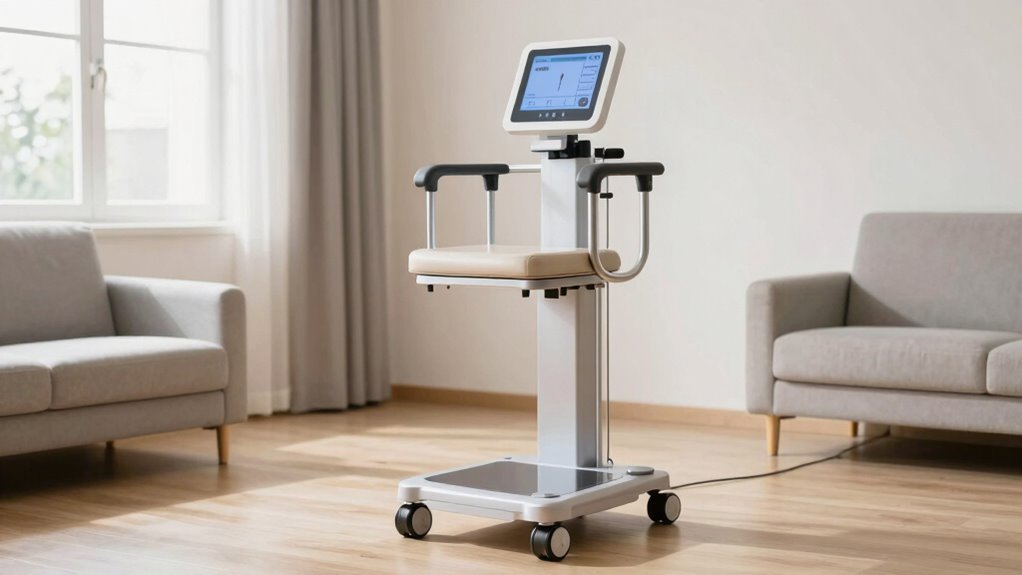

When a loved one is bedridden or unable to stand, tracking body weight becomes one of the simplest ways caregivers can monitor health at home. Sudden weight loss or gain often signals fluid retention, malnutrition, or disease progression long before other symptoms appear — but a standard bathroom scale is useless if the patient cannot stand on it. That is exactly the problem a patient lift scale solves: it hangs between your lift and the sling, letting you weigh the patient during a routine transfer or repositioning session without any extra handling.

Turn quiet afternoons into listening time
- Thousands of audiobooks, podcasts and originals
- Listen on your phone, tablet or Echo — also offline
- Cancel anytime
In this comparison, I looked at two of the most practical options for home care in 2026. The EZ Assistive Lift & Weight Scale earns my top spot for its 500 lb safe working load and simple three-button operation, which makes it the better choice for heavier patients and nervous first-time caregivers. The Electric Patient Lift Scale (B0FPSVGLGG) is my value pick: it installs in about a minute, has a backlit display, and costs noticeably less, but its 300 lb ceiling and shorter boom limit who it works for. The central tradeoff in this category comes down to capacity and safety margin versus price and convenience — and I break down exactly who each one fits below.
Complete the kit


Key Takeaways
- The EZ Assistive scale’s 500 lb working load makes it the safer pick for bariatric patients, while the Electric Patient Lift Scale tops out at 300 lbs of lifting load.
- Both scales are weighing-only attachments — neither includes the patient lift itself or a sling, so budget for the hoist separately if you don’t already own one.
- The Electric Patient Lift Scale installs in about one minute and has a backlit LCD, which helps in dim bedrooms; EZ Assistive counters with just three buttons for foolproof operation.
- Neither product includes batteries, so add AAA or alkaline cells to your order to avoid a dead scale on day one.
- Neither scale is rated for transfer — they weigh the patient while suspended, so the lift, not the scale, must support movement between bed and chair.
| EZ Assistive Lift & Weight Scale for Bedridden Patients – 500 lb Capacity |  | Best Overall — Highest capacity and simplest operation | Safe Working Load: 500 lbs (230 kg) | Display: LCD screen | Controls: Three button switches | VIEW ON AMAZON | See Our Full Breakdown |
| Electric Patient Lift Scale for Weighing Bedridden Patients |  | Best Value — Fast install and backlit display on a budget | Maximum Load Capacity: 300 lbs (LCD reads to 330 lbs) | Boom Length: 15.75 inches, telescopic | Display: Backlit LCD | VIEW ON AMAZON | See Our Full Breakdown |
| patient lift with scale for home care | Display | Power Source | Safe Working Load | Controls |
|---|---|---|---|---|
| EZ Assistive Lift & Weight Sca | LCD screen | Replaceable alkaline battery | 500 lbs (230 kg) | Three button switches |
| Electric Patient Lift Scale fo | Backlit LCD | 2 AAA batteries (not included) | — | — |
More Details on Our Top Picks
EZ Assistive Lift & Weight Scale for Bedridden Patients – 500 lb Capacity
This option stands out for one reason above all: a 500 lb (230 kg) safe working load. In home care, that number does more than accommodate heavier patients — it provides headroom that keeps you comfortably inside the safety envelope even when the patient’s weight fluctuates. Compared with the Electric Patient Lift Scale, which is limited to 300 lbs of lifting load, the EZ Assistive gives caregivers of larger patients the only real choice between these two.
Operation is deliberately stripped down to three button switches, and that simplicity is a feature rather than a cost cut. Family caregivers juggling a sling, a lift, and an anxious patient do not want to decode a multi-mode interface mid-transfer. The LCD display reads clearly under normal room lighting, though it lacks the backlight found on the competing model — in a bright bedroom that is a non-issue, but in a dim evening room you may need to turn on a lamp to confirm the reading.
Attachment is handled through the included black webbing, which loops between the lift’s hook and the scale. The instructions ask you to inspect the webbing before every use, and I would treat that as a genuine safety step rather than legal fine print — webbing is the single wear item on any hanging scale. One hard limitation repeats throughout the product documentation: this is a weighing-only device, not rated for transfer. You suspend, read, and lower. If your routine involves moving the patient from bed to wheelchair while weighed, this scale (and its rival) is the wrong tool.
Power comes from a replaceable alkaline battery, which keeps long-term running costs trivial and avoids the recharge-cycle degradation of built-in lithium packs. For a device that might sit unused for a week and then be needed immediately, replaceable cells are the more dependable design.
Pros:- 500 lb safe working load leaves a real safety margin for heavier patients
- Three-button operation is genuinely foolproof for non-professional caregivers
- Replaceable alkaline battery keeps long-term costs near zero
- Included webbing connects to most standard lift hooks without adapters
Cons:- LCD lacks a backlight, making readings harder in low-light bedrooms
- Strictly weighing-only — the manufacturer explicitly warns against using it for transfer
- Webbing is a wear item that must be inspected before every single use
Best for: Caregivers of medium-to-heavy patients (up to 500 lbs) who want a simple, high-capacity scale for routine weight monitoring at home or in a nursing facility.
Not ideal for: Buyers who need a backlight for dim rooms, anyone expecting a complete lift system in the box, or patients who must be transferred while suspended.
- Safe Working Load:500 lbs (230 kg)
- Display:LCD screen
- Controls:Three button switches
- Attachment:Included black webbing
- Power Source:Replaceable alkaline battery
- Intended Use:Weighing only — not for transfer
- Care Settings:Home care, hospital, nursing home
- Batteries Included:Check packaging — confirm before first use
Our verdict“The EZ Assistive is my top pick because capacity is the one spec you cannot upgrade later, and its no-frills design keeps the focus on safe, repeatable readings.”
Electric Patient Lift Scale for Weighing Bedridden Patients
Where the EZ Assistive leans on capacity, this model makes its case on convenience and price. Installation takes about a minute thanks to the included climbing buckles and sling rope, and nothing on the lift needs to be removed or modified. For a caregiver who already owns a compatible power-assisted patient lift, that means the scale goes from box to first reading before the patient is even positioned — no tools, no technician, no downtime.
The standout hardware feature is the backlit LCD, readable in any lighting condition. That sounds minor until you have weighed someone at 6 a.m. or during a night repositioning; squinting at an unlit screen while holding a transfer is exactly the kind of friction this display removes, and it is a genuine advantage over the EZ Assistive here. The scale also displays up to 330 lbs on the LCD, though the practical lifting load is 300 lbs — I would treat 300 as the real ceiling and not plan around the display’s extra headroom.
The tradeoffs are real. A 15.75-inch telescopic boom is shorter than many caregivers expect, which can force the patient to be positioned lower during weighing and may complicate setups under low ceilings or over tall beds. Batteries are not included, and neither is the lift or sling — the effective cost of this “budget” option climbs quickly if you are starting from scratch. Compared with the EZ Assistive, the 200 lb capacity gap is the deciding difference: for patients under 275 lbs or so, this pick makes the most sense for the money; above that, the EZ Assistive is simply the responsible choice.
Where it wins outright is as an alternative to bulky wheelchair scales. A dedicated wheelchair scale occupies floor space, costs more, and requires transferring the patient into the chair first. This hanging scale delivers comparable accuracy for bedridden patients who cannot make that transfer at all — which is the exact population it exists to serve.
Pros:- Roughly one-minute installation with included buckles and sling rope
- Backlit LCD stays readable in dark bedrooms and nighttime care routines
- Cordless AAA operation means no cables near the bed
- Cheaper and far more compact than a dedicated wheelchair scale
Cons:- 300 lb load ceiling excludes many home care patients outright
- Lift, sling, and even the two AAA batteries are all sold separately
- Short 15.75-inch boom can force lower patient positioning in tight setups
Best for: Budget-conscious caregivers of lighter patients (under 300 lbs) who already own a compatible patient lift and want quick installation plus a readable-in-the-dark display.
Not ideal for: Heavier patients, buyers without an existing lift, or setups with tall beds and low ceilings where the short boom causes clearance problems.
- Maximum Load Capacity:300 lbs (LCD reads to 330 lbs)
- Boom Length:15.75 inches, telescopic
- Display:Backlit LCD
- Power Source:2 AAA batteries (not included)
- Installation Time:About 1 minute
- Includes:LCD scale, four climbing buckles, sling rope, boom
- Not Included:Patient lift and sling
- Best Use:Home or institutional weighing of bedridden patients
Our verdict“A smart buy for lighter patients and existing lift owners, provided you accept the lower capacity and supply your own batteries.”
How We Picked
Because I could not put every scale on the market through hands-on trials, I built this comparison around the factors that matter most in a home care setting. Safe working load came first: home patients often weigh more than caregivers expect, and a scale rated too close to the patient’s weight leaves no margin for error. I then weighed ease of use, since most users are family caregivers rather than trained nurses — fewer buttons and clearer displays genuinely reduce mistakes during a stressful transfer.
Installation burden was the third filter. Anything that requires disassembling the lift or hiring a technician defeats the purpose of home monitoring, so I favored models that attach in minutes with included hardware. Total cost of ownership mattered too: hidden expenses like excluded batteries, slings, or the lift itself can quietly double the price of a “cheap” scale. Finally, I prioritized long-term weight tracking reliability, because the entire point of a lift scale is catching small changes in the patient’s condition over weeks and months. Both products here survived those filters, but they land in different places — which is why the ranking below is really about matching the scale to the patient, not crowning one universal winner.
| patient lift with scale for home care | Display |
|---|---|
| EZ Assistive Lift & Weight Sca | LCD screen |
| Electric Patient Lift Scale fo | Backlit LCD |
Factors to Consider When Choosing Patient Lift With Scale For Home Care
Before choosing between these two scales, a handful of decisions will narrow the field faster than any feature list. Here is what I would work through first.Know the Patient’s Real Weight
Capacity is the non-negotiable spec. Weigh the patient’s heaviest realistic estimate — including clothing, briefs, and any fluid retention — and add a buffer of at least 10 percent. The EZ Assistive’s 500 lb rating covers nearly every home patient; the Electric Patient Lift Scale’s 300 lb limit does not. If there is any doubt, spend the extra money on capacity, because exceeding a hanging scale’s rated load is a fall risk, not a warranty question.
Confirm You Already Own a Compatible Lift
Neither product includes the hoist or sling. Both are accessories that hang off an existing patient lift. If you are starting from zero, the true budget is lift plus sling plus scale, which can total several hundred dollars. Check your lift’s hook style and boom before ordering, since the webbing and buckles on each scale assume a standard attachment point.
Weighing Is Not Transferring
Both manufacturers are explicit that their scales are for weighing only. The scale sits in the load path momentarily while you read the number, then the patient is lowered. If your care routine requires moving the patient between bed and chair while suspended, you need a lift rated for transfer with an integrated weighing function — a different and more expensive category of equipment.
Think About the Room
Lighting and ceiling height shape the experience. Dim bedrooms favor the backlit display on the Electric Patient Lift Scale; low ceilings or tall bed frames argue against its short boom, since the patient may need to be positioned lower during weighing. Measure the clearance from your lift’s peak hook height to the mattress before committing.
Track Readings, Not Just Moments
The value of a lift scale is trend data. Weigh the patient at the same time of day, in similar clothing, on the same schedule — weekly works for most home situations. Keep a simple log, because a two-pound weekly drift is the kind of change a doctor will act on, while a single reading rarely tells anyone anything.
Frequently Asked Questions
Do these products include the patient lift itself?
No, and this is the most common source of buyer confusion in this category. Both the EZ Assistive scale and the Electric Patient Lift Scale are hanging attachments that connect between your existing lift’s hook and the patient sling. The lift frame, the sling, and in the case of the Electric model even the AAA batteries are sold separately. If you do not already own a compatible hoist, you will need to purchase one before either scale is usable, so factor that cost into your comparison from the start.
Can I use a patient lift scale to transfer a patient between bed and chair?
No. Both models reviewed here are rated for weighing only, and EZ Assistive states this explicitly in its safety warnings. The scale’s webbing and buckles are designed to hold a static, suspended load while you read the display, not to absorb the swinging and lateral forces of an actual transfer. Using a weighing-only scale as part of a transfer chain risks equipment failure and patient injury. Complete your transfer first with the lift’s normal hardware, or invest in a lift designed with an integrated, transfer-rated weighing system.
How accurate are hanging lift scales compared to standing scales?
Quality hanging scales are generally accurate within a pound or two, which is sufficient for the trend monitoring that matters in home care. Small sources of variation do exist: sling weight can affect readings if not tared out, patient movement during suspension causes the number to fluctuate, and low batteries can degrade display stability. To get consistent results, weigh at the same time of day, let the reading settle before recording it, and replace batteries at the first sign of a dim or unstable display rather than pushing them further.
Which scale should I choose for a heavier patient?
The EZ Assistive is the clear choice for heavier patients because of its 500 lb safe working load, which comfortably exceeds the 300 lb lifting capacity of the Electric Patient Lift Scale. Beyond the raw numbers, capacity margins matter for safety: a scale working near its limit handles load fluctuations poorly, and patients with mobility limitations often shift weight unexpectedly while suspended. If the patient’s weight approaches or exceeds 275 lbs, the 300 lb model leaves too little room for error, and I would not recommend it regardless of the price difference.
How often should a bedridden patient be weighed at home?
A weekly schedule works well for most home care situations, since it smooths out daily fluid and food variation while still catching meaningful trends within a month. Some conditions, such as heart failure or kidney disease with fluid management concerns, may warrant weighing two or three times per week on your physician’s guidance. The key is consistency: same time of day, same clothing, same procedure. Always log the numbers and share the trend with the care team, because a steady decline or gain over several weeks is far more clinically useful than any single measurement.
Conclusion
After comparing both scales, the decision really comes down to two questions: how much does the patient weigh, and do you already own a lift?
For heavier patients or anyone wanting maximum safety margin, the EZ Assistive Lift & Weight Scale is my overall pick. Its 500 lb working load, three-button simplicity, and replaceable alkaline battery make it the responsible default for home care, and its only real compromises — no backlight and a weighing-only rating — are easy to live with in most households.
For lighter patients and budget-focused buyers who already own a compatible lift, the Electric Patient Lift Scale is the smarter spend. The backlit display, one-minute installation, and lower price make daily monitoring genuinely easy, as long as the patient stays comfortably under 300 lbs and your room layout tolerates the shorter boom.
For caregivers starting from scratch with no lift at all, pause before buying either one. Your first purchase is a transfer-rated patient lift and sling; the scale is the second step, not the first. And for anyone who needs to weigh while transferring, look at integrated weighing lifts instead — neither of these accessories is built for that job.
Evergreen bestsellers Picks
bestsellers
As an affiliate, we earn on qualifying purchases.