When it comes to managing wandering in dementia patients, safety alarms are essential tools for caregivers. The best options quickly alert you when your loved one leaves a designated area, helping prevent dangerous situations. The CallToU Bed Alarm stands out for its silent vibration alert, ideal for discreet monitoring, while the Senior DepartAlert Door System provides comprehensive door safety. However, choosing the right alarm involves tradeoffs like ease of use, coverage area, and alert type. Continue reading for a detailed breakdown of the top options and what to consider when selecting the best alarm for your needs.

Turn quiet afternoons into listening time
- Thousands of audiobooks, podcasts and originals
- Listen on your phone, tablet or Echo — also offline
- Cancel anytime
Complete the kit


Key Takeaways
- The most effective alarms balance reliability with ease of use, especially for caregivers managing multiple patients.
- Wireless systems with caregiver pagers offer quick response times but may come with higher costs and maintenance needs.
- Bed and chair sensors are best for patients prone to wandering during sleep or seated periods, while door alarms suit those with specific exit routes.
- Battery life and alert volume are critical factors that impact ongoing usability and safety effectiveness.
- Higher-priced systems often include more comprehensive coverage and advanced features, but simpler models may suffice for low-risk scenarios.
| CallToU Bed Alarm for Elderly and Dementia Patients – Portable Sensor with Vibration & Silent Alert |  | Best for Flexible, Portable Bed Monitoring | Power Source: 3 AAA batteries (included) | Control Method: Remote, Voice | Audible Noise: 110 dB | VIEW ON AMAZON | See Our Full Breakdown |
| Lunderg Wireless Early Alert Bed Alarm System for Elderly & Fall Prevention |  | Best for Early Caregiver Alerts & Large Homes | Power Source: Battery Powered | Compatible Devices: Lunderg Bed Alarm, Chair Alarm, Call Button | Battery Description: Alkaline | VIEW ON AMAZON | See Our Full Breakdown |
| PILSAMAS Bed Alarms for Elderly Dementia Patients, Motion Sensor Pager Set |  | Best for Whole-Home Motion Monitoring | Power Source: Battery Powered | Compatible Devices: Caregiver Pager, Receiver | Connectivity Technology: Wireless | VIEW ON AMAZON | See Our Full Breakdown |
| Wireless Motion Sensor Alarm System with Pager for Caregivers |  | Best for Remote Monitoring & Fall Prevention | Power Source: Battery Powered | Maximum Range: 300 ft | Mounting Type: Pocket | VIEW ON AMAZON | See Our Full Breakdown |
| Smart Caregiver Floor Mat Alarm and Pager System – Wireless Alert for Fall and Wandering Prevention | 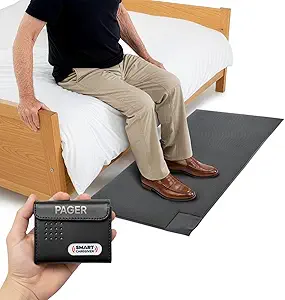 | Best for Physical Barrier Monitoring | Dimensions: 48 x 24 inches | Color: Grey | Power Source: 2 AA batteries (not included) | VIEW ON AMAZON | See Our Full Breakdown |
| Smart Caregiver Bed and Chair Exit Alarm System for Fall and Wandering Prevention |  | Best Overall for Discreet, Reliable Monitoring | Power Source: Battery Powered | Compatible Devices: Nurse Call Systems, Smart Caregiver Systems | Battery: 1 x 9V alkaline (included) | VIEW ON AMAZON | See Our Full Breakdown |
| Upgraded Bed Sensor Alarm and Fall Prevention System for Elderly and Dementia Patients, Wireless Motion Sensor with Caregiver Pager and Adjustable Volume |  | Best for Wireless, Long-Range Monitoring with Flexible Alerts | Power Source: Battery Powered | Compatible Devices: Motion Detector | Battery Description: Alkaline | VIEW ON AMAZON | See Our Full Breakdown |
| Senior DepartAlert Anti-Wandering Door Bar System with Pager for Dementia and Alzheimer’s Care |  | Best for Indoor Door Monitoring with Long-Range Alert | Monitoring Capacity: 1 exit door | Range: 150ft-300ft | Includes: Door Alarm Bar, Wristband Transmitter, Caregiver Pager, Magnetic Contact Switch, Wall Mount Reset Button, Replacement Wrist Straps, AC Power Adapter | VIEW ON AMAZON | See Our Full Breakdown |
| PELEGON Bed Alarm for Elderly Dementia Patients – Wireless Sensor Pad and Pager Fall Prevention |  | Best for Long-Range Bed Monitoring with Customizable Alerts | Battery Description: Alkaline | Number of Batteries: 4 AA batteries required (included) | Control Method: Push Button | VIEW ON AMAZON | See Our Full Breakdown |
| safety alarms for dementia wandering | Power Source | Maximum Range | Control Method | Sensor Technology |
|---|---|---|---|---|
| CallToU Bed Alarm for Elderly | 3 AAA batteries (included) | 10 feet | Remote, Voice | Motion |
| Lunderg Wireless Early Alert B | Battery Powered | 400 feet | Touch | — |
| PILSAMAS Bed Alarms for Elderl | Battery Powered | 1000 feet | — | — |
| Wireless Motion Sensor Alarm S | Battery Powered | 300 ft | — | — |
| Smart Caregiver Floor Mat Alar | 2 AA batteries (not included) | — | — | Contact sensor |
| Smart Caregiver Bed and Chair | Battery Powered | — | Touch | Contact Sensor |
| Upgraded Bed Sensor Alarm and | Battery Powered | 182 meters | App, Touch | Contact Sensor |
| Senior DepartAlert Anti-Wander | — | — | — | — |
| PELEGON Bed Alarm for Elderly | — | 328 feet | Push Button | Motion Sensor |
More Details on Our Top Picks
CallToU Bed Alarm for Elderly and Dementia Patients – Portable Sensor with Vibration & Silent Alert
This alarm stands out for its portability and smart detection, making it a strong choice for caregivers who need flexible placement options at home or in care facilities. Compared with systems like the Lunderg Wireless Early Alert Bed Alarm, it offers a more customizable alert experience with silent and vibrate modes, but its detection range of only 10 feet can limit coverage in larger rooms. Its battery-powered design reduces dependency on wired connections, yet it requires regular battery replacement, which could be inconvenient. The adjustable volume helps tailor alerts to different environments, but proper placement is critical to minimize false alarms. Overall, this model suits caregivers seeking a discreet, portable solution for bed monitoring, especially in spaces where mobility is essential.
Pros:- Wireless and portable for flexible placement
- Adjustable volume and silent/vibrate modes
- Smart detection reduces false alarms
Cons:- Requires batteries for operation, leading to ongoing costs
- Limited detection range of 10 feet may restrict placement options
Best for: Caregivers needing portable, adjustable-bed alert solutions for home or hospital use
Not ideal for: Large households or caregivers wanting a long-range system—its limited range may hinder coverage
- Power Source:3 AAA batteries (included)
- Control Method:Remote, Voice
- Audible Noise:110 dB
- Maximum Range:10 feet
- Sensor Technology:Motion
- Color:White
Our verdict“Ideal for caregivers seeking a portable, customizable bed alarm for flexible safety monitoring in smaller spaces.”
Lunderg Wireless Early Alert Bed Alarm System for Elderly & Fall Prevention
This system excels at alerting caregivers before a loved one gets out of bed, which helps prevent falls while respecting dignity. It surpasses simpler alarm pads like the CallToU Bed Alarm with its pre-alert technology, providing early warnings that can be crucial in busy or large homes. The wireless pager with adjustable volume and vibration makes it easy to customize alerts, but the 400-foot range may still fall short in very expansive properties. Its straightforward setup and no need for Wi-Fi or apps make it accessible for less tech-savvy users. This pick is best suited for families wanting a reliable, long-range alarm system that promotes independence while maintaining safety.
Pros:- Wireless alert system enhances safety without in-room alarms
- PreRise sensor provides early warning, reducing fall risk
- Portable pager with adjustable volume and vibration
Cons:- Battery life may require frequent replacement (up to 15 months)
- Range limited to 400 feet, which may be insufficient in very large homes
Best for: Families with large homes or those who prefer a straightforward, early warning system for fall prevention
Not ideal for: Caregivers in small, confined spaces where a shorter-range system would suffice and reduce false alarms
- Power Source:Battery Powered
- Compatible Devices:Lunderg Bed Alarm, Chair Alarm, Call Button
- Battery Description:Alkaline
- Number of Batteries:2 AA batteries (included)
- Control Method:Touch
- Maximum Range:400 feet
Our verdict“Best suited for families needing a long-range, easy-to-use alert system to prevent falls in large or multi-room environments.”
PILSAMAS Bed Alarms for Elderly Dementia Patients, Motion Sensor Pager Set
This system is ideal for comprehensive, motion-based monitoring, especially in larger residences. Its infrared sensors detect footstep movements, reducing false alarms compared to contact-based systems like the Smart Caregiver Floor Mat. The long-range pager (up to 1000 feet) allows residents to move freely within the home while alerting caregivers promptly. Multiple alert modes, including vibrations, chimes, and LED flashes, support various needs, but it doesn’t detect bed or chair departures, limiting its scope. Installation requires careful placement for optimal detection, and battery life varies with usage. This makes it a solid choice for caregivers wanting discreet, motion-focused monitoring without privacy concerns or ongoing subscription fees.
Pros:- Reduces false alarms with infrared footstep detection
- Long-range pager supports freedom of movement within 1000 feet
- Multiple alert modes including vibrations, chimes, and LEDs
Cons:- Proper installation height is critical for accurate detection
- Limited to motion detection only, not suitable for bed monitoring
Best for: Caregivers seeking a long-range, motion-based safety system for entire-home monitoring
Not ideal for: Those needing bed or chair exit alerts, or in smaller spaces where simpler systems suffice
- Power Source:Battery Powered
- Compatible Devices:Caregiver Pager, Receiver
- Connectivity Technology:Wireless
- Alert Type:Motion Only
- Maximum Range:1000 feet
- Battery Cell Type:Lithium Polymer
Our verdict“Perfect for caregivers wanting broad, motion-based safety coverage in large homes, with minimal privacy concerns.”
Wireless Motion Sensor Alarm System with Pager for Caregivers
This system caters to caregivers needing remote, silent alerts with a modest 300-foot range. Its wireless motion sensor can be placed near walkways or entry points, alerting caregivers discreetly via pager, which makes it suitable for environments where minimal disturbance is desired. Compared to the longer-range PILSAMAS system, it offers easier portability but lacks compatibility with other systems, limiting expandability. Battery operation provides flexibility, yet batteries are sold separately, adding ongoing costs. Its limited range makes it better suited for small to medium-sized spaces rather than sprawling homes. This pick makes sense for those prioritizing silent, remote alerts over extensive coverage or integration.
Pros:- Silent alerts prevent disturbance during sleep or rest
- Remote monitoring via pager allows flexibility
- Battery operated for portability
Cons:- Batteries must be purchased separately
- Limited to standalone use, not compatible with other systems
Best for: Caregivers needing a portable, silent alert system for small to medium residences
Not ideal for: Large homes or those requiring integration with multiple safety devices, due to its limited 300-foot range
- Power Source:Battery Powered
- Maximum Range:300 ft
- Mounting Type:Pocket
- Batteries Required:4 AA batteries
- Temperature Range:73 °F
Our verdict“Best suited for caregivers seeking simple, silent remote monitoring in smaller or contained environments.”
Smart Caregiver Floor Mat Alarm and Pager System – Wireless Alert for Fall and Wandering Prevention
This system emphasizes physical safety by using a durable floor mat combined with a wireless pager alert. Its large 48×24 inch mat covers a significant area, making it ideal for doorways or beds. Compared to motion sensors like the PILSAMAS, it offers a straightforward contact-based solution, which is effective for preventing falls or wandering at specific entry points. The system’s vibration and audible alert options enable discreet notifications, but it depends on batteries (not included), and its price isn’t listed, which could be a drawback. Its fixed placement makes it less flexible than motion-based systems but provides predictable activation zones. This setup best fits environments where physical barriers are preferred over motion sensors, especially for high-risk areas.
Pros:- Wireless alert system with a long 300-foot range
- Vibration and audible alerts for discreet notifications
- Easy to set up for specific entry points
Cons:- Requires 2 AA batteries, which are not included
- Limited to specific sensors and accessories, reducing flexibility
Best for: Caregivers wanting a reliable, physical barrier alert for doorways or beds in high-risk settings
Not ideal for: Large open areas or residents who move freely across multiple rooms, where a motion sensor might be better
- Dimensions:48 x 24 inches
- Color:Grey
- Power Source:2 AA batteries (not included)
- Range:300 feet
- Sensor Technology:Contact sensor
- Warranty:1 year
Our verdict“Ideal for environments requiring a durable, physical safety barrier at key points for fall and wandering prevention.”
Smart Caregiver Bed and Chair Exit Alarm System for Fall and Wandering Prevention
This system stands out for its simplicity and immediate alerts, making it ideal for caregivers who prioritize quick response to bed or chair exits. Compared with the PELEGON Bed Alarm, it offers more straightforward setup and reliable contact sensors, but it requires regular battery changes and a separate monitor. Its discreet sensor pads with incontinence protection make it suitable for continuous wear without discomfort, though the sensor sizes are limited. The wall-mount monitor provides clear status updates, which is vital for busy caregivers. However, the need for batteries and limited sensor compatibility may pose challenges for some users.
Pros:- Immediate alerts help prevent falls before they happen
- Easy to set up and switch between bed and chair sensors
- Discreet, comfortable sensor pads with incontinence protection
- Adjustable volume and clear status indicators
Cons:- Requires regular battery replacements
- Additional monitor needed for both bed and chair sensors
- Limited to specific sensor sizes and configurations
Best for: Caregivers seeking a straightforward, reliable bed and chair monitoring system with minimal fuss
Not ideal for: Households needing multi-room or mobile monitoring, as it focuses specifically on bed and chair exits
- Power Source:Battery Powered
- Compatible Devices:Nurse Call Systems, Smart Caregiver Systems
- Battery:1 x 9V alkaline (included)
- Control Method:Touch
- Mounting Type:Wall Mount
- Sensor Technology:Contact Sensor
- Color:White
- Item Dimensions:30″L x 0.5″W x 10″H
Our verdict“This pick is best for caregivers who want reliable, easy-to-use alerts for bed and chair exits in controlled environments.”
Upgraded Bed Sensor Alarm and Fall Prevention System for Elderly and Dementia Patients, Wireless Motion Sensor with Caregiver Pager and Adjustable Volume
This system’s wireless design and long-range coverage up to 182 meters make it highly suitable for larger homes or those who want unobtrusive monitoring without fixed sensors. Unlike the Bed and Chair Alarm, it offers placement under beds or at doorways and includes a caregiver pager, providing peace of mind for caregivers who need flexibility. The adjustable volume and dual alerts (LED and sound) allow customization to different environments and sensitivities. However, its reliance on batteries and environment-dependent range may limit performance, especially in complex layouts. It’s ideal for caregivers who value mobility and long-distance alerts but may not suit settings requiring fixed or multi-door monitoring.
Pros:- Wireless and easy to install under beds or at doors
- Long-range signal transmission up to 182 meters
- Adjustable volume levels and dual alert system
- Includes caregiver pager and batteries for immediate use
Cons:- Batteries need frequent replacement
- Placement and range may vary depending on environment
- Limited to specific sensor technology, may not suit all needs
Best for: Families or caregivers needing flexible, wireless monitoring across large or multi-room spaces
Not ideal for: Homes with very limited mobility or where wired systems are preferred for reliability
- Power Source:Battery Powered
- Compatible Devices:Motion Detector
- Battery Description:Alkaline
- Number of Batteries:3 AAA batteries required (included)
- Control Method:App, Touch
- Mounting Type:Door Mount
- Maximum Range:182 meters
- Sensor Technology:Contact Sensor
Our verdict“This system is ideal for those wanting flexible, long-distance wireless alerts with customizable settings.”
Senior DepartAlert Anti-Wandering Door Bar System with Pager for Dementia and Alzheimer’s Care
The DepartAlert system excels for indoor use, especially when monitoring a single door with a wristband transmitter. Its long-range pager—up to 300 feet—provides reliable alerts as residents approach or open the door, making it suitable for indoor homes or small facilities. Unlike the Bed Alarm systems, it focuses on door entry, which is crucial for preventing wandering in dementia care. The inclusion of a wristband transmitter and accessories simplifies setup, but it only covers one door and the wristbands need replacement every six months. It’s best suited for households with a single monitored entry point and indoor use only, as outdoor environments are outside its scope.
Pros:- Effective for preventing wandering in dementia or Alzheimer’s patients
- Wireless alert system with a long-range caregiver pager
- Includes multiple accessories for easy setup
- Reliable indoor range up to 300 feet
Cons:- Limited to monitoring one door unless additional systems are purchased
- Indoor use only, not suitable for outdoor environments
- Wristbands require replacement every six months
Best for: Indoor households needing targeted door monitoring for dementia wandering prevention
Not ideal for: Outdoor homes or those requiring multi-door coverage without additional units
- Monitoring Capacity:1 exit door
- Range:150ft-300ft
- Includes:Door Alarm Bar, Wristband Transmitter, Caregiver Pager, Magnetic Contact Switch, Wall Mount Reset Button, Replacement Wrist Straps, AC Power Adapter
- Wristband Transmitter Replacement Interval:6 months
- Indoor Use Only:Yes
Our verdict“This door system is best for indoor use where a single entry needs monitoring to prevent wandering.”
PELEGON Bed Alarm for Elderly Dementia Patients – Wireless Sensor Pad and Pager Fall Prevention
This system provides long-range coverage up to 328 feet, making it suitable for larger homes or those who need flexible bed monitoring. Its wireless sensor pad and pager facilitate quick alerts without cumbersome wiring, unlike the wired options. The customizable alert modes, including vibrations and sounds, help tailor responses based on individual needs, especially in dementia care. However, the reliance on 4 AA batteries and potential for false alarms in environments with movement or interference can be drawbacks. This pick makes the most sense for caregivers seeking versatile, long-distance bed safety with easy setup, but not for those requiring high-precision or outdoor use.
Pros:- Long-range wireless coverage up to 328 feet
- Easy, tool-free setup for quick installation
- Customizable alerts including vibration and sound
- Designed specifically for dementia fall prevention
Cons:- Requires 4 AA batteries, which need frequent replacement
- Limited to basic motion detection, potential false alarms in certain environments
- Not suitable for outdoor or highly cluttered spaces
Best for: Caregivers needing long-range, customizable bed alarms for dementia patients at home
Not ideal for: Settings requiring outdoor or highly sensitive motion detection with minimal false alarms
- Battery Description:Alkaline
- Number of Batteries:4 AA batteries required (included)
- Control Method:Push Button
- Maximum Range:328 feet
- Sensor Technology:Motion Sensor
- Color:White
- Item Dimensions:6.5″ L x 3.8″ W x 14.5″ H
Our verdict“This bed alarm is ideal for caregivers who need flexible, long-distance alerts with customization options in a home setting.”

How We Picked
To evaluate these safety alarms, I focused on factors that directly impact their effectiveness in preventing wandering incidents for dementia patients. Reliability of sensors and alert mechanisms was paramount, along with ease of installation and operation for caregivers. Durability and build quality mattered, especially for systems that require frequent handling or adjustments. I also considered features like battery life, volume control, and coverage area, which influence day-to-day usability. The ranking reflects a balance between performance, affordability, and suitability for different caregiver needs, highlighting options that excel in specific scenarios or general use.| safety alarms for dementia wandering | Control Method | Sensor Technology |
|---|---|---|
| CallToU Bed Alarm for Elderly | Remote, Voice | Motion |
| Lunderg Wireless Early Alert B | Touch | — |
| PILSAMAS Bed Alarms for Elderl | — | — |
| Wireless Motion Sensor Alarm S | — | — |
| Smart Caregiver Floor Mat Alar | — | Contact sensor |
| Smart Caregiver Bed and Chair | Touch | Contact Sensor |
| Upgraded Bed Sensor Alarm and | App, Touch | Contact Sensor |
| Senior DepartAlert Anti-Wander | — | — |
| PELEGON Bed Alarm for Elderly | Push Button | Motion Sensor |
Factors to Consider When Choosing Safety Alarms For Dementia Wandering
Selecting the right safety alarm for dementia wandering involves understanding your specific environment and the patient’s habits. Consider how discreet the alarm needs to be, the area you want to cover, and your budget. It’s also important to think about ease of use, especially if multiple caregivers are involved, and whether the system requires frequent maintenance or battery replacements. By evaluating these factors, you can find a solution that offers reliable protection without adding unnecessary complexity or expense.Coverage Area and Sensor Placement
Different alarms are designed to cover various zones — from beds and chairs to doorways and entire rooms. Choose a system that matches your environment; for example, bed alarms work well for nighttime wandering, while door sensors suit exit prevention. Proper placement is critical for reliability; sensors must be positioned correctly to detect movement or exit without false alarms. Overly sensitive systems may trigger false alerts, leading to caregiver fatigue or ignoring warnings, so balance sensitivity with practicality.
Alert Type and Response Speed
Alarms come with a variety of alert methods: loud sounds, vibrations, or wireless notifications to caregivers’ pagers or phones. Consider what will be most effective for your setting — a loud alarm might wake other residents but could also cause distress, while silent vibrations are discreet but may delay response if not paired with a caregiver pager. Response speed is vital; systems with real-time alerts help prevent incidents, especially in high-risk situations.
Ease of Use and Maintenance
Caregivers need alarms that are straightforward to install and operate, especially in emergency situations. Complicated systems increase the risk of misuse or neglect. Battery life also plays a role; systems that require frequent charging or battery replacements can be burdensome, so look for models with long-lasting power sources. Consider whether the alarm setup allows for simple adjustments and whether it provides clear instructions, especially for family members managing care part-time.
Build Quality and Reliability
Durability matters since alarms may be handled daily or moved around. Cheaply made sensors or receivers can fail unexpectedly, risking safety. Look for systems with sturdy construction, reliable wireless connections, and positive user reviews regarding consistent performance. A system that frequently malfunctions may be worse than no alarm at all, leading to false sense of security or missed alerts.
Cost and Additional Features
While budget-friendly options are tempting, investing in a more comprehensive system can provide enhanced safety features like multiple sensors, adjustable volume, and remote monitoring. Higher-priced models often include advanced alerts or integration with home automation, which can be beneficial for complex care environments. Balance your budget with the level of safety and convenience you require, avoiding overspending on features you won’t use.
Frequently Asked Questions
How do I choose between a bed alarm and a door alarm?
Choosing between a bed alarm and a door alarm depends on your loved one’s habits and the risk areas in your home. Bed alarms are useful if wandering occurs mainly during sleep, alerting you when they leave the bed. Door alarms are more suited if the main concern is preventing exit from the house or a specific room. For many caregivers, combining both provides comprehensive coverage, but starting with the most high-risk zone can be a practical first step.
Are wireless alarms more reliable than wired ones?
Wireless alarms offer greater flexibility and easier installation, making them popular for many caregivers. However, their reliability depends heavily on signal strength and interference, which can sometimes cause false alarms or missed alerts. Wired systems tend to be more stable but are less adaptable. If choosing wireless, ensure the system has a strong connection and positive reviews for consistent performance in your environment.
What features should I prioritize for a system used overnight?
For overnight use, prioritize alarms with long-lasting batteries, quiet or vibration alerts to avoid disturbing others, and sensors that are easy to activate or deactivate as needed. Consider models with adjustable volume and sensitivity to reduce false alarms, especially if your loved one moves a lot during sleep. A system with a caregiver pager or remote notification capability enhances response times in the dark or when you’re not close by.
Can I use multiple alarms together for better safety?
Yes, combining different alarms, such as bed sensors, chair sensors, and door alarms, creates a layered safety approach that covers various scenarios. Many systems are compatible and can be integrated with central monitoring devices or caregiver pagers. This setup provides peace of mind, especially for individuals at high risk of wandering or exit-seeking behavior. Just ensure the systems are compatible and that you can manage multiple alerts without confusion.
How often should I test or maintain these alarms?
Regular testing is essential to ensure alarms function correctly. Most manufacturers recommend testing weekly by activating sensors and verifying alerts. Battery replacements should be scheduled based on manufacturer guidelines or when alerts indicate low power. Maintaining alarms involves cleaning sensors, checking signal strength, and updating firmware if applicable. Consistent maintenance prevents unexpected failures and keeps your loved one safe.
Conclusion
For those seeking the best overall safety alarm, the CallToU Bed Alarm offers reliable, discreet monitoring suitable for many situations. Caregivers prioritizing value for money will find the PILSAMAS Bed Alarms a cost-effective option that still delivers dependable alerts. Families new to safety alarms or with simpler needs should consider models like the PELEGON Bed Alarm for straightforward setup. For high-risk environments or caregivers managing multiple patients, investing in systems with caregiver pagers, such as the Smart Caregiver Floor Mat System, provides peace of mind. Ultimately, selecting the right alarm depends on your specific environment, risk factors, and budget — but understanding these differences ensures you make an informed choice that keeps loved ones safe.
Halloween Picks
halloween
As an affiliate, we earn on qualifying purchases.