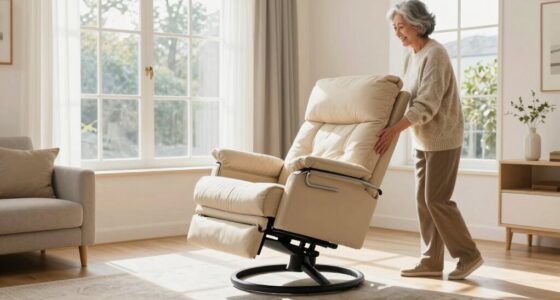
Finding effective tools to help elderly individuals get up safely is essential for maintaining independence and preventing falls. The best overall pick, Liberty Lift Assists Standing Aid, offers portability and strong support, but it may not suit those needing more stability. The Vive Stand Assist excels for couch and chair support, while the Stand Assist Aid Plus provides adjustable height for varied needs. Tradeoffs often involve balancing portability against maximum support, or price against durability. Keep reading for a detailed comparison to find the right fit for your situation.

Turn quiet afternoons into listening time
- Thousands of audiobooks, podcasts and originals
- Listen on your phone, tablet or Echo — also offline
- Cancel anytime
Complete the kit


Key Takeaways
- The most versatile tools combine portability with adjustable height, making them suitable for various environments.
- Sturdy construction and high weight capacity are key for users with significant mobility challenges.
- Ease of use, including grip and handle design, greatly impacts the effectiveness of each aid.
- Price varies widely; more expensive options generally offer better durability and support, but not always.
- Choosing the right tool depends heavily on whether the primary need is stability, portability, or ease of transfer.
| Couch Cane Stand Up Assist Device for Seniors and Elderly |  | Best for Couch and Bed Assistance | Adjustable Width: 18 to 23.5 inches | Material: High quality iron | Color: Not specified | VIEW ON AMAZON | See Our Full Breakdown |
| Stand Assist Aid Plus, Adjustable Steel Standing Aid for Seniors & Elderly, 20-26.8 inches, White |  | Best for Standing from Low Surfaces | Height Range: 20-26.8 inches | Material: Steel | Weight Capacity: 250 lbs | VIEW ON AMAZON | See Our Full Breakdown |
| Mobility Aids Tool, Standing Support Device with Adjustable Height and 600Lbs Capacity |  | Best for Heavy Users and Versatile Support | Base Diameter: 6 inches | Load Capacity: 600 pounds | Adjustable Height: Yes | VIEW ON AMAZON | See Our Full Breakdown |
| Lift Assist for Elderly and Disabled with No-Slip Handles, Supports Up to 420 lbs |  | Best for Transfers and Indoor/Outdoor Use | Length: 9.6 inches | Width: 10.8 inches | Weight: 0.6 lbs | VIEW ON AMAZON | See Our Full Breakdown |
| Standing Aid from Floor, Adjustable Height Stand Assist for Elderly, Portable Support Device |  | Best for Maximum Support and Heavy Duty Use | Height Range: 53cm to 70.5cm | Weight Capacity: 800 pounds | Material: Aluminum alloy | VIEW ON AMAZON | See Our Full Breakdown |
| Standing Assist Device for Seniors and Mobility Support |  | Best Overall for Versatile Support and Heavy Lifting | Material: Aluminum Alloy | Maximum Support Weight: 600 lbs | Height Adjustment: Five levels | VIEW ON AMAZON | See Our Full Breakdown |
| Liberty Lift Assists Standing Aid – Portable Handheld Support for Elderly, Disabled, and Caregivers |  | Best for Lightweight, Portable Support with Moderate Capacity | Material: Composite plastic | Support Weight: 420 lbs | Dimensions: 11 x 10.8 inches | VIEW ON AMAZON | See Our Full Breakdown |
| Stand Assist Aid for Elderly, Sit to Stand Mobility Assistance Device |  | Best for Stable, Adjustable Support During Sit-to-Stand Movements | Weight Capacity: 350 lbs | Height Range: 30″ to 36″ | Material: Reinforced frame | VIEW ON AMAZON | See Our Full Breakdown |
| Vive Stand Assist – Mobility Standing Aid Rail for Couch, Chair |  | Best for Chair Assistance and Discreet Support | Support Weight: 300 pounds | Material: Aluminum | Adjustability: Yes | VIEW ON AMAZON | See Our Full Breakdown |
| Vive Bed Ladder Assist – Pull Up Assist Device with Handle Strap and Rope |  | Best for Bed Mobility and Post-Surgery Support | Support Weight: 300 pounds | Handle Type: Non-slip foam handles | Material: Heavy-duty webbing | VIEW ON AMAZON | See Our Full Breakdown |
| Adjustable Standing Aid for Elderly – Non-Slip Support Device for Rising and Stability |  | Best Overall for Versatile Indoor/Outdoor Support | Material: Aluminum alloy, ABS, silicone | Base Diameter: 18 cm (7 inches) | Height Adjustment: 41 cm, 51 cm, 61 cm | VIEW ON AMAZON | See Our Full Breakdown |
| Standing Assist Device, Mobility Aid for Getting Up from Floor |  | Best for Versatile Mobility and Ground-Level Support | Suitable for: Elderly, people with back pain, knee problems, mobility issues | Usage scenarios: Gardening, stair climbing, floor tasks, sofa assistance | Adjustable height: Yes | VIEW ON AMAZON | See Our Full Breakdown |
| tools to help elderly people get up | Material |
|---|---|
| Couch Cane Stand Up Assist Dev | High quality iron |
| Stand Assist Aid Plus | Steel |
| Mobility Aids Tool | — |
| Lift Assist for Elderly and Di | — |
| Standing Aid from Floor | Aluminum alloy |
| Standing Assist Device for Sen | Aluminum Alloy |
| Liberty Lift Assists Standing | Composite plastic |
| Stand Assist Aid for Elderly | Reinforced frame |
| Vive Stand Assist | Aluminum |
| Vive Bed Ladder Assist | Heavy-duty webbing |
| Adjustable Standing Aid for El | Aluminum alloy, ABS, silicone |
| Standing Assist Device | — |
More Details on Our Top Picks
Couch Cane Stand Up Assist Device for Seniors and Elderly
This device stands out for its adjustable width and portability, making it ideal for seniors who need support getting up from couches, beds, or chairs. Compared to the Stand Assist Aid Plus, it offers a more customizable fit, but it’s limited to firm, stable surfaces and may not accommodate softer furniture. Its lightweight, foldable design allows easy storage and transport, though it lacks detailed weight capacity info. This pick makes the most sense for those who need occasional support on standard furniture without heavy lifting. The soft sponge grip enhances comfort, while its sturdy iron construction ensures stability during use. However, it isn’t suited for uneven or soft surfaces and might not support heavier users without further info.Pros:- Adjustable width for a tailored fit
- Sturdy and stable construction
- Soft sponge grip for comfort
- Lightweight and foldable for portability
Cons:- Designed mainly for firm, stable surfaces
- Limited information on maximum weight capacity
Best for: Seniors needing support on couches or beds with firm surfaces
Not ideal for: Those with soft or uneven furniture, or requiring high weight capacity details
- Adjustable Width:18 to 23.5 inches
- Material:High quality iron
- Color:Not specified
- Assembly:Tool-free, foldable
Our verdict“This device works best for seniors seeking adjustable, portable support on standard furniture surfaces.”
Stand Assist Aid Plus, Adjustable Steel Standing Aid for Seniors & Elderly, 20-26.8 inches, White
The Stand Assist Aid Plus excels in providing adjustable height support from 20 to 26.8 inches, making it well-suited for standing up from low seats or floors. Unlike the Couch Cane, it offers a higher weight capacity of 250 lbs, supporting more users with strength and stability. Its solid steel frame guarantees durability, but it’s less versatile for soft or sinking furniture, and it requires some arm strength for effective use. This device is ideal for seniors who need reliable support during standing, especially from low surfaces, but it’s not designed for use as a walking aid. The white finish adds a clean look, though it’s best for users with sufficient upper body strength.Pros:- Adjustable height for personalized support
- Durable steel construction
- Supports up to 250 lbs
- Lightweight and portable
Cons:- Not suitable for soft or sinking furniture
- Requires some arm strength for use
Best for: Elderly individuals needing stable support from low or floor-level surfaces
Not ideal for: Users with limited arm strength or on soft furniture that sinks
- Height Range:20-26.8 inches
- Material:Steel
- Weight Capacity:250 lbs
- Color:White
Our verdict“This aid offers sturdy, height-adjustable support perfect for standing from low surfaces but demands some strength from the user.”
Mobility Aids Tool, Standing Support Device with Adjustable Height and 600Lbs Capacity
This standing support device offers an impressive 600 lbs capacity and adjustable height, making it suitable for users with significant weight or strength needs. Compared to the Stand Assist Aid Plus, it provides a higher load capacity and a broader range of applications, including lifting heavier objects. Its stable rubber base and adjustable handle height add safety and adaptability, but the lack of foldability and potential heaviness could limit portability. It’s best for those who require a robust, secure support that can handle heavier loads, though it may be less convenient for frequent transport or storage. The durable grip enhances safety, but its size might be cumbersome in small spaces.Pros:- Supports up to 600 pounds
- Adjustable height for versatility
- Non-slip rubber base for safety
- Easy to move and position
Cons:- No foldability for compact storage
- Potentially heavy for some users
Best for: Users with high weight capacity needs or requiring versatile, heavy-duty support
Not ideal for: Elderly users needing lightweight, portable aids for daily transport
- Base Diameter:6 inches
- Load Capacity:600 pounds
- Adjustable Height:Yes
- Handle Type:Durable grip
Our verdict“This device is ideal for heavier users needing a durable, adjustable support with maximum stability.”
Lift Assist for Elderly and Disabled with No-Slip Handles, Supports Up to 420 lbs
This lift assist is designed specifically for safe transfers from sitting positions, supporting up to 420 lbs with non-slip handles that boost grip security. Unlike the Couch Cane or Stand Assist Aid Plus, it excels in providing a lightweight, portable option for both indoor and outdoor transfers. Its small size (9.6 inches long) makes it easy to handle, though it requires some strength to operate effectively and isn’t suited for lifting or full transfers. The textured handles enhance grip, but over time, wear could diminish their effectiveness. This pick is perfect for occasional transfers but isn’t intended for lifting heavy loads or prolonged use.Pros:- Supports up to 420 lbs, suitable for bariatric patients
- Non-slip textured handles for safety
- Lightweight and portable
- Indoor and outdoor versatility
Cons:- Requires some user strength
- Limited to transfers, not lifting or full standing support
- Handle texture may wear over time
Best for: Caregivers assisting with transfers from chairs, beds, or wheelchairs
Not ideal for: Users needing assistance with standing from the floor or heavy lifting
- Length:9.6 inches
- Width:10.8 inches
- Weight:0.6 lbs
- Support Capacity:420 lbs
Our verdict“This lift assist is best for safe, portable transfers, especially for caregivers managing occasional patient movement.”
Standing Aid from Floor, Adjustable Height Stand Assist for Elderly, Portable Support Device
This standing aid supports users up to 800 pounds, making it suitable for the most demanding needs. Its adjustable height from 53 cm to 70.5 cm and lightweight aluminum build enhance usability and portability, unlike bulkier options like the Mobility Aids Tool. The dual base ensures stability, but its size could be cumbersome in tight spaces, and limited color options might not appeal to everyone. It’s tailored for users requiring heavy-duty support in various environments, including home or care facilities, where maximum capacity and durability are priorities. Its robust construction, however, might be overkill for typical elderly users with lighter needs.Pros:- Supports up to 800 pounds for heavy-duty stability
- Adjustable height for personalized support
- Lightweight and portable aluminum construction
- Stable dual base design
Cons:- May be bulky for tight spaces
- Limited color options
Best for: Elderly or bariatric users needing maximum weight support and portability
Not ideal for: Small spaces or users seeking a subtle, less bulky aid
- Height Range:53cm to 70.5cm
- Weight Capacity:800 pounds
- Material:Aluminum alloy
- Portability:Yes
Our verdict“This aid offers unmatched support for the heaviest users while maintaining portability, ideal for demanding environments.”
Standing Assist Device for Seniors and Mobility Support
This standing assist device stands out for its impressive support weight capacity of 600 lbs, making it suitable for a wide range of users, including those with significant weight or strength challenges. Compared with the Vive Stand Assist, which supports only 300 lbs, this model offers more durability and stability, especially for users needing higher support levels. Its adjustable height and lightweight aluminum design combine to create a versatile, portable solution for both indoor and outdoor use. However, it may require some assembly and adjustment, and taller users might need to carefully set the height for optimal comfort. The wide anti-slip base and ergonomic handle enhance safety, making it a reliable choice for those who prioritize strength and stability. Still, the need for proper setup could be a hurdle for some, especially if users are not familiar with assembly tasks.
Pros:- Supports up to 600 lbs for maximum strength
- Adjustable height for tailored comfort
- Non-slip handle and base for enhanced safety
- Lightweight and portable for easy transport
Cons:- Requires some assembly or adjustment for optimal use
- Design may need fine-tuning for very tall users
Best for: Caregivers or seniors needing high-capacity, adjustable support for standing from low positions, both indoors and outdoors
Not ideal for: Very tall users or those uncomfortable with assembly, as the device may require adjustments for taller heights and setup
- Material:Aluminum Alloy
- Maximum Support Weight:600 lbs
- Height Adjustment:Five levels
- Handle:Non-slip ergonomic foam
- Base:Wide anti-slip design
- Portability:Lightweight, travel-friendly
Our verdict“This model is well-suited for users who need a robust, adjustable stand assist with high weight support and portability.”
Liberty Lift Assists Standing Aid – Portable Handheld Support for Elderly, Disabled, and Caregivers
Compared with larger standing aids, the Liberty Lift offers a compact, lightweight design supporting up to 420 lbs, making it ideal for quick transfers and travel. Its ergonomic, non-slip textured grip ensures a secure hold, which is especially helpful during mobility tasks. While it doesn’t provide mechanical lift assistance like some larger devices, its portability makes it easier to carry and store, perfect for caregivers or seniors who need a simple, manual support. However, it requires some upper body strength and may not suit users with very limited upper limb mobility or those who need full-body lift support. Its plastic construction balances durability with lightweight handling, but it may not withstand rough handling over time.
Pros:- Supports up to 420 lbs for versatile use
- Ergonomic, non-slip textured handles for safety
- Lightweight and portable for easy transport
- Easy to clean with household cleaners
Cons:- Limited to manual lifting assistance, not a mechanical lift
- Requires user upper body strength, which may be a limitation
Best for: Caregivers or seniors needing a portable, manual support that’s easy to carry and use for transfers
Not ideal for: Individuals with severe upper body weakness or those seeking mechanized lifting solutions, as it relies on user strength
- Material:Composite plastic
- Support Weight:420 lbs
- Dimensions:11 x 10.8 inches
- Weight:0.6 pounds
- Handle Diameter:4.3 inches
Our verdict“This pick is best for users who need a lightweight, portable handle for steady transfers but have enough upper body strength to operate it safely.”
Stand Assist Aid for Elderly, Sit to Stand Mobility Assistance Device
The Stand Assist Aid offers a sturdy, adjustable platform that supports users up to 350 lbs during sit-to-stand transfers. Its adjustable height from 30″ to 36″ makes it adaptable to various furniture heights, and its padded handles enhance comfort and grip security. Compared with the Vive Stand Assist, which is more chair-specific, this device provides broader support for users who need help from different seated positions. Its stability and portability make it suitable for home use, but it may not be ideal for users requiring full walking support or those with severe balance issues. Some upper body strength is necessary, and it does not support standing alone without additional assistance.
Pros:- Supports up to 350 lbs with stable construction
- Adjustable height for personalized comfort
- Portable and easy to position near furniture
- Padded handles for comfort
Cons:- Not suitable for users needing full walking support
- Requires some upper body strength for safe use
Best for: Seniors or adults with limited mobility needing stable support during sit-to-stand tasks at home
Not ideal for: Users who require full-body walking support or have severe balance impairments, as it primarily assists during sitting and standing, not walking
- Weight Capacity:350 lbs
- Height Range:30″ to 36″
- Material:Reinforced frame
- Features:Ergonomic padded handles, non-slip rubber feet, storage pouch
Our verdict“This device is ideal for seniors needing stable, adjustable support during sit-to-stand movements in a home setting.”
Vive Stand Assist – Mobility Standing Aid Rail for Couch, Chair
The Vive Stand Assist excels at helping users stand from chairs, sofas, and recliners with ease. Made of durable aluminum, it supports up to 300 lbs and features adjustable, padded handles for comfort. Its design allows it to snugly fit around cushions or beneath them, providing a discreet, secure support point. Compared to the larger floor-standing devices, this rail is less obtrusive and perfect for users who need occasional assistance without bulk. However, it may not fit all chair types perfectly, especially those with very thick cushions or non-standard shapes. Installation requires some space around the chair, and it’s limited to use with cushioned seats, making it less versatile for full mobility support.
Pros:- Provides stable support for standing up
- Adjustable and easy to install
- Comfortable, padded handles for secure grip
- Supports up to 300 pounds
Cons:- May not fit all chair types, especially non-cushioned or very thick furniture
- Limited to use with cushioned seats
Best for: Individuals who need discreet, easy-to-install support for standing up from chairs and sofas
Not ideal for: Users with non-cushioned or very unconventional furniture, as it may not fit or provide enough support in those cases
- Support Weight:300 pounds
- Material:Aluminum
- Adjustability:Yes
- Fitting Method:Snug around cushions or beneath cushions
- Color:Black
Our verdict“This stand assist is best suited for those seeking a discreet, chair-specific aid for rising with minimal fuss.”
Vive Bed Ladder Assist – Pull Up Assist Device with Handle Strap and Rope
The Vive Bed Ladder Assist targets users recovering from surgery or managing lower body weakness, supporting up to 300 lbs. Its adjustable length and non-slip foam handles give users a reliable grip for sitting up or repositioning in bed. Unlike the standing aids, this device focuses on bed-side support, attaching easily to most bed frames without tools, making it highly portable. Compared to the Stand Assist Aid for sit-to-stand, this device is more suitable for patients needing help getting in and out of bed rather than support during standing. A key tradeoff is that it requires a secure attachment point and may not fit beds with atypical frames. Its simplicity makes it ideal for home use but less so for active mobility outside the bed.
Pros:- Supports up to 300 lbs with sturdy construction
- Adjustable length for personalized support
- Comfortable, non-slip foam handles
- Easy to install and portable
Cons:- Needs a secure, fixed part of the bed for attachment
- Not suitable for beds with non-standard frames
Best for: Individuals recovering post-surgery or with lower limb weakness needing bed-side pull-up support
Not ideal for: Users seeking full standing assistance or those with non-standard bed frames that lack attachment points
- Support Weight:300 pounds
- Handle Type:Non-slip foam handles
- Material:Heavy-duty webbing
- Adjustability:Yes
- Installation:Attaches to most bed frames without tools
Our verdict“This device is ideal for those needing dependable support to sit up in bed, especially during recovery or limited mobility periods.”
Adjustable Standing Aid for Elderly – Non-Slip Support Device for Rising and Stability
This adjustable standing aid stands out for its sturdy construction and adaptability, making it a strong choice for seniors who need reliable support both inside and outside the home. Compared to the Standing Aid from Floor, this model offers more stability with a broader base and a non-slip bottom, reducing the risk of slips. Its adjustable height ensures a better fit for different users, unlike fixed-height models that may not suit everyone. However, the limited height options—only three settings—may not be perfect for all users, especially those who need more precise adjustments. Its lightweight design makes it easy to handle, but the somewhat basic appearance might not appeal to those seeking a more refined look. Overall, this pick makes the most sense for seniors who want a durable, versatile aid that can handle multiple environments and are okay with a straightforward design.
Pros:- Sturdy and stable construction with a wide, non-slip base
- Adjustable height for personalized support
- Lightweight and easy to carry for outdoor use
Cons:- Limited height options may not accommodate all users
- Design may appear basic or utilitarian for some preferences
Best for: Elderly individuals who need a stable, adjustable support device for both indoor and outdoor use.
Not ideal for: Users requiring very specific height adjustments or a more aesthetically refined device, as the limited height options and basic design may fall short.
- Material:Aluminum alloy, ABS, silicone
- Base Diameter:18 cm (7 inches)
- Height Adjustment:41 cm, 51 cm, 61 cm
- Weight:Lightweight
Our verdict“This standing aid is best suited for seniors seeking a durable, adaptable support tool for varied environments, accepting some design simplicity.”
Standing Assist Device, Mobility Aid for Getting Up from Floor
This standing assist device is designed to support a range of mobility challenges, especially for those with back pain or knee issues. Unlike the Adjustable Standing Aid, which excels in outdoor stability, this model focuses on versatility across different scenarios like gardening, stairs, or household tasks, thanks to its adjustable height and portability. Its compact size makes it easy to transport and store, but it may require some assembly and fine-tuning for optimal use, which could be cumbersome for less-handy users. Its safety features, including non-slip materials and sturdy build, help prevent falls during transitions, but limited weight capacity details leave some uncertainty about its suitability for very heavy users. This device is ideal for seniors or those with moderate mobility issues who need a flexible, easy-to-move support tool.
Pros:- Supports various mobility needs and scenarios
- Adjustable height for personalized use
- Portable and easy to carry between locations
Cons:- May require some assembly or adjustment for optimal fit
- Limited details on maximum weight capacity
Best for: Elderly individuals with general mobility challenges, back or knee pain, or those who need support in varied environments like gardening or stairs.
Not ideal for: People with severe mobility impairments or who require a high weight capacity, since detailed capacity info is lacking and it may need assembly.
- Suitable for:Elderly, people with back pain, knee problems, mobility issues
- Usage scenarios:Gardening, stair climbing, floor tasks, sofa assistance
- Adjustable height:Yes
- Portability:Yes
- Safety features:Non-slip materials, sturdy construction
Our verdict“This support device offers flexible, ground-level assistance ideal for seniors with moderate mobility needs who value portability and versatility.”
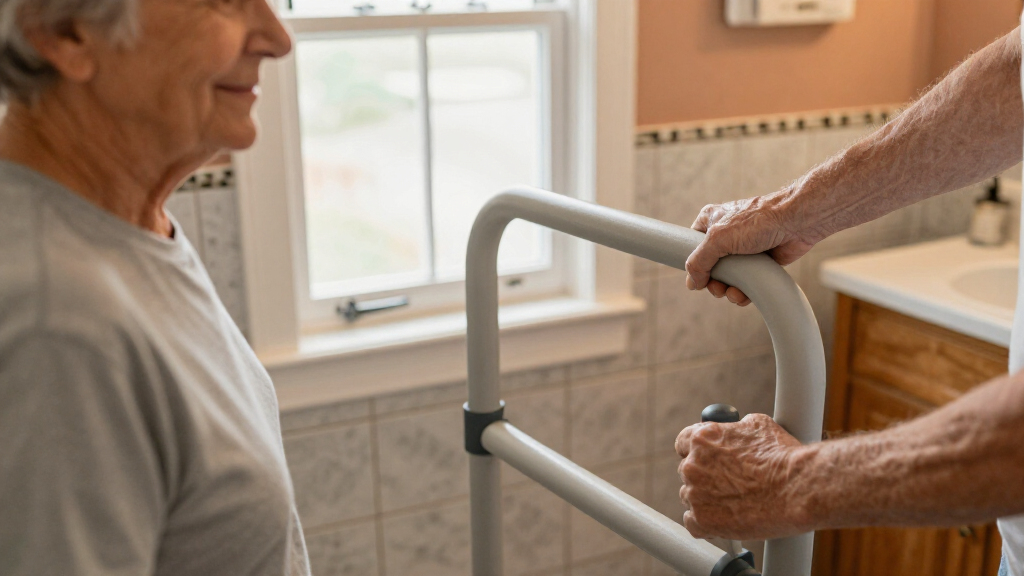
How We Picked
Products were evaluated based on durability, ease of use, adjustability, weight capacity, portability, and value for money. We prioritized aids that offer real support for standing and rising, rather than simple assistive features. Each product was compared against others in terms of stability, user-friendliness, and versatility. Our goal was to highlight options suitable for different types of users—from those needing lightweight support to those requiring robust, floor-to-standing assistance. The ranking reflects the best balance of performance and practicality for a wide range of needs.Factors to Consider When Choosing Tools To Help Elderly People Get Up
Choosing the right tools to help elderly people get up involves several key considerations. First, assess the individual’s mobility level and whether they need full standing support or just assistance with transfers. Next, consider portability—if they need support in multiple locations or while traveling, a lightweight, portable device may be best. Durability and weight capacity are vital for heavier users or those with significant strength issues. Ease of use, including handle design and adjustability, also plays a crucial role in ensuring safety and independence. Finally, balance your budget with the quality and features needed for safe use.Mobility Level and Support Needs
Understanding the user’s mobility limitations is essential before choosing a tool. Some aids are designed purely for stability during transfers, while others assist from the floor to standing. For individuals with severe weakness or balance issues, a sturdy, high-weight-capacity device is necessary. Conversely, for those with mild difficulty, lighter, simpler tools might suffice. Matching the product to the user’s specific needs minimizes frustration and maximizes safety.Portability and Use Environment
Deciding between portable and stationary aids depends on where the user needs support. Portable tools, like handheld lifts or foldable rails, are ideal for multiple locations or travel. Stationary aids, such as mounted rails or floor supports, offer more stability but are limited to one area. Consider the user’s daily routines—do they need support in the bathroom, living room, or bedroom? The right choice balances ease of transport with the level of support needed in each environment.Build Quality and Capacity
Durability directly impacts safety and long-term usability. Heavier users require aids with higher weight capacities—ideally over 300 lbs—while lighter users might not need such robust construction. Materials should be slip-resistant and sturdy, especially handles and bases. Investing in well-built products can prevent accidents, but often comes at a higher price. Always verify the weight limits and material quality before purchasing.Ease of Use and Safety Features
Ease of operation is vital for user confidence and safety. Look for aids with ergonomic handles, non-slip grips, and simple height adjustments. Some devices include safety straps or anti-slip bases, which add security during use. Complicated mechanisms can discourage regular use or cause frustration, so prioritize intuitive designs. Consider whether caregivers or family members will assist in setup or use, and choose accordingly.Cost and Long-Term Value
While budget-friendly options are tempting, investing in higher-quality aids often yields better safety and durability. Cheaper models may wear out quickly or lack stability, leading to potential accidents. Conversely, premium devices tend to last longer and support heavier weights or more strenuous use. Evaluate how often the aid will be used and whether the investment aligns with long-term safety goals. Sometimes, paying more upfront reduces replacement costs and enhances peace of mind.Frequently Asked Questions
Can these tools be used independently without caregiver assistance?
Many of these tools are designed for independent use, especially those with adjustable height and portable features. However, the suitability depends on the individual’s mobility level and strength. Some aids may require initial setup or steady handling, so for users with severe weakness or balance issues, caregiver assistance might still be necessary during use. Carefully reviewing product instructions and support features can help determine if a tool is suitable for independent operation.
Are these tools safe for use on different types of flooring?
Most of these aids are designed with non-slip bases or handles to ensure safety across various flooring types, including hardwood, tile, and carpet. However, stability can vary based on the surface texture and aid design. For example, floor-mounted rails or supports with rubberized bases tend to perform better on slippery surfaces. Always verify if the product specifies compatibility with your flooring or if additional anti-slip accessories are recommended.
How do I choose the right height adjustment for a standing aid?
Correct height adjustment is critical for both safety and comfort. The aid should be set so that the user can grasp handles comfortably without overextending or stooping. Measure the user’s standing height and ensure the device’s adjustable range covers this comfortably. Many aids feature multiple height settings or telescoping parts, making it easier to customize. Proper setup minimizes strain and supports natural movement during standing.
What safety features should I prioritize in a standing assist device?
Look for aids with non-slip bases or grips, sturdy handles, and easy-to-operate height adjustments. Safety straps or support belts can add security, especially for users with severe balance issues. Anti-slip surfaces and stability features prevent accidental slips or tipping. Devices with intuitive design and straightforward operation increase safety by reducing user error. Prioritizing these features helps ensure confidence and reduces fall risk during use.
Is it better to buy a portable or a stationary standing aid?
The choice depends on the user’s environment and mobility needs. Portable aids are ideal for multiple locations or if the user moves frequently, offering flexibility and convenience. Stationary aids, such as mounted rails or floor supports, provide greater stability and are better suited for permanent setups like bathrooms or living rooms. Consider how often the aid will be used, the need for mobility, and available space to determine which option offers the best safety and practicality.
Conclusion
For those seeking an all-around reliable solution, the Liberty Lift Assists Standing Aid stands out as the best overall choice, offering portability and sturdy support suitable for most users. If budget is a concern, the Standing Assist Device for Floor provides solid support without a hefty price. For beginners or those with mild mobility issues, simpler models like the Vive Stand Assist can be effective and easy to operate. Caregivers or users with significant strength or stability needs should consider more robust, high-capacity options like the Mobility Aids Tool. Ultimately, selecting the right aid depends on individual mobility, environment, and safety priorities—use this guide to find the best fit for your situation.
Cold & flu season Picks
humidifiers
As an affiliate, we earn on qualifying purchases.