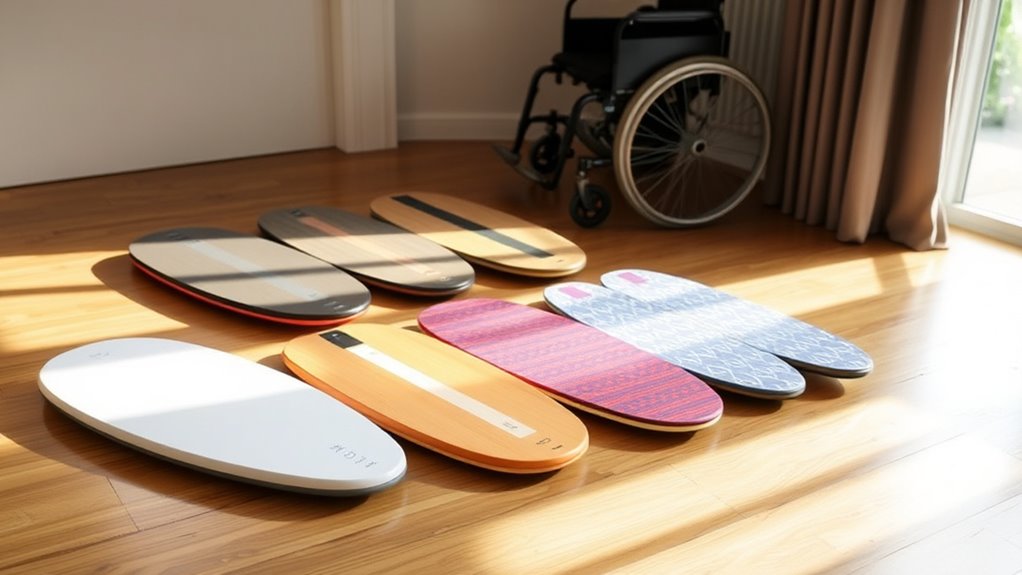

When I search for the best transfer boards for wheelchair transfers, I find they’re essential for enhancing independence and safety. These boards come in various materials and designs, featuring anti-slip surfaces and ergonomic handles for ease of use. They accommodate diverse weight capacities and support different transfer scenarios. Whether you’re helping seniors, post-surgery patients, or anyone with limited mobility, there’s a solution for you. You’ll discover even more options and details as you explore further.
Key Takeaways
- Transfer boards promote independence by enabling safe wheelchair transfers with minimal assistance from caregivers, enhancing user autonomy.
- Key features include durable materials, ergonomic handles, and anti-slip surfaces that ensure safety and ease of use during transfers.
- Various designs, such as sliding boards and rotating disks, cater to different transfer scenarios, making them versatile for users.
- Weight capacities range from 320 lbs to 735 lbs, accommodating a wide variety of users, including elderly and post-surgery patients.
- Considerations include maintenance requirements and surface compatibility, as some boards may be less portable or suited for uneven surfaces.
DMI Transfer Board and Slide Board for Patient Move Assist
If you’re looking for a reliable solution to assist in transfers for elderly or disabled individuals, the DMI Transfer Board stands out with its impressive weight capacity of 440 pounds. I’ve found it incredibly useful for smooth transfers between a wheelchair, bed, or chair. Made from durable Scotch pine, this board is built to last, with a smooth surface that prevents clothing snags. The tapered ends and cut-out handles make it easy to maneuver. Plus, it promotes independence for users while protecting caregivers from injury. Overall, it’s a practical and effective tool for anyone needing assistance with patient mobility.
Best For: Individuals needing assistance with transfers, such as the elderly, disabled, or post-surgery patients.
Pros:
- Durable Construction: Made from heavy-duty Scotch pine, ensuring long-lasting use.
- High Weight Capacity: Supports up to 440 pounds, accommodating a wide range of users.
- User-Friendly Design: Features tapered ends and cut-out handles for easy maneuverability and secure grip.
Cons:
- Limited Dimensions: At 30 inches long, it may not be suitable for all transfer scenarios.
- Wood Material: May require extra care to maintain its condition compared to plastic alternatives.
- Weight: Being a wooden board, it may be heavier than some other transfer aids, making it less portable.
DMI Heavy-Duty Transfer Board for Patients and Seniors
The DMI Heavy-Duty Transfer Board is an excellent choice for individuals who require assistance with transfers, particularly seniors and those recovering from surgery. Made from durable Scotch Pine, this board supports up to 735 pounds and features a smooth surface that prevents snags. I appreciate the tapered ends and cut-out handles, which provide extra leverage for secure sliding. To use it, simply position one end at the starting point and the other at the destination, ensuring the board is level. Always lock wheelchairs for safety, and consider using a gait belt for added support during transfers.
Best For: Individuals requiring assistance with transfers, including seniors and those recovering from surgery.
Pros:
- Durable Construction: Made from thick, sealed Scotch Pine wood, ensuring longevity and a smooth surface that prevents snags.
- High Weight Capacity: Supports up to 735 pounds, making it suitable for a wide range of users.
- User-Friendly Design: Features tapered ends and cut-out handles for easy sliding and secure grip during transfers.
Cons:
- Requires Training: Users need to have proper training and follow professional guidance for safe usage.
- Potential Friction: Must ensure the board is clean and dry to reduce friction, which may require additional maintenance.
- Limited Mobility: May not be suitable for individuals with extreme mobility challenges without additional assistance.
Transfer Board and Slide Board for Patient Transfer
Designed for individuals with limited mobility, the Transfer Board and Slide Board make transferring between surfaces like wheelchairs and cars much easier. This patented product features a 31.5×8 inch transfer board and a 28×28 inch slide sheet, ensuring smooth, efficient transitions. The anti-slip back keeps it secure, while the curved edges prevent scratches. With three handles for easy grasping, transferring feels safe and comfortable. Simply place the board horizontally, and the patient can move back and forth as needed. Using the slide sheet enhances the process, making it an essential tool for improving care efficiency and reducing injury risks.
Best For: Individuals with limited mobility who require assistance with transferring between surfaces like wheelchairs and cars.
Pros:
- Enhanced safety and comfort with anti-slip features and multiple handles.
- Facilitates smooth and efficient transfers, reducing the risk of injury for both patient and caregiver.
- Compact design makes it easy to store and transport.
Cons:
- May require additional assistance for users with severe mobility limitations.
- The size of the transfer board may not accommodate larger individuals comfortably.
- Users may need training to effectively utilize the board and slide sheet for optimal results.
DMI Heavy-Duty Transfer Board for Patient Move Assist
For anyone needing a reliable solution for patient transfers, the DMI Heavy-Duty Transfer Board stands out with its sturdy construction and thoughtful design. Made from heavy-duty Scotch Pine, it supports up to 440 pounds, ensuring safety during transfers. I appreciate the smooth, sanded surface, which prevents snags and makes movement effortless. The tapered ends and cut-out handles provide extra leverage, making it easier for both caregivers and patients. Whether transferring from a wheelchair to a bed or chair, this board promotes independence while protecting caregivers from injury. It’s truly a must-have for anyone involved in patient mobility.
Best For: Individuals requiring assistance with safe and secure transfers, including seniors, disabled individuals, and caregivers.
Pros:
- Durable Construction: Made from heavy-duty Scotch Pine, supporting up to 440 pounds for reliable use.
- Smooth Surface: Sanded and sealed wood provides frictionless transfers, preventing snags and ensuring comfort.
- Enhanced Usability: Tapered ends and cut-out handles offer extra leverage, making transfers easier for both patients and caregivers.
Cons:
- Weight Limit: May not be suitable for individuals exceeding 440 pounds.
- Material Sensitivity: Wooden construction may be susceptible to wear and tear over time if not properly maintained.
- Limited Dimensions: At 30 x 8 x 0.75 inches, it may not accommodate larger individuals or certain transfer scenarios effectively.
Slide Transfer Board with Handles for Seniors and Handicap
If you’re looking for a reliable solution to assist seniors and handicapped individuals with safe and easy transfers, the Slide Transfer Board with Handles is an excellent choice. Made of heavy-duty wood, it supports up to 500 lbs, making it perfect for wheelchair users and postoperative patients. The two cutout handles provide a secure grip, and the smooth, sealed surface prevents skin scratches. I love how it reduces caregiver stress while ensuring safety during transfers. Whether indoors or outdoors, this board offers easy maneuverability and peace of mind for both users and caregivers alike. It’s truly a game-changer for independence!
Best For: Seniors, handicapped individuals, wheelchair users, and postoperative patients who need assistance with safe and easy transfers.
Pros:
- Reduces caregiver burden and stress during patient transfers.
- Made of durable, heavy-duty wood with a high load capacity of up to 500 lbs.
- Features cutout handles for a secure grip and a smooth surface to prevent skin scratches.
Cons:
- Might be heavy for some caregivers to maneuver alone.
- Limited to flat surfaces for optimal use, which may restrict some transfer scenarios.
- Requires proper technique to ensure safety during transfers, which may require training for some users.
Mobility Transfer Board with Sliding Disk for Wheelchair Users
Looking for a solution that simplifies transfers for wheelchair users? The Mobility Transfer Board with Sliding Disk is your answer. This FSA-eligible device allows safe transfers without lifting between your wheelchair, bed, car seat, or bathroom fixtures. Its sturdy design features a rotating disk for smooth pivoting and sliding, making transfers easier than ever. I love how it enhances my independence while minimizing effort for my caregivers. Lightweight and portable, I can easily transport it wherever I go. With a focus on safety and versatility, this transfer board is an essential tool for anyone needing mobility assistance.
Best For: Individuals who use wheelchairs and require assistance with safe and efficient transfers between various surfaces.
Pros:
- Enhances independence: Allows users to transfer without assistance, promoting self-reliance.
- Easy to transport: Lightweight and portable design makes it convenient for on-the-go use.
- Safe and efficient: No-lift design reduces risk of injury for both users and caregivers during transfers.
Cons:
- Limited weight capacity: May not accommodate all user sizes or weights, requiring careful selection.
- Learning curve: Users may need time to become familiar with the sliding disk mechanism.
- Surface compatibility: Effectiveness may vary depending on the type of surfaces involved in transfers.
Wooden Transfer Board for Transferring Disabled Patients and Seniors
Choosing a wooden transfer board is an excellent option for those needing to assist disabled patients and seniors during transfers. I love how this heavy-duty hardwood board, measuring 30 inches long and 8 inches wide, provides a sturdy surface for safe movement. The tapered ends make sliding seamless, while the cutouts ensure easy handling. With a weight capacity of 440 pounds, it’s perfect for various patient sizes. The smooth finish enhances comfort and safety, reducing injury risks for both caregivers and patients. It truly enhances independence and makes transferring between wheelchairs, beds, and cars so much easier for everyone involved.
Best For: Individuals caring for disabled patients, seniors, or those requiring assistance with mobility transfers.
Pros:
- Sturdy Construction: Made of heavy-duty hardwood with a weight capacity of 440 pounds, ensuring durability and safety during transfers.
- Smooth Sliding: Tapered ends facilitate seamless movement, reducing the risk of injury for both caregivers and patients.
- Comfort and Ease of Use: The smooth finish and hand cutouts provide a comfortable grip, making handling easier and enhancing patient independence.
Cons:
- Limited Portability: Being a wooden board, it may be heavier and less portable than some alternative materials.
- Requires Care in Maintenance: Wooden surfaces may need regular maintenance to prevent wear and ensure safety.
- Not Adjustable: Fixed size may not suit all transfer scenarios, potentially limiting versatility for some users.
YHK Sliding Transfer Boards for Wheelchairs
YHK Sliding Transfer Boards are an excellent choice for seniors seeking to maintain their independence during transfers. They’re made from sturdy plasticized steel and can support up to 440 lbs, making them reliable for various situations. The toothed granule design on the back prevents slipping, ensuring safety during use. I appreciate the ergonomic handle, which provides a comfortable grip without scratching the skin. To use, simply lay the board horizontally between surfaces and slide. Just remember to inspect the edges for sharpness and, if needed, have a caregiver assist you for added safety. This board truly enhances mobility!
Best For: Seniors and individuals with limited mobility seeking to enhance their independence during transfers.
Pros:
- Sturdy construction supports up to 440 lbs, ensuring reliability.
- Non-slip design enhances safety by preventing accidental slippage during use.
- Ergonomic handle offers a comfortable grip, reducing the risk of skin abrasions.
Cons:
- Requires users to have strong, balanced hands for independent operation.
- May need caregiver assistance for those who lack upper body strength.
- Edges should be checked for sharpness before use, which could pose a risk if not inspected.
Urby Plus Size Extra Wide Transfer Board for Seniors and Elderly
The Urby Plus Size Extra Wide Transfer Board is an excellent choice for seniors and elderly individuals who require additional support during transfers. I appreciate its durable Rubberwood construction, providing a smooth surface that’s both thick and sturdy. This board is wider and longer than average, supporting up to 400 pounds, making it perfect for various user sizes. The cutout handholds offer better leverage, and the rounded corners enhance safety and comfort during use. With a 1-year unlimited warranty, I feel confident knowing it’s designed to assist with transfers, physical therapy, and reducing caregiver strain effectively.
Best For: Seniors, elderly individuals, and physical therapy patients who require additional support during transfers.
Pros:
- Durable Construction: Made from sturdy Rubberwood with a smooth surface, ensuring strength and stability.
- Plus Size Design: Wider and longer than average, accommodating users up to 400 pounds for various transfer needs.
- Safety Features: Cutout handholds and rounded corners enhance safety, comfort, and ease of use during transfers.
Cons:
- Weight Limit: May not be suitable for users exceeding 400 pounds, limiting its use for some individuals.
- Size: The larger dimensions may make it difficult to store in smaller living spaces.
- Limited Mobility: Users still require some level of mobility to utilize the board effectively.
Vive Transfer Board – Patient Slide Assist Device
For elderly individuals or those with disabilities, the Vive Transfer Board stands out as an essential tool for safe and easy transfers between various surfaces like wheelchairs, beds, or cars. I love that it’s made from strong, sealed wood, supporting up to 400 pounds. The rounded, tapered ends make transfers smoother and more comfortable, while the dual cutout handles give a secure grip. What’s impressive is the lightweight design, allowing me to position it effortlessly. Plus, with a 60-day VIVE guarantee, I feel confident in my purchase. This board truly enhances independence and minimizes the risk of caregiver injuries.
Best For: The Vive Transfer Board is best for elderly individuals or those with disabilities seeking safe and easy transfers between various surfaces.
Pros:
- Strong construction supports up to 400 pounds, ensuring durability and safety.
- Rounded, tapered ends and dual cutout handles enhance comfort and grip during transfers.
- Lightweight design allows for effortless positioning and use.
Cons:
- Limited to flat surfaces, may not be suitable for uneven or sloped areas.
- Requires some level of upper body strength for effective use, potentially challenging for some users.
- The wood material, while strong, may require maintenance to prevent wear over time.
Wooden Slide Transfer Board for Seniors and Handicap (500 lb Capacity)
Looking for a reliable solution to assist seniors and individuals with mobility disabilities during transfers? The Wooden Slide Transfer Board is an excellent choice. With a sturdy 500-pound capacity, it’s designed for safe transfers between beds, wheelchairs, and stools. Its 30-inch length and lightweight design make it portable and easy to use anywhere. The hardwood construction features a smooth, sealed surface that minimizes friction, ensuring comfort and safety. Plus, the large handles offer a secure grip for better leverage. This transfer board not only promotes independence but also reduces the risk of caregiver injuries, making it a smart investment for anyone in need.
Best For: Seniors and individuals with mobility disabilities who require assistance during transfers between various locations.
Pros:
- Durable hardwood construction with a smooth, sealed surface for easy sliding and minimized friction.
- Lightweight design (3.7 pounds) allows for portability and ease of use in different settings.
- Large, rounded handles provide a secure grip, enhancing safety and leverage during transfers.
Cons:
- Limited to a size of 30 inches, which may not accommodate all user needs or preferences.
- Requires some upper body strength for effective use, which may not be suitable for all individuals with mobility issues.
- The wooden material may not be as easily cleanable as some plastic alternatives.
LOSCHEN Slide Transfer Board for Seniors
Designed specifically for seniors, the LOSCHEN Slide Transfer Board makes transferring between various surfaces like wheelchairs and beds much easier. I appreciate its sturdy ABS plastic construction, which is both durable and resistant to moisture. The board’s straight design is a game-changer, allowing me to maneuver it effortlessly. Plus, the non-slip features ensure safety during transfers, giving me peace of mind. I recommend having an escort for the first use, and testing the sliding speed beforehand. This board comfortably supports up to 440 lbs, making it a reliable choice for a smooth shift between surfaces.
Best For: The LOSCHEN Slide Transfer Board is best for seniors and caregivers seeking a safe and efficient way to assist with transfers between various surfaces.
Pros:
- Durable Construction: Made from high-quality ABS plastic, ensuring longevity and moisture resistance.
- Straight Design: Easier to maneuver compared to curved models, facilitating smoother transfers.
- Safety Features: Non-slip texture and smooth edges enhance user safety during transfers.
Cons:
- Size Limitations: May not be suitable for very thin or large individuals; users should verify dimensions and weight capacity.
- Need for Assistance: An escort is recommended for initial use, which may not be convenient for all users.
- Sliding Speed Variability: Users must test sliding speed beforehand to prevent potential injuries during transfers.
Transfer Board for Wheelchair Users
Transfer boards are an essential tool for anyone who needs to assist elderly or disabled individuals with safe shifts between surfaces like beds, baths, or cars. I’ve found that these boards make transfers smoother and reduce the risk of injury for both the user and the caregiver. The crescent-shaped design, coupled with a rotating 360° disk, allows for natural movement, making it easier to glide from one surface to another. With a sturdy construction that supports up to 400 lbs, it’s perfect for various needs. Just remember to connect it securely and provide support during the initial use for safety.
Best For: Individuals who are elderly or disabled and require assistance with safe transfers between surfaces like beds, baths, or cars.
Pros:
- Enhanced Safety: Reduces the risk of injury for both users and caregivers during transfers.
- Sturdy Construction: Supports up to 400 lbs, making it suitable for a wide range of users.
- Ergonomic Design: The crescent shape and rotating disk facilitate smooth, natural movements for easier transfers.
Cons:
- Initial Support Needed: Caregivers must assist during the first use to ensure safety, which may require additional effort.
- Requires Secure Connection: Users must ensure the board is properly connected between surfaces, which can be cumbersome.
- Limited to Specific Uses: Primarily designed for transfers between certain surfaces, which may not accommodate all mobility needs.
DMI Transfer Board for Patient and Senior Move Assist
If you’re seeking a reliable solution for assisting seniors or individuals with disabilities during transfers, the DMI Transfer Board is an excellent choice. This heavy-duty wood board, made from Scotch Pine, measures 24 x 8 x 1 inches and supports up to 440 pounds. Its tapered, rounded edges make sliding smooth and comfortable. To use, position it level between the starting point and destination, ensuring wheelchair wheels are locked. I recommend using it alongside the DMI Gait Belt for extra support. This transfer board not only promotes independence but also considerably reduces the risk of caregiver injuries. It’s a practical and safe option!
Best For: Individuals with disabilities, seniors, or post-surgery patients requiring assistance with safe and easy transfers.
Pros:
- Heavy-duty construction supports up to 440 pounds, ensuring durability and reliability.
- Tapered, rounded edges allow for smooth sliding, enhancing comfort during transfers.
- Promotes independence for users while reducing the risk of injury for caregivers.
Cons:
- Requires proper positioning and technique for safe use, necessitating some training.
- May not be suitable for individuals who are unable to assist in the transfer process.
- Limited to one size (24 x 8 inches), which may not fit all transfer scenarios effectively.
LOSCHEN Slide Transfer Board for Patient Assistance
For those seeking a reliable solution for assisting patients, the LOSCHEN Slide Transfer Board stands out due to its anti-slip back surface, which substantially enhances safety during transfers. I appreciate how it facilitates movement between wheelchairs, beds, and other surfaces, making life easier for both patients and caregivers. The curved edges and smooth material guarantee no scratches or injuries occur during use. Plus, the cut-out handle allows for easy grasping, enhancing efficiency. Supporting up to 320 lbs, it’s durable and simple to operate, making transfers seamless. If you have questions or need support, their customer service is ready to help.
Best For: Patients, elderly individuals, and caregivers seeking a safe and efficient method for transferring between various surfaces.
Pros:
- Anti-slip back surface enhances stability and safety during transfers.
- Curved edges and smooth material prevent scratches and injuries to users.
- Cut-out handle allows for easy grasping, improving transfer efficiency.
Cons:
- May require assistance for those with limited mobility.
- Horizontal placement may not be suitable for all types of transfers.
- Weight capacity of 320 lbs may limit use for heavier patients.
Factors to Consider When Choosing Transfer Boards for Wheelchair Transfer

When choosing a transfer board for wheelchair transfers, I always consider several key factors. The weight capacity, material durability, and surface smoothness are vital for safety and ease of use. Additionally, handle design and board dimensions can greatly impact the comfort and effectiveness of the transfer process.
Weight Capacity Requirements
Choosing the right transfer board for wheelchair transfers is essential, especially regarding weight capacity. I always verify the board’s weight limit exceeds my maximum weight to guarantee safety during transfers. It’s wise to select a board with a weight capacity at least 50% higher than my weight for that added safety margin. Typically, I find product specifications detailing maximum load ratings, which can range from 440 to 735 pounds depending on the model. I also consider the heaviest potential user and any equipment or accessories involved in the transfer. In conclusion, I confirm that the weight capacity complies with healthcare guidelines and safety standards to prevent any structural failures during use.
Material Durability
While selecting a transfer board, I focus heavily on material durability to guarantee it withstands regular use. I look for boards made from high-quality wood, like sealed Scotch Pine or hardwood, as they offer strength and smoothness, minimizing friction during transfers. Alternatively, I consider plastic boards crafted from ABS or similar sturdy materials, which resist moisture, mold, and deformation. The thickness of the board is also essential; thicker boards usually support higher weight capacities and resist bending. I make certain that the surfaces are properly sealed and finished to prevent splinters, cracks, and water damage. By prioritizing these factors, I can confidently choose a transfer board that will maintain its integrity and effectiveness over time.
Surface Smoothness
Since a smooth surface on a transfer board is essential for ensuring an efficient and safe transfer, I always prioritize this aspect in my selection process. A smooth, sealed surface reduces friction, making sliding easier and safer for the person being transferred. I look for boards that prevent snagging of clothing or skin, as this can lead to discomfort and injury. Polished, even surfaces minimize the risk of skin irritation, which is critical for a pleasant experience. Additionally, I prefer non-porous finishes that resist moisture and bacteria buildup, ensuring hygiene over time. A well-finished surface not only enhances safety but also contributes to a quieter, more comfortable transfer for both the patient and caregiver.
Handle Design
When I evaluate transfer boards for wheelchair transfers, handle design is one of the most critical factors I consider. Ergonomically shaped and sealed handles provide a secure and comfortable grip, which is essential during transfers. I look for cut-out handles that allow for easy grasping and leverage, reducing strain on both the caregiver and the patient. The number of handles, typically two or three, can significantly affect stability and control during movement. I prefer boards with handles positioned at both ends for balanced handling and better leverage. It’s also crucial that handles are smooth, sealed, and free of sharp edges to prevent scratches, skin irritation, or damage to clothing. These features make a big difference in ensuring safe transfers.
Board Dimensions
After considering handle design, board dimensions play a significant role in choosing the right transfer board for wheelchair transfers. The length typically ranges from 24 to 36 inches, which directly affects how easily you can bridge between surfaces. A longer board offers greater transfer distance but can be tricky to maneuver in tight spaces. On the other hand, widths vary from about 7 to 10 inches, impacting stability and suitability for different users. Narrower boards are portable and easier to manage, but they require precise positioning for safety. Ultimately, it’s essential to match the dimensions with your transfer needs and the available physical space to guarantee both safety and efficiency during transfers.
Safety Features
How can we guarantee safety during wheelchair transfers? It starts with choosing transfer boards that feature anti-slip surfaces and textured backs to prevent accidental slips. I look for handles with secure grips and sealed edges to minimize the risk of hand injuries and clothing snags. Rounded corners and smooth edges are essential, ensuring that neither patients nor caregivers risk scratches or cuts. Additionally, non-slip bump patterns or granules enhance stability while using the board. Finally, it’s essential to consider the weight capacity ratings; making sure the board can safely support the user’s body weight without failure provides peace of mind. Prioritizing these safety features is key to making transfers as secure as possible.
Ease of Use
Choosing the right transfer board can make a world of difference in ease of use during wheelchair transfers. I’ve found that ergonomic handles or cutouts are essential for a secure grip, whether I’m helping someone or transferring myself. A smooth, sealed surface without rough edges is pivotal; it allows for easy sliding while minimizing the risk of injury. It’s also important that the board matches the user’s size and weight capacity for safe use. I appreciate designs with an anti-slip or textured back, which prevents slipping during transfers. Finally, ease of positioning and leveling the board is indispensable; I prefer designs that allow for stable placement between surfaces to facilitate smooth transitions.
Portability Options
When it comes to transferring between a wheelchair and other surfaces, what could be more important than having a portable transfer board? I always look for a board that’s lightweight and compact, making it easy to transport and store. Check for carrying handles or a design that simplifies carrying and maneuvering. It’s also beneficial if the board can be disassembled or folded for portability. I prefer materials like durable plastic or thin hardwood, which keep the weight down without sacrificing strength. Finally, confirm the size and weight of the transfer board support easy handling while still being safe and effective. This way, I can maintain my independence without worrying about cumbersome equipment.
Frequently Asked Questions
Are Transfer Boards Suitable for All Types of Wheelchairs?
Transfer boards aren’t suitable for all types of wheelchairs. I’ve found that their effectiveness really depends on the wheelchair’s design and the user’s needs. For instance, some wheelchairs have armrests or other features that can make transferring difficult. It’s essential to contemplate the chair’s height, width, and stability. I recommend trying out different boards to see what works best for your specific situation, ensuring safety and comfort during transfers.
How Do I Clean and Maintain a Transfer Board?
I clean my transfer board with warm, soapy water and a soft cloth to avoid scratches. After rinsing it thoroughly, I let it air dry completely. I check for any cracks or wear during cleaning, as maintaining its integrity is essential for safety. I also store it in a dry place to prevent moisture damage. Regular maintenance like this keeps my transfer board in top condition and guarantees it’s safe to use.
Can Transfer Boards Be Used on Any Surface?
Absolutely, transfer boards can be used on various surfaces, but some are better than others. Did you know that around 70% of wheelchair users face challenges during transfers? I’ve found that smooth, firm surfaces like tile or hardwood work best, while carpet can be tricky. It’s essential to guarantee the board’s secure, so I always check the stability first before making a move. Safety’s my top priority when using it!
What Is the Weight Limit for Most Transfer Boards?
Most transfer boards typically support a weight limit of around 250 to 350 pounds. I’ve found that it’s vital to check the manufacturer’s specifications for the exact limit, as it can vary. When I choose a board, I always prioritize safety and durability, ensuring it meets my needs. If you’re unsure about a board’s capacity, it’s best to consult the guidelines or talk to a healthcare professional for advice.
Are There Any Age Restrictions for Using Transfer Boards?
Is there really an age limit for using transfer boards? I’ve found that there aren’t specific age restrictions. Instead, it’s more about the individual’s ability to use the board safely and effectively. I’d always recommend consulting a healthcare professional to ensure the user is physically capable of handling the transfer process. It’s important to prioritize safety, regardless of age, so anyone considering it should feel confident and comfortable using the equipment.
Conclusion
In summary, choosing the right transfer board can make a world of difference for wheelchair users and their caregivers. Did you know that using a transfer board can reduce the risk of injury by up to 80% during transfers? This statistic really highlights the importance of safety and ease in daily routines. So, whether you opt for a heavy-duty model or one with handles, investing in a quality transfer board can enhance independence and confidence.