To ease sundowning, use warm, soft lighting in the evening to create a calming environment and reduce shadows. Incorporate dimmable lights for flexible brightness and maximize natural light during the day to support circadian rhythms. Avoid bright or flickering lights before bed and establish consistent lighting routines. Adding nightlights and positioning lights to minimize glare help safety and comfort. Keep exploring these tips for more practical ways to make evenings calmer and safer.
Key Takeaways
- Use warm, soft, and dimmable lighting in the evening to create a calming environment and reduce shadows and glare.
- Maintain a consistent lighting routine with nightlights along pathways to promote safety and familiarity.
- Maximize natural daylight during the day and incorporate light therapy to support circadian rhythms.
- Position lights to minimize glare and shadows, aiming at walls or ceilings for even diffusion.
- Utilize smart or automated lighting controls to ensure reliable, gentle illumination and safe navigation at night.
As an affiliate, we earn on qualifying purchases.
Use Warm, Soft Lighting in the Evening
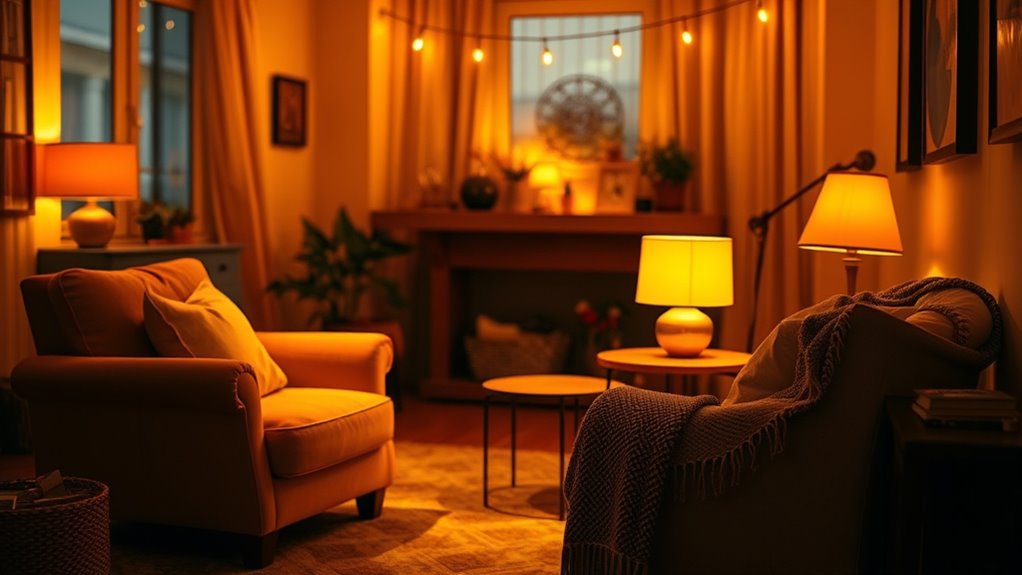
In the evening, switching to warm, soft lighting can make a significant difference for those experiencing sundowning. Bright, harsh lights can increase confusion and agitation, so opt for gentle illumination that mimics natural sunset tones. Use lamps with warm-colored bulbs or dimmable fixtures to create a soothing environment. This type of lighting helps reduce shadows and glare, which can be disorienting. Keep the lighting consistent and avoid sudden changes in brightness, as these can upset your loved one. The goal is to create a calm, inviting space that signals the end of the day and promotes relaxation. Incorporating ergonomic lighting solutions can further enhance comfort and ease transitions into evening routines. Selecting appropriate lighting options that are designed to minimize visual stress can also contribute to a more comfortable environment. Using vetted indoor lighting products ensures safety and reliability. Additionally, understanding the effects of lighting on mood can help you tailor your lighting choices more effectively. Being mindful of the home decor elements, such as the placement and style of lamps, can enhance the overall calming effect. By choosing warm, soft lighting, you can help ease anxiety and make evening transitions smoother.
Incorporate Dimmable Lights for Flexible Brightness
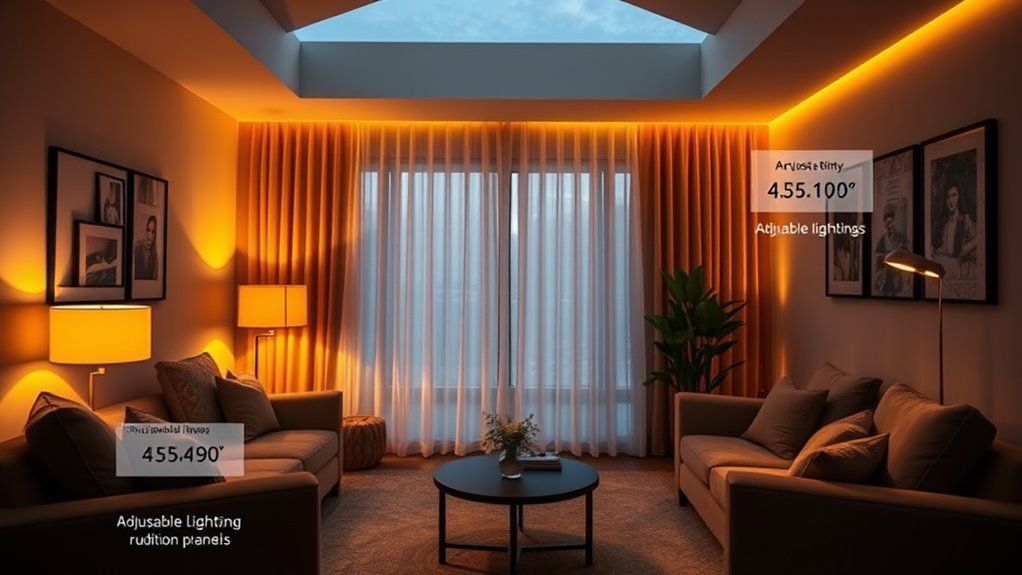
Adding dimmable lights to your loved one’s environment gives you the flexibility to adjust brightness levels quickly and easily. This control helps create a calming atmosphere during sunset and early evening when symptoms may intensify. With dimmable lighting, you can soften glare, reduce shadows, and set the perfect mood, easing agitation and confusion. You’ll find it helpful to experiment with different settings to discover what works best for your loved one. Consider the following options:
| Brightness Level | Suitable For |
|---|---|
| Bright | Activities requiring focus |
| Moderate | Transition periods, early evening |
| Soft | Relaxing or winding down |
Adjusting lighting based on activity and time of day can considerably improve comfort and reduce sundowning symptoms. Incorporating seasonal variations into your lighting choices can further enhance the calming environment you create. Additionally, understanding lighting customization options can help you fine-tune the ambiance even more effectively, especially when considering home improvement strategies to optimize your space.
Maximize Natural Light During Daytime Hours
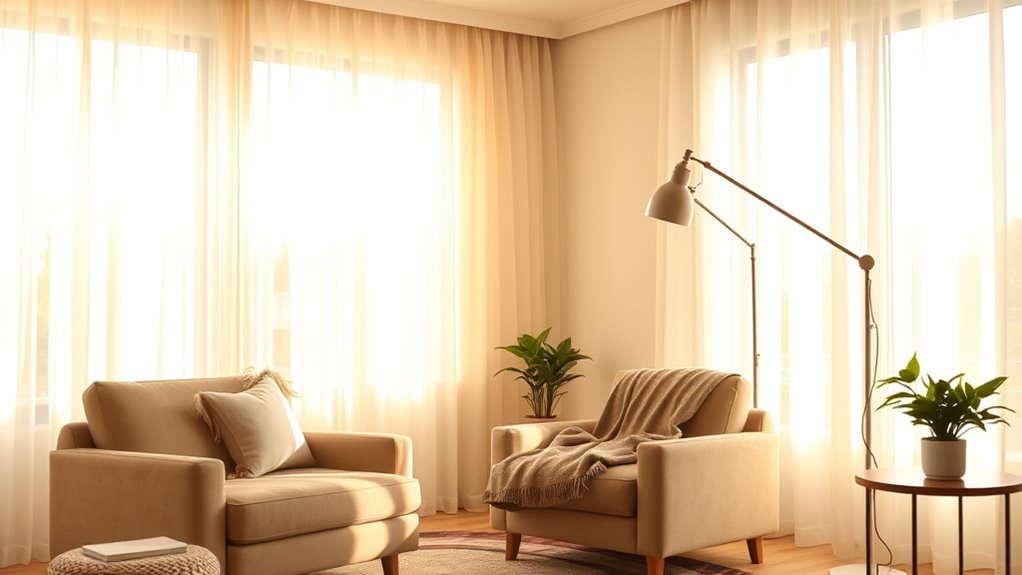
Maximizing natural light during the daytime can considerably improve your loved one’s mood and alertness. To do this, keep curtains and blinds open during the morning and early afternoon, allowing sunlight to fill the space. Position furniture near windows to encourage exposure and create a bright, welcoming environment. Spend time outdoors together whenever possible, especially in the late morning and early afternoon, to boost vitamin D and promote alertness. Use light-colored walls and reflective surfaces to help distribute sunlight throughout the room. Avoid heavy drapes that block light and opt for sheer curtains instead. Maintaining a consistent daytime schedule with plenty of natural light can help regulate your loved one’s internal clock and reduce sundowning symptoms. Incorporating exotic fruit blends into your diet can also boost overall mood and energy levels, supported by research on nutrition and mental health, enhancing the positive effects of increased natural light and light therapy. Additionally, incorporating healthy sleep routines can further support circadian rhythms and reduce sundowning episodes. Being mindful of production quantity variances can help in planning and optimizing resources for activities that encourage outdoor engagement, further supporting mood and alertness.
Avoid Bright or Flickering Lights Before Bedtime
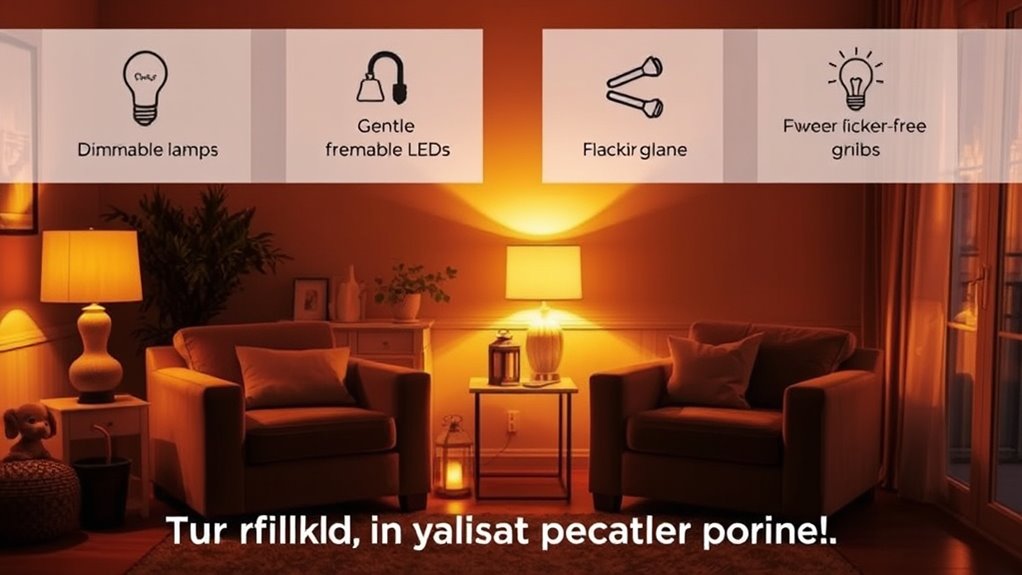
Bright or flickering lights before bedtime can disrupt your loved one’s ability to wind down and prepare for sleep. These types of lighting can cause overstimulation, making it harder for them to relax. Avoid using bright overhead lights or lamps with flashing bulbs in the evenings. Instead, opt for soft, warm lighting that creates a calming environment. Flickering lights from screens, such as TVs, tablets, or smartphones, should be turned off at least an hour before bedtime. This helps reduce blue light exposure, which can interfere with melatonin production. Keeping lighting gentle and steady signals to the brain that it’s time to wind down, making it easier for your loved one to shift smoothly into sleep.
Establish Consistent Lighting Routines
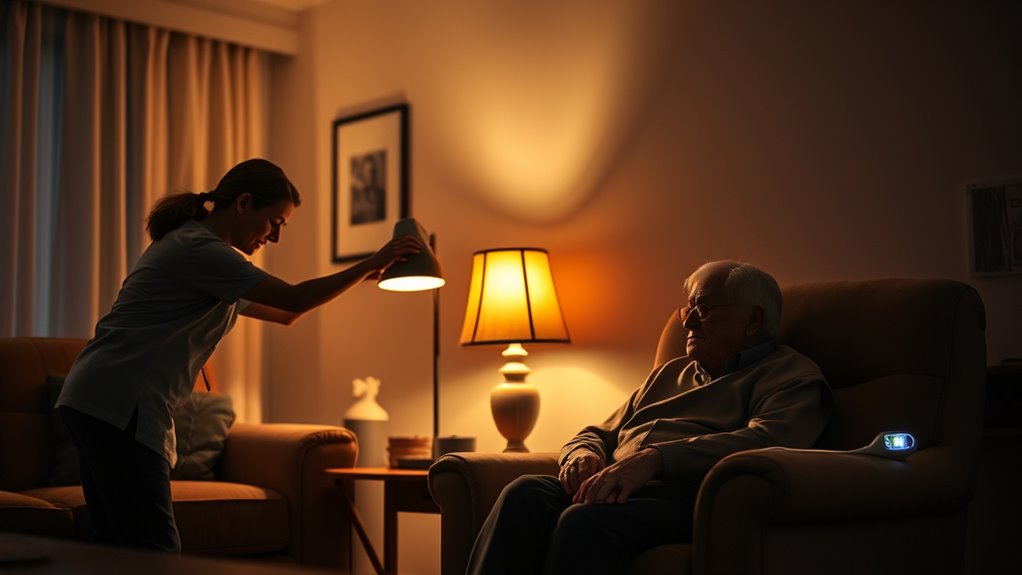
To help your loved one adjust to a predictable sleep pattern, establishing a consistent lighting routine each day is essential. Set a routine that mimics natural light changes, helping their body recognize when to wind down. For example, gradually dim the lights in the evening, then turn on softer, warm lights at the same time each night. Consistency reduces confusion and anxiety, easing sundowning symptoms. You can visualize this routine with the following:
| Time of Day | Lighting Condition | Purpose |
|---|---|---|
| Morning | Bright, natural light | Wakefulness and alertness |
| Afternoon | Moderate lighting | Maintain activity levels |
| Evening | Dim, warm lighting | Signal winding down, sleep |
Implementing a lighting routine that aligns with the circadian rhythm can further support your loved one’s wellbeing. Maintaining these patterns fosters a stable environment and minimizes disruption to sleep cycles, helping to reduce sundowning behaviors. Additionally, ensuring proper hydration and nutrition during the day can influence the body’s response to changing light conditions. Research indicates that light therapy can be beneficial for regulating sleep-wake cycles in individuals experiencing sundowning. Stick to these patterns to create a calming environment that supports your loved one’s circadian rhythm.
Utilize Nightlights for Safe Navigation
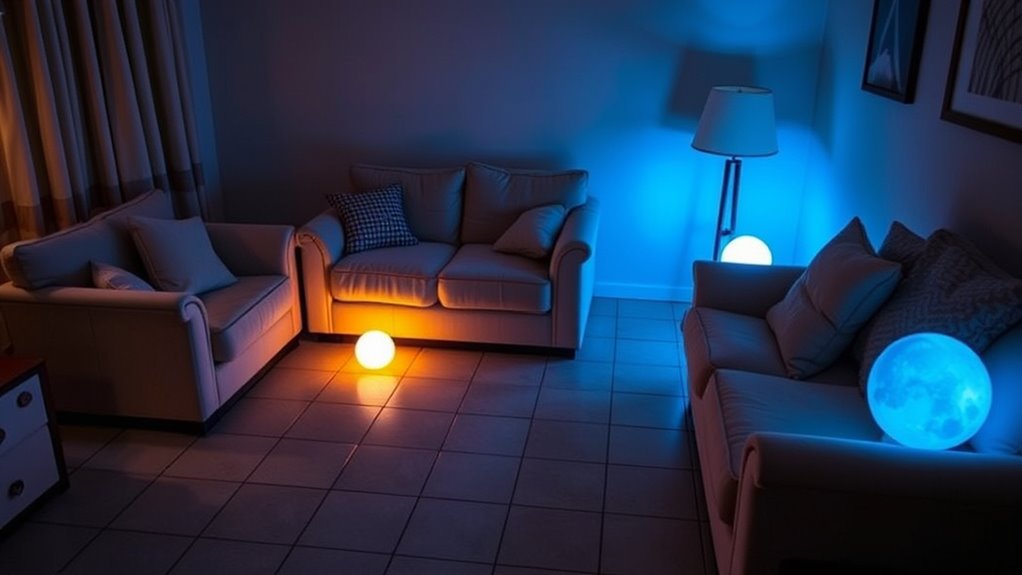
As part of creating a calming environment that aligns with your loved one’s sleep routine, incorporating nightlights can substantially improve safety during those vulnerable evening hours. Nightlights provide gentle illumination, helping your loved one navigate the space without feeling startled or disoriented. Place them strategically along commonly used pathways, such as hallways, staircases, and bathrooms. Opt for warm-toned bulbs that emit soft light, reducing the risk of glare that can cause confusion or agitation. Guarantee the nightlights are easy to turn on and off or operate automatically with sensors. This simple step minimizes the chance of falls or injuries while maintaining a soothing atmosphere. Additionally, automating lighting with automation technologies can enhance safety and convenience during nighttime hours. Using lighting control systems allows for customizable lighting schedules that adapt to your loved one’s needs and routines. Implementing smart lighting solutions can further optimize illumination based on ambient conditions, improving overall safety. To ensure consistent and reliable operation, consider choosing automatic sensor lights that activate seamlessly when needed. By making nighttime navigation safer, you help your loved one feel more secure and reduce unnecessary anxiety during sundowning episodes. Utilizing essential oils for calming effects, like lavender, in a diffuser near these pathways can further promote relaxation and ease stress during nighttime hours.
Position Lights to Minimize Glare and Shadows
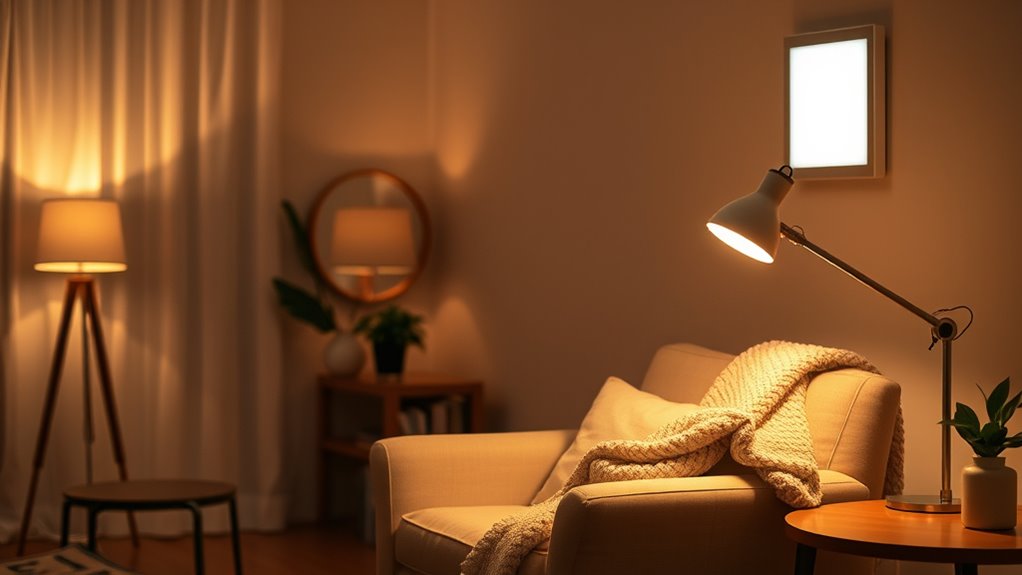
Position your lights carefully to reduce glare and eliminate harsh shadows that can cause confusion or disorientation. Proper placement helps create a comfortable environment by minimizing visual clutter. For example, avoid placing bright lights directly in someone’s line of sight. Instead, aim lights at walls or ceilings to diffuse the illumination evenly. Use the table below to understand common problem areas and solutions:
| Problem Area | Solution |
|---|---|
| Overhead glare | Use diffused ceiling fixtures or lamps |
| Harsh shadows | Position lights to soften shadow edges |
| Uneven lighting | Add multiple light sources for balance |
Integrate Light Therapy to Regulate Circadian Rhythms
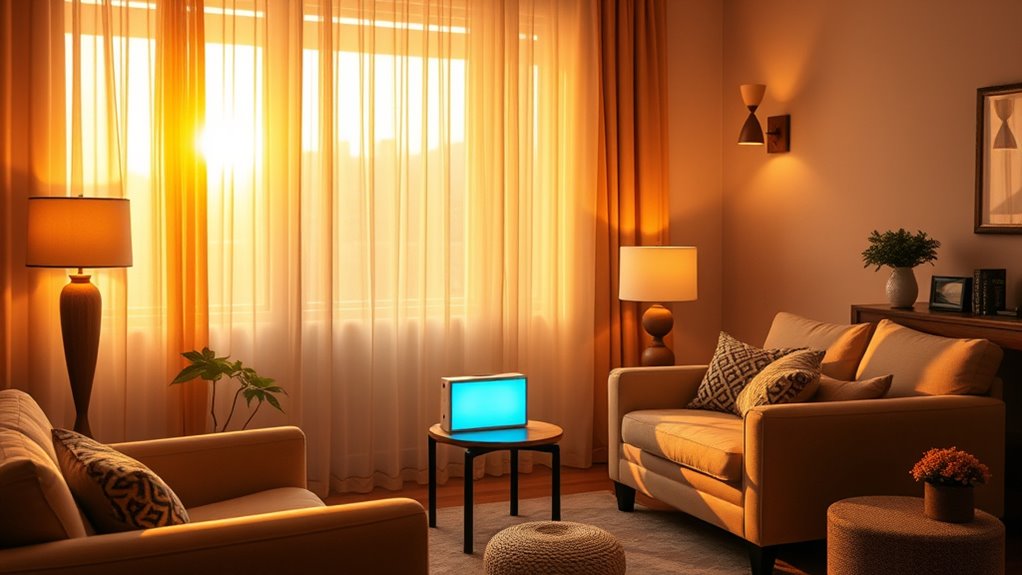
Proper lighting arrangements not only reduce visual confusion but also play an essential role in regulating your loved one’s internal clock. Light therapy involves exposing them to bright, natural-like light during the day to reinforce their circadian rhythms. Using a lightbox or specialized lamp for about 30 minutes in the morning can help reset their internal clock, promoting better sleep at night. Consistent exposure to appropriate light levels signals to their brain that it’s daytime, reducing sundowning symptoms. Avoid dim lighting in the evening, as it can confuse their internal clock further. Incorporating light therapy into their daily routine can improve mood, sleep quality, and overall behavioral stability. Regular light exposure is also beneficial for monitoring circadian rhythms, ensuring their internal clock remains aligned. Remember, consult a healthcare professional before starting any light therapy to ensure it fits your loved one’s specific needs.
Frequently Asked Questions
How Do Different Light Colors Affect Sundowning Symptoms?
Different light colors can considerably influence your loved one’s sundowning symptoms. Warm, soft lighting with yellow or amber hues helps create a calming environment, reducing agitation and confusion. In contrast, blue or bright white lights may overstimulate, increasing restlessness. You should use dim, warm lighting in the evening to promote relaxation and better sleep, while avoiding harsh, cool tones that can heighten anxiety during sundowning episodes.
Can Specific Lighting Strategies Improve Sleep Quality in Dementia Patients?
You can improve sleep quality in dementia patients by implementing specific lighting strategies. Use warm, soft lighting in the evening to signal bedtime and reduce agitation. Keep mornings bright with natural light or bright artificial lighting to help regulate their circadian rhythm. Dimming lights gradually before sleep also promotes relaxation. These adjustments help reinforce day-night cues, making it easier for your loved one to fall asleep and enjoy better rest.
Are There Any Safety Concerns With Using Nightlights or Dimmable Fixtures?
You might wonder if nightlights or dimmable fixtures pose safety risks. Generally, nightlights are safe if they’re properly placed and don’t cause tripping hazards. Dimmable fixtures are safe when installed correctly and used with compatible bulbs. However, avoid overly bright or flickering lights, as they can cause confusion or discomfort. Always monitor the environment to guarantee lighting remains gentle, consistent, and free of hazards to keep everyone safe.
How Can Outdoor Lighting Be Optimized for Evening Safety?
Imagine guiding your loved one safely as the evening unfolds. To optimize outdoor lighting, you can install pathway lights that softly illuminate walkways, reducing tripping risks. Use motion-activated fixtures to brighten dark corners only when needed, avoiding glare. Keep outdoor bulbs at a warm, gentle hue to create a calming environment. Regularly check that all lights are functioning properly, ensuring a safe and welcoming outdoor space as twilight settles in.
What Are the Best Types of Light Therapy Devices for Home Use?
When choosing light therapy devices for home use, you should look for options that emit bright, full-spectrum light, ideally around 10,000 lux, to mimic natural sunlight. You’ll want portable, easy-to-use devices like light therapy lamps or visors that can be used in the mornings. Confirm the device has adjustable brightness and timers for convenience, making it simple to incorporate into your daily routine to help manage symptoms.
Conclusion
By blending gentle, glow-in-the-dark guidance with consistent, calming cues, you create a comforting climate that curbs confusion and cultivates calm. Thoughtfully tailored lighting not only eases sundowning symptoms but also fosters a feeling of safety and serenity. Remember, simple strategies like soft, steady lights can markedly soothe your loved one’s evening experience. Embrace these effective, easy lighting hacks to foster familiarity, reduce frustration, and foster peace during sundowning’s challenging hours.