
To manage fluid at home, track your intake carefully, including liquids and high-water foods, and record all outputs like urine and sweat. Watch for signs of fluid retention, such as swelling or shortness of breath, and adjust your fluids accordingly with your healthcare provider’s guidance. Stay open with your doctor about symptoms, and change your plan as needed. Keep learning about best practices to stay comfortable and healthy—more helpful tips are ahead.

Turn quiet afternoons into listening time
- Thousands of audiobooks, podcasts and originals
- Listen on your phone, tablet or Echo — also offline
- Cancel anytime
Key Takeaways
- Track all fluid intake and losses daily to stay within your healthcare provider’s recommended limit.
- Recognize early signs of fluid imbalance, like swelling or shortness of breath, and report them promptly.
- Adjust fluid and salt intake based on symptoms, weight changes, and healthcare advice.
- Use small, frequent sips of fluids and avoid caffeinated or sugary beverages.
- Maintain open communication with your healthcare team, sharing symptom updates and fluid management records.
heart failure fluid intake tracker app
As an affiliate, we earn on qualifying purchases.
As an affiliate, we earn on qualifying purchases.
Understanding Your Fluid Restrictions
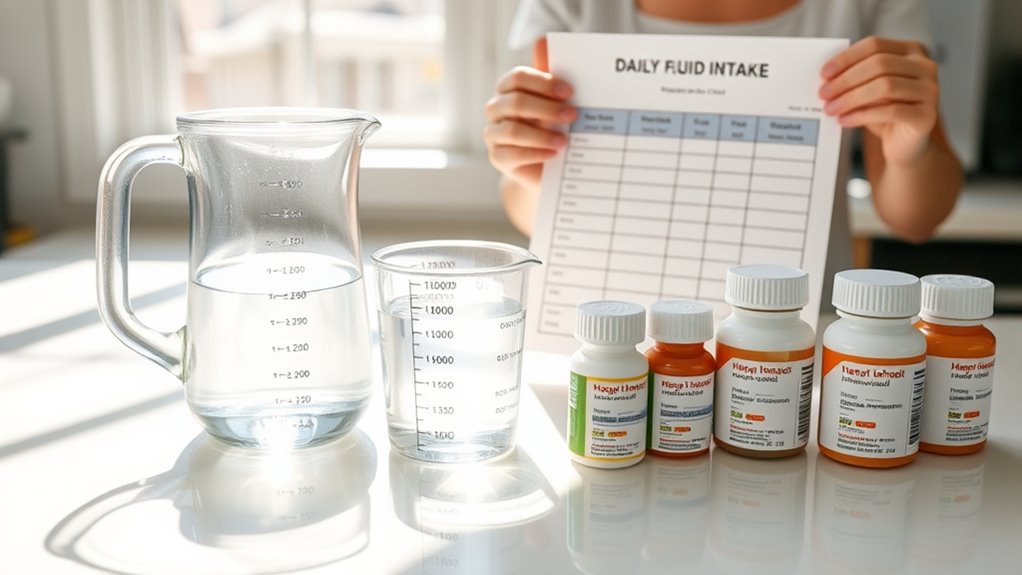
Understanding your fluid restrictions is essential for managing heart failure effectively. Your healthcare provider sets a specific daily limit on fluid intake on the basis of your individual health needs. This includes all liquids you drink, such as water, coffee, tea, and even foods with high water content like soups and fruits. Knowing this limit helps you avoid overloading your heart, which can lead to swelling and shortness of breath. To stay on track, you need to be aware of how much fluid you consume throughout the day. Keep track of your intake by using a journal or a mobile app, and measure fluids carefully. Monitoring your air quality can also be beneficial, as poor air quality may affect respiratory health, which is especially important for those with heart conditions. Additionally, understanding AI safety developments can inform future health technologies that might aid in managing chronic conditions. Staying informed about air purifier use can help improve your indoor environment and support your overall health. Incorporating balanced diets with appropriate hydration levels can further support your heart health and overall well-being. Being aware of cybersecurity best practices, such as protecting your health data, can help safeguard your personal information related to your health management. Following your fluid restrictions closely supports your health and helps you maintain better control over your heart failure.
Monitoring Daily Fluid Intake and Output

You need to track your daily fluid intake carefully to stay within your limits. Make sure to record every sip and measure your output accurately, including urine and other losses. Recognizing signs of imbalance early helps you respond quickly and prevent complications. Monitoring your fluid balance regularly is essential for effective management. Being aware of your alimony types and their potential adjustments can also provide emotional support during this process, encouraging patience and trust in your healing journey. Additionally, understanding data privacy concerns related to health information can help you ensure your personal data remains secure. For example, knowing how to distinguish between various urine output measurements can help you better interpret your fluid status.
Tracking Daily Intake
Keeping track of your daily fluid intake and output is essential for managing heart failure effectively. By recording everything you drink, including water, coffee, tea, and even soups, you get a clear picture of your daily fluid consumption. Use a journal, app, or calendar to log each measurement accurately. Pay attention to portion sizes and timing, especially if your healthcare provider has set specific limits. Consistently tracking helps you identify patterns or unexpected increases in intake. It also enables your care team to adjust your treatment plan if needed. Remember, staying vigilant about your fluid intake plays a key role in preventing fluid buildup and easing your symptoms. Make it a daily habit to record every sip and drink, so you stay in control of your condition.
Recording Output Accurately
Accurately recording your fluid output is just as important as tracking intake. This helps you and your healthcare team understand your fluid balance and detect potential issues early. When you measure and document every ounce of urine, vomit, diarrhea, or other fluid losses, you’re providing essential information to manage heart failure effectively. Be consistent and precise to avoid errors that could impact treatment. Use a marked container or measuring cup for accuracy, and record every output promptly. Remember, even small changes matter.
- Keep a dedicated journal or chart for easy tracking
- Measure all fluids lost, not just urine
- Record the time of each output
- Note any unusual or excessive losses
- Share your records regularly with your healthcare provider
Recognizing Imbalance Signs
Monitoring daily fluid intake and output helps catch early signs of imbalance before they worsen. Keep track of everything you drink and how much you urinate or sweat. If you notice your weight increasing rapidly or your shoes, ankles, or belly swelling, it could indicate fluid buildup. Shortness of breath, especially when lying down, is another sign of excess fluid. Pay attention to increased fatigue or a persistent cough, which may suggest fluid retention in your lungs. Conversely, if you’re feeling weak or dizzy, you might be dehydrated. Regularly checking your symptoms and comparing them to your fluid logs helps you recognize when your body signals trouble. Promptly report any concerning signs to your healthcare provider to prevent complications.
Recognizing Signs of Fluid Retention

Fluid retention is a common issue in heart failure patients and can often be detected through certain physical signs. You should watch for symptoms indicating excess fluid in your body. Notice if your ankles, feet, or legs swell, especially by the end of the day. Check for sudden weight gain over a few days, which often signals fluid buildup. Observe if your abdomen feels bloated or tight, as this can indicate fluid accumulation. Pay attention to your breathing—if you’re feeling more short of breath or wheezing, it may be due to fluid in your lungs. Recognizing these signs early helps prevent complications. Here are key indicators:
Watch for swelling, rapid weight gain, and shortness of breath to catch fluid retention early in heart failure.
- Swelling in lower extremities
- Rapid weight gain
- Abdominal bloating
- Shortness of breath
- Tightness across your chest
Incorporating Heart-Healthy Hydration Practices

Managing your fluid intake is essential for controlling heart failure symptoms while maintaining proper hydration. To do this, focus on balancing fluids to avoid overload or dehydration. Drink small amounts regularly instead of large volumes at once. Prioritize water, herbal teas, and clear broths, and limit sugary or caffeinated beverages. Using natural materials like linen or cotton in your drinkware can make hydration more enjoyable. Incorporating AI Bifurcation insights can help tailor hydration strategies to individual needs, optimizing outcomes based on personal health data. Staying informed about personal development techniques can also motivate you to adhere to your hydration plan and improve overall well-being. Use the table below to guide your hydration choices:
| Hydration Goal | Best Practices |
|---|---|
| Maintain hydration | Drink small amounts throughout the day. |
| Limit harmful drinks | Reduce caffeine and sugary beverages. |
| Monitor intake | Use a fluid journal or tracker daily. |
| Listen to your body | Thirst and swelling are signals to adjust. |
Following these practices helps support your heart health while keeping you properly hydrated. Proper fluid management is crucial for preventing complications related to heart failure.
Communicating Effectively With Your Healthcare Team

Good communication with your healthcare team is essential for managing heart failure effectively. Share clear information about your symptoms, ask questions whenever you’re unsure, and report any changes promptly. This proactive approach helps your team to provide effective support and adjust your care as needed. Additionally, keeping detailed records of your symptoms and medication adherence can facilitate more accurate assessments during consultations. Understanding dream symbols can also help in recognizing emotional states that might affect your health management. Regularly updating your medical history ensures your care remains tailored to your current condition.
Clear Information Sharing
Have you ever wondered how effectively sharing information with your healthcare team can impact your heart failure management? Clear communication helps make certain your treatment plan is accurate and tailored to your needs. When you share honest, detailed updates, your team can spot issues early and adjust your medications or lifestyle advice accordingly. This prevents complications and keeps your condition stable. Remember, good information sharing isn’t just about updates — it’s about building trust and understanding. Be specific about your symptoms, medication adherence, and any side effects. Keep a health journal, ask for clarification, and update your team regularly.
- Provide detailed symptom descriptions
- Report medication side effects promptly
- Share changes in daily activity levels
- Keep track of fluid intake and weight
- Ask for guidance when unsure of symptoms
Ask Questions Freely
Are you comfortable asking your healthcare team questions about your heart failure? Open communication is essential for managing your condition effectively. Don’t hesitate to voice concerns or ask about anything you don’t understand, whether it’s medication instructions, symptom changes, or fluid restrictions. Your healthcare team is there to support you, and asking questions helps ensure you get the right care. Prepare your questions ahead of appointments to make the most of your time. Remember, no question is too small or unimportant. Clear dialogue leads to better understanding and helps you follow your fluid management plan confidently. Being proactive about asking questions empowers you to take control of your health and reduces anxiety about managing heart failure at home.
Report Changes Promptly
Noticing changes in your symptoms is essential for managing heart failure effectively. When you observe new or worsening issues, report them to your healthcare team promptly. Quick communication helps prevent complications and ensures your treatment stays on track. Be specific about what you notice, such as increased swelling or shortness of breath. Keep a record of your symptoms to share during appointments. Remember, your team relies on your honesty and detail to adjust your care plan accurately. Delaying reports could lead to worsening health or hospital visits. Stay proactive in your care by staying alert and communicating openly.
- Recognize early warning signs
- Keep a symptom journal
- Contact your healthcare provider immediately
- Follow their instructions precisely
- Ask questions if unsure about changes
Adjusting Fluid Management as Your Condition Changes
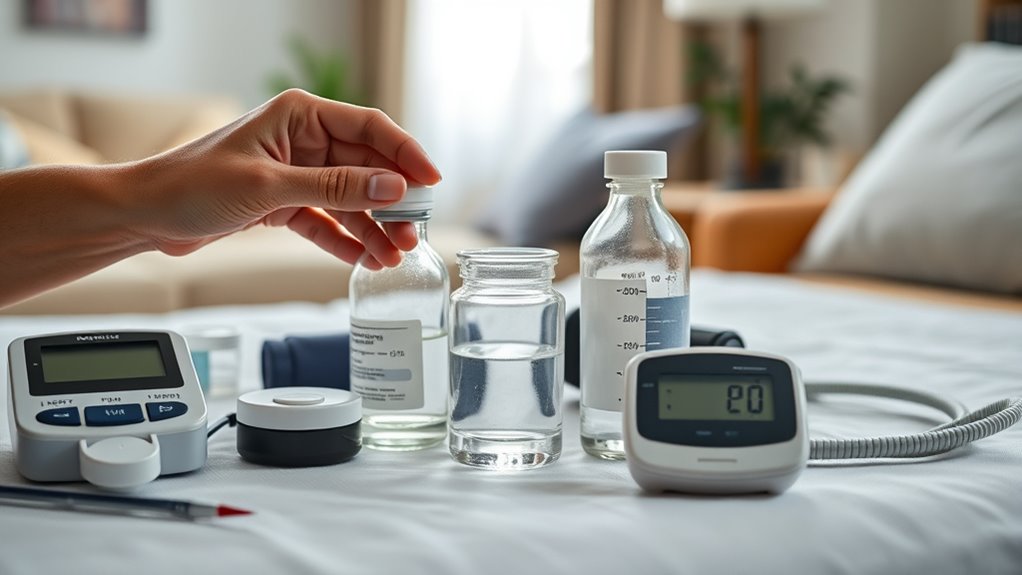
As your heart failure progresses or improves, it’s essential to regularly reassess and adjust your fluid management plan. Changes in your symptoms, weight, or energy levels indicate when adjustments are needed. If you notice increased swelling, shortness of breath, or weight gain, you might need to cut back on fluids or salt intake. Conversely, if you feel dehydrated, dizzy, or fatigued, your doctor may recommend a slight increase in fluids. Keep track of your daily weight, symptoms, and fluid intake, and share this information with your healthcare provider. Regular check-ins help ensure your plan remains effective and safe. Remember, fluid needs can change over time, and staying flexible is key to managing your condition successfully. Monitoring for fluid retention can help you identify when adjustments are necessary. Incorporating herbal remedies, such as those utilizing plant parts like chamomile flowers, may support your overall wellness but should be discussed with your healthcare provider to ensure safety. Engaging in mindful practices like self-monitoring can also empower you to better recognize signs of fluid imbalance. Additionally, understanding how essential oils can support your health might provide complementary comfort, but always consult your healthcare team before use. Furthermore, staying informed about AI-driven health tools can enhance your ability to track symptoms and manage your condition effectively.
Frequently Asked Questions
How Can I Safely Increase My Fluid Intake During Hot Weather?
To safely increase your fluid intake during hot weather, start by drinking small amounts frequently throughout the day. Opt for water, herbal teas, or electrolyte drinks. Avoid sugary or caffeinated beverages. Listen to your body’s signals, like thirst and the color of your urine—aim for light-colored. If you have health concerns or heart issues, consult your healthcare provider to determine the right amount of fluids for you.
What Are Alternative Ways to Stay Hydrated Without Drinking Fluids?
So, you’re tired of chugging water, huh? Well, why not turn into a human salad bar? Snack on juicy fruits like watermelon and oranges, or munch on crunchy veggies like cucumbers and celery. Sip on herbal teas or broth-based soups for variety. These tasty options hydrate you without the boring drips of plain water, making hydration a fun, flavorful adventure rather than a chore.
How Do Medications Affect My Fluid Restrictions and Management?
Medications can considerably impact your fluid restrictions and management. Diuretics, for example, help your body remove excess fluid but require careful monitoring to prevent dehydration or electrolyte imbalances. Other drugs might cause fluid retention, making it harder to stay within your limits. Always communicate with your healthcare provider about your medications, and follow their instructions closely to manage your fluid intake effectively and avoid complications.
Can Certain Foods Help Manage My Fluid Levels Effectively?
Certain foods can help you manage your fluid levels better. Focus on eating fresh fruits and vegetables, which have high water content but are low in sodium. Avoid salty snacks and processed foods, as they cause your body to retain water. Incorporate lean proteins and whole grains to support your overall health. Staying hydrated with small sips of water and monitoring your intake helps keep your fluid levels balanced effectively.
What Should I Do if I Accidentally Exceed My Fluid Limit?
If you accidentally exceed your fluid limit, stay calm and don’t panic. You should contact your healthcare provider promptly to discuss what happened and get personalized advice. Meanwhile, try to sip small amounts of water if you’re feeling thirsty, and monitor your symptoms like swelling or shortness of breath. In future, keep track of your fluids carefully and stick to your prescribed limits to avoid complications.
Conclusion
Managing fluids effectively is essential for heart failure care at home. Remember, about 50% of heart failure patients experience fluid retention, which can worsen symptoms if not controlled. By understanding your restrictions, monitoring intake, and staying in touch with your healthcare team, you can improve your quality of life. Stay proactive, follow your plan, and don’t hesitate to ask questions—your efforts make a real difference in managing your condition successfully.
Cold & flu season Picks
humidifiers
As an affiliate, we earn on qualifying purchases.